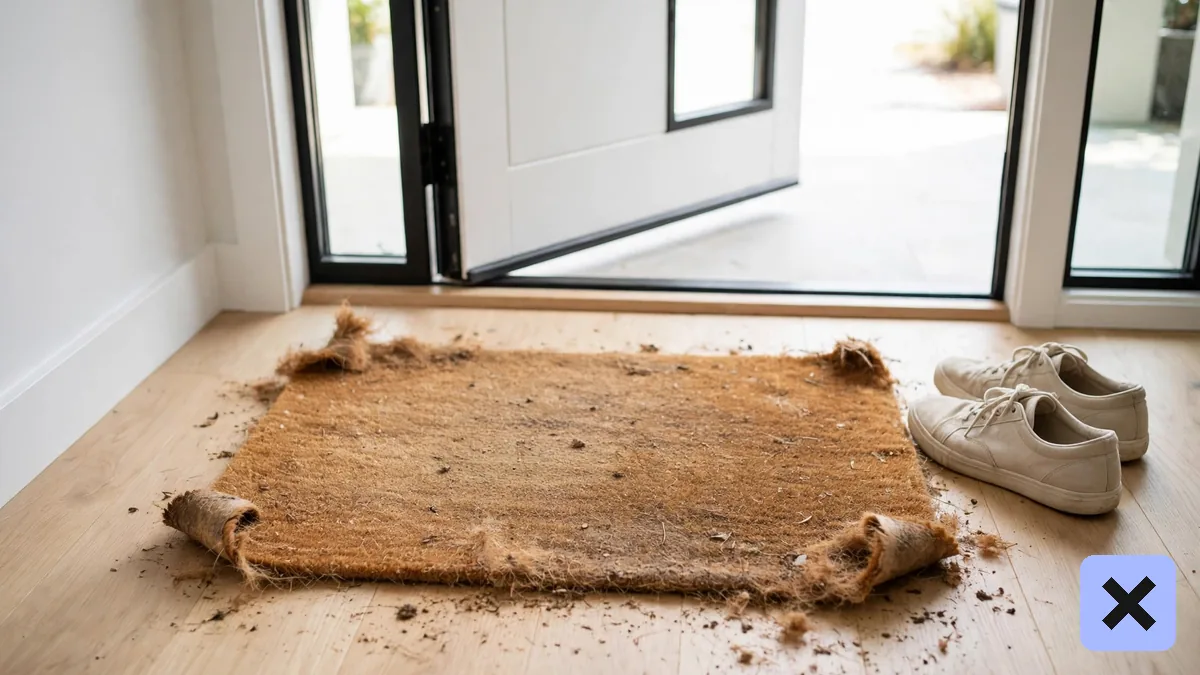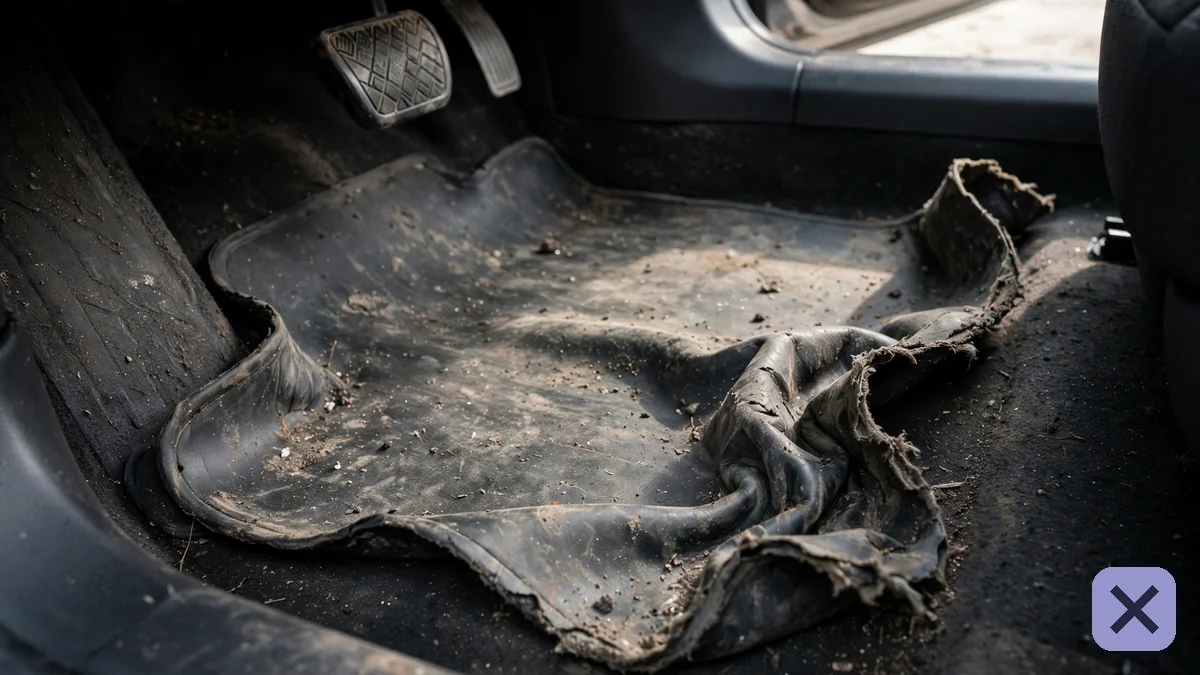
The worst car mats look like a bargain in the shop and a mistake within a month. They curl at the edges, slide under the pedals, trap water against the carpet, and shed fibres every time you get in and out. A floor mat is a small purchase, but a bad one quietly damages the carpet it was supposed to protect.
Most drivers only notice when the damage is already done. The mat has bunched up behind the brake pedal, the heel pad has worn through to the carpet below, or a damp smell has settled into the car. By then the cheap mat has cost more than a good one would have, because it has taken the carpet and the resale value with it.
This guide looks at the worst car mats on the market, the materials and designs that fail first, and the warning signs to spot before you buy. It covers carpet mats that flatten and fray, rubber mats that slide, all-weather trays that hold water, and universal-fit sets that fit nothing properly.
Key takeaways
- The worst car mats are usually the cheapest universal-fit sets, made from thin material with no proper anchoring.
- A mat that slides under the pedals is not just annoying, it is a genuine safety risk that should be replaced immediately.
- Thin carpet mats wear through at the heel within months, then let dirt and water reach the carpet underneath.
- Cheap rubber mats curl, crack, and harden in heat and cold, and they often smell strongly of chemicals for weeks.
- Measure your footwell and check the anchor points before buying, because a mat made for your exact model will always outlast a universal one.
Why the Worst Car Mats Fail So Fast
Car mats fail for a small number of predictable reasons, and the worst ones usually fail in several at once. The material is too thin, the backing has no grip, the shape does not match the footwell, and there is no anchor to hold it in place. Each weakness alone is manageable. Together, they turn a simple accessory into a daily irritation.
Makers of the cheapest mats cut costs in places you cannot see until the mat is in your car. They use less material, skip the heavy backing, and leave out the clips that connect to the factory anchor points. The result looks fine in the packaging and feels flimsy the moment you unfold it.
Thin Material Is the First Warning Sign
Pick a mat up and feel it before you judge it. A quality carpet mat has a dense pile and a firm, heavy backing that resists bending. A quality rubber mat is thick enough to hold its shape when you lift it by one corner. The worst car mats feel light, floppy, and papery, and they fold over under their own weight.
Universal Fit Usually Means No Fit at All
Universal-fit mats are made to sort of fit hundreds of different cars, which means they properly fit none of them. Drivers trim them with scissors, which leaves rough edges that fray and catch on shoes. A mat that is too large bunches up against the pedals. A mat that is too small leaves strips of carpet exposed, exactly where muddy shoes deposit the most dirt.
The Worst Car Mats by Type
Not every bad mat fails in the same way. Carpet mats fray, rubber mats curl, and moulded trays can trap water if the design is wrong. The table below summarises the most common problem types and what to choose instead.
| Mat type | Main problem | What fails first | Better choice |
|---|---|---|---|
| Thin carpet mats | Wear through quickly | Heel pad and pile | Deep-pile mat with reinforced heel |
| Cheap rubber mats | Curl and slide | Edges and backing grip | Heavy moulded rubber with anchors |
| Universal-fit sets | Fit nothing properly | Trimmed edges fray and lift | Model-specific cut mats |
| Shallow all-weather trays | Hold standing water | Low walls let water spill over | Deep-wall tray with drainage channels |
| Foam-backed mats | Absorb water and smell | Foam backing rots and crumbles | Solid rubber or sealed backing |
| Novelty printed mats | Style over substance | Print peels and pile flattens | Plain mat in a quality material |
Cheap Carpet Mats That Flatten and Fray
Carpet mats feel comfortable and look smart when they are new, which is why so many drivers choose them. The best ones last for years. The worst ones flatten within weeks, and the difference is almost entirely in the density of the pile and the quality of the backing.
A cheap carpet mat has a sparse pile that crushes underfoot and never springs back. After a month of commuting, the driver’s side looks noticeably flatter than the passenger side, and dirt works its way into the flattened pile and becomes almost impossible to vacuum out. A well-made mat has a bound edge that stops the pile from unravelling, while a cheap mat often has a heat-cut edge that starts to fray after a few months.
Rubber Mats That Curl, Slide, and Smell
Rubber mats should be the practical choice. They are easy to clean, they hold water, and they stand up to muddy boots. The worst ones do the opposite. They curl at the corners, slide across the footwell, and fill the car with a chemical smell that lingers for weeks.
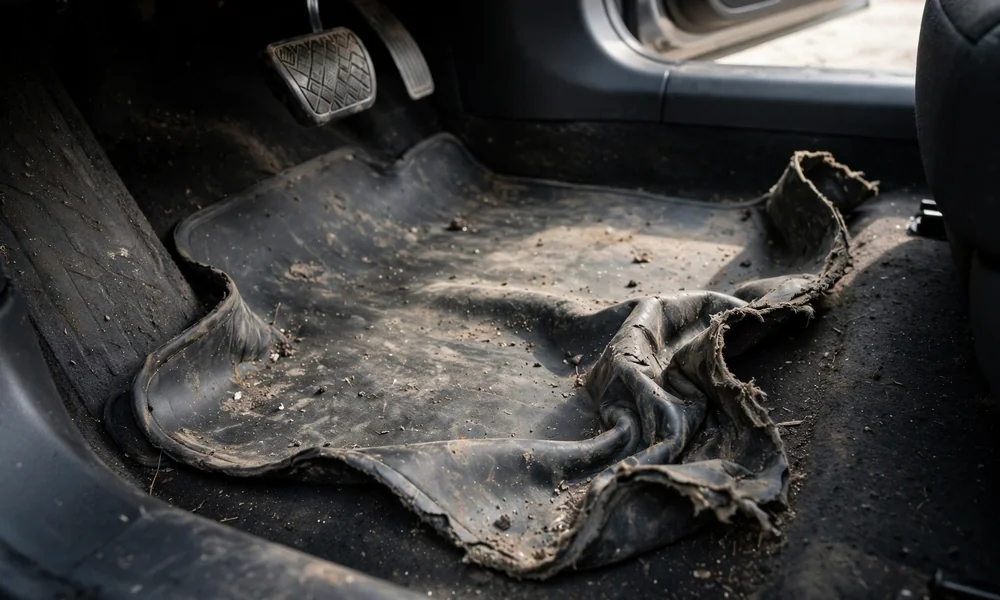
Curling is the most visible problem, and it is also a safety issue. A mat that curls up at the front can catch under the accelerator or brake pedal, and a mat that slides forward can bunch up behind the pedals altogether. This is the normal behaviour of thin rubber with no anchor points and no grip on the underside.
Cheap rubber also smells strongly of chemicals, especially in a warm car, and its shallow tread lets mud slide off the edges onto the carpet when you lift it. The same careless buying habit shows up in car accessories that waste money, where a low price hides a short life and a poor fit.
All-Weather Trays That Trap Water Instead of Holding It
All-weather trays are supposed to be the toughest option, with raised walls that contain water, snow, and mud. The worst ones have walls that are too low, too flexible, or too poorly shaped to do the job. Water pools in the middle, sloshes over the sides when you brake, and ends up on the carpet anyway.
How Bad Mats Damage Your Car
The damage from a bad mat is slow and easy to miss, which is why it is so costly. The mat rubs against the carpet every time you move your feet, and the friction wears a bald patch into the carpet underneath. By the time you lift the mat and see the damage, no amount of cleaning will bring it back.
Water damage is worse, because it spreads beyond the footwell. A leaking mat lets water soak into the carpet underneath, where it can sit for months, causing rust on the floor pan and mould in the carpet. It also hurts resale value, since a buyer who finds worn or damp carpet will assume the car has been neglected.
Finally, there is safety. A mat that slides, bunches, or curls can interfere with the pedals, and that is a risk no driver should accept. If your mat moves when you push it with your foot, take it out and replace it before your next journey.
What to Look For Instead
A good car mat is not hard to recognise once you know what to look for. It is heavy enough to stay put, thick enough to hold its shape, and cut to fit your exact model. It has anchor holes that line up with the factory fixings in your footwell.
For carpet mats, look for a dense pile, a reinforced heel pad, and a bound edge. The heel pad should be a separate, thicker layer, not a printed patch. Hold the mat up to the light. If you can see through the pile, it is too thin to last. For rubber mats, look for weight, depth, and grip. The mat should be heavy enough that it does not move when you push it with your foot, and the tread should be deep enough to trap dirt and water. Cheap shortcuts rarely stay cheap, as the worst detailing products that disappoint prove every time a spray leaves streaks.
Checklist: Spotting the Worst Car Mats Before You Buy
- Feel the weight. A good mat is heavy and holds its shape. A light, floppy mat will curl, slide, and wear out fast.
- Check the fit. Model-specific mats cover the footwell edge to edge. Universal mats leave gaps and need trimming.
- Look for anchor holes. The holes must line up with the factory anchor points in your car, or the mat will move.
- Inspect the heel pad. It should be a thick, reinforced layer, not a thin printed patch that wears through in months.
- Test the backing. The underside should grip the carpet. A smooth, slippery backing means the mat will slide.
- Smell the material. A strong chemical smell in the shop means a strong smell in a warm car, and it is a sign of cheap rubber.
Frequently Asked Questions
How long should a good car mat last?
A good carpet mat should last three to five years, and a good rubber mat or tray should last five years or more. If yours are falling apart within a year, the material or the fit is the problem, not your driving.
Are universal-fit car mats worth buying?
Universal-fit mats are rarely worth it. They fit poorly, they need trimming, and the trimmed edges fray and curl. A model-specific mat costs more up front but lasts longer and covers more carpet, so it is usually cheaper over the life of the car.
Why does my car mat slide under the pedals?
A mat slides because it has no grip on the underside, no anchor connection, or the wrong shape for the footwell. Check that the anchor holes line up with the factory fixings, and if the mat has no holes at all, replace it. A sliding mat is a safety risk, not a minor annoyance.
Can a bad car mat cause a smell in the car?
Yes, in two ways. Cheap rubber releases a chemical smell in warm weather, and a mat that holds water against the carpet causes a damp, musty smell. If the smell goes away when you take the mats out, the mats are the cause, and replacing them will fix it.
Should I choose carpet or rubber car mats?
Carpet mats are quieter and look smarter, and they suit dry climates. Rubber mats and trays are better for wet weather and muddy boots, because they are easy to clean and they hold water. Many drivers keep carpet for summer and rubber for winter.
How do I clean car mats properly?
Take the mats out first. Vacuum carpet mats, wash them with carpet cleaner, and let them dry fully before putting them back. Hose rubber mats down, scrub the tread, and let them dry in the sun. Never put a damp mat back in the car. Comfort matters too, which is why drivers also notice car seats that fail on comfort on long journeys, where thin padding and poor support turn a short drive into an ache.
The Bottom Line
The worst car mats are the ones that look cheap and act cheap: thin, poorly fitting, slippery, and quick to wear out. They curl, they slide, they trap water, and they damage the carpet they were bought to protect. A good mat costs more, but it fits your exact model, stays in place, and keeps your carpet clean and dry for years. Measure your footwell, check the anchor points, feel the weight, and buy the mat that fits properly, because the cheapest mat in the shop is usually the most expensive one you will ever own.