Steer Clear of the Worst Food Festivals of 2026
The worst food festivals of 2026 are not the small ones with a short row of stalls and a modest crowd. A small food festival with honest cooking can be a wonderful afternoon, and a famous one can still serve a terrible meal. The worst food festivals fail in a much more basic way: they charge a festival price for food that arrives cold, small, late or not at all. This guide ranks the worst types of food festival, so you can spot a bad one before you pay for the ticket, the tokens and the travel.
Key takeaways
- A food festival is about the food: if the dishes arrive cold, tiny or hours old, the music and the bunting cannot save it.
- Token systems are the first warning sign: forced minimum buys and tokens that expire worthless.
- Count the dishes before you book: a row of stalls selling the same thing is one stall wearing seven signs.
- No seating, no shade and no water turn a good meal into a bad afternoon.
- Check the menu, the portion sizes and the allergen information before you pay: if the festival will not show them, steer clear.
How the worst food festivals were chosen
Every type below was scored on five measures. The food comes first: is it cooked fresh, served hot and worth the price, or reheated, stale and small? Variety is second: how many genuinely different dishes the stalls offer. Value is third: the real cost of a full meal once ticket, tokens and drinks are added. The site is fourth, because nowhere to sit, no shade and no water ruins even good cooking. Honesty is fifth: does the festival show its menu, prices and allergen information before you book?
No individual festival is named here, because the problem is the pattern, not the place. Second, this is about festivals built around eating, not the big music weekends where food is a side issue: our guide to the worst festivals ranks the music and culture weekends where the food stalls are only part of the problem, and our guide to the worst food trucks covers the single van that charges restaurant prices for a cold snack.
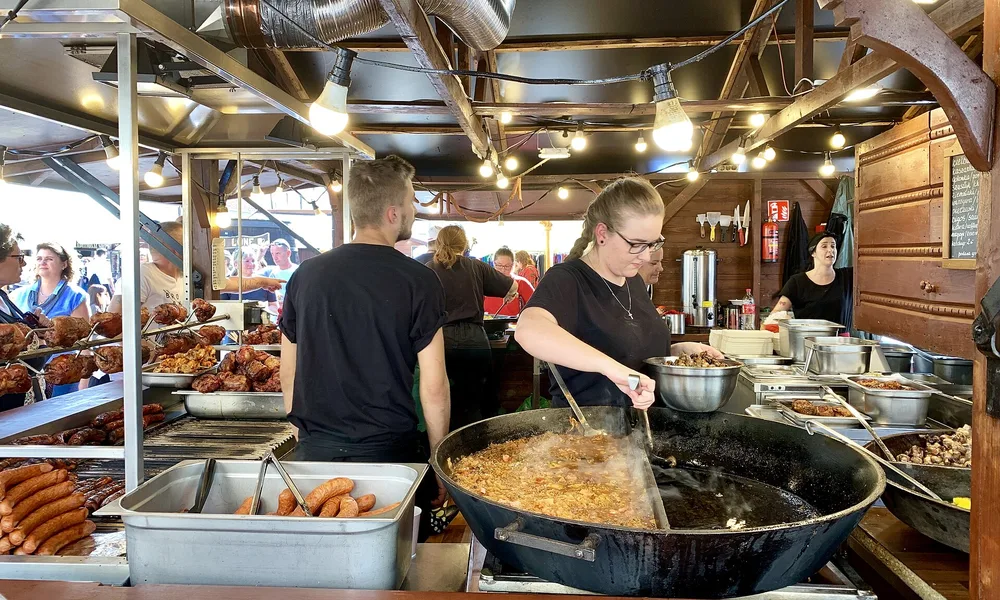
Comparison table: the worst food festivals of 2026
| Rank | Festival type | Main fault | What it costs you |
|---|---|---|---|
| 1 | The Cold Tray Stall | Food cooked hours ago, served lukewarm | A meal you cannot enjoy |
| 2 | The Token Trap | Forced tokens, minimum buys, no refunds | Money left on worthless tokens |
| 3 | The Taster Portion | Tiny portions at full-meal prices | Hunger after a full-priced meal |
| 4 | The One-Dish Row | Every stall sells the same dish | No choice, however far you walk |
| 5 | The Mystery Allergen Stall | No ingredients or allergen information | A meal some people cannot risk |
| 6 | The No-Seat Scramble | Nowhere to sit, no shade, no water | A hot meal eaten standing in a crowd |
| 7 | The Sell-Out by Noon | Headline dishes gone before lunch | The dishes you came for, missed |
The worst food festivals of 2026
1. The Cold Tray Stall: the worst food festival of all
The Cold Tray Stall is the worst food festival you will ever attend, and it is not close. The food is cooked in the morning, stacked in trays, and served hours later at a temperature that is neither hot nor cold, just tired. You can see it before you order: trays sitting open under a heat lamp that stopped working hours ago, steam that never comes, and a server who spoons the food out with the air of someone who knows exactly what it tastes like. A good food festival cooks in small batches all day; the Cold Tray Stall cooks once, early, and sells the same tray until it is empty. The signs are plain: no cooking behind the counter, no steam, and a menu that never changes because the food was finished before the gates opened.
2. The Token Trap: a meal that costs twice what you planned
The Token Trap does not sell you food. It sells you tokens, and the tokens are where the money goes. You buy a strip of tokens at the gate, in a minimum amount that is always more than one meal costs, and every dish is priced in a number of tokens that never quite matches what you hold. The smallest dish costs three tokens, the tokens come in strips of ten, and the change is given in tokens you cannot spend anywhere else. Refunds are refused and tokens expire at the gate, so the last tokens in your pocket are worthless by the time you want them. An honest festival takes ordinary money at the stall; the Token Trap turns lunch into a maths problem and keeps the remainder. Before you book, check whether the festival takes cash or cards at the stall: if it runs on tokens alone, with a minimum buy and no refund, walk away.
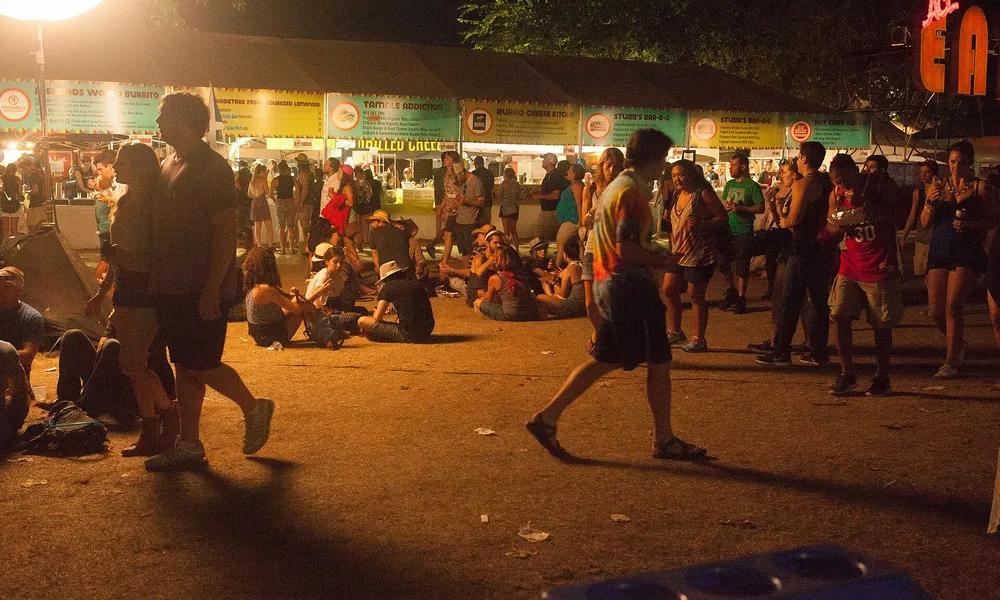
3. The Taster Portion: three bites for the price of a meal
The Taster Portion sells you a meal and hands you a sample. The plate looks generous in the photograph and arrives as three bites on a large plate, a single skewer where the menu promised a platter, or a small pot that is gone before you have found somewhere to stand. The price is a full meal price, the portion is a tasting portion, and the festival calls it a chance to try more dishes. A family of four spends a full restaurant bill and leaves hungry. The signs are in past photographs: small pots and tiny plates. If the festival will not say how much food a portion is, assume it is not enough.
4. The One-Dish Row: seven stalls, one meal
The One-Dish Row promises a world of food and delivers a single dish seven times over. You walk the row and every stall sells the same thing: the same fried snack, the same grilled meat, the same sweet drink, with a different sign and a different price. The variety on the website is a trick of naming, because the stalls share a supplier and the only real choice is which queue to join. A good food festival is a tour of different cuisines; the One-Dish Row is a corridor with one meal repeated. Count the dishes, not the stalls, before you book.
5. The Mystery Allergen Stall: a meal you cannot trust
The Mystery Allergen Stall sells food with no information about what is in it. There is no ingredients list, no allergen notice, and no one behind the counter who can tell you whether the dish contains nuts, gluten, dairy or shellfish. The server shrugs and the festival has no allergen guide anywhere. For anyone with an allergy or a food intolerance, it makes the whole festival unusable: every dish is a guess, and a wrong guess is a medical problem. A good food festival prints allergen information at every stall; the Mystery Allergen Stall treats the question as a nuisance. Before you book, check whether the festival publishes allergen information: if it does not, and you or anyone with you has a food allergy, do not go.

6. The No-Seat Scramble: nowhere to eat what you bought
The No-Seat Scramble sells you hot food and gives you nowhere to eat it. There are no tables, no benches and no shade, so you eat standing in a crowd, balancing a hot plate in one hand and a drink in the other, while people push past you on both sides. The food cools in your hands and the meal you paid festival prices for is eaten like a snack on a train platform. A good food festival provides tables, shade and water; the No-Seat Scramble spends its money on the entrance arch and forgets the tables. Look at the photographs before you book: if you cannot see a single table or bench, assume you will eat standing up.
7. The Sell-Out by Noon: the dishes you came for, gone
The Sell-Out by Noon advertises its headline dishes all year and runs out of them before lunch. The dish on the poster, the one the festival is named after, the one every review mentions, is gone by midday, and the stalls that sold it close their shutters while the festival is still charging at the gate. What is left is the food nobody came for. The festival knew how many portions it had and how many tickets it sold, and it sold the tickets anyway. A good food festival cooks enough of its headline dish for the crowd it invited; the Sell-Out by Noon sells the dish in every photograph and runs out of it before most visitors arrive. Check past reviews before you book: if visitors keep saying the best dishes were gone by noon, believe them.
What to avoid when booking a food festival
The most common food festival regret is a wrong expectation: a token system discovered at the gate, a portion that feeds nobody, or a menu that turned out to be one dish repeated. Check four things before you pay: whether stalls take ordinary money or tokens only, whether the menu shows real prices and portion sizes, whether allergen information is published, and whether the photographs show tables, shade and water. The same checks work at the markets where festival food is sold all year, and our guide to the worst markets makes the same point about short measures and triple prices, because the traps are the same everywhere.
Checklist: booking a food festival
- Check whether stalls take cash or cards, or tokens only with a minimum buy and no refund.
- Read the menu with real prices and portion sizes, and work out the cost of one full meal before you book.
- Count the genuinely different dishes on the stall list, not the number of stalls.
- Check the allergen information for every dish you plan to eat, and ask the festival if it is missing.
- Look for tables, benches, shade and free water in the photographs from past years.
- Read past reviews for sell-outs and token complaints before you pay.
Frequently asked questions
What is the worst type of food festival?
The Cold Tray Stall, where food cooked hours ago is served lukewarm from trays under a dead heat lamp. Cold, stale food ruins the whole point of a food festival.
Are token systems at food festivals always bad?
Not always, but they are the most common trap. A fair system refunds unused tokens and sells them in small amounts; a bad one forces a large minimum buy and refuses refunds.
How much should a meal cost at a food festival?
Add the ticket, the tokens and a drink, and compare the total with a restaurant meal. If a small plate costs as much as a full meal in a restaurant, the festival is charging festival prices for tasting portions.
What should I do if a stall cannot tell me the allergens?
Do not eat from it. Ask the festival organisers for the allergen guide, and if there is none, choose a stall that can answer the question properly.
When is the best time to arrive at a food festival?
Arrive at opening time if you want the headline dishes, because the best food often sells out by noon.
How do I know if a food festival has enough seating?
Look at photographs from past years and count the tables and benches. If every photograph shows people eating while standing, the festival has not provided anywhere to eat.
Bottom line
The worst food festivals of 2026 are the ones that forget the food: cold trays, token traps, tiny portions, one dish repeated, no allergen information, nowhere to sit and headline dishes gone by noon. Check the menu, the prices and the seating before you book.