The worst hostels for backpackers do not announce themselves with a warning sign. They look fine in the photos, the price looks like a bargain, and the reviews mention a great atmosphere. Then you arrive, drop your pack on a sagging mattress, and realise the next three nights will test your patience. A bad hostel does more than cost you sleep. It drains your energy and turns a trip you saved months for into something you simply endure.
Backpackers choose hostels for good reasons. They are cheap, social, and flexible, and a good one can make a trip. The problem is that the gap between a good hostel and a bad one is enormous, and it is rarely visible from a booking page. One gives you a clean bed, a working locker, and a quiet night. The other gives you a mattress you can feel every spring through and a dorm that sounds like a train station until three.
This guide looks at what goes wrong in the worst hostels for backpackers, the kinds of places to avoid, and the warning signs you can spot before you pay. It is about knowing the difference between basic and broken.
Key takeaways
- A bad mattress, constant noise, and dirty bathrooms cause most hostel misery, not the lack of luxury.
- Party hostels, overcrowded dorms, and hostels in the wrong neighbourhood are the types most likely to ruin a stay.
- Read recent reviews for mentions of bed bugs, broken lockers, and refund refusals before you book.
- A small dorm, a proper locker, and real quiet hours are worth paying a few pounds more for.
- If a hostel will not answer a direct question about beds or bathrooms, treat the silence as an answer.
What Makes a Hostel Truly Bad for Backpackers
A hostel can be simple without being bad. Backpackers expect a bed that supports them, a place to wash, somewhere safe for their belongings, and a reasonable chance of sleep. When a hostel fails at those basics, you wake up tired and spend the day counting the hours until you can try to sleep again.
The bed is the whole trip
Sleep is the one thing a hostel exists to provide, and it is the thing bad hostels get wrong most often. A mattress that has lost its shape, a pillow as flat as a folded towel, and bedding that smells of the last ten guests are the classic signs.
Before you book, look for recent reviews that mention sleep specifically. Guests forgive a plain room, but they complain loudly about a bed they could not sleep in. Guest photos show the sagging mattresses the official pictures hide.
Noise that never stops
Noise is part of hostel life, and experienced backpackers pack earplugs for that reason. But there is a difference between normal sounds and a hostel that never goes quiet. Thin walls, slamming dorm doors, a bar below the bedrooms, and a reception that treats quiet hours as a suggestion add up to nights where sleep is not possible.
Location matters as much as policy. A hostel above a nightclub will be loud no matter how polite the staff are. Check the map before you book, and read reviews from people who stayed on a weekday. A place that is loud every night is one to avoid unless you plan to stay out until dawn yourself.
The Worst Kinds of Hostels to Avoid
Bad hostels are not all bad in the same way. Some are loud, some are dirty, some are simply in the wrong place. Recognising the type helps you decide whether the problem is one you can live with for a night or one that will follow you for your whole stay.
The party hostel that never sleeps
Party hostels have their place, and for some travellers they are the whole point of the trip. The trouble starts when the party is not optional. In the worst of these places the bar sits in the same building as the dorms, the music runs until the small hours, and guests who want an early night are treated as the problem.
If you want a social hostel without the all-night noise, look for one that separates its bar from its bedrooms and enforces quiet hours. If several recent reviews say some version of great party, impossible to sleep, believe them. That tells you exactly who the hostel is built for.
The cramped dorm with no space to live
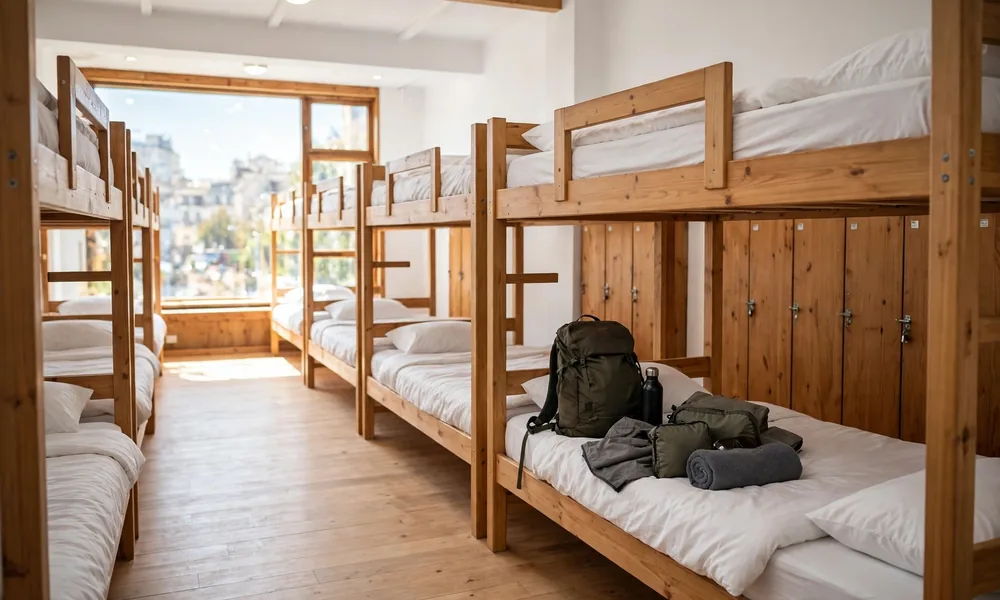
Some dorms are designed to fit as many beds as possible into as little space as possible. The result is a room where you cannot open your bag without blocking the aisle, with one plug socket for eight people. Backpackers live out of their bags and need somewhere to sort clothes and charge a phone.
Count the beds in the room photos and look for the gaps between them. If the bunks are packed so tightly that you cannot see floor in the picture, the room will feel worse in person. Look for a locker big enough for a full backpack and at least one plug socket per guest. These are not luxuries. They are the basic tools of travelling light.
Red Flags to Spot Before You Book
Most bad hostels give themselves away before you pay, if you know where to look. The booking page, the review history, and the way the hostel answers questions all carry clues. The table below collects the most reliable warning signs. Two or three together should make you pause.
The same carelessness that leads to a poor hostel choice often shows up in other parts of a trip. Many travellers who end up in the worst hostels made the same rushed decisions when they booked transport, so reading about common hotel booking mistakes that cost travellers money is a useful reminder of how small oversights at booking turn into real problems on arrival.
| Red flag | What it usually means | What to do instead |
|---|---|---|
| No recent reviews | The hostel may have changed hands, or guests stopped recommending it | Choose a place with reviews from the last three months |
| Repeated mentions of bed bugs | A serious problem that takes real effort to fix | Do not book, however cheap the bed is |
| Photos show no bathrooms or lockers | The facilities are probably not worth showing | Ask for photos, or book somewhere transparent |
| Staff do not answer questions | Problems on arrival will be handled the same way | Take the silence as a warning and move on |
| Strict no-refund policy on a long stay | You are locked in even if the place is unusable | Book one night first, then extend if it is good |
| Price far below every other hostel | Corners are being cut, usually on cleaning | Pay the normal rate at a better-reviewed place |
Bed bugs deserve a special mention, because they are the one hostel problem that can follow you home. Repeated mentions across several months mean the hostel has a problem it is not fixing, and no saving is worth that risk.
How to Protect Your Sleep, Stuff and Sanity
Avoiding the worst hostels is only half the job. The other half is travelling in a way that makes even an average hostel work well. Experienced backpackers carry a small kit of habits that turn a basic dorm into a comfortable base, and none of it is expensive.
Start with the dorm itself. Smaller dorms are almost always better than large ones. A four-bed dorm has fewer snorers, fewer alarms, and fewer people coming in late. If the price difference is small, pay it. Choosing well also means packing well, so read about luggage choices that make hostel life harder before you buy a bag that will not fit in a locker.
Picking the right dorm
When you arrive, take a minute to choose your bed rather than accepting the first free one. A lower bunk near a plug socket and away from the door is usually the best spot. The door side gets the light and the noise every time someone comes in, and the top bunk means climbing down in the dark.
Introduce yourself to your roommates when you arrive. A short friendly hello makes people far more considerate about noise and lights than any sign on the wall. Agree informally on lights-out, and pack your bag the night before an early start so you are not rustling plastic at five in the morning.
Backpacker Hostel Checklist
Use this checklist every time you book a hostel bed. It takes two minutes, and it catches most of the problems in this guide. If a hostel fails three or more checks, look for another option.
- Recent reviews mention clean beds, hot water, and quiet nights.
- The dorm has six beds or fewer, or a smaller dorm is within budget.
- Each bed has a locker for a full backpack, a plug socket, and a reading light.
- The hostel is a short walk from public transport and the area feels safe after dark.
- Quiet hours are stated clearly, and reviews say staff enforce them.
- You can book one night first and extend later, not pay for a long stay upfront.
Frequently Asked Questions
Are hostels safe for solo backpackers?
Hostels are generally safe for solo travellers, and many backpackers prefer them because they make it easy to meet people. Pick one with working lockers, staff around the clock, and reviews from other solo guests. Keep valuables locked away, and avoid the common solo travel mistakes that cause trouble, like arriving late at night with nowhere booked.
How much should a good hostel bed cost?
There is no single fair price, because it depends on the city, the season, and the dorm size. Compare it with other hostels in the same city. If a bed costs far less than every other hostel nearby, something is being cut. If it costs close to a budget hotel room, check what is included first.
What should I do if my hostel has bed bugs?
Tell the staff immediately, take photos if you can, and do not put your bag on the bed or on the floor. Ask to move rooms or to leave. Keep luggage sealed in plastic bags until you can wash everything on a hot cycle, and inspect your bag before your next stay, because bed bugs travel in luggage easily.
Can I get a refund if the hostel is terrible?
It depends on how you booked. A direct booking is often easier to change than one made through a third-party site, and a polite complaint on arrival sometimes produces a room change or a partial refund. If you booked a non-refundable rate, a refund is unlikely, which is why booking a single night first is such good advice.
Is a private room in a hostel better than a dorm?
A private room gives you quiet and privacy, but it costs more, and at that price a budget hotel is often better value. The exception is when you want the social side of a hostel, like the common room and the kitchen, while sleeping privately. Compare prices before you decide.
What is the best dorm size for a first-time backpacker?
A four-bed dorm is the best starting point for most first-time backpackers. It is social enough to meet people without being overwhelming, and far quieter than a ten or twelve-bed room. A smaller room with a proper locker will do more for your trip than any free breakfast.
The Bottom Line
The worst hostels for backpackers are not hard to avoid once you know what to look for. A bad mattress, endless noise, and dirty bathrooms are all visible in advance if you read recent reviews, check the map, and ask direct questions before you pay. Spend a little more for a smaller dorm, a working locker, and a hostel that enforces its own quiet hours. The cheapest bed in the city is never worth the sleep you lose in return.