Nothing ruins a family holiday faster than a bad hotel pool. Children plan their whole day around the water, and parents count on the pool as the easy win between sightseeing and dinner. When the worst hotel pools for families turn out to be murky, overcrowded, freezing, or closed altogether, the disappointment spreads through the entire trip.
A hotel pool looks wonderful in the booking photos. The water sparkles, the loungers are empty, and a family splashes in the shallow end. Reality is often very different: the pool may be tiny, the water cloudy, the shallow area non-existent, and the lifeguard nowhere to be seen. For families with small children, these are safety risks and wasted money, not minor annoyances.
This guide covers the worst hotel pools for families, the warning signs to spot before you book, and what to do when the pool lets you down.
Key takeaways
- The worst hotel pools for families are small, overcrowded, poorly maintained, or missing a safe shallow area for children.
- Cloudy water, broken tiles, slippery decks, and missing lifeguards are serious safety warning signs, not cosmetic flaws.
- Check recent guest photos and reviews of the pool itself, not just the hotel’s marketing pictures.
- Ask the hotel about pool size, depth, opening hours, and heating before you book.
- Have a backup plan, such as a nearby beach or public pool, in case the hotel pool disappoints.

What Makes a Hotel Pool Bad for Families
A good family pool is safe, clean, spacious, and welcoming to swimmers of every age. A bad one fails on several of these points at once, and once you know the categories, you can spot them in minutes.
Size That Does Not Match the Hotel
The most common problem is a pool built for a small guesthouse sitting at the centre of a 300-room hotel. At nine in the morning it looks fine, but by eleven every lounger is taken and children have nowhere to play. Hotels rarely mention this mismatch. They show the pool from a flattering angle, empty, at dawn.
Before booking, compare the pool to the size of the hotel. A single small pool serving hundreds of rooms is a red flag, and a family hotel should offer a large main pool or a separate children’s pool.
No Safe Area for Young Children
Many hotel pools are built for adults, starting at one metre deep and dropping quickly to two metres or more, with no shallow shelf, no steps a toddler can sit on, and no separate paddling pool. Parents end up holding a small child for the entire swim.
A family-friendly pool needs a gradual entry or a shallow zone no deeper than knee height for toddlers, plus clear depth markings, non-slip steps, and handrails. If none of these appear in photos, assume the pool was not designed with children in mind.
The Worst Hotel Pool Problems Families Face
Some pool problems are annoying, but others are genuinely dangerous. The worst hotel pools for families combine several of these faults, turning the highlight of the holiday into a daily frustration.
Dirty or Cloudy Water
Cloudy water is the clearest sign of poor maintenance. It means the filtration is struggling, the chemical balance is off, or the pool is not cleaned often enough. Children swallow pool water and spend hours immersed in it, so water quality matters far more for families than for anyone else.
Look for water you can see through to the bottom. If the pool floor is invisible, do not let children swim. Ear infections, stomach upsets, and skin rashes are common after swimming in poorly maintained pools.
Overcrowding and No Space to Play
An overcrowded pool is stressful and unsafe. Children cannot practise swimming, parents cannot keep sight of them, and collisions become routine.
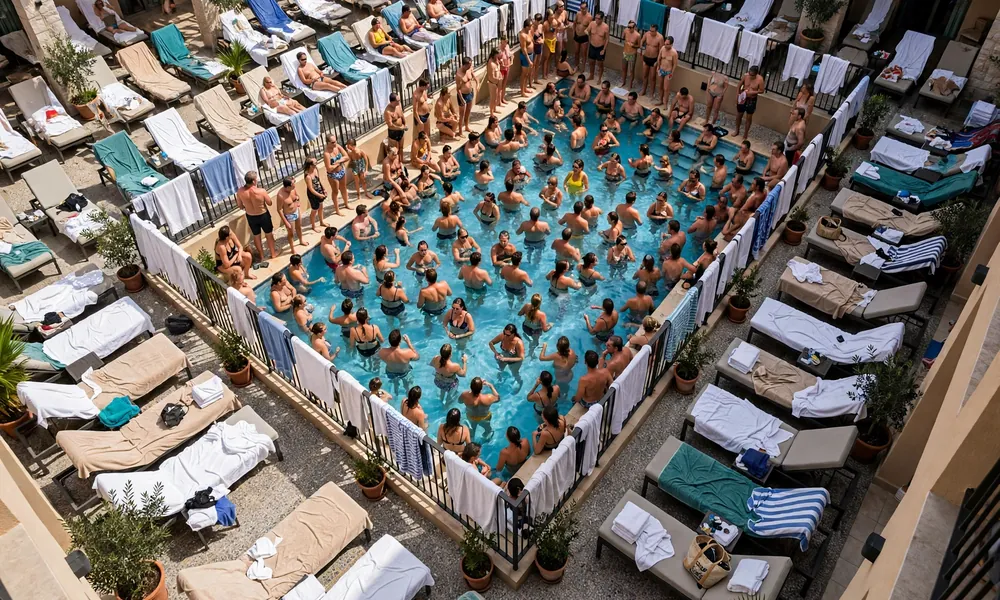
Overcrowding often means too little shade, too few loungers, and nowhere for non-swimmers to sit. Families end up arriving at dawn to claim a spot, which is no way to spend a relaxing holiday. A bad pool can spoil a seaside stay just as surely as one of the worst beach resorts families warn each other about, so take those warnings seriously.
Freezing Water and Broken Heating
A pool advertised as heated but running cold is a classic family holiday letdown. Small children lose body heat quickly, so a cold pool means ten minutes of swimming followed by shivering. Some hotels switch the heating off to save money without telling guests.
Ask for the actual water temperature, not just the word heated. A comfortable family pool sits between 26 and 30 degrees Celsius, and anything below 24 will feel cold to children within minutes. If the hotel cannot give you a number, that tells you everything.
Missing Safety Features
The worst hotel pools for families often lack the basics: no lifeguard, no depth signs, no rescue equipment, and a deck so slippery that children fall walking to the water.
A family hotel should have a lifeguard during busy hours, clear rules displayed near the pool, and a barrier separating the pool from play areas. If the pool area looks unstaffed and unmaintained, keep your children out and raise it with the hotel manager.
Worst vs Best Hotel Pools at a Glance
Use this table when you are choosing between hotels.
| Feature | Worst Hotel Pools | Best Hotel Pools |
|---|---|---|
| Water quality | Cloudy, murky, strong chemical smell | Clear, clean, balanced, no harsh smell |
| Size | Tiny pool for a large hotel | Large pool plus separate children’s pool |
| Shallow area | None, deep from the edge | Gradual entry and toddler zone |
| Crowds | Packed, no free loungers | Space to swim and play |
| Temperature | Cold, heating switched off | Heated to 26 to 30 degrees |
| Safety | No lifeguard, no signs, slippery deck | Lifeguard, depth signs, safe deck |
| Opening hours | Short hours, frequent closures | Long hours, reliable schedule |
How to Spot a Bad Hotel Pool Before You Book
The good news is that most bad hotel pools leave a trail of evidence online. A few minutes of research before booking can save a week of disappointment.
Read Recent Guest Photos, Not Marketing Photos
Hotel marketing photos are taken on the best day of the year. Guest photos tell the truth, so search review sites for pool photos and sort reviews by most recent. Look at the water colour, the loungers, the tiles, and how crowded the pool looks.
Check photos from the same month you plan to travel. A pool photographed in May may be closed for maintenance in October, and seasonal closures catch many families out.
Search Reviews for Pool Complaints
Use the search function on review sites and look for words like pool, dirty, cold, crowded, closed, and children. A single complaint may be bad luck, but five saying the same thing is a pattern, and warnings from other parents are worth more than any star rating.
Also check how the hotel responds to pool complaints. A hotel that apologises and explains what it fixed is very different from one that ignores the issue.
Ask the Hotel Direct Questions
Before you book, email the hotel and ask: how large is the pool, how deep is the shallow end, is there a separate children’s pool, what is the water temperature, is there a lifeguard, and what are the opening hours? A family-friendly hotel will answer in detail, while a hotel with a poor pool will give vague replies or ignore the questions.
This step matters even more when you are weighing different types of stays. Reading a clear comparison of Airbnb vs hotels for family trips can help you decide whether a hotel pool is even the right choice, since a holiday rental with a private pool sometimes beats a crowded hotel pool entirely.
What to Do When the Pool Disappoints
Sometimes you do everything right and the pool still lets you down. The water is cold, the pool is closed for repairs, or it is far smaller than the photos suggested. Here is how to handle it without losing the holiday.
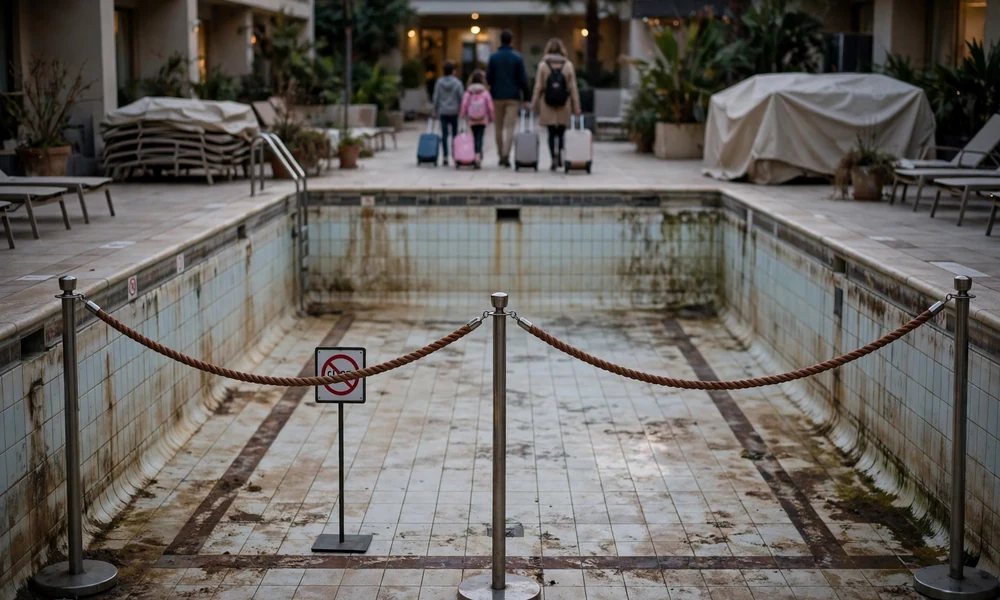
Complain Calmly and in Writing
Go to reception, explain the problem clearly, and ask what the hotel will do. Request it in writing and note the name of the person you spoke to. If the pool was a major reason you chose the hotel, say so.
Ask for practical help first: access to a sister hotel’s pool, a room upgrade, or a discount. Many hotels will offer something if you ask politely and early.
Find an Alternative Place to Swim
Look for nearby public pools, water parks, or beaches while the hotel sorts out the problem. A day trip to a water park often becomes the highlight of the trip anyway. If you booked a beach destination, the sea may be the better option, and a fair hotel vs resort for a beach holiday comparison can help you judge whether your hotel’s location suits a beach-based backup plan.
Know Your Rights
If a hotel advertised a heated pool, a children’s pool, or a lifeguard and none of those exist, you may be entitled to compensation or a partial refund. Keep screenshots of the listing, your booking confirmation, and copies of any emails. If you booked through an agent or platform, raise it with them too, since a documented complaint often leads to a partial refund.
Family Pool Checklist Before You Book
Run through this checklist for every hotel you consider. If a hotel fails more than two items, keep looking.
- Clear water you can see through to the pool floor in recent guest photos.
- A shallow area or separate children’s pool suitable for your youngest child.
- Pool size that fits the number of rooms in the hotel.
- Heated water with a stated temperature between 26 and 30 degrees Celsius.
- A lifeguard on duty during busy hours and clear depth markings.
- Recent reviews that mention the pool positively, with no repeated complaints.
Frequently Asked Questions
What is the worst type of hotel pool for families?
The worst type is a small, deep, unheated pool with no shallow area, no lifeguard, and poor water quality. It is unsafe for young children and usually overcrowded because the hotel has too many guests for one small pool.
How can I tell if a hotel pool is clean?
Check recent guest photos for clear water where you can see the pool floor, and read reviews for mentions of dirty water, strong chemical smells, or skin and ear problems after swimming.
Should I book a hotel mainly for its pool?
Only if you have verified the pool with recent guest photos and reviews. If the pool is the only reason you are booking, confirm the details with the hotel directly first.
What should I do if the hotel pool is closed when I arrive?
Ask reception why it is closed and when it will reopen, and request access to another pool, a discount, or help finding a nearby alternative. Put your complaint in writing, since an advertised pool that is closed is a valid reason to ask for compensation.
Are hotel pools safe for toddlers?
They can be, but only with a proper shallow area, constant adult supervision, and suitable swim aids. Check the depth, look for a separate paddling pool, and stay within arm’s reach of your child at all times.
Is a cold hotel pool a reason to complain?
Yes, if the hotel advertised a heated pool. Water below 24 degrees Celsius is too cold for young children for long, so ask for the actual temperature and raise it as a complaint if the pool was sold as heated.
The Bottom Line
The worst hotel pools for families share the same faults: cloudy water, no shallow area, overcrowding, cold temperatures, and missing safety features. Check recent guest photos, read pool-specific reviews, and ask the hotel direct questions before you book. Do that homework, keep the checklist handy, and have a backup plan ready.