A jump rope is the cheapest piece of fitness equipment a beginner can own, and the easiest one to get wrong. The worst jump ropes for beginners of 2026 fail in ways that leave a new skipper tangled in a cord that never straightens, tripping over a rope that cannot be shortened, or nursing forearms burned out by handles that weigh more than the rope itself. They are too long, too light, or too heavy for learning, with bearings that grind and cables that kink the first time they are folded. Beginners buy them expecting a simple tool that teaches rhythm. What they get is a rope that teaches bad habits, because they start jumping differently to compensate for a rope that will not spin straight. A rope that teaches bad habits is worse than no rope at all, because a beginner who learns to jump wrong must unlearn it all before they can jump right.
The Length a Beginner Cannot Change
Length is the single most common mistake a beginner makes, and the worst ropes make it unfixable. A rope that is too long trips the feet and slaps the floor in front of the body, while a rope that is too short forces the shoulders up and the back into a hunch. Most good ropes can be adjusted, either by sliding the cable through the handle and trimming it, or by moving a small screw or clip. The worst ropes are fixed at one length, sold as one size fits all, which fits almost nobody. A beginner who cannot set the length will spend every session tripping, and a beginner who trips every session will stop skipping within a fortnight.
The test takes ten seconds and no equipment. Stand on the middle of the rope with one foot and pull the handles up beside the body: for most people, the handles should reach somewhere between the armpits and the shoulders. If they reach the chin, the rope is too long. If they barely reach the chest, it is too short. A beginner who cannot set the length will spend every session tripping, and a beginner who trips every session will stop skipping. Our guide to the best jump ropes of 2026 shows how an adjustable rope should be set for a first session.
Thin Cords That Tangle and Whip
A thin, uncoated plastic cord is the most common offender in a beginner’s rope. It arrives coiled tight in its packaging and never straightens out, so it keeps springing back into loops that catch the feet. It tangles if it is looked at the wrong way, and when it does hit the legs it stings far more than a heavier rope should. A beginner who is hit by their own rope every few skips learns to jump with their arms out and their body tense, which is the opposite of good skipping. A beginner who is hit by their own rope every few skips learns to jump with arms out and body tense, which is the opposite of good skipping.
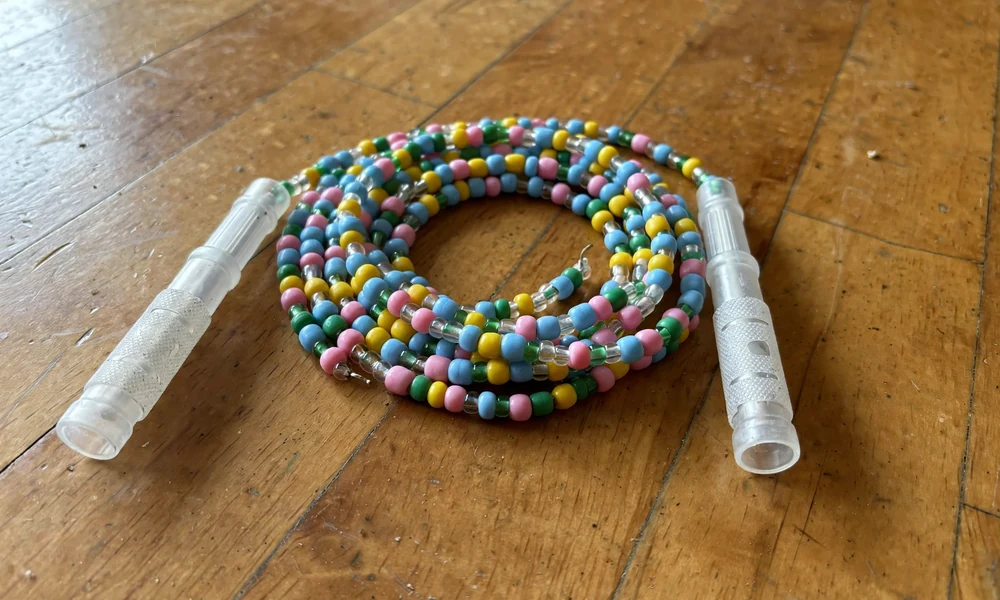
A PVC cord is the friendliest place for a beginner to start: it is light, it holds a decent loop, and it does not hurt much when it catches the legs, which matters while timing is still being learned. A beaded rope is better still for many beginners, because the beads give the rope a little weight and a rhythm that can be heard, which makes timing far easier. A coated steel cable is fast and precise, but it will sting bare skin at speed, and a beginner does not need speed yet. Buy the rope for the skipping being learned, not the skipping imagined.
Handles That Tire the Arms First
Handles should sit comfortably in the palm without forcing the fingers into a tight grip, and the worst ones fail at both ends. Handles that are too long, too thick, or made from slippery plastic make the rope hard to control, and handles that are not fixed properly to the cable loosen and wobble within weeks. Some cheap ropes have handles filled with sand or water for weight, which sounds clever until the seal leaks or the weight shifts from one side to the other. Heavy handles tire the forearms long before the legs do, so a beginner stops because their arms are burning, not because their heart or legs are tired.
Heavy handles are the trap beginners fall into most often. They tire the forearms long before the legs do, so a beginner stops because their arms are burning, not because their heart or legs are tired. Light handles let the rope do the work, while the legs and lungs do the training. Look for handles roughly the length of the palm, with a grip that feels secure when the hands are damp, and twist each handle hard before buying: any wobble at the joint will get worse with every session, and it will cost rhythm long before it breaks completely.
Bearings That Grind From Day One
A rope exists to turn, and the worst ones turn badly from the first skip. Bearings that feel gritty on day one seize up completely after a month, so the cable twists as it turns, the loop wobbles, and the rope arrives at the feet late or early on every turn. A beginner spends the whole session correcting for the rope instead of training the body, and the rhythm that makes skipping joyful never appears. A good rope rotates smoothly on bearings that feel almost silent. A beginner spends the whole session correcting for a rope that will not spin straight, and the rhythm that makes skipping joyful never appears.
Spin the rope before you buy, or spin it the moment it arrives. Hold one handle and flick the cable: it should turn freely for several seconds without catching. Ball bearings give the smoothest, fastest spin and are worth having for regular skipping, while a simple swivel works well enough for occasional use and costs less. If any part of the rope moves in a way it should not, that movement will get worse with every session, and a beginner will blame their own coordination for a mechanical failure.
Too Heavy, Too Light, Too Wrong
Weight is a question of purpose, not quality, and the worst beginner ropes get it backwards. A heavy rope, with a thicker cable or weighted handles, turns skipping into a strength session for the shoulders, but it tires a beginner quickly and punishes mistakes harder when it hits the legs. A rope that is too light gives no feedback at all, so a beginner cannot feel where the rope is in the air and never learns the timing. Most beginners should start light but not weightless, and only add weight once their timing is solid. A speed rope is thin, fast, and unforgiving, built for double unders rather than first skips, and a beginner does not need speed yet.
The right starting rope has enough weight to feel in the hands and hear in the air, without tiring the arms in the first minute. A beaded rope does this well, because the beads add weight without adding speed, and the sound of the beads gives timing feedback a beginner can use. A speed rope does the opposite: it is thin, fast, and unforgiving, built for double unders rather than first skips. Buy the heavy rope later, when the timing is solid and the shoulders are ready for it.
Ropes That Wear Out Where They Touch the Floor
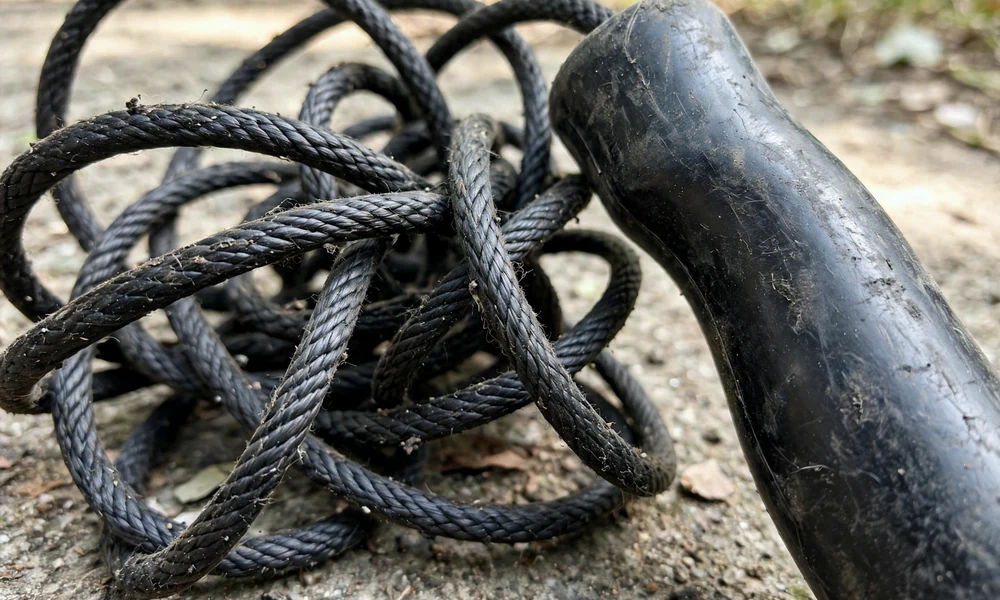
A jump rope spends its life hitting the floor, and the worst ones wear through where they touch it. A bare steel cable on rough concrete wears through its coating in weeks, a PVC cord frays where it slaps tarmac, and a beaded rope loses beads one at a time until the rhythm that made it useful is gone. A rope that wears through in the middle will snap without warning, usually mid-skip, which is startling enough to put a beginner off for weeks. A rope that wears through in the middle will snap without warning, usually mid-skip, which is startling enough to put a beginner off for weeks.

The fix is the surface, not the rope. A mat, a wooden floor, or a rubber gym tile doubles the life of any rope, while rough concrete halves it, and a beginner who skips on a kind surface will keep the same rope for years. Check the cable every few weeks for wear, especially in the middle where it hits the floor, and replace a rope that shows its core through the coating. A rope that is looked after lasts, and a rope that lasts teaches timing instead of teaching frustration.
What to Buy Instead
The ropes worth buying share a short list of features, and none of them is expensive on its own. An adjustable length that can be set to the armpits and checked again after a few weeks. A PVC cord or a beaded rope, forgiving while timing is learned. Light handles that fit the palm and stay grippy when damp, fixed firmly to the cable. Bearings that spin freely and silently, and a weight that can be felt without tiring the arms. If a rope fails any one of those checks, keep looking. A rope that works on day one and still works in a year is worth every penny, and a rope that fails in the first month teaches the same lesson for free.
Fit matters as much as build, and the rope should suit the beginner in front of you rather than the athlete in the photograph. A taller beginner needs a longer rope, a beginner with small hands needs slim handles, and anyone skipping on concrete needs a rope that survives being dropped on a hard floor. Set the length once, store the rope in wide loops rather than a tight coil, and check the length again after a few weeks, because cables settle and stretch. A rope that works on day one and still works in a year is worth every penny. If you want another simple tool for a beginner’s home gym, our guide to the best kettlebells for beginners of 2026 covers the weights that suit a new trainer.
The Bottom Line
The worst jump ropes for beginners of 2026 share a pattern: a length that cannot be changed, a thin cord that tangles and whips, handles that tire the arms, bearings that grind, and a weight that is wrong for learning. Avoid those five failures and you avoid almost every beginner regret. Buy adjustable, buy PVC or beaded, keep the handles light, and set the length to your armpits. Do that, and the cheapest piece of equipment you own may also become the one you use most. And if you want to see how the same thinking applies across the whole category, our comparison of the best vs worst jump ropes of 2026 puts the good and the bad side by side.