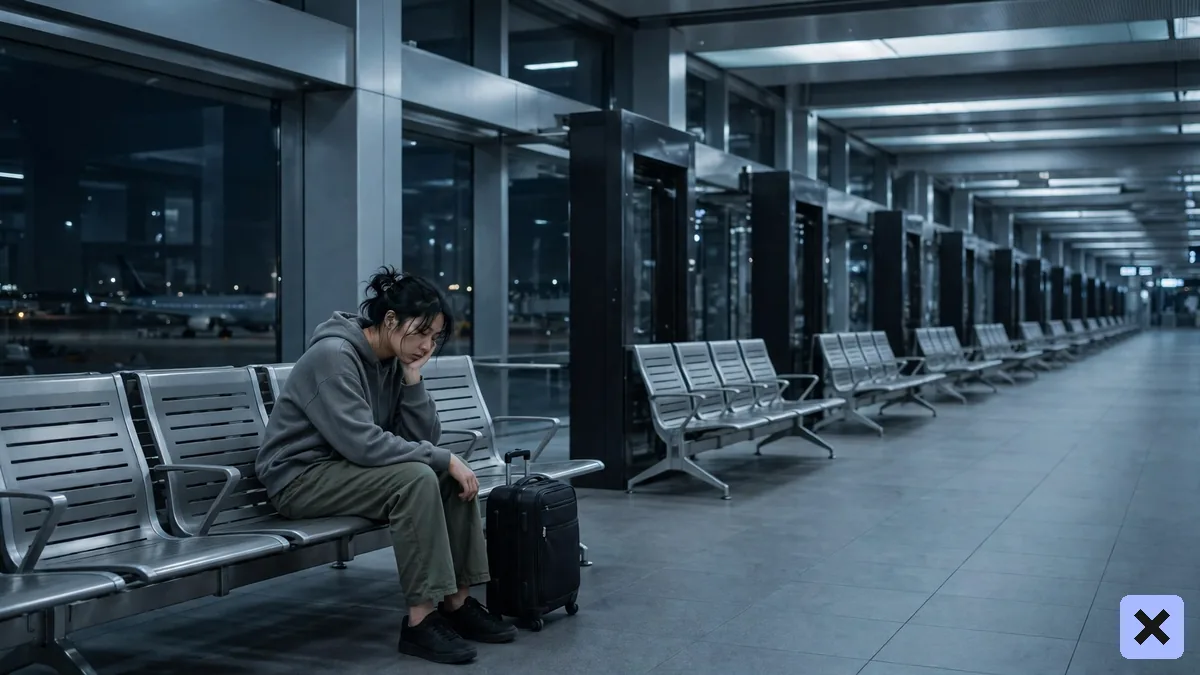
The worst layover experiences share a familiar shape: a journey that was supposed to be a brief pause turns into hours of discomfort and frustration. A layover should be a short, forgettable interval between two flights, yet for many travellers it becomes the part they remember most, and not fondly. When the connection is too tight or the next flight is delayed without explanation, the wait can feel longer than the flights themselves.
What makes these experiences so draining is the way small problems stack up: the board changes without warning, the food outlets close, the seating is designed to stop anyone sleeping, and the staff who could help are nowhere to be found. Add jet lag and a dying phone battery, and a routine stopover becomes a genuine ordeal.
This guide looks at the worst layover experiences travellers report again and again, why they happen, and how to protect yourself next time a cheap fare comes with a long stop — so you are never the person curled up on a terminal floor at 3 a.m.
Key takeaways
- Overnight layovers in airports that close or ban sleeping are the most miserable, so check the airport’s night rules before you book.
- Connections under 60 minutes at large airports are a gamble, and a missed connection can cost you a full day.
- Gate changes, lost luggage, and silent delays cause more misery than the wait itself.
- A survival kit, charged devices, and a backup plan turn a bad layover from a crisis into an inconvenience.
- Choosing a slightly longer, well-timed layover is often better than the shortest possible connection.
What Makes a Layover Go Wrong
Most layovers are harmless: you land, walk to the next gate, wait an hour, and board. The worst layover experiences begin when one assumption behind that plan breaks down — the incoming flight is late, the connection is far away, or the airport works against you.
The Overnight Trap
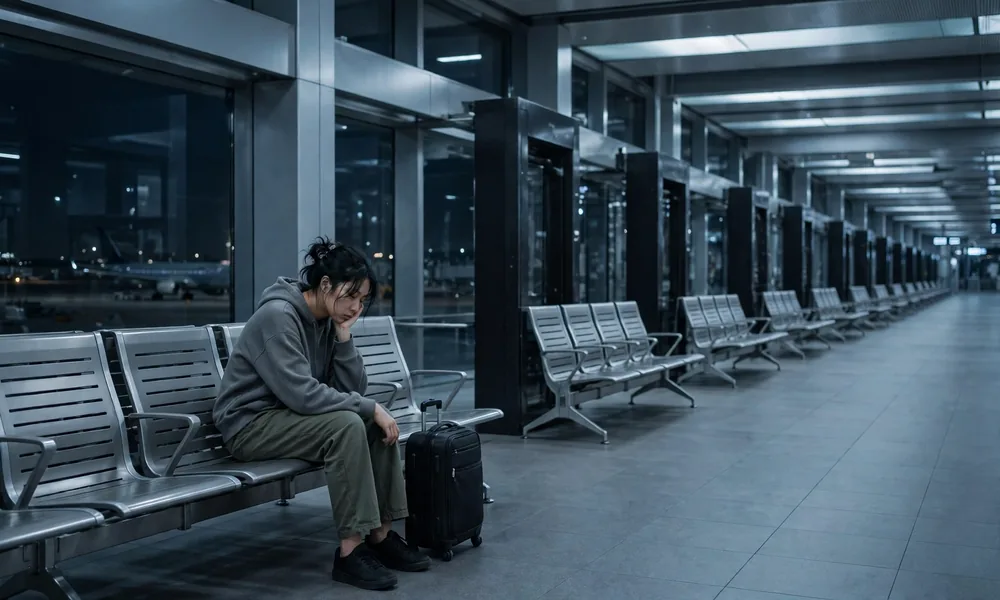
The overnight layover is the classic nightmare: you book a fare arriving at 11 p.m. and departing at 7 a.m., assuming you can simply wait in the terminal. In reality, some airports close overnight and require everyone to leave, while others stay open but switch off the heating and close every shop. Security may move you along if you try to sleep across seats.
Travellers caught in this trap often discover too late that the nearest hotel is a shuttle ride away, fully booked, or far pricier than the money saved on the fare. An eight-hour overnight stop is not a layover, it is an unplanned night without a bed — check before booking whether the airport stays open all night and sleeping is tolerated.
The Impossible Connection
The second classic failure is the connection that looks fine on paper and falls apart in practice. A 45-minute transfer sounds workable until you land at a remote stand, wait twenty minutes for a bus, queue at security again, and find your next gate is a fifteen-minute walk away.
Airlines sell tight connections because the schedule allows them, not because they are comfortable. If your first flight is even slightly late, the plan collapses, and rebooking can mean hours at a service desk or an overnight stay. Under an hour at a big airport is rarely worth the saving.
The Worst Layover Experiences Travellers Describe
Ask frequent travellers about their worst layover experiences and the same stories come up with different airport names attached: poor information, nowhere comfortable to rest, and no one taking responsibility.
Stranded Overnight With Nowhere to Sleep
The most common horror story starts with a cancelled last flight. Passengers are told to wait for rebooking, then that the next flight is tomorrow, then that there are no hotel vouchers because the cancellation was weather-related. The terminal empties, the shops close, and hundreds of people compete for benches designed to stop anyone lying down.
Those who have lived through it describe the same miseries: bright lights, cold air conditioning, announcements every few minutes, and patrols waking anyone who dozes off. The lucky ones find a quiet corner near a charging point; the unlucky ones sit upright all night.
The Sprint Across the Airport
Then there is the sprint. Your flight lands late, the board shows your connection boarding now, and the gate is at the far end of the terminal. You run with a carry-on bouncing behind you, only to arrive as the doors close. Some make it, breathless, to find their seat given away; others watch their plane push back.
Running through an airport after a long flight, possibly in an unfamiliar country, is stressful enough. The worst versions add a bus transfer between terminals, a passport queue, or a security line that refuses late passengers. Experienced travellers treat a tight connection as a risk, not a convenience.
The Gate Change Nobody Announced
A quieter but equally infuriating experience is the silent gate change. You settle at the gate on your boarding pass, put your headphones on, and look up an hour later to find the flight has left from the other side of the airport. The announcement was made once, in a language you do not speak, or the board changed while you bought coffee.
Departure information changes constantly in noisy airports. Travellers caught out this way learn to check the board every twenty minutes and sit where they can see a screen. A gate change is a small event for the airline, but for the passenger who misses a flight, the consequences can last a full day.
The Lost Bag That Never Caught Up
On a short layover, your bag has to make the same tight connection you do, and sometimes it does not. The worst version is the bag that misses the transfer and takes days to catch up, while you wait abroad without clothes, toiletries, or medication. Your luggage choices that make travel harder can turn this from an annoyance into a genuine problem, especially if everything essential is checked.
Those who have been through it recommend the same precautions: keep medication, a change of clothes, and chargers in your carry-on, and photograph your bag first. A lost bag on a direct flight is bad enough; on a journey with two connections it can take a week to find its way home.
Why Some Airports Make Layovers Worse
Not all airports treat connecting passengers equally. Some are built around comfortable transfers, with short walks and clear signs; others seem designed to punish anyone who stops. The difference comes down to a few factors most travellers never check before booking.
| Airport factor | What good looks like | What bad looks like |
|---|---|---|
| Opening hours | Open 24 hours with staffed help desks | Closes overnight, passengers forced outside |
| Seating | Benches without armrests, quiet rest zones | Seats designed to prevent lying down |
| Food and water | Outlets open late, free drinking water | Everything closed after 9 p.m. |
| Connection layout | One terminal, short walks, clear signs | Multiple terminals, buses, repeat security |
| Information | Live boards, announcements, helpful staff | Silent gate changes, conflicting boards |
Before booking a flight with a long stop, a few minutes of research pays off: check the airport’s overnight rules, recent traveller reviews, and whether you will need to change terminals. The worst airport experiences travellers report often involve exactly these factors, and they are almost always avoidable with a different routing.
How to Survive a Bad Layover
Even with careful planning, a bad layover can still happen: weather, technical faults, and delays are outside your control. What is in your control is how prepared you are — and preparation is what separates a miserable night from a merely boring one.
Before You Book
Start with the connection: at least ninety minutes at a large hub, two hours if you are changing terminals, clearing immigration, or travelling with children. Check whether the airport stays open overnight and sleeping is allowed. A ticket that saves forty pounds but adds a six-hour overnight wait is rarely a bargain once you count the food, discomfort, and lost day.
Consider the airline as well: some carriers rebook stranded passengers quickly and offer hotel vouchers, while others leave you to sort it out alone. Reading reviews of how an airline handles delays is dull, but it matters most on the night everything goes wrong. Travellers who fly on budget airlines that skimp on comfort often find the same cost-cutting in disruption handling, with long queues and little support.
At the Airport
Once in the terminal, act early. If your flight is delayed, check the connection immediately rather than waiting for an announcement, and speak to staff before the queue forms. Keep your phone charged, snacks in your bag, and know the quieter parts of the terminal.
If an overnight wait becomes unavoidable, look for a lounge day pass, often cheaper than a hotel and including food, showers, and a seat. Book a transit hotel early if the airport has one, because rooms sell out fast when flights are cancelled. If stranded, document everything: photograph the departure board, keep boarding passes, and save receipts for a compensation claim.
Layover Survival Checklist
Run through this list every time you book a flight with a stop; it takes two minutes and can save you a night of misery.
- Allow at least 90 minutes at a large hub, two hours if changing terminals.
- Confirm the airport stays open overnight and lets passengers wait inside.
- Pack a survival kit in your carry-on: charger, snacks, water bottle, neck pillow, change of clothes.
- Keep medication, documents, and valuables with you, never checked.
- Download offline maps and the airline app, and screenshot the booking.
- Have a backup plan: the next flight, the nearest hotel, and how to claim compensation.
Frequently Asked Questions
What is the worst layover length?
There is no single worst length, but overnight stops of six to ten hours in airports that close or ban sleeping are the most miserable. A one-hour connection is stressful; a long daytime layover can be pleasant.
Can I sleep in the airport during a layover?
It depends on the airport. Some welcome sleeping passengers and provide rest zones, while others close overnight or move people along. Check the rules before you book, and keep a hotel backup for any overnight stop.
What happens if I miss my connection?
The airline should rebook you on the next flight if both flights are on one ticket. Ask staff immediately and check the airline app too. If the next flight is the following day, ask about hotel vouchers and meal allowances.
Should I book a tight connection to save money?
Usually not. A short connection saves time only when everything goes perfectly, and one delay can cost you a day. A longer connection, or a slightly pricier direct flight, is often the better deal once the risk is counted.
Is it better to leave the airport during a long layover?
If the layover is six hours or more, you have any visa needed, and the city is close, leaving the airport can turn a dull wait into a bonus trip. Allow plenty of time to return and reach your gate.
What should I pack for a long layover?
Pack light but smart: a portable charger, headphones, snacks, a water bottle, a neck pillow, a light layer, and a change of clothes. Keep medication and documents in your carry-on.
The Bottom Line
The worst layover experiences are rarely caused by one dramatic event — a tight connection, a closed airport, a silent gate change, or a lost bag, arriving at the worst possible moment, stacks into a night you will not forget. Most of it is avoidable: check the connection time, check the airport, pack a small survival kit, and treat a suspiciously cheap fare with a long overnight stop as what it is — a bargain that charges you in comfort instead of money. Book the kinder routing, and the layover goes back to being the forgettable pause it was meant to be.