
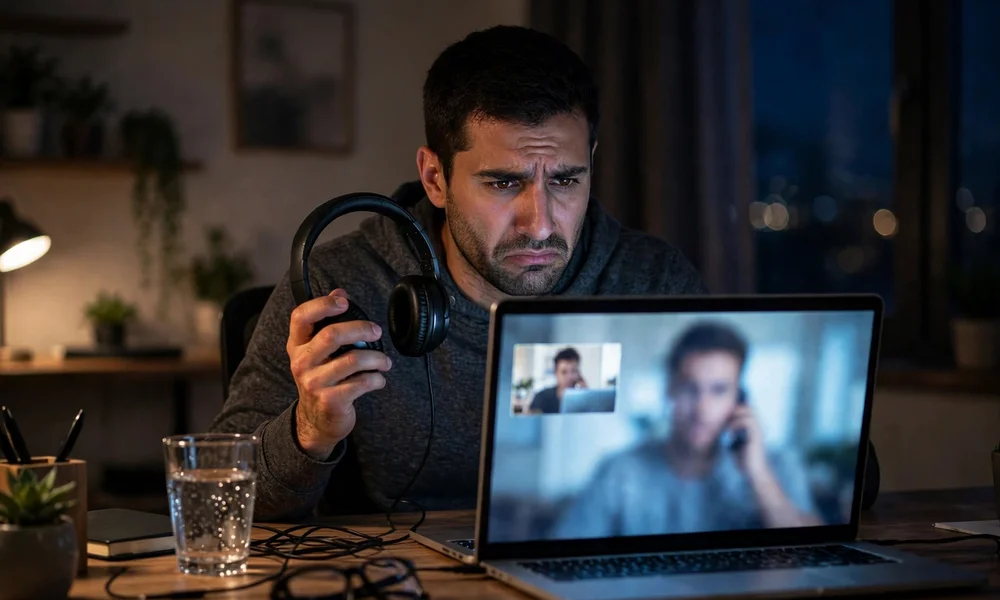
The worst microphones 2026 has to offer do not sound like bad products when you first plug them in. They arrive in tidy boxes, promise studio sound, noise cancelling and crystal-clear calls, and cost just little enough to feel like a bargain. Then the first meeting starts, and your voice sounds thin and far away, every keyboard tap comes through like a drum, and someone asks you to repeat yourself for the third time.
That is the real problem with a bad microphone. It does not fail loudly. It fails in small ways, call after call, recording after recording, until sounding unprofessional becomes your normal.
This guide rounds up the worst microphone types of 2026, the ones that disappoint in every setting: work calls, podcasting, streaming, teaching and online interviews. You will learn the faults that matter, the marketing claims to ignore, and the simple tests that expose a bad microphone before the return window closes.
Key Takeaways
- A big specification number means nothing without a decent capsule and sensible tuning, and a cheap microphone that claims studio sound often sounds worse than a plain headset.
- Background noise is the biggest divide in 2026: bad microphones pick up keyboards, fans and traffic, while good ones keep the focus on your voice.
- Thin, tinny sound, constant hiss and plosive pops cause more daily complaints than any other microphone fault.
- Fake features such as AI noise removal only disguise a poor microphone; they never fix one.
- Record a short test in your real room before an important call, and return the microphone quickly if it fails.
Why the Worst Microphones of 2026 Still Sell
Bad microphones survive because the things that make a microphone good are invisible on a shelf. A buyer can see the price and the claims printed on the box, but cannot hear the capsule, the tuning or the way the microphone handles a noisy room. So the cheapest microphones compete on words that are easy to print and hard to check.
The second reason is that most people buy a microphone once, in a hurry, for a specific event: a job interview, a new remote role, a podcast that starts next week. There is no time to test three microphones side by side, so the first one that looks right gets ordered. By the time the faults show up, the box is gone and the return feels like more trouble than it is worth. Bad sound is also easy to blame on something else, so the microphone escapes suspicion for weeks. A bad camera is obvious at a glance, as our guide to the worst webcams of 2026 shows, but a bad microphone hides behind every other part of the setup.
The Worst Microphone Types of 2026
The worst microphones of 2026 fall into a handful of recognisable types. They are not all cheap, but they all cut corners in the same places: the capsule, the tuning, the mount, the cable or the software. Once you know the types, you can spot one in a review, a specification sheet or a five-minute test.

Tiny Tinny USB Desk Microphones
The tiny USB desk microphone is the most common disappointment of 2026. It is a small plastic cylinder on a flimsy tripod, sold for the price of a lunch, and it sounds exactly like it looks. Voices come out thin and nasal, with no warmth in the low end and a harsh edge on every sibilant sound.
These microphones also have the worst signal-to-noise ratio of any type on this list. Turn the volume up and a constant hiss rises with it; turn it down and you sound far away. A microphone shorter than your thumb cannot capture the full range of a human voice.
Laptop Built-In Microphones
Every laptop has a built-in microphone, and in 2026 most of them are still poor. The microphone sits beside the camera, inches from the cooling fan and the keyboard, and it hears both far better than it hears you.
Built-in microphones also use aggressive automatic gain. When you pause, the microphone turns itself up and the room noise rushes in. When you speak loudly, it turns itself down and clips the start of your words. Even a modest headset sounds dramatically better, because the microphone sits close to your mouth and far from the fan.
Cheap Lavalier Microphones
A lavalier microphone should be the simplest upgrade of all: a tiny microphone clipped to your shirt, close to your mouth, out of shot. The cheap ones sold in multi-packs fail at every step. The cable is thin and microphonic, so every brush against your clothes becomes a loud rustle in the recording.
The sound itself is usually muffled and boomy, because the tiny capsule sits against fabric and picks up chest resonance instead of clear speech. Many cheap lavaliers also ship with the wrong connector or a flaky adapter, so they work on one phone and not another, or crackle whenever the plug moves.
Fake Condenser Podcast Microphones
The fake condenser microphone looks the part and that is the trap. It is big, silver, mounted in a shock mount, with a pop filter and a boom arm, and it promises broadcast sound for a fraction of the price of a real studio microphone.
The sound gives it away within seconds. Real condenser microphones are sensitive and detailed; these impostors are dull and noisy, with a hollow midrange and a hiss that sits under every word. They also pick up every sound in the room. A podcaster who buys one ends up with worse audio than a simple dynamic microphone would have given them.

Headset Boom Microphones That Hear Everything
A headset microphone should solve the distance problem by sitting right next to your mouth, and the best ones do. The worst ones ruin that advantage with a pickup pattern so wide that it hears the whole room. Your keyboard, the television next door and the dog in the hallway all arrive at full volume.
Many of these headsets also suffer from plosives. Without a proper foam cover, every p and b lands on the microphone like a gust of wind, and the covers that do ship are often thin, loose or missing entirely after a week. The pattern is familiar from other audio gear. Just as the worst noise-cancelling headphones of 2026 promise silence and deliver a faint hiss, these headsets promise clear calls and deliver a live feed of your entire household.
Wireless Microphones With Constant Dropouts
Wireless microphones are wonderful when they work and miserable when they do not, and the cheap ones of 2026 do not work reliably. The connection drops for a fraction of a second, just long enough to swallow a word, then returns as if nothing happened.
Battery life is the second fault. Many budget wireless microphones quote eight hours and deliver three, and the battery indicator jumps from half full to empty with no warning. Some models forget their receiver after every use or need an app account before they will work at all. A wireless microphone that needs troubleshooting before every use has already failed.
How the Worst Microphones Compare
The table below sums up the six types, the fault that defines each one, and who suffers most from it.
| Microphone type | Main fault | Who suffers most | Easy to spot? |
|---|---|---|---|
| Tiny USB desk microphone | Thin, tinny sound with constant hiss | Remote workers on calls | Yes, by size and price |
| Laptop built-in microphone | Fan and keyboard noise dominate | Anyone working from a laptop | Yes, record a test call |
| Cheap lavalier microphone | Rustle, rumble and muffled speech | Video creators and teachers | Yes, after one outdoor test |
| Fake condenser microphone | Dull sound, hiss and handling noise | New podcasters and streamers | Hard, until you hear it |
| Headset boom microphone | Picks up the whole room | Call centre and office workers | Yes, in a noisy room |
| Wireless microphone | Dropouts, short battery and latency | Streamers and interviewers | Only after longer use |
How to Test a Microphone Before You Keep It
Testing a microphone takes ten minutes and saves weeks of bad audio. Record yourself reading a paragraph in your normal room, at your normal desk, with the microphone in the position you will actually use. Do not test it in a silent room at midnight. Type while you speak and let the fan run, as in normal use.
Then listen back on headphones and check for hiss, thinness, plosives on p and b sounds, and background noise that competes with your words. Finally, test it on a real call with a friend who will be honest with you. A proper video setup pairs decent audio with decent video, and our guide to the best webcams of 2026 covers the camera half of that pairing. If your friend says you sound far away or hard to follow, believe them and send the microphone back.
Checklist: Avoiding the Worst Microphones
- Record a test in your real room before the return window closes, with typing and background noise included.
- Check the capsule and pickup pattern, not just the words studio or broadcast on the box.
- Make sure the microphone sits close to your mouth and stays in position without drooping or wobbling.
- Listen for hiss, thin sound and plosives on headphones, and reject any microphone that fails two of the three.
- Confirm the connector, driver and power requirements work with your computer or phone before you rely on it.
- Keep the box and receipt until you have used the microphone on three real calls.
Frequently Asked Questions
What is the worst type of microphone to buy in 2026?
The tiny USB desk microphone is the worst buy for most people. It sounds thin, hisses constantly and sits too far from your mouth to capture your voice properly. A basic headset sounds better for the same money.
Why does my microphone sound tinny?
A tinny sound usually means the microphone capsule is too small to capture the low frequencies in your voice, or the microphone is too far away. Move it closer; if it still sounds hollow, the capsule is the problem.
Can software fix a bad microphone?
Software can reduce steady background noise and lift a quiet voice, but it cannot add warmth or detail that the microphone never captured. It cannot repair dropouts, clipping or plosives. A bad microphone with good software still sounds like a bad microphone.
Are expensive microphones always better?
No. Some of the worst microphones on this list cost more than they should, because the money went into the casing, the accessories and the packaging rather than the capsule. Price is a weak guide; a short test recording tells you far more than a price tag ever will.
Is a headset microphone good enough for podcasting?
For a casual podcast or a remote interview it can be, provided the boom stays close to your mouth and the headset has a proper foam cover. For a show where audio quality is the product, a dedicated dynamic microphone on a boom arm is a better choice.
How do I know if my microphone is picking up too much background noise?
Record thirty seconds of yourself speaking while you type, then listen back on headphones. If you can hear the keyboard, the fan or the traffic as clearly as your voice, the microphone is picking up too much. Move it closer, turn the gain down, or choose a microphone with a tighter pickup pattern.
The Bottom Line
The worst microphones 2026 has to offer all make the same promise and break it the same way: they look ready for serious work and sound like an afterthought. The fix is not to spend more money, but to test before you commit and judge a microphone by what it records in your room rather than what the box claims. Do that, and the microphone you keep will be the one that lets people hear you, not the one that makes them work to.


