The worst sports cars for everyday driving are not slow, ugly, or badly built. Most are fast, beautiful, and brilliant on an open road. The problem starts on Monday morning, when the same car must crawl through traffic, climb a steep driveway, carry a weekly shop, and park in a tight space. A sports car that feels alive on a country lane can feel stubborn and impractical before you have even reached the office.
Everyday driving is a different test from a weekend drive. It rewards comfort, visibility, space, and forgiveness, and it punishes stiff suspension, low ground clearance, heavy controls, and cabins designed for a photoshoot rather than a school run. The worst sports cars for everyday driving fail this test in small ways at first, then in larger ones, until the novelty wears off and the compromises become the whole experience.
This guide looks at the traits that make a sports car hard to live with, rather than naming one model to avoid. The same faults appear across many badges and price ranges, from affordable coupes to expensive supercars. If you can spot them on a test drive, you can save yourself months of regret and a car that spends more time parked than driven.
Key takeaways
- Low ground clearance turns speed bumps, steep driveways, and car park ramps into daily hazards.
- Stiff suspension and loud cabins make short trips tiring and long commutes genuinely unpleasant.
- Poor rear visibility and wide blind spots make parking, merging, and reversing harder than they should be.
- Tiny boots, cramped cabins, and awkward seats limit what the car can carry and who can ride in it.
- High running costs, fragile parts, and thirsty engines hurt most when the car is used every single day.
Why Everyday Driving Exposes the Worst Sports Cars
A sports car is usually judged on a short, exciting drive. The dealer route is smooth, the roads are clear, and the engine sounds wonderful. Everyday driving is the opposite: repetitive, slow, and full of obstacles that a performance car was never designed to handle gracefully.
Ground Clearance and the Speed Bump Problem
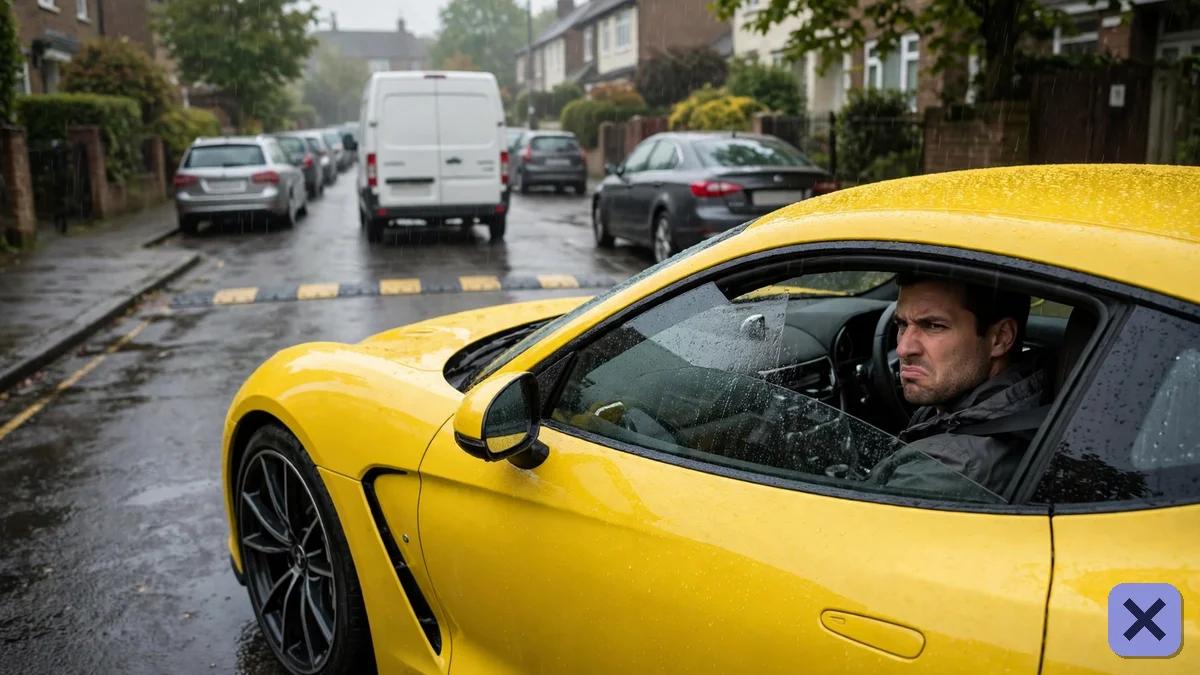
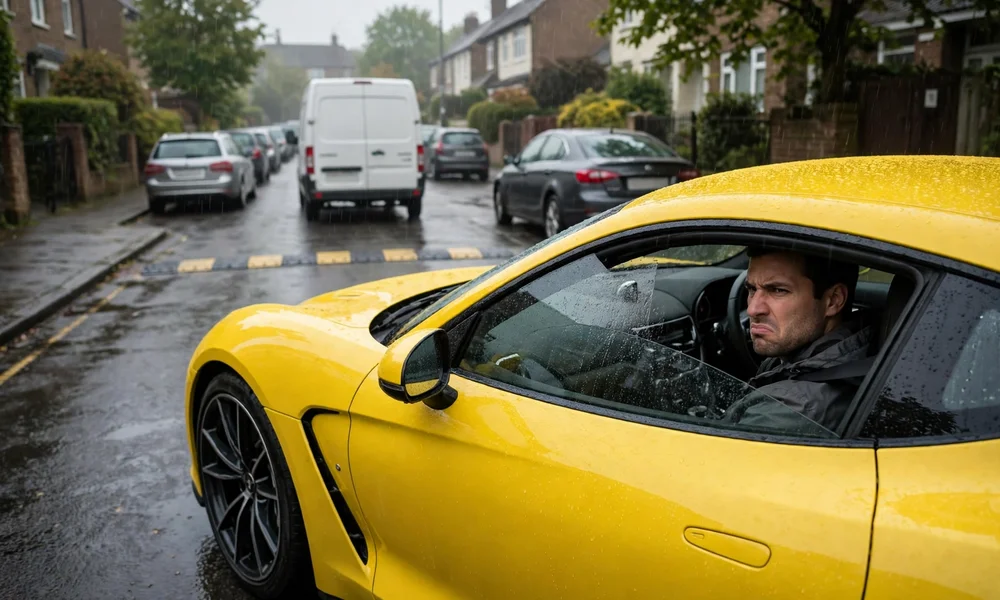
Low ground clearance is the most common everyday fault in a sports car, and the easiest to underestimate. A car that sits close to the road looks dramatic and handles well at speed, but it also scrapes its nose on speed bumps, catches its front splitter on steep driveways, and grounds out on the ramps of multi-storey car parks. Every scrape is a small shock, and over time the damage adds up in repair bills and lost confidence.
Some cars offer a front lift system that raises the nose at low speed, but many do not, and the ones that do often charge a large amount for it. Without it, the driver must approach every bump at an angle and crawl over every ramp. That is obstacle management, not driving, and it gets old quickly.
Visibility, Blind Spots, and Parking Stress
Good visibility makes everyday driving calm, and bad visibility makes it stressful. Many sports cars have thick pillars, tiny rear windows, high rear decks, and low seating positions that leave the driver guessing about what is behind them. Reversing into a tight space becomes a careful operation, and merging means leaning forward and hoping the blind spot is clear. That is the reality of living with a sports car every day, and it is worth reading about in the reality of living with a sports car every day before you commit to one.
Parking sensors and reversing cameras help, but they do not fix a fundamentally awkward shape. A long bonnet makes it hard to judge the front of the car, wide hips make narrow spaces feel narrower, and low doors make it hard to get in and out in a tight bay.
The Comfort Problem: Ride, Noise, and Seats
Comfort is the quality that separates a sports car you love from one you avoid driving. A firm ride feels connected and precise on a smooth road, but on a potholed street it feels harsh and restless. The worst sports cars for everyday driving transmit every bump and drain cover straight into the cabin, and after a week of commuting the driver starts to dread the journey.
Stiff Suspension on Real Roads
Sports suspension is tuned for flat, smooth surfaces, which are rare on everyday routes. On real roads, a stiff setup skips over bumps instead of absorbing them, and the car can feel nervous on wet or uneven surfaces. Some cars offer adaptive dampers with a softer comfort mode, which helps a great deal, but many cheaper sports cars have a single firm setting and no way to soften it.
The test is simple: drive the car over the worst road you use regularly, not the best one. If the ride feels busy and unsettled at normal speeds, it will feel worse when you are tired, when it is raining, and when you have a passenger along. A good everyday sports car should feel composed on a bad road, not just on a good one.
Seats That Hurt After Forty Minutes
Deep bucket seats look wonderful and hold you firmly through corners, but they can be a poor fit for everyday use. Narrow bolsters squeeze wider drivers, fixed headrests sit at the wrong height, and a low position makes it hard to climb in and out. A seat that feels supportive for half an hour can feel punishing after two hours.
Practical Problems: Space, Passengers, and Daily Jobs
A sports car does not need to be a family estate, but it does need to handle the ordinary jobs of daily life. The worst sports cars for everyday driving fail at these jobs in ways that seem small until they happen every week: a boot that holds a weekend bag but not a weekly shop, a cabin with nowhere to put a phone or a coat, and rear seats that are decorative rather than usable.
Tiny Boots and Awkward Storage
Boot space is often an afterthought in a sports car, and it shows. Some cars have a shallow boot that will take a soft bag but not a hard suitcase, while others split the space between a small front boot and a small rear boot. Mid-engined cars are often the worst offenders, with storage that is clever on paper and frustrating in practice.
When the Car Only Works for One Person
Two-seat sports cars are honest about what they are, and that honesty is part of their charm. The trouble starts with cars that promise more than they deliver, with rear seats that exist in the brochure but not in real life. A cramped back seat is worse than no back seat at all, because it creates an expectation the car cannot meet, and every journey becomes a negotiation about who sits where.
The same logic applies to longer journeys. A car that is tiring after an hour, that needs frequent fuel stops, and that leaves no room for luggage will turn a simple trip into a chore. It is worth thinking about how the car handles the journeys you actually make, because the worst road trip mistakes often start with choosing the wrong car, as covered in the worst road trip mistakes to avoid on long drives.
Running Costs That Hurt More Every Day
Running costs are easy to ignore when a car is a weekend toy and hard to ignore when it is driven every day. The worst sports cars for everyday driving combine thirsty engines, expensive tyres, heavy brake wear, and fragile parts that are costly to replace. A car that is affordable to buy can still be expensive to own, and the bills arrive more often when the mileage climbs.
| Everyday cost | What goes wrong | Why it hurts daily |
|---|---|---|
| Fuel | Thirsty engine, small tank | Frequent stops and high weekly spend |
| Tyres | Wide, low-profile, fast-wearing | Expensive replacements every few months |
| Brakes | Large discs and pads wear quickly | Costly servicing in stop-start traffic |
| Repairs | Low splitter and fragile bodywork | Scrapes and cracks need frequent fixes |
| Insurance | High group, theft risk, costly parts | Premiums stay high all year round |
Depreciation adds another layer. Sports cars that are hard to live with can be hard to sell, because the next buyer will face the same problems. A car with a reputation for punishing daily use, high costs, and fragile parts will attract fewer buyers and lower offers. That is why it pays to research running costs first, and to avoid the common car-buying mistakes that turn an exciting purchase into an expensive lesson, including the common car-buying mistakes to avoid before you sign.
The Worst Traits to Watch For on a Test Drive
A proper test drive is the best defence against buying the wrong sports car. The trick is to drive it the way you will actually use it, on the roads you actually use, for long enough to feel the faults. A short drive on smooth roads will flatter almost any car. A longer drive through traffic, over speed bumps, and into a tight parking space will tell you the truth.
- Does the front scrape on speed bumps, steep driveways, or car park ramps?
- Can you see clearly behind you, and are the blind spots manageable without constant strain?
- Does the ride stay composed on rough roads, or does it feel harsh and restless?
- Can you sit comfortably for an hour, get in and out easily, and adjust the seat properly?
- Does your usual luggage, shopping, or equipment fit in the boot without a struggle?
- Are the controls, gearbox, and clutch easy in slow traffic, or tiring after twenty minutes?
Frequently Asked Questions
Can any sports car work for everyday driving?
Yes, some can. The best everyday sports cars combine reasonable ground clearance, a comfortable ride mode, good visibility, and enough boot space for daily life. They are usually the softer, more practical models in a range, rather than the hardest, fastest versions.
Is low ground clearance really a deal breaker?
It depends on where you drive. If your roads are smooth, your driveway is flat, and you rarely use multi-storey car parks, it may be manageable. If you face speed bumps and steep ramps daily, it becomes a constant worry and a source of repair bills.
Are older sports cars worse for daily use?
Often, yes. Older sports cars tend to have harsher rides, fewer driver aids, worse visibility, and higher maintenance needs. They can also lack reversing cameras, parking sensors, and comfortable seats, though a well-maintained example can still be enjoyable.
What matters more: power or comfort?
For everyday driving, comfort matters more. You will use the ride, the seats, the visibility, and the boot every single day, while you will only use full power occasionally. A slightly slower car that is comfortable and easy to live with brings more pleasure over a year.
Should I buy a sports car as my only car?
Only if it passes the everyday test honestly. If it handles your commute, your shopping, your passengers, and your parking without constant compromise, it can work as an only car. If it fails several of those tests, it is better as a second car, or not at all.
How do I avoid buying the wrong one?
Take a long test drive on your own roads, bring your luggage, sit in the car for a proper length of time, and check the running costs before you commit. Compare several cars, ask owners about daily life with them, and walk away from any car that feels like hard work.
The Bottom Line
The worst sports cars for everyday driving demand constant compromise for a thrill you only feel occasionally. They scrape, they jolt, they tire you out, and they leave no room for ordinary life. Choose the car that makes your daily drive easier, not harder, and the excitement will still be there when the road opens up.