Takeaway food feels like the cheap option. There is no shopping, no cooking and no washing up, and the price on the menu looks reasonable enough. Yet the worst takeaway mistakes can turn a quick dinner into one of the most expensive ways to eat, without you ever noticing where the money went.
The problem is rarely one big splurge. It is the delivery fee here, the extra side there, and the leftovers that sit in the fridge until they have to be thrown away. Each mistake looks small on its own, but added together over a month they can easily cost as much as a weekly shop.
This guide covers the takeaway habits that waste the most money, from ordering decisions and menu traps to delivery fees and food waste. Every mistake comes with a simple fix, so you can keep the convenience without paying a premium for it.
Key takeaways
- Small fees, minimum-order top-ups and tips add up to far more than the price of the food itself.
- Ordering when you are hungry, tired or in a rush leads to bigger orders and more waste.
- Set menus only save money if you would have ordered everything in them anyway.
- Cold, late or wrong orders cost double when you reorder instead of asking for a fix.
- Leftovers are only a saving if they are stored properly and actually eaten the next day.
The Ordering Mistakes That Add Up Fast
Most takeaway waste starts before the food is even cooked. How, when and how much you order shapes the final bill far more than the price of any single dish.
Ordering When You Are Starving
Hunger is the worst ordering companion. When you are already starving, every dish looks essential, portion sizes seem smaller than they are, and adding one more side feels harmless. The result is an order built for three people when only one or two are eating.
Decide what you want before you open the app, and pause ten minutes between choosing and confirming. A short wait settles the urgent hunger and often cuts a side dish or dessert from the order.
Ignoring the Total Until Checkout
Menu prices are designed to look friendly. The real cost only appears at checkout, where delivery fees, service charges, packaging fees and tips are added one by one. People who never look at the final total often pay twenty or thirty percent more than the menu suggested.
Check the full total before you pay, and compare it with the menu price. If the gap surprises you, try a different restaurant, collect the food yourself, or order directly from the restaurant instead of through an app. The comparison takes thirty seconds and can save several pounds on every order.
The Menu Traps That Push Your Bill Higher
Takeaway menus are built to encourage spending. The layout, the deals and the suggested extras all nudge you towards a bigger order than you planned.
The Set Menu That Is Not a Saving
Set menus and meal deals look like excellent value because the headline price is lower than buying each item separately. But the saving only exists if you actually wanted everything in the deal. A set menu that includes a starter you do not like and a dessert nobody eats is not a bargain at any price.
Before choosing a deal, add up the cost of only the items you genuinely want. If the deal is still cheaper, take it. If the individual items cost less, skip the deal and order exactly what you want. The same logic applies to buy-one-get-one offers: a second dish you throw away is not free, it is waste.
The Upsell at Every Step
Would you like extra cheese? A larger size for one pound more? A drink and a side for three pounds? Each suggestion sounds trivial, and that is the point. Three small upsells can add five or six pounds to an order, and they rarely improve the meal itself.
Decide your order in advance and treat every add-on as a separate decision. Ask yourself whether you would walk into a shop and buy that item on its own. If the answer is no, skip it. Restaurants know that menus that try to do too much make choosing harder, and that overload makes it easier to add things you never wanted.
The Delivery Habits That Quietly Drain Your Budget
Delivery is the convenience you are paying for, but how you use it can double its cost. Timing, frequency and platform choice all make a big difference.
Ordering One Meal at a Time, Every Time
Ordering a single meal several times a week means paying the delivery fee several times a week. The fee might only be two or three pounds, but across a month it adds up to the price of several full meals. Frequent small orders are one of the most expensive takeaway habits there is.
Batching helps. Order a larger meal that covers two nights, or order for the whole household in one go, so one fee covers more food. Planning two takeaway nights a week instead of four, and cooking simple meals on the other nights, cuts the delivery bill in half while the food stays just as enjoyable.
Sticking to One App Out of Habit
Loyalty to a single delivery app is convenient, but it is rarely the cheapest option. Prices, fees and promotions vary between platforms, and the same restaurant can charge different delivery fees on different apps. Sticking to one app out of habit means you never see the cheaper option.
Before ordering, compare the total on one other platform, or check whether the restaurant delivers directly. Direct orders often skip the platform commission, which can mean lower prices or free delivery.
The Food Choices That Waste More Than Money
Some takeaway mistakes waste more than money. They waste good ingredients, produce disappointing meals and leave you ordering again an hour later.
Choosing Dishes That Travel Badly
Not every dish survives a twenty-minute journey in a box. Fried food goes soggy, salads wilt, noodles clump together and anything with a crisp topping loses its texture. Ordering the wrong dish for delivery means paying full price for a meal that arrives at half its quality.
Choose dishes that travel well. Saucy dishes, curries, stews and rice bowls usually arrive in good shape, while anything that depends on crispness is a gamble. If you really want the crispy dish, collect it yourself and save the delivery fee as well.
Ordering the Same Thing Every Time
Sticking to one safe order feels efficient, but it has a hidden cost. You miss cheaper dishes on the same menu, you never discover the restaurant’s better-value options, and the meal becomes boring enough that you start adding extras to make it interesting.
Try one new dish each time you order from a familiar place. Menus often hide their best value in less popular sections, and a cheaper main you enjoy is worth more than an expensive favourite you are tired of. Learning what genuinely good value looks like on a plate helps you spot it anywhere, whether you are ordering in or eating out.
The Storage and Leftover Mistakes
Leftovers are the great promise of takeaway: order a little extra, eat it tomorrow, and get two meals for the price of one. That only works if the food survives the night and you actually eat it.
Leaving Food in the Delivery Box Overnight
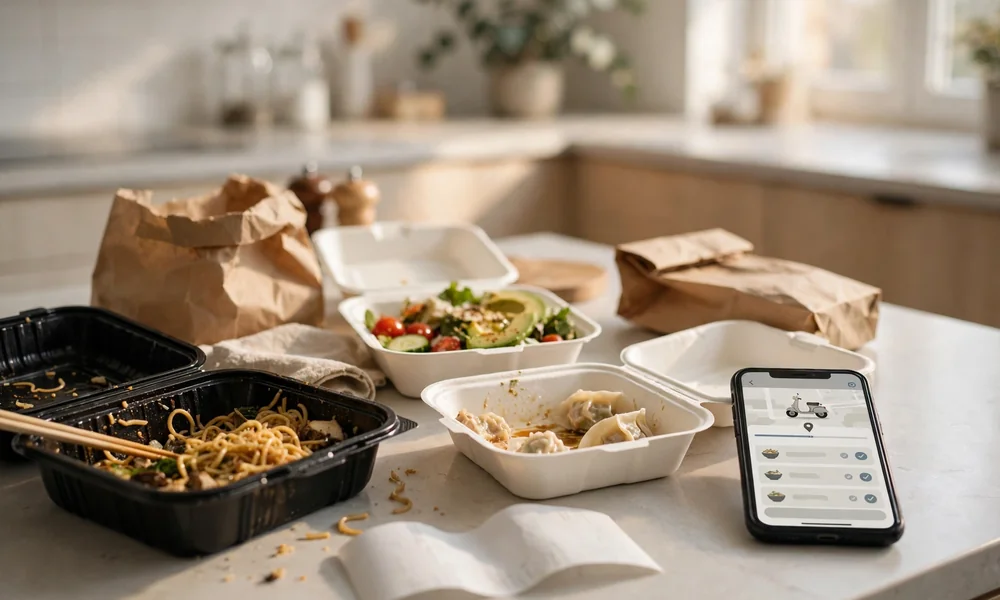
Food left in its delivery container in the fridge dries out, absorbs smells and goes off faster. Cardboard and thin plastic are not designed for storage, and a meal that would have been fine in a sealed container can be inedible by the next evening.
Transfer leftovers into sealed containers as soon as you finish eating, while the food is still fresh. It takes two minutes, and it is the difference between a free lunch tomorrow and food in the bin.
Reheating Food the Wrong Way
Badly reheated leftovers are a quiet form of waste. Microwaving everything into a soggy mess, or overheating delicate dishes until they are dry and tough, makes food nobody wants to finish.
Reheat with a little care. Add a splash of water to rice and noodles before microwaving, use the oven for anything that should stay crisp, and reheat sauces gently rather than blasting them. Good reheating is easier when your kitchen is organised, which is one reason kitchen gadgets that eat up counter space cause more trouble than they solve.
| Mistake | What it costs you | The simple fix |
|---|---|---|
| Ordering while starving | Extra sides and dishes you do not need | Decide your order before opening the app |
| Ignoring the checkout total | Fees add 20 to 30 percent to the menu price | Check the full total and compare platforms |
| Choosing set menus blindly | Paying for items nobody eats | Price the items you want first, then compare |
| Small orders, several times a week | A delivery fee on every single order | Batch orders and cut takeaway nights to two |
| Leaving leftovers in the box | Food spoils and gets thrown away | Move leftovers to sealed containers at once |
| Ordering dishes that travel badly | Full price for a soggy, disappointing meal | Pick saucy dishes, collect crispy ones |
The Takeaway Checklist
Run through this checklist before every order. It takes less than a minute and catches the mistakes that cost the most.
- Decide what you want before opening the delivery app.
- Check the full checkout total, including every fee and tip.
- Compare the total on one other platform or direct from the restaurant.
- Price the set menu against only the items you actually want.
- Choose dishes that travel well, or collect the crispy ones yourself.
- Move leftovers into sealed containers as soon as you finish eating.
Frequently Asked Questions
How much do takeaway fees really add to an order?
Delivery fees, service charges, packaging fees and tips commonly add twenty to thirty percent to the menu price, and small orders are hit hardest. A meal listed at ten pounds can easily cost thirteen or fourteen pounds by checkout.
Is it cheaper to collect takeaway instead of having it delivered?
Yes, in most cases. Collection removes the delivery fee and often the service charge too, and some restaurants offer a discount for it.
Are meal deals and set menus ever worth it?
They are worth it when you would have ordered everything in the deal anyway. Add up the price of the items you genuinely want first. If the deal beats that total, take it. If not, order the individual items and skip the deal.
What is the best way to save money on takeaway without giving it up?
Order less often but in larger amounts, compare platforms before you pay, collect when you can, and skip extras you would not buy on their own. Together these habits can cut a monthly takeaway bill by a third.
Which takeaway dishes are the best value?
Dishes that are hard to cook well at home, such as curries, wood-fired pizzas and complex noodle dishes, give the best value. Simple sides such as plain rice, chips and basic salads cost very little to make at home, so they are poor value as takeaway.
How can I stop wasting takeaway leftovers?
Only order extra when you know when you will eat it, move leftovers into sealed containers straight after the meal, and reheat them properly. If leftovers regularly go uneaten, order the standard size.
The Bottom Line
Takeaway is not expensive because the food costs too much. It is expensive because of the small decisions around it: ordering hungry, ignoring fees, falling for deals, paying for delivery several times a week and throwing away food that was never stored properly. Fix those decisions and takeaway goes back to being a convenient treat that is worth the money. Order with a plan, check the total before you pay, and let the leftovers earn their keep tomorrow.