Skip These Worst Toy Shops of 2026
The worst toy shops of 2026 are not the small ones with a short shelf of honest toys and a shopkeeper who knows which ones break first. The worst toy shops fail in a simpler way: they sell toys that break on the first day, hide the real cost behind batteries sold separately, and refuse to take anything back once the box is open. This guide ranks the worst types of toy shop you will meet in 2026, so you can spot a bad one before your child falls in love with it.
Key takeaways
- A toy shop is judged by what survives play, not by how bright the window looks: a cheap toy that breaks on day one costs more than one that lasts a year.
- If the age label cannot be trusted, nothing else on the box can be either, so check the small parts yourself before you buy.
- Batteries sold separately at the till are a hidden price rise, so ask what the toy needs before you reach the counter.
- A shop that will not take back a faulty toy is telling you what it thinks of its own stock.
- Buy the toy for the child in front of you, and keep your money for the shop that lets you check the box first.
How the worst toy shops were chosen
Every type below was scored on five measures. Durability comes first: does the toy survive a normal week of play, or does it crack or stop working before the weekend is over? Honesty is second, judged on whether the age label, the picture and the price match what is actually inside. Hidden cost is third, because a toy that needs batteries or extra parts only sold at the till is not the price on the shelf. Returns are fourth: will the shop take back a faulty toy, or does the sale end the moment you leave? Range is fifth: does the shop sell toys for different ages and interests, or the same licensed plastic in every aisle? Two notes before the list. First, no single shop is named as the worst, because the same seven traps turn up in every high street, mall and market. Second, toy shops share their worst habits with gift shops, as our guide to the worst gift shops shows, where the same overpricing and identical stock appear in a different aisle.
Comparison table: the worst toy shops of 2026
| Rank | Toy shop type | Main fault | Warning sign |
|---|---|---|---|
| 1 | The Age-Label Liar | Age labels that cannot be trusted | Small parts in a toy for toddlers |
| 2 | The Broken Display Demo | Display toys that do not work | Dead try-me buttons, missing pieces |
| 3 | The Battery Tax Till | Batteries sold separately at triple price | Batteries only sold at the counter |
| 4 | The Dusty Clearance Mountain | Years-old stock at full price | Faded boxes, dusty shelves, old dates |
| 5 | The Identical-Everywhere Aisle | The same licensed toys in every shop | No toys for different ages or interests |
| 6 | The No-Returns Counter | No returns once the box is open | No receipt, no returns sign |
| 7 | The Pushy Upsell Playroom | Staff push the dearest set and extras | Add-ons offered before you choose |
The worst toy shops of 2026
1. The Age-Label Liar: the worst toy shop of all
The Age-Label Liar is the worst toy shop you will ever walk into, and it is not close. The age label is the one promise on the box that matters most, and this shop treats it as decoration. A toy marked safe for a two-year-old arrives home with buttons small enough to swallow, cords long enough to tangle, and edges sharp enough to cut. The shop does not care, because the label was chosen to sell the toy to the widest group, not to keep the youngest child safe. A shop that will not let you look inside the box knows what you would find there.
2. The Broken Display Demo: try it, it does nothing
The Broken Display Demo is the shop where every toy on display is broken, flat or missing its best part. The try-me button does nothing because the batteries died months ago, and the racing car has three wheels. Your child presses the button, waits, and presses it again. It is a shop that never checks its own displays, which tells you how much care goes into the stock it sells you sealed. A bad shop leaves the dead one on the shelf for a year, because a child who cannot try the toy cannot discover it is rubbish before the till.
3. The Battery Tax Till: the price on the shelf is a lie
The Battery Tax Till is the shop where the price on the shelf is only the start of what you will pay. The toy needs six batteries, none included, and the only batteries in the shop sit beside the till at three times the price of the shop down the road. You discover this after your child has chosen the toy and carried it to the counter. Ask before you queue: what does this toy need to work, and is it in the box? A shop that sells the batteries beside the toy, at a fair price, is being honest about the real cost. A shop that hides them until the till is charging you for the moment.
4. The Dusty Clearance Mountain: old stock, full price
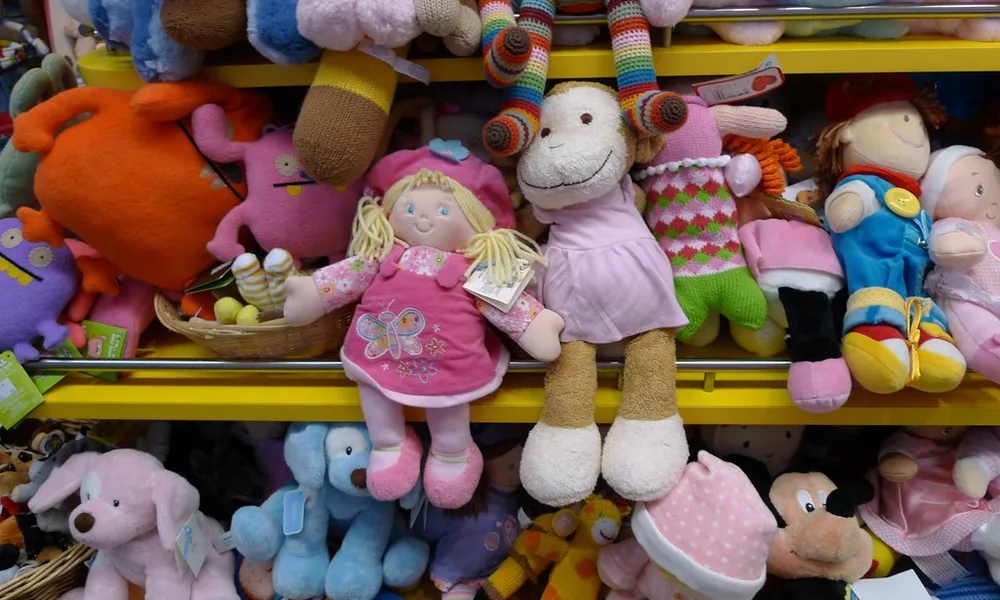
The Dusty Clearance Mountain is the pile of faded boxes at the back of the shop, sun-bleached on one side and dusty on the other, still priced as if they arrived yesterday. The instructions are missing and the stickers have dried out. None of this is reflected in the price, because the shop is waiting for a buyer who does not notice. Check the date on the box and run your finger along the top of the shelf. If it comes away dusty, the toy has been waiting a long time for someone who will not check.
5. The Identical-Everywhere Aisle: the same toy in every town
The Identical-Everywhere Aisle is the row of shelves that looks the same in every toy shop, because it is the same. The same licensed characters, the same plastic figures, the same three colours of the same car, in every town and every mall. There is nothing here for a child who likes building, drawing or quiet games, because the shop only stocks what sells fastest. The same trap turns up in other shops, as our guide to the worst thrift shops shows, where one rail of identical clothes replaces any real choice. If you have seen the same aisle in three towns, you have seen enough, and the shop worth your money is the one with a shelf you have never seen.
6. The No-Returns Counter: the sale ends at the door
The No-Returns Counter is the shop where the sale ends the moment you walk out of the door. The toy stops working on the first evening, and when you take it back the answer is already printed on a sign behind the till: no returns on opened toys. A faulty toy is not a change of mind, and a shop that treats it as one is a shop that never has to stand behind what it sells. The honest shops take a faulty toy back without a fuss. The worst shops pass the loss to you, and hope you never come back. Ask about returns before you buy, and walk away from any shop that cannot answer plainly.
7. The Pushy Upsell Playroom: the till is a sales pitch
The Pushy Upsell Playroom is the shop where buying a toy is the start of a sales pitch, not the end of one. Then come the extras: the carrying case, the spare parts pack, the warranty that costs a third of the toy. Each one is offered while your child is holding the box, which is exactly when saying no is hardest. The staff are not helping you choose; they are working through a list, and your child is the lever. A good shop answers your questions and leaves you alone. A bad shop follows you around the aisle, narrating the most expensive toy in the shop as if it were the only one. Buy the toy your child actually wants, and leave the shop that will not take no for an answer.
Checklist: spotting a bad toy shop before you pay
- Check the age label against the small parts inside the box, and do not trust a label that looks wrong.
- Press every try-me button, and walk away if the displays are dead, broken or missing parts.
- Ask what the toy needs to work, and whether batteries or extra parts are included in the price.
- Look at the boxes for fading, dust and old dates, and check the instructions and small parts are still inside.
- Ask about returns before you pay, and get a receipt for anything that costs more than a few pounds.
- Say no to the extras once, and leave the shop that keeps pushing the dearest set after you have chosen.
Frequently asked questions
How can I tell if a toy shop age label is wrong?
Open the box if the shop allows it, and look for small parts, long cords and sharp edges. A toy for a toddler should have no part small enough to fit through a toilet roll tube and no edge that catches your finger. If the shop will not let you look inside, buy elsewhere.
Should a toy shop let me try a toy before I buy it?
Yes, for any toy that makes a sound, moves or lights up. A working display is the shop’s proof that the toy does what the box promises. Dead displays warn that the shop does not check its stock, and the sealed toy you take home may be just as dead.
Are batteries really a hidden cost in toy shops?
They are the most common one. Many toys need four or six batteries that are not included, and the batteries sold at the till can cost more than the toy. Ask what the toy needs before you queue, and keep standard batteries at home.
What should I do if a toy breaks on the first day?
Take it back with the receipt, the box and all the parts, and ask for a refund or a replacement. A toy that breaks in normal play on its first day is faulty, not worn out. If the shop refuses, keep the receipt.
Is it worth buying toys from a shop with no returns policy?
No, not for anything that costs real money. A shop with no returns policy is telling you it will not stand behind its stock. The same money buys the same toy in a shop that takes faulty goods back.
How do I find a good toy shop instead?
Look for a shop where the displays work, the staff can tell you which toys break and which ones last, the age labels match the toys inside, and the returns policy is written down where you can read it. The best toy shops are often the small ones, as our guide to the worst bookshops shows for bookshops too, where a small shop whose owner knows the stock beats a big shop nobody checks.
Bottom line
The worst toy shops of 2026 treat the age label as decoration, the display as an afterthought, the batteries as a second price, and the return as your problem. Skip the shop where the displays are dead and the boxes are dusty, and spend your money where the toys work, the labels are honest, and a faulty toy comes back without a fight. Your child will not remember the shop, but they will remember whether the toy lasted the week.