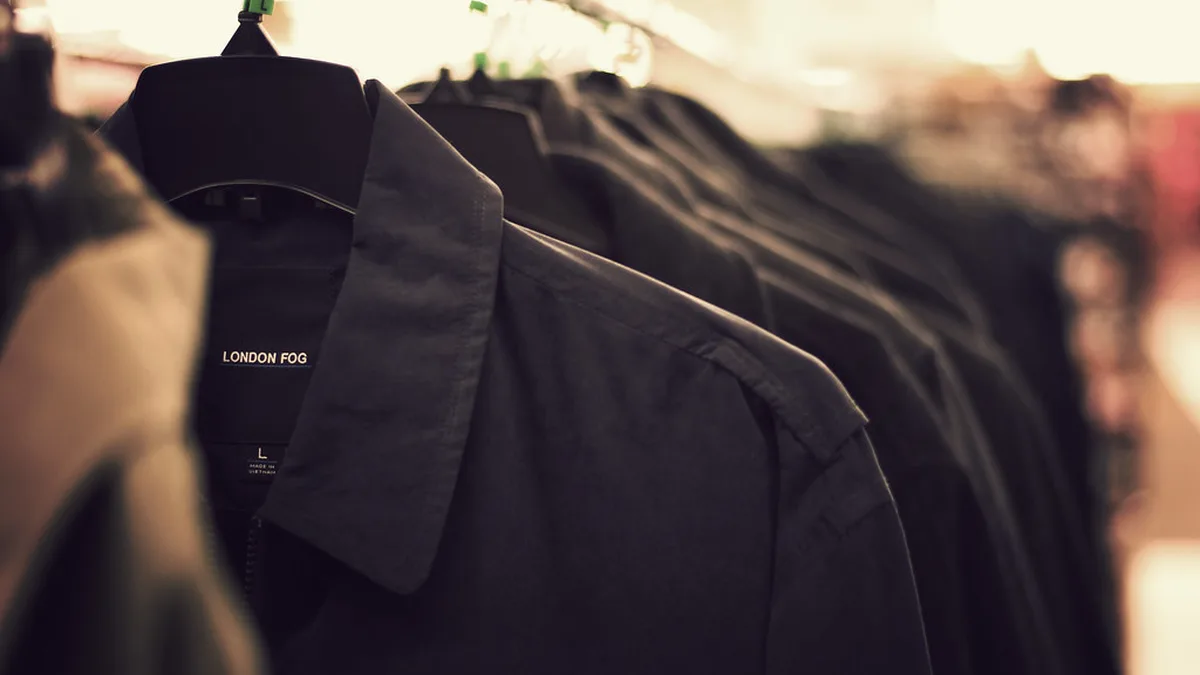
Beware the Worst Thrift Shops of 2026
The worst thrift shops of 2026 are not the quiet charity shops with a small rail of honest clothes and a shelf of paperbacks. A good thrift shop is one of the best bargains in any town: donated goods sold cheaply, sorted with care, priced to move, and checked before they reach the floor. The worst thrift shops fail in the opposite way. They charge boutique prices for donated goods, hide stains and broken zips, refuse every return, and fill their rails with stock that should have gone to the rag bin. This guide ranks the worst types of thrift shop you will meet in 2026, by the money each one wastes and the disappointment each one leaves behind, so you can spot a bad one before you hand over your cash.
Key takeaways
- Thrift should mean cheap: a donated coat priced like a new one is not a bargain, whatever the label inside says.
- Smell is a warning, not a quirk: a shop that reeks of damp has stock that was never cleaned, aired or checked.
- Always inspect before you pay, because a thrift shop with no returns is selling you a surprise, not a bargain.
- Check every zip, button, seam and sole in the shop, since the fault you find at home is the fault you now own.
- Walk out of any shop that prices by the label alone, hides its prices, or rushes you past the till with no receipt.
How the worst thrift shops were chosen
Every type below was scored on five measures. Pricing comes first: does the price match the condition and the fact that the stock was donated? Condition is second: are clothes clean, checked and honestly described, or stained, torn and sold as seen? Returns are third, because a shop that refuses every return has nothing to lose when it sells you a dud. Sorting is fourth: are the rails organised by size and type, or a jumble where nothing can be found? Honesty is fifth: does the shop say what an item is, or dress up a high-street cast-off as a designer find?
Two notes before the list. First, no single shop is named here, because the same seven types turn up in every town. Second, a thrift shop is judged on what it sells today, not on one famous bargain from five years ago. The same logic runs through our guide to the worst flea markets, where new goods dressed as vintage drain your wallet, and our guide to the worst street markets, where identical imported stock sells at triple the price.
Comparison table: the worst thrift shops of 2026
| Rank | Thrift shop type | Main fault | Warning sign |
|---|---|---|---|
| 1 | The Boutique-Priced Charity Shop | Donated goods at new-shop prices | Prices copied from a boutique, not a charity shop |
| 2 | The Damp and Musty Warehouse | Stock never cleaned, aired or checked | The smell hits you at the door |
| 3 | The No-Returns, No-Receipt Till | Every sale final, no proof of purchase | A handwritten sign and a cash-only till |
| 4 | The Fake-Designer Rail | High-street copies priced as designer | Wonky stitching, wrong labels, vague answers |
| 5 | The Jumble With No Sizes | Nothing sorted, nothing findable | Coats with swimwear, no size order at all |
| 6 | The Broken-Everything Shelf | Untested goods sold as working | No plug, no test, parts already missing |
| 7 | The Fitting-Room-Free Shop | No way to try anything on | A curtain in a corner or nothing at all |
The worst thrift shops of 2026
1. The Boutique-Priced Charity Shop: donated goods at new-shop prices
The Boutique-Priced Charity Shop is the worst thrift shop of 2026 because it breaks the one promise a thrift shop makes: that second-hand means cheaper. The stock was donated for free, yet the rail reads like a high-street window. A five-year-old coat with a worn collar carries a price within a few pounds of a new one, and a chipped mug costs more than the same mug new in a supermarket. Compare the price with the same item new, check the cuffs, the collar and the lining, and if the saving is only a few pounds, walk away and buy new.
2. The Damp and Musty Warehouse: stock that was never cleaned
The Damp and Musty Warehouse announces itself before you reach the first rail. The air is heavy, the coats smell of a cellar, and the books on the shelf are swollen at the edges. Nothing here has been cleaned, aired or checked: clothes go from the donation bag straight onto the hanger, and soft toys, curtains and bedding carry the damp of wherever they were stored. The test is simple: lift a coat to your face and smell it, run a hand along the inside of the collar, and look for dark spots on the lining. If the shop smells like a flooded basement, no price makes its stock worth carrying home.
3. The No-Returns, No-Receipt Till: every sale is final
The No-Returns, No-Receipt Till is the thrift shop that takes your money and keeps it, whatever happens next. A handwritten sign above the till says all sales are final, the till is cash only, and no receipt is offered. When a shop knows it never has to take anything back, it has no reason to check anything. Broken zips, missing buttons, stained linings and dead electronics all reach the floor, because the shop loses nothing when you discover them at home. Always ask about returns before you pay, insist on a receipt, and treat a cash-only, no-receipt till as a warning.
4. The Fake-Designer Rail: high-street copies at designer prices
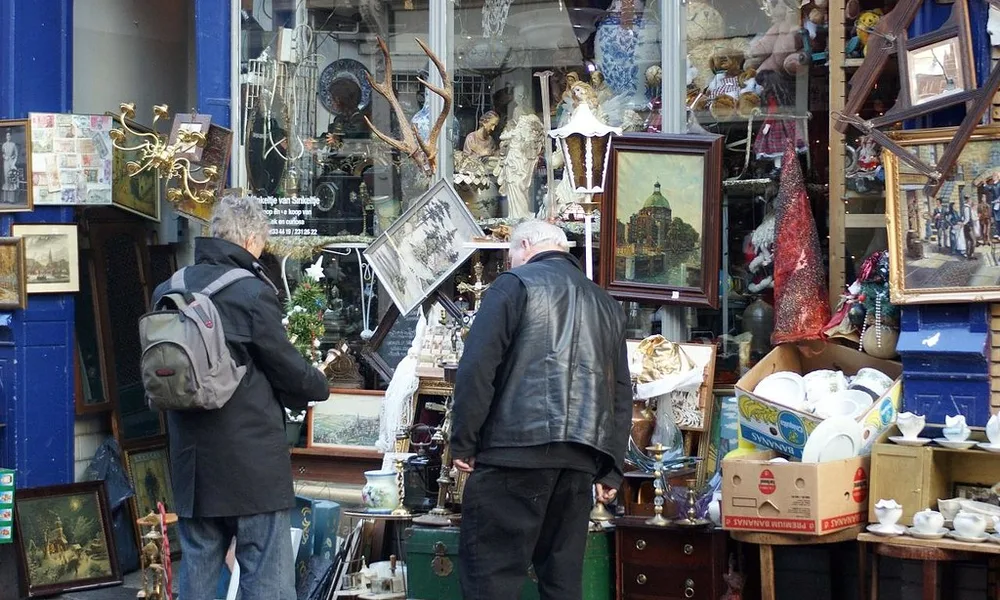
The Fake-Designer Rail is where ordinary high-street clothes wear designer prices. A coat with a copied label, a bag with stitching that wanders off the seam, and trainers with a logo that is slightly the wrong shape all sit on a rail marked as premium finds. The seller insists each piece is genuine, but the evidence says otherwise: labels sewn in crooked, fonts that do not match the brand, hardware that feels light and cheap, and no proof of where any of it came from. Check the stitching inside the seams, feel the weight of the zips and buckles, and if the shop cannot answer a simple question about where a piece came from, walk away.
5. The Jumble With No Sizes: nothing sorted, nothing findable
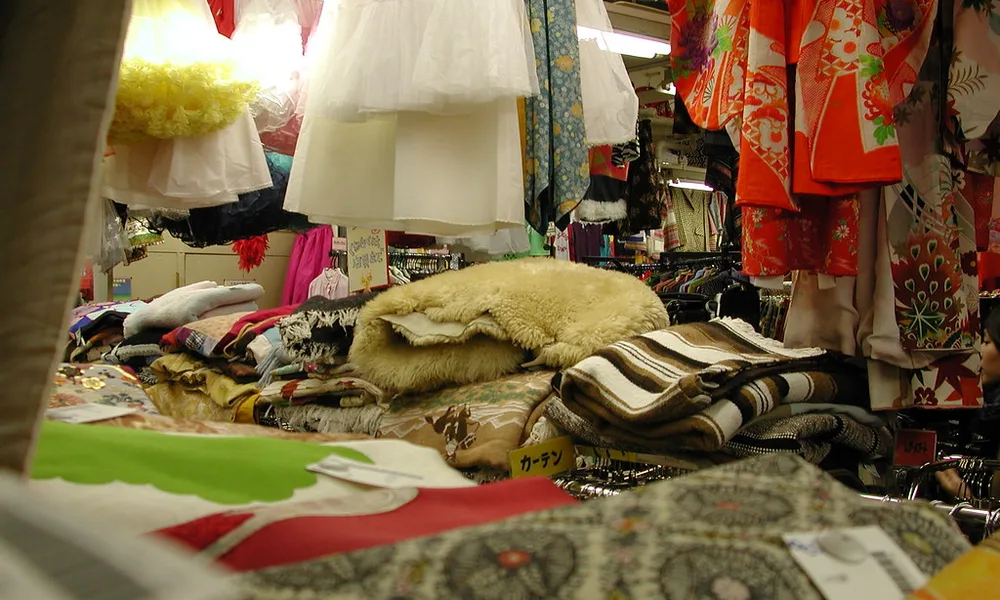
The Jumble With No Sizes is the thrift shop that treats sorting as somebody else’s job. Coats hang next to swimwear, children’s clothes are mixed in with adult sizes, and the sizes on the rails run in no order at all. Finding anything takes an hour of digging, and most shoppers give up and leave. This type dumps everything together and calls the mess a treasure hunt. If you cannot find your size in five minutes, the shop has already told you how it treats its stock, and the answer is badly.
6. The Broken-Everything Shelf: untested goods sold as working
The Broken-Everything Shelf is the corner of the thrift shop where dead goods go to find a buyer. Old radios with no plug in sight, lamps with frayed cords, toys with missing parts, and kitchen gadgets that have not been switched on in years all sit on a shelf priced as if they work. The shop will not test anything, because there is no socket, no battery and no patience for the question. The fault only appears when you get home, and by then the no-returns sign has already done its work. Ask to see an item switched on, check the cord and the plug, and if the shop cannot show you it working, assume it does not work.
7. The Fitting-Room-Free Shop: no way to try anything on
The Fitting-Room-Free Shop sells clothes you cannot try on, in a space that makes no allowance for it. There is no fitting room, no mirror worth the name, and sometimes not even a curtain in a corner. You are expected to guess your size from a label, hold a coat against your shoulders in the aisle, and hope the fit works out at home. Second-hand sizes are unreliable: clothes shrink, stretch and come from decades when sizes meant different things, so a label is a guess, not a guarantee. If a shop sells clothes but will not let you try them on, shop elsewhere.
Checklist: how to spot a bad thrift shop in five minutes
- Smell the air at the door: damp or musty means stock that was never cleaned or aired.
- Compare one price with the same item new: if the saving is tiny, the bargain is fake.
- Ask about returns and a receipt before you pick anything up, not after you have paid.
- Check every zip, button, seam, sole and lining on each item you plan to buy.
- Look for sorting: rails in size order and type order mean a shop that checks its stock.
- Test anything with a plug or a battery, and count the parts on toys, games and sets.
Frequently asked questions
Are thrift shops supposed to be cheap?
Yes. A thrift shop sells donated goods, so its prices should sit well below the same item new. A fair shop prices by condition, with ordinary pieces cheap and only the best pieces dearer.
Is it safe to buy second-hand clothes?
Yes, when the shop cleans and checks its stock. Wash everything before you wear it, check the seams and linings, and avoid anything that smells of damp or shows dark spots that could be mould.
What should I check before buying second-hand electronics?
Ask the shop to switch the item on in front of you, check the cord and plug for fraying or cracks, and look for missing parts or batteries. If the shop cannot test it, assume it does not work, and never buy an electrical item with a damaged cord.
Why do some thrift shops refuse all returns?
Some small charity shops refuse returns because they lack the staff to process them, but a blanket refusal also removes the shop’s reason to check its stock. A fair shop offers at least a short window for faulty items.
How can I tell a fake designer item in a thrift shop?
Check the stitching inside the seams, the weight of the zips and buckles, and the quality of the labels. Genuine pieces are finished cleanly, while copies have crooked labels, wandering stitching and light, cheap hardware.
What is the best time to visit a thrift shop?
Visit soon after new stock is put out, usually on weekday mornings, and visit often, since the best pieces sell fast. Avoid the last hour before closing, when the rails have been picked over.
Bottom line
The worst thrift shops of 2026 share one habit: they forget that second-hand should mean cheaper, cleaner and honestly described. Price by condition, smell the stock, test what plugs in, try clothes on, and demand a receipt. The best thrift shops do all of that without being asked. The worst ones do none of it, and they are worth nothing but a walk past the door. Check the price, the smell and the seams before you pay, and the good shops will reward you for it. For more bad shopping trips to avoid, see our guide to the worst markets of 2026, where the same overpricing and no-returns habits waste your money in other ways.


