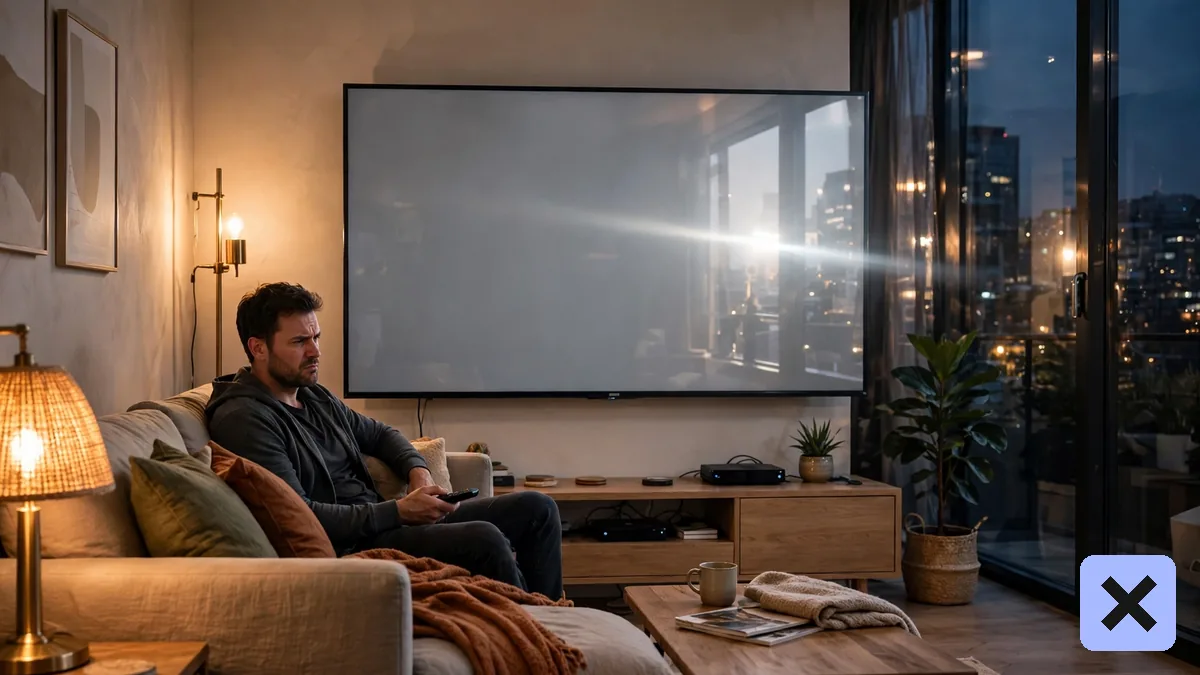
The worst TVs of 2026 are not hard to find. They sit on the same shelves as the good ones, wearing the same magic words on the box: 4K, HDR, smart, cinematic. They cost less, they look bigger, and on a bright shop floor under perfect lighting, some of them even look fine. The trouble starts at home, on the first ordinary evening, when the film you wanted to watch looks grey, the menu takes ten seconds to open, and the dialogue is so muffled you reach for the subtitles.
A bad television is a uniquely annoying purchase. It is the biggest screen in the house, you use it every day, and you cannot hide it in a drawer. A bad phone gets replaced in a year. A bad television hangs on the wall for five.
This guide names the patterns that make a television one of the worst TVs of 2026. The sets to avoid share the same failures: dim panels, dishonest HDR claims, slow software, dreadful sound, narrow viewing angles and build quality that gives up early. Learn to recognise them, and you can walk past any bad set in any shop, whatever brand is on the box.
Key takeaways
- A dim panel is the single worst flaw in a television: no software update can fix a screen that cannot get bright enough for your room.
- HDR on the box means nothing without real brightness and local dimming, so ignore the badge and check the peak brightness figure instead.
- Slow smart software ruins a television every single day, while a good panel only matters when you sit down to watch.
- Almost every slim television sounds thin and muffled, so treat a soundbar as part of the purchase, not an optional extra.
- The cheapest large television is usually cheap for a reason, and the reason is the panel, the processor or the build, never the brand name.
The worst TVs of 2026 at a glance
Use this table to recognise the failures quickly, then read the sections below to see how each one shows up in daily use.
| Failure | What you notice | How bad it gets |
|---|---|---|
| Dim, washed-out panel | Grey blacks, faded colour in daylight | Unwatchable in a bright room |
| Fake HDR | HDR badge, flat and dull picture | No better than standard video |
| Slow smart platform | Apps take seconds to open, menus lag | Daily frustration, frozen screens |
| Terrible sound | Muffled dialogue, no bass | Subtitles become essential |
| Narrow viewing angle | Picture fades from the side seats | Half the sofa gets a bad picture |
| Poor build and reliability | Dead pixels, failing backlight | Dead set within two years |
1. The washed-out panel
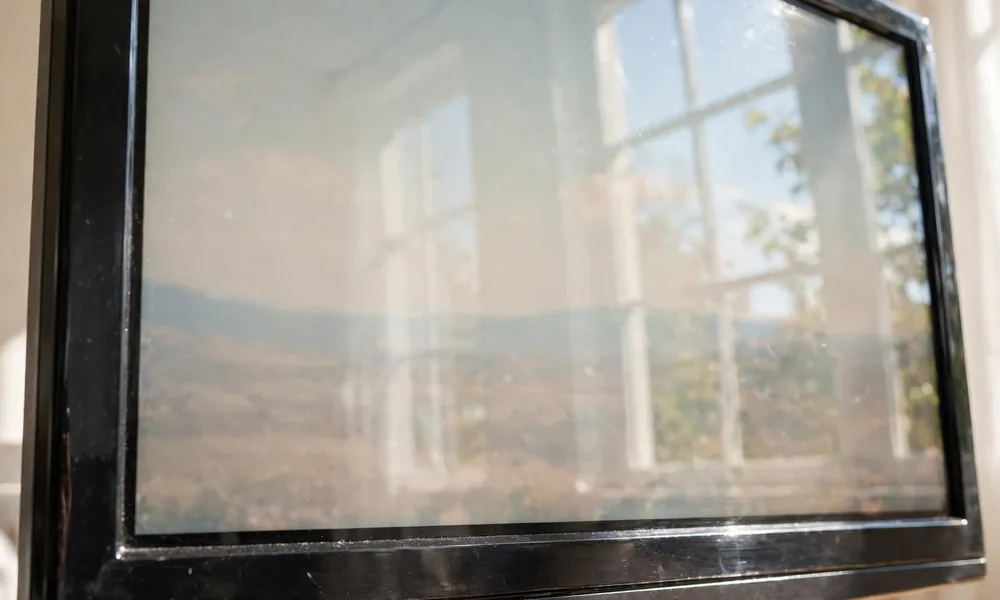
The panel is the television, and a bad one poisons everything else. The worst panels share a look you can spot in seconds: blacks that are grey, colours that seem rinsed out, and a picture that goes milky the moment sunlight enters the room. Brightness is the number that matters most, and it is the number cheap sets hide. A good living-room television reaches at least 600 nits of peak brightness; the worst manage 250 to 300, which is fine for a dark bedroom and hopeless for a room with windows. There is no fix: settings can shift the problem around, but they cannot add light the hardware does not produce. If a television looks washed out in the shop, it will look worse at home.
2. Fake HDR and the numbers game
HDR is the most abused word on a television box. The badge promises brighter highlights, deeper shadows and richer colour, and on a good set it delivers exactly that. On the worst sets, the badge is a sticker on a panel that cannot do any of it. The set accepts an HDR signal, shows an HDR logo when you press play, and then displays a picture no better than ordinary video, sometimes worse. The defence is simple: ignore the badge and look for the numbers. A genuine HDR set in 2026 offers at least 600 nits of peak brightness and some form of local dimming, and the manufacturer will say so plainly. If the specification sheet mentions HDR but gives no brightness figure and no dimming zones, the badge is marketing, .
3. The sluggish smart platform
A beautiful panel attached to a slow brain is a miserable television. The worst smart platforms of 2026 share the same symptoms: the home screen takes several seconds to appear after you press power, apps open slowly or crash back to the menu, and the remote feels disconnected, as if every press travels through treacle. The cause is usually a weak processor paired with heavy software: budget sets run the same feature-heavy platforms as premium ones, but on chips that cannot keep up, and with too little memory to hold apps open. A streaming stick can replace the built-in platform, but it is a workaround, not a cure: you still juggle two remotes. When you test a television, open three apps in a row and search for a film. If any of it stutters, the set will annoy you for years.

4. Sound that ruins the film
Almost every slim television sounds bad, but the worst ones sound actively hostile. Dialogue comes out muffled and buried under music, so you turn the volume up and the sound effects become painful. There is no bass at all, which makes films feel small and flat, and at higher volumes the tiny speakers distort. The result is a home cinema that needs subtitles in your own language. Sound is the one flaw with a genuinely good fix: a modest soundbar transforms almost any television, and it costs a fraction of the set. If neither set you are comparing sounds good, add the price of a soundbar to both before you decide which is the bargain.
5. The viewing-angle trap
Television makers photograph their sets head-on, and for good reason. Many budget panels look superb from directly in front and fall apart from the side: colours wash out, contrast collapses, and the picture takes on a grey or green tint. In a shop you stand in front of the set, so you never see it. At home, the people on the ends of the sofa see it every evening. The test takes ten seconds: stand in front of the set, then walk two steps to the side and look again. If the picture changes dramatically, it will change dramatically for everyone who does not sit in the middle.

6. Build quality and reliability
The worst televisions do not just look bad; they die young. The signs are visible before you buy if you know where to look: a stand that wobbles when you touch it, a back panel that flexes, ports that feel loose, and a remote that feels like it came free with something else. The failures that follow are depressingly predictable: backlights dim unevenly or fail in patches, leaving bright clouds on dark scenes; dead pixels appear in clusters; power supplies give up after a year or two, often just after the warranty ends. A long warranty is the clearest signal a maker trusts its own product, and a one-year warranty on a television you are expected to keep for five years is a statement, not a confident one.
7. The bargain that keeps charging you
The cheapest large television on the shelf is rarely a miracle of manufacturing. More often it is a set whose price has been subsidised, and the subsidy is collected after you buy it. The home screen fills with sponsored rows, the remote carries buttons that sell subscriptions, and the set quietly collects viewing data. None of this is disclosed clearly on the box, and all of it makes the set slower and more irritating to use. A set that needs three accessories to become watchable was never cheap. It was expensive in instalments, and the instalments are your patience.
How to spot a bad TV in the shop
You do not need to be an expert to avoid the worst TVs of 2026. You need ten minutes and the willingness to ignore the demonstration footage. Ask the shop to show ordinary content: a dark scene from a film you know, a football match, the evening news. Check the specification sheet for peak brightness in nits, the number of dimming zones, the refresh rate, and the number of HDMI 2.1 ports: a sheet that hides the brightness figure is hiding it for a reason. A television that fails any one of these tests in the shop will fail it every day at home.
What to buy instead
Avoiding the worst sets does not require a huge budget. The difference between a bad television and a good one is usually a few hundred pounds or dollars, spent on the panel and the processor rather than on inches. If you want a shortlist of sets that get both right, our guide to the best smart TVs of 2026 compares the strongest options across every size and budget. If money is tight, the best 4K TVs under $1,000 shows how much picture quality that budget buys today. And if the set is going in the main living room, read our guide to the best smart TVs for living rooms before you choose a size, because the right size depends on where you sit.
Checklist: six checks before you pay
- Watch a dark scene: blacks should look black, not grey.
- Check peak brightness; walk away if it is under 400 nits for a living room.
- Open three apps in a row and search for a film; stuttering menus mean a weak processor.
- Stand two steps to the side and check the picture keeps its colour from the end of the sofa.
- Listen to dialogue at normal volume and check voices are clear without turning the sound up.
- Check the warranty; one year and no updates means a set built to be replaced.
Frequently asked questions
What is the worst TV brand in 2026?
There is no single worst brand, because every maker sells good and bad sets. Avoid the pattern instead: a very cheap large set with a dim panel, a slow platform and a one-year warranty.
Are cheap TVs really that bad?
Not always. Some budget sets offer a genuinely good picture for the price. A cheap set with a bright panel and a decent platform can be a bargain; one without either is a false economy.
Can a bad TV picture be fixed with settings?
Settings can improve a mediocre picture, but they cannot fix a bad panel. No setting adds brightness, contrast or viewing angle the hardware does not have.
Is a slow smart TV worth buying if the picture is good?
It can be, if you plan to use a streaming stick and accept the extra remote and cost. Count the stick in the price.
How long should a TV last?
A well-made television should last seven to ten years of daily use. Backlight failure and power supply problems are the most common early deaths, and both are more likely on the cheapest sets.
Should I buy a TV with ads on the home screen?
It depends on how much it bothers you. Treat heavy advertising as a warning sign, and remember a streaming stick bypasses most of it.
The bottom line
The worst TVs of 2026 fail in the same ways: dim panels, dishonest HDR, slow software, dreadful sound, narrow viewing angles and build quality that gives up early. None of these flaws is hidden. They are all visible in ten minutes in a shop, if you look at ordinary content, open the menus, stand to the side and listen. Spend a little more on the panel and the processor, and buy the television you will still enjoy in five years.


