
The worst vacuum cleaners of 2026 share one cruel talent: they look perfectly capable in the shop and then fail the moment real life gets messy. The box promises deep cleaning and powerful suction, but a few weeks in, pet hair stays where it fell, dust puffs back into the air, and the machine becomes a chore of its own.
A bad vacuum costs you money twice, once at the till and again when you replace it far sooner than planned. Worse still, some of the poorest performers quietly make your home less healthy, leaking fine dust and allergens back into the room.
Below are the vacuum types and failure patterns to avoid in 2026, the warning signs to check before you pay, and a checklist that separates a bargain from a mistake.
Key Takeaways
- Weak suction on carpet is the top sign of a vacuum to avoid: no design can make up for a motor that cannot lift embedded dirt.
- Leaky, unsealed filtration turns a vacuum into a dust spreader, so any machine without a sealed system is a bad buy for allergy homes.
- Tiny dustbins, short battery life and clog-prone brush rolls make owners abandon a vacuum within months.
- Heavy, badly balanced machines get used less often, so the floors stay dirty even though you own a vacuum.
- A short warranty and no spare parts signal that a manufacturer does not expect its machine to last.
The Worst Vacuum Cleaners of 2026 at a Glance
If a machine you are considering matches more than one row of this table, walk away.
| Failure pattern | What goes wrong | Who suffers most | How to spot it |
|---|---|---|---|
| Feeble suction | Leaves grit and hair in carpet | Carpeted homes, pet owners | No air-watt figure |
| Leaky filtration | Fine dust escapes into the room | Allergy households | No sealed-system claim |
| Clog-prone brush roll | Hair wraps the roller until it stops | Pet owners, long hair | Fixed brush roll |
| Tiny dustbin | Needs emptying mid-clean | Large homes, pet owners | Bin under 0.4 litres |
| Short battery life | Dies before the house is finished | Homes over two bedrooms | Under 20 minutes on full power |
| Heavy and awkward | Hard to carry and push | Stair-heavy homes | Over 7 kg |
| Fragile build | Hoses split, clips snap | Everyday family use | Thin plastic, 1-year warranty |
Why Bad Vacuums Fail
Suction That Fades Fast
Suction is the heart of a vacuum, and the first thing cheap machines compromise. Some start strong and fade within months as the motor wears and the filters clog. Others never had real power at all, relying on a loud motor and a spinning brush to fake cleaning. Test it on carpet: if grit and hair stay in the fibres, the suction is failing.
Filtration That Leaks Dust Back Out
A vacuum that sucks dirt in and blows fine dust out of its exhaust is worse than useless for anyone with allergies or asthma. It collects the visible dirt and returns the invisible particles, pollen, dust mite waste and pet dander, into the air you breathe. You can sometimes smell it: a stale, dusty odour from the exhaust. If a manufacturer does not clearly claim a sealed system, assume the machine leaks.
Brush Rolls That Give Up
The brush roll does the real work on carpet, beating and lifting dirt out of the fibres so the suction can carry it away. On the worst machines it is also the first part to fail. Hair wraps around it in thick bands, and within weeks the roller spins sluggishly or stops. Some hide the problem behind a sealed head you cannot open.

A well-designed vacuum lets you remove the brush roll in seconds and clear it without tools. The worst ones make it a chore, or make it impossible.
Vacuum Types to Avoid in 2026
Not every machine in these categories is bad, but the worst vacuums of 2026 cluster in a few predictable designs. Here they are.
The Ultra-Cheap Upright
A whole shelf of upright vacuums is priced so low that something has to give, and it is always the motor, the filtration or the build. These machines are heavy, loud and clumsy, with thin plastic bodies that flex and rattle, and they lose suction quickly as their cheap filters clog. A big machine with a weak motor cleans worse than a small one with a strong motor.
The Cordless Stick That Dies Mid-Clean
Cordless sticks are wonderful when they work, and infuriating when they do not. The worst ones promise forty minutes of runtime and deliver fifteen on anything above the lowest power setting, so the battery dies halfway through a modest flat. Many cannot be used while charging, so a dead battery means a half-cleaned home and a two-hour wait. The small dustbin makes it worse: a 0.3-litre bin fills fast.
The Robot Vacuum That Wanders and Misses
Cheap robot vacuums are the most common regret in this whole category. The worst models navigate by bumping into things at random, missing whole rooms, getting stuck under furniture and chewing through cables. They clean the same patch of floor five times while ignoring the hallway entirely, and their tiny dustbins fill before they have covered one room. Some lack the mapping and cliff sensors that make better robots safe, so they tumble down stairs or wedge under a low sofa. The best robot vacuums for kitchens show what good navigation looks like.
The Handheld That Pretends to Be a Full Vacuum
Handheld vacuums have a genuine job: quick spills, car seats, stairs and pet beds. The trouble starts when one is sold as a whole-home solution, with a promise that it can replace your main machine. It cannot. The motor is too small, the bin is too tiny and the battery lasts minutes.
The Bagless Machine With Nowhere for the Dust to Go
Bagless vacuums save money on bags, but the worst designs turn emptying the bin into a cloud of dust. A bin that opens from the bottom with a stiff latch, or one that has to be shaken out over a bin, releases the fine dust you just collected back into the air and onto your hands. For allergy households this undoes the entire point of vacuuming.
The Canister With a Hose That Splits
Canister vacuums live or die by their hoses, and cheap ones fail here more than anywhere else. Thin, stiff hoses crack at the bend points, split where they join the wand, and leak suction until the machine wheezes along with half its power. The photograph below shows exactly that.
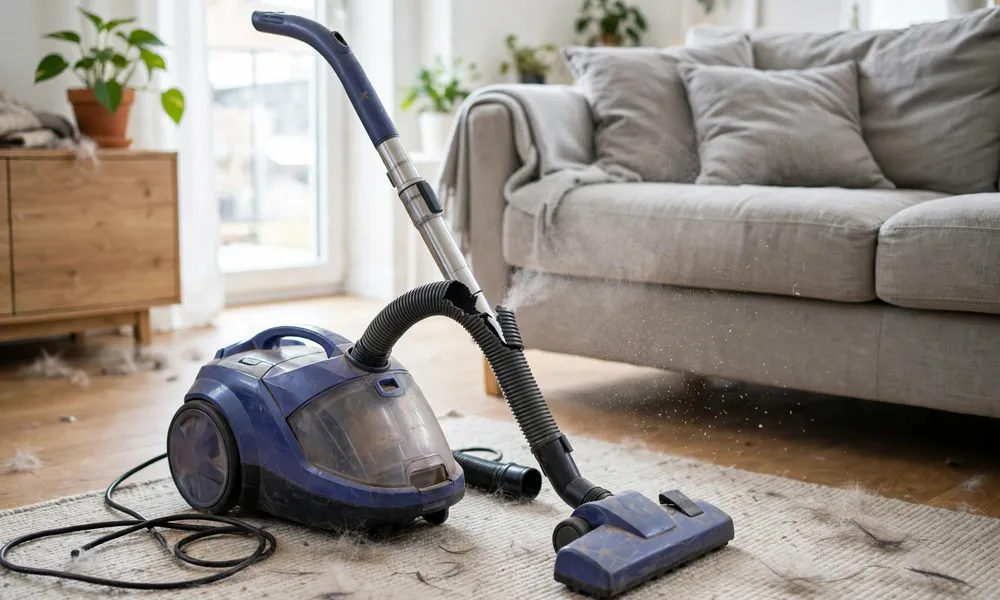
Once a hose splits, the machine is effectively finished unless a replacement part is available, and on the cheapest models it often is not.
The Overweight Upright Nobody Wants to Carry
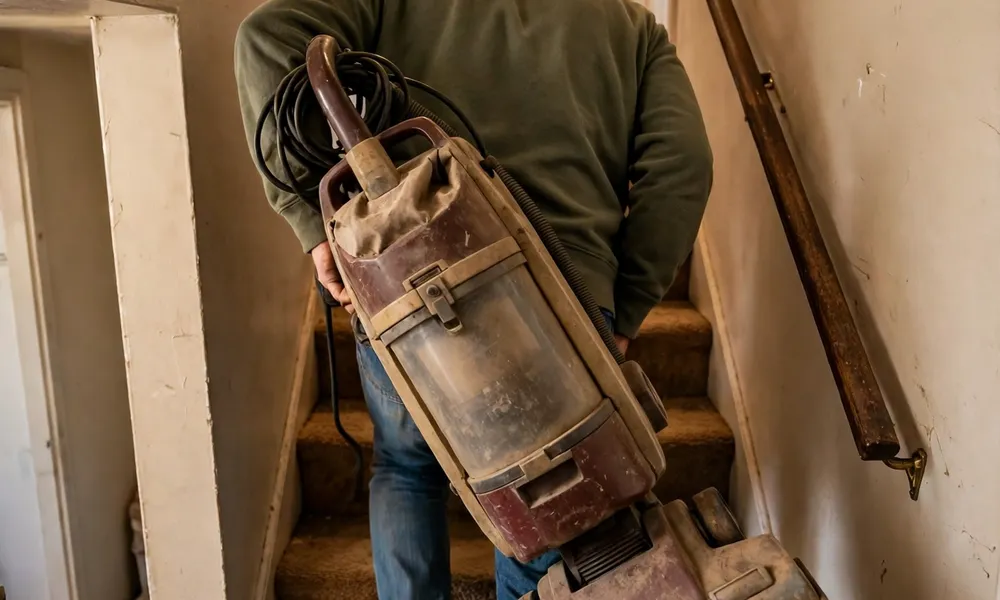
Weight is the most underestimated factor in vacuum ownership. A machine that weighs nine kilograms might clean well on a flat floor, but it becomes a burden the moment stairs appear. Carrying a heavy upright up a narrow staircase is a weekly workout nobody asked for, and many owners simply stop vacuuming the upstairs properly. Balance matters too: a vacuum with its weight low feels lighter than the scales suggest.
Warning Signs to Check Before You Buy
The worst vacuums of 2026 do not advertise their flaws, but they do leave clues. First, read the specifications for what is missing: no air-watt figure, no sealed-system claim and no battery runtime on full power usually means poor performance. Second, pick the machine up. If it feels flimsy or rattles, the build quality is telling you what the box will not.
Third, look at the dustbin and the brush roll. Open the bin and close it again. Try to remove the brush roll. If either job needs force or a tool, daily maintenance will be a frustration you live with for years. Fourth, check the warranty and the spare parts: a one-year warranty on a machine that should last a decade is a confession. Finally, check the reviews for repeated complaints, losing suction, clogging, dying batteries, and believe the patterns. The best vacuum cleaners of 2026 show how strong machines handle carpet, filtration and handling.
What to Do If You Already Own One of These
If you are reading this with a disappointing vacuum already in your cupboard, all is not lost. Start with maintenance. Wash or replace the filters, clear the brush roll of wrapped hair, check the hose for splits and empty the bin before every clean. A surprising number of weak vacuums are simply clogged vacuums. If maintenance does not help, stop throwing money at parts for a machine with a fundamentally weak motor or a leaking body. A new filter will not fix a design that was never sealed. Replace it and keep the old machine for the car or the garage. For single rooms, a smaller machine can take some of the load, like the best robot vacuums for bedrooms.
Checklist: Avoiding the Worst Vacuum Cleaners
Run through these six checks before you pay for any vacuum in 2026.
- Check the suction figure. Look for a published air-watt rating and real carpet performance, not just a loud motor.
- Confirm sealed filtration. The machine should claim a sealed system with high-efficiency filtration, especially for allergy households.
- Inspect the brush roll. It should be removable without tools and resist hair wrapping.
- Measure the bin and the battery. A full-size vacuum needs a bin of at least 0.7 litres; a cordless stick needs at least 30 minutes of runtime.
- Lift it and carry it. If you cannot comfortably carry it up your stairs, it will not get used properly.
- Check the warranty and parts. A three to five year warranty and easily available spares mark a manufacturer that stands behind its machine.
Frequently Asked Questions
What is the worst type of vacuum cleaner in 2026?
There is no single worst type, but the most common disappointments are ultra-cheap uprights with weak motors, budget cordless sticks with short battery life, and random-navigation robot vacuums that miss whole rooms.
How can I tell if a vacuum has weak suction before buying it?
Look for a published air-watt figure and independent carpet pickup results. If the manufacturer only quotes input watts or vague terms like powerful suction, be suspicious.
Are cheap vacuum cleaners always bad?
Not always, but the cheapest machines usually cut corners on the motor, the filtration or the build, the three things that decide how well a vacuum cleans and how long it lasts.
Why does my vacuum smell dusty when I use it?
A dusty smell from the exhaust usually means fine dust is leaking past the filtration system, either because the seals are poor or the filters are clogged. Wash or replace the filters first. If the smell persists, the machine itself is leaking.
How long should a vacuum cleaner last?
A well-built vacuum should last seven to ten years with basic maintenance. If a machine starts losing suction or splitting hoses within two years, it was not built to last.
Should I replace a bad vacuum or try to fix it?
Fix it if the problem is maintenance, such as a clogged filter or a wrapped brush roll. Replace it if the problem is design, such as a weak motor or a battery that was always too small.
The Bottom Line
The worst vacuum cleaners of 2026 are not hard to spot: weak suction, leaking filtration, clogging brush rolls, tiny bins, dying batteries and bodies too heavy to carry upstairs. Check the suction figure, the seals, the brush roll, the bin, the weight and the warranty before you pay.


