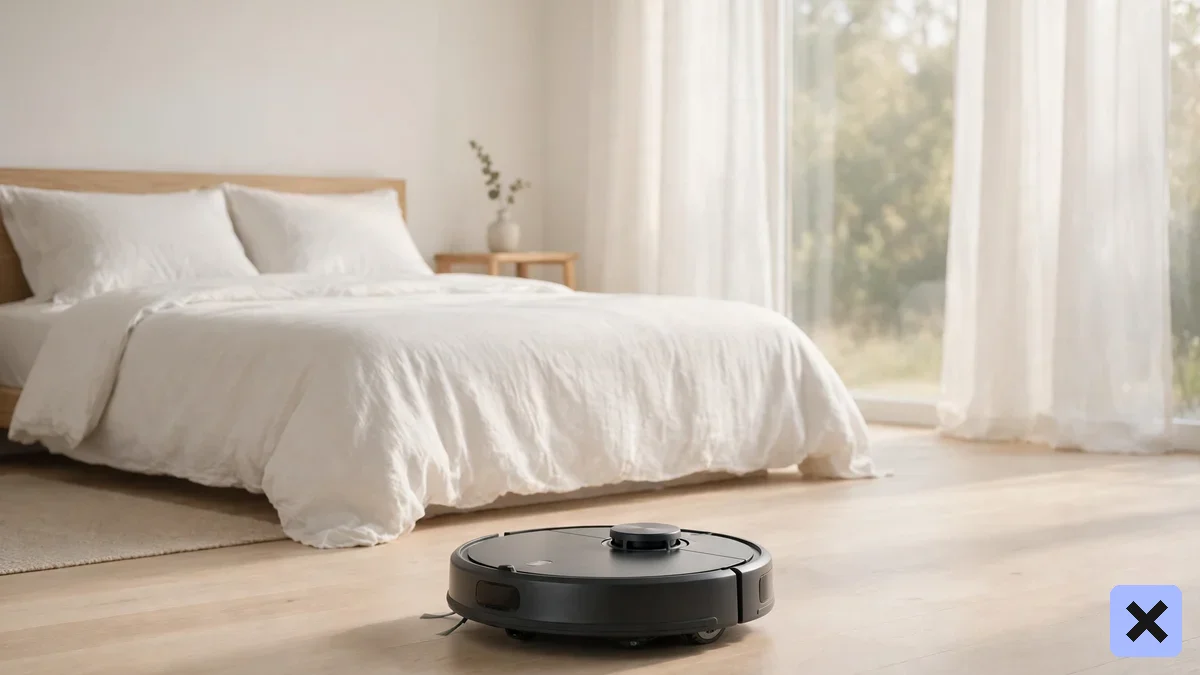
The best robot vacuums for bedrooms in 2026 are quiet, slim, and smart enough to clean under the bed without waking anyone up. It is the room where you sleep, where dust settles on soft bedding and pet hair collects in corners, and where a loud machine at 7 a.m. is the last thing you want.
Low bed frames, nightstands, cables, slippers, and rugs with fringe all test a robot’s navigation, while dust mites and allergens gather in mattresses and carpets. The best models for 2026 combine strong suction with gentle noise levels, slim profiles, and smart mapping.
This guide compares the best robot vacuums for bedrooms in 2026 by noise level, height, suction, filtration, battery life, and how each one handles the obstacles a real bedroom throws at it.
Key takeaways
- Pick a robot vacuum under 60 decibels for bedrooms so it can clean while you sleep without disturbing anyone.
- Choose a model under 3.5 inches tall so it can reach the dust that gathers under beds and low dressers.
- HEPA filtration matters most in bedrooms, because dust mites and allergens collect in bedding and carpet.
- Smart mapping with no-go zones keeps the vacuum away from cables, pet bowls, and fragile items beside the bed.
- Self-emptying docks are worth it in bedrooms, since the vacuum can run daily without you touching a dusty bin.
What Makes a Robot Vacuum Great for Bedrooms
A good bedroom robot vacuum is judged differently from a general-purpose one. The living room rewards raw power and speed; the bedroom rewards quiet operation, a low profile, and gentle, thorough cleaning.
Noise Level Comes First
Most robot vacuums run between 55 and 70 decibels. In a bedroom, that difference is enormous: a machine at 68 decibels sounds like a conversation next to your pillow, while one at 55 decibels sounds like a quiet hum you can sleep through. The best robot vacuums for bedrooms in 2026 offer a quiet or night mode that drops suction slightly to keep noise down. If you plan to run the vacuum overnight, look for a model rated at 58 decibels or lower, with a scheduled quiet mode in the app. Hardwood amplifies a vacuum’s whir while carpet absorbs it.
Height and Under-Bed Reach
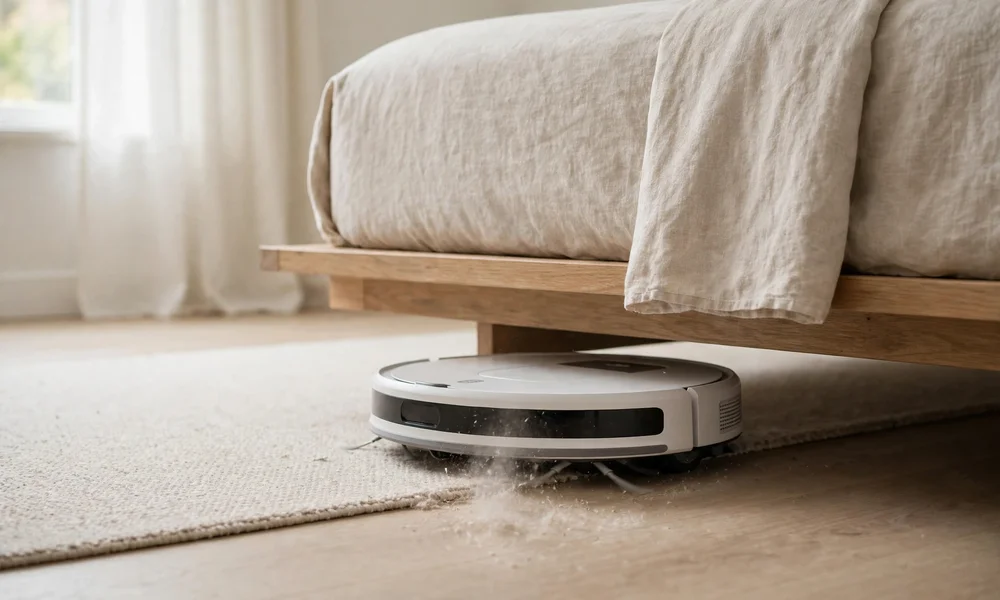
The space under a bed is one of the dustiest places in a home, and a regular vacuum almost never reaches it. A robot vacuum 3.5 inches tall or shorter can slide under most standard bed frames and low dressers. Models with a raised laser turret often measure 3.8 to 4 inches, which sounds like a small difference until the vacuum bumps into the bed frame and turns away, leaving a strip of dust untouched. Measure your bed clearance before you buy and pick a model that fits with at least a quarter inch to spare.
Suction and Allergen Filtration
Bedrooms collect dust mites, skin flakes, and pet dander in carpets and rugs. Strong suction matters, but filtration matters more. A true HEPA filter traps the fine particles that trigger allergies instead of blowing them back into the air you breathe while you sleep. Look for sealed filtration systems and a washable or replaceable filter. If anyone in the household wakes up sneezing, the best robot vacuums for allergies are worth comparing alongside the bedroom picks, since the two lists overlap heavily on filtration and dust handling.
Best Robot Vacuums for Bedrooms 2026: Top Picks
Each pick below suits a different kind of bedroom, from a small apartment room to a large primary suite.
Best Overall: The Quiet All-Rounder
The best overall bedroom robot vacuum balances everything: around 55 decibels in quiet mode, a 3.3-inch profile, 5,000 Pa suction, and smart mapping that learns the room in a single run. Its side brush reaches into the corners beside the nightstand where dust gathers, and the self-emptying dock holds about 60 days of dust. For most bedrooms, this is the pick that does the most things well.
Best for Light Sleepers: The Whisper-Quiet Model
If you or a partner are light sleepers, the whisper-quiet model is the one to buy. It runs at roughly 52 decibels in night mode, soft enough to run at 2 a.m. without waking anyone. It trades a little suction for that silence, so it is best on hard floors and low-pile carpet rather than thick shag. Its scheduling stands out: set it to clean the bedroom only, at a specific time and noise level, and it returns to its dock before the alarm goes off.
Best for Allergy Sufferers: The HEPA Specialist
For bedrooms where allergies are the main problem, the HEPA specialist leads the pack. It pairs a sealed HEPA filtration system with a brush roll that lifts dust mites and pet dander out of carpet fibers. Its self-emptying dock uses a sealed bag so collected dust never escapes back into the room. It is slightly taller than the slimmest models, so check your bed clearance, but for allergy control it is the strongest choice here.
Best Budget Pick: The Slim Value Model
The budget pick proves that a good bedroom robot vacuum does not have to cost a fortune. At just 3.1 inches, it is one of the slimmest models available. Its suction is modest but adequate for daily dust and hair on hard floors and low carpet. It lacks a self-emptying dock and uses simpler gyroscope mapping, so it takes a little longer to cover the room. For a smaller bedroom or a guest room, it is excellent value.
Best for Large Bedrooms: The Long-Run Model
Large primary bedrooms need a vacuum with a big battery and a large dustbin. The long-run model cleans for up to 180 minutes on a single charge without recharging halfway through. Its mapping remembers multiple zones, so you can clean the sleeping area daily and the dressing area twice a week. It is a little louder than the whisper-quiet models at full suction, so schedule it for the daytime.
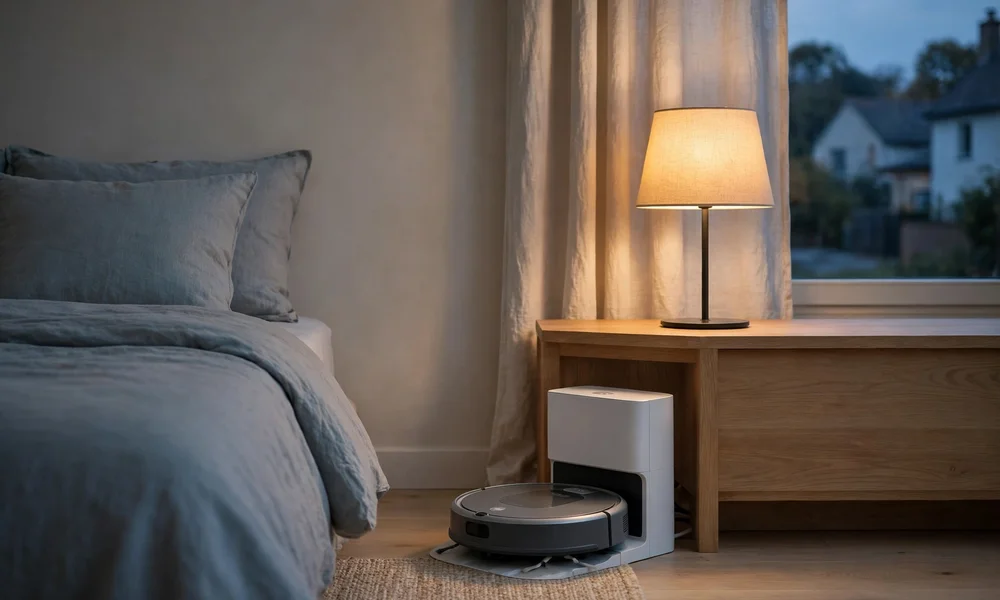
Bedroom Robot Vacuum Comparison Table
The table below compares the five picks on the measurements that matter most in a bedroom. Noise figures are for each model’s quiet or night mode.
| Model type | Noise (quiet mode) | Height | Suction | Filtration | Battery life | Self-emptying |
|---|---|---|---|---|---|---|
| Best overall all-rounder | 55 dB | 3.3 in | 5,000 Pa | HEPA | 150 min | Yes |
| Whisper-quiet model | 52 dB | 3.4 in | 3,500 Pa | HEPA | 120 min | Yes |
| HEPA allergy specialist | 57 dB | 3.7 in | 6,000 Pa | Sealed HEPA | 140 min | Yes, sealed bag |
| Budget slim model | 56 dB | 3.1 in | 2,800 Pa | Standard filter | 100 min | No |
| Long-run large room model | 58 dB | 3.5 in | 5,500 Pa | HEPA | 180 min | Yes |
How to Choose the Right One for Your Bedroom
Measure First, Buy Second
Measure the gap under your bed, your dresser, and any low storage furniture. Write the smallest number down and compare it with the vacuum’s height, remembering that the quoted height includes the sensor turret. Give yourself at least a quarter inch of clearance, and check door thresholds too, since a vacuum that cannot climb a high threshold will stay trapped in one room.
Match Suction to Your Floor
Hard floors need less suction than carpet, and thick carpet needs more than low-pile rugs. A vacuum with adjustable suction and automatic carpet boost is ideal, because it can run quietly on the wood floor and then increase power when it rolls onto the rug beside the bed. Mostly carpet means prioritizing suction and brush design; mostly hard floor means prioritizing noise and navigation.
Think About the Dock
Self-emptying docks are taller and louder when they empty, with a short burst of noise that lasts a few seconds. If the dock sits next to your bed, that burst can wake a light sleeper, so place the dock in the hallway or schedule emptying for the daytime. If you compare whole-home options as well, the best robot vacuums overall include several models with quieter docks that also work well in bedrooms.
Setting Up a Robot Vacuum in a Bedroom
Clear the Floor Before the First Run
Pick up charging cables, shoelaces, small socks, and anything with a cord before the first cleaning run. A phone charger cable is still the most common thing that stops one mid-room. Tuck cables behind the nightstand, lift the bed skirt if it drags on the floor, and move slippers to the closet. After the first mapping run, draw no-go zones in the app around the bedside cables and any fragile items.
Schedule Around Sleep
If you leave for work in the morning, schedule a full-power clean for mid-morning and a quiet-mode pass in the evening. Night cleaning works well with the whisper-quiet models, but test it once while you are awake before trusting it at 2 a.m. A bedroom that stays cool and comfortable also helps you sleep through a quiet cleaning pass, which is one reason many people pair a robot vacuum with other smart bedroom upgrades such as the best smart thermostats for bedrooms when they set up a sleep-friendly room.
Keep the Sensors Clean
Dust on the cliff sensors and the laser window confuses the vacuum and makes it bump into furniture. Wipe the sensors with a dry cloth once a week and replace the filter on the schedule the manufacturer suggests. A clogged filter quietly reduces suction long before you notice the floor looking dirty.
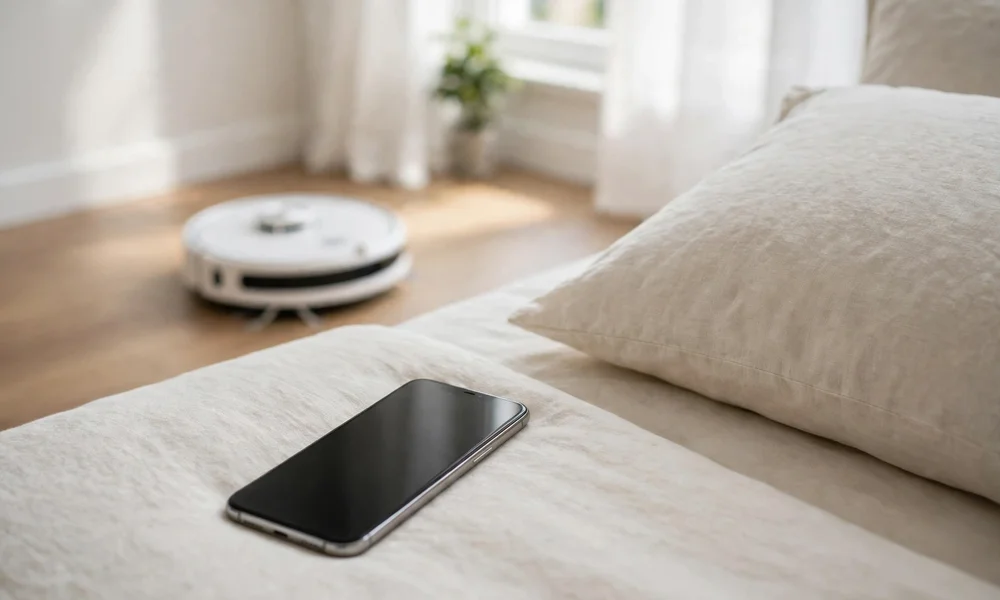
Bedroom Robot Vacuum Checklist
Use this checklist before you buy and again after the first week of use.
- Measure the clearance under the bed and every low piece of furniture, and confirm the vacuum fits with room to spare.
- Check the quiet-mode noise rating and test a night run while you are awake before trusting it overnight.
- Confirm the filter is a true HEPA filter with a sealed system if allergies are a concern.
- Clear cables and clutter from the floor, then draw no-go zones in the app after the first mapping run.
- Place the dock with clear space around it and schedule self-emptying for a time when the noise will not wake anyone.
- Set a weekly routine: wipe the sensors, check the brush roll for hair, and empty or replace the filter on schedule.
Frequently Asked Questions
Can a robot vacuum run at night while I sleep?
Yes, if you choose a quiet model rated at 58 decibels or lower in night mode and test it once while awake. Whisper-quiet models around 52 decibels are designed for overnight runs.
Will a robot vacuum fit under my bed?
Most robot vacuums between 3.1 and 3.5 inches tall fit under standard bed frames. Measure your bed clearance first and leave at least a quarter inch of spare room.
Do robot vacuums help with bedroom allergies?
Yes, especially models with sealed HEPA filtration that trap dust mites, pollen, and pet dander instead of blowing them back into the air. Daily cleaning makes the biggest difference.
How often should a robot vacuum clean a bedroom?
Daily is ideal, since dust and skin flakes build up fast on bedding and floors. A short daily quiet-mode run keeps the room consistently clean.
Is a self-emptying dock worth it for a bedroom?
For most people, yes. It means the vacuum can run daily without you handling a dusty bin. Just remember the dock empties with a short burst of noise, so schedule emptying for the daytime if you are a light sleeper.
Can a robot vacuum clean around a nightstand and bed legs?
Yes, if it has good mapping and a side brush that reaches into corners. Let it learn the room on the first mapping run, then add no-go zones around cables and fragile items.
The Bottom Line
The best robot vacuum for a bedroom is the one that cleans well without disturbing your sleep. Prioritize a quiet mode under 58 decibels, a slim profile that fits under your bed, and sealed HEPA filtration if allergies are part of the picture. The all-round pick suits most bedrooms, the whisper-quiet model suits light sleepers, and the HEPA specialist suits allergy households.