The best smart thermostats for bedrooms in 2026 keep your sleeping space at exactly the right temperature all night, without you ever having to think about it. A bedroom is not like a living room: it needs to cool down before bed, stay steady while you sleep, and warm gently before your alarm.
Too many homes still rely on a single thermostat in the hallway, which leaves the bedroom a few degrees too warm or too cold. That small difference matters, because sleep quality is closely tied to temperature: a room slightly too warm leaves you tossing and turning.
In this guide, we compare the leading smart thermostats for bedrooms in 2026, from premium learning models to simple budget picks. Every model was judged on bedroom strengths: quiet operation, accurate sensing, sleep-friendly schedules, and a display that will not light up your room at 2 a.m.
Key takeaways
- The best smart thermostats for bedrooms hold the room between 60 and 67 degrees Fahrenheit overnight, the range most sleep experts recommend.
- Room sensors matter most in a bedroom, because a hallway thermostat cannot tell how warm your sleeping space is.
- Look for a display that dims or turns off at night, so its glow never disturbs your sleep.
- Schedules that pre-cool the bedroom before bedtime and warm it before waking deliver the biggest comfort gain.
- You do not need the most expensive model: a good budget thermostat with scheduling and app control covers most bedrooms well.
Why Your Bedroom Deserves Its Own Thermostat
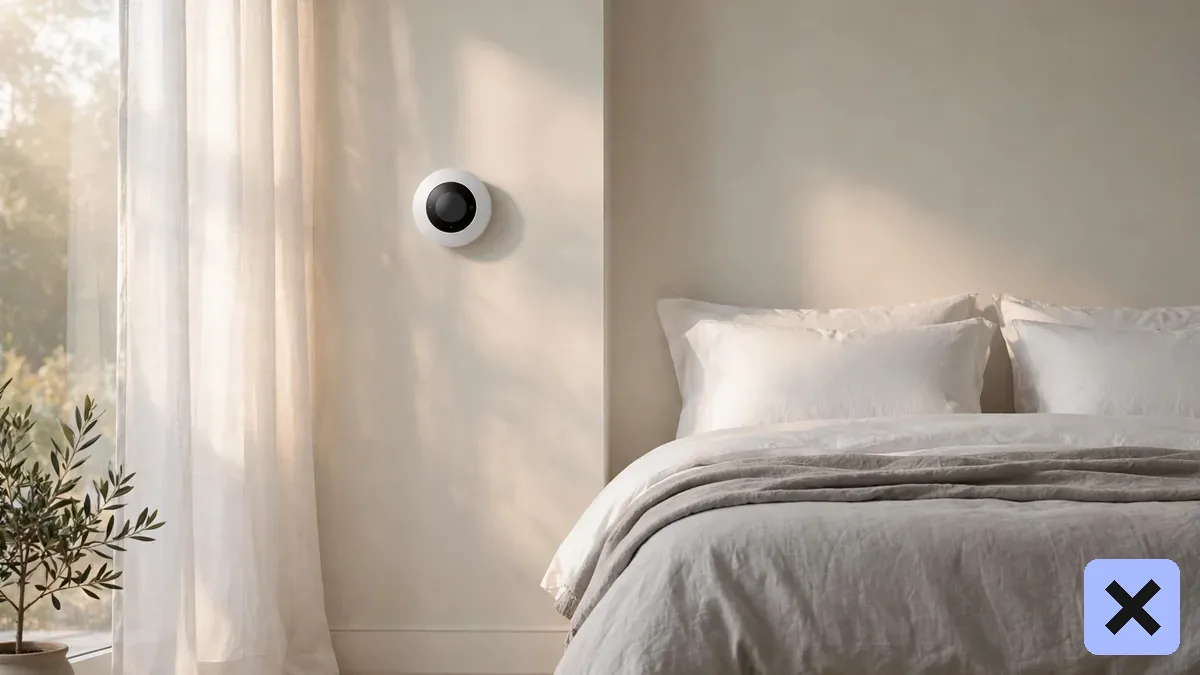
Most homes have one thermostat controlling the whole house, usually in a hallway or living room. The problem is simple: hallways and bedrooms heat and cool at different rates. A bedroom upstairs, one with large windows, or one above a garage can easily sit several degrees away from the hallway reading, leaving it stuffy in summer and chilly in winter.
A smart thermostat built with the bedroom in mind solves this in two ways. A wireless room sensor lets heating and cooling follow the temperature where you actually sleep, and a sleep schedule cools the room in the evening and warms it in the morning, rather than following a daytime routine meant for the living room. People who switch often report falling asleep faster and waking less.
How We Picked the Best Smart Thermostats for Bedrooms 2026
We judged every thermostat on the features that matter most at night. Temperature accuracy came first, because a thermostat that reads two degrees off is useless for sleep. Room sensor support came next, since sensing the bedroom itself is the biggest upgrade over a hallway thermostat. We also weighed display brightness and night modes, scheduling flexibility, humidity sensing, and compatibility with common systems. App quality mattered too, and so did value.
The Best Smart Thermostats for Bedrooms 2026
These five stood out for different rooms, budgets, and heating systems.
| Thermostat | Best For | Room Sensors | Display | Price Range |
|---|---|---|---|---|
| Google Nest Learning Thermostat (4th Gen) | Best overall | Yes | Bright, auto-dimming | Premium |
| Ecobee Smart Thermostat Premium | Room sensors | Yes, included | Clear, dimmable | Premium |
| Amazon Smart Thermostat | Budget pick | No | Simple, subtle | Budget |
| Honeywell Home T9 | Zoned bedrooms | Yes | Clean touchscreen | Mid-range |
| Sensi Touch 2 | Simple touchscreen | Yes, optional | Large, dimmable | Mid-range |
1. Google Nest Learning Thermostat (4th Gen) — Best Overall
The Google Nest Learning Thermostat remains the best all-round choice for bedrooms in 2026. It learns your routine over the first week or two, then builds a schedule around it, cooling the bedroom before bedtime and warming it before you wake. The large display dims automatically in low light, and optional room sensors let it prioritise the bedroom over the hallway. Its only real drawback is the premium price.
2. Ecobee Smart Thermostat Premium — Best for Room Sensors
If your bedroom runs noticeably warmer or cooler than the rest of the house, the Ecobee Smart Thermostat Premium is the strongest pick. It ships with a room sensor in the box, and extra sensors are easy to add, so it manages the bedroom temperature directly instead of guessing from the hallway. The air quality monitor and humidity sensor add useful context, and the display dims nicely at night. It is a premium model, but for problem bedrooms it earns its price.
3. Amazon Smart Thermostat — Best Budget Pick
The Amazon Smart Thermostat proves that a bedroom upgrade does not need to cost much. It covers the essentials well: reliable scheduling, app control, and Alexa voice control in a small, unobtrusive design. The display is simple and does not glow brightly at night. What you give up is room sensor support and learning features: you set the schedule yourself. For a bedroom that already heats and cools fairly evenly, that is a fair trade. If your home is small and the rooms stay close in temperature, the principles in our guide to smart thermostats for small homes apply here too.
4. Honeywell Home T9 — Best for Zoned Bedrooms
The Honeywell Home T9 is built for homes where different rooms need different temperatures. Its room sensors can prioritise the bedroom at night and the living areas during the day, switching focus automatically on a schedule. That suits bedrooms over a garage, facing the afternoon sun, or never matching the rest of the house. The touchscreen is clean and readable, the display dims in the dark, and it works with a wide range of systems, including many older ones. It lacks the learning tricks of the Nest, but for zoned comfort it is hard to fault. To cover the whole house as well, compare it with our picks for smart thermostats for the whole home.
5. Sensi Touch 2 — Best Simple Touchscreen
The Sensi Touch 2 is the pick for anyone who wants a smart thermostat that still feels simple. Its large touchscreen is easy to read and use, with clear controls and a display that can be dimmed at night. It supports room sensors, so the bedroom can be the priority, and it works with most systems without a common wire in many installations. There is no learning algorithm: you set a schedule, and it follows it. For a straightforward bedroom thermostat at a mid-range price, it is an excellent choice.
What Matters Most in a Bedroom Thermostat
Quiet Operation
A thermostat itself makes no noise, but it controls equipment that does. The best bedroom thermostats let you run the fan gently and avoid short cycling that clicks the system on and off all night.
Temperature Accuracy
Accuracy is everything in a bedroom. A thermostat that reads two degrees high will leave you too warm all night, and you may never realise it is the cause. Room sensors help enormously, because they measure the air where you sleep rather than the air in a hallway.
Sleep Schedules
The best bedroom feature of any smart thermostat is a proper sleep schedule. Set the room to begin cooling an hour before bed, hold steady overnight, and warm up thirty minutes before your alarm, matching how your body temperature naturally falls at night and rises in the morning.
Display Brightness
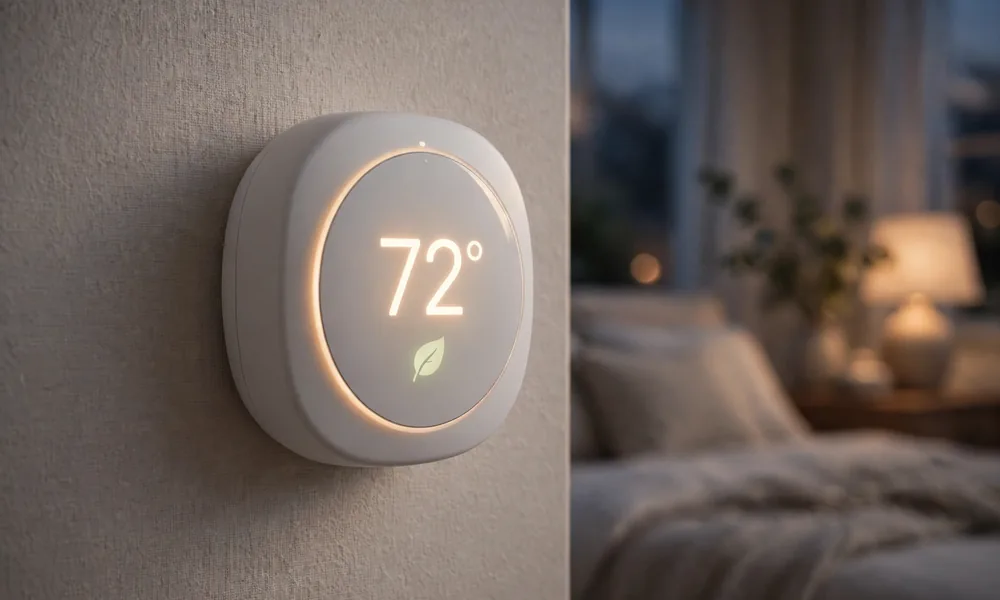
A bright thermostat display can act like a small night light, and that is the last thing you want beside the bed. The best models dim automatically, turn the display off until touched, or offer a night mode, so treat display control as a must-have if your thermostat sits inside the bedroom.
Humidity Sensing
Humidity affects how warm a room feels. A bedroom at 68 degrees with high humidity can feel clammy, while the same temperature with dry air feels crisp. Thermostats with humidity sensing can run the system to reduce moisture.
The Ideal Bedroom Temperature for Sleep
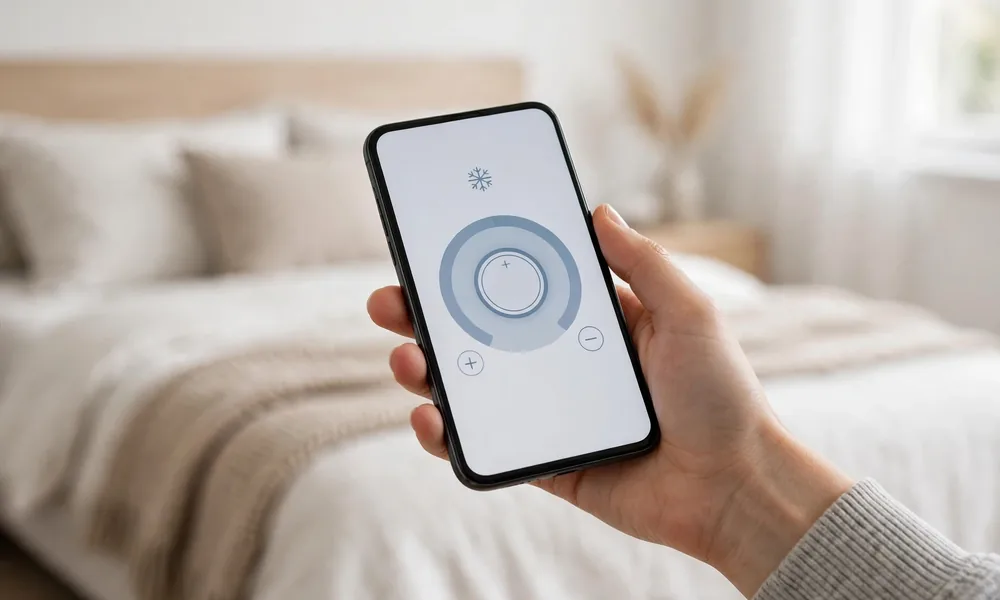
Most sleep experts recommend a bedroom temperature between 60 and 67 degrees Fahrenheit, or about 15 to 19 degrees Celsius, with most people sleeping best at the cooler end, around 65 degrees. Your body temperature naturally drops as you fall asleep, and a cool room supports that process. The right setting still varies: heavy duvet sleepers may prefer the cooler end, while those who wake up cold should try the warmer end.
The advantage of a smart thermostat is that you can test settings easily: change the sleep temperature by one degree, live with it for three nights, and see how you feel. Children and older adults often prefer a slightly warmer room, so households with different needs have another good reason to use room sensors and schedules that treat the bedroom as its own zone. Once the temperature is sorted, a bedroom pairs well with other smart comfort upgrades, such as the smart speakers for bedrooms that can play white noise as you drift off.
Installation and Compatibility Checklist
Run through this checklist before buying. It takes five minutes and prevents the most common installation headaches.
- Check your wiring: confirm whether your system has a common wire, and whether your thermostat needs one or includes an adapter.
- Confirm your system type: most models support forced air, heat pumps, and boilers, but check your exact setup before ordering.
- Measure the wall space: make sure the thermostat fits where the old one sits, especially in older homes with small backplates.
- Test your Wi-Fi: the thermostat needs a reliable signal where it will be installed.
- Plan sensor placement: place a bedroom sensor at pillow height, away from windows and direct sunlight.
- Set the schedule first: configure the sleep schedule during setup, so the first night already benefits from the new thermostat.

Smart Thermostats vs. Traditional Thermostats in the Bedroom
A traditional thermostat holds one temperature until someone changes it. In a bedroom, that means the room is often too warm when you get into bed and too cool by morning, and you end up adjusting it by hand after you are already uncomfortable. A smart thermostat changes the temperature before you notice: it cools the room before bedtime, holds it steady overnight, and warms it before waking, all on a schedule you set once. Remote sensors, humidity readings, and app control add layers a traditional thermostat cannot offer, and a smart schedule stops heating an empty bedroom during the day.
Frequently Asked Questions
What is the best temperature for a bedroom at night?
Most sleep experts recommend 60 to 67 degrees Fahrenheit, with around 65 degrees suiting most adults. Adjust by one degree at a time over several nights.
Do I need a room sensor for my bedroom?
Not always, but it helps a lot if your bedroom runs warmer or cooler than the hallway. A sensor lets the thermostat manage the bedroom temperature directly.
Will a smart thermostat work without a common wire?
Many models work without one, either by drawing power differently or by using an included adapter. Check the requirements for your model and heating system before buying.
Can a smart thermostat really save money?
Yes, mainly by not heating or cooling empty rooms. A bedroom schedule that eases off during the day and only conditions the room before bedtime cuts waste noticeably.
Is the display light a problem at night?
It can be, which is why the models in this guide dim or turn off their displays in the dark.
Do smart thermostats work with Alexa and Google Home?
Most do. The models in this guide support Alexa, Google Assistant, or both, so you can adjust the bedroom temperature by voice or in a bedtime routine.
The Bottom Line
The best smart thermostats for bedrooms in 2026 make good sleep easier by keeping the room at a steady, cool temperature all night. The Google Nest Learning Thermostat is the best overall pick for most bedrooms, the Ecobee Premium is the strongest choice for rooms with uneven temperatures, and the Amazon Smart Thermostat is the best value at a low price. Whichever model you choose, add a room sensor if you can, set a proper sleep schedule, and give the new temperature a few nights before judging it.