A violin bow looks like a simple stick: a bit of wood, some horsehair, a screw at the end. Tighten it, and play. What nobody tells a first-time player is that the bow decides how much of their playing actually reaches the room. A good bow is straight, balanced, and even, with hair that grips the string and a stick that bends just enough to follow the music. A bad one warps, sheds hair, and skips across the strings, so every note sounds scratchy and every phrase sounds uneven. The worst violin bows of 2026 make practising miserable, teach bad habits, and fall apart before the first year of lessons ends. A player deserves a bow that helps them shape their sound, not one that fights them at every stroke.
What Makes a Violin Bow Bad
A violin bow has one job above all others: it must draw sound from the string honestly. A player moves the bow slowly and expects a soft note, moves it faster and expects a louder one, and the bow should answer the same way every time. Bad bows fail this test on the first day. Their sticks are either stiff as rods or so soft they bend under their own weight, and neither one teaches the player anything about tone. The hair often makes things worse, uneven from one end to the other, so the sound changes as the bow travels and a long note wobbles no matter how steadily the player moves. The balance is just as bad, with a bow that feels heavy at the tip and light at the frog, so the arm tires within minutes.
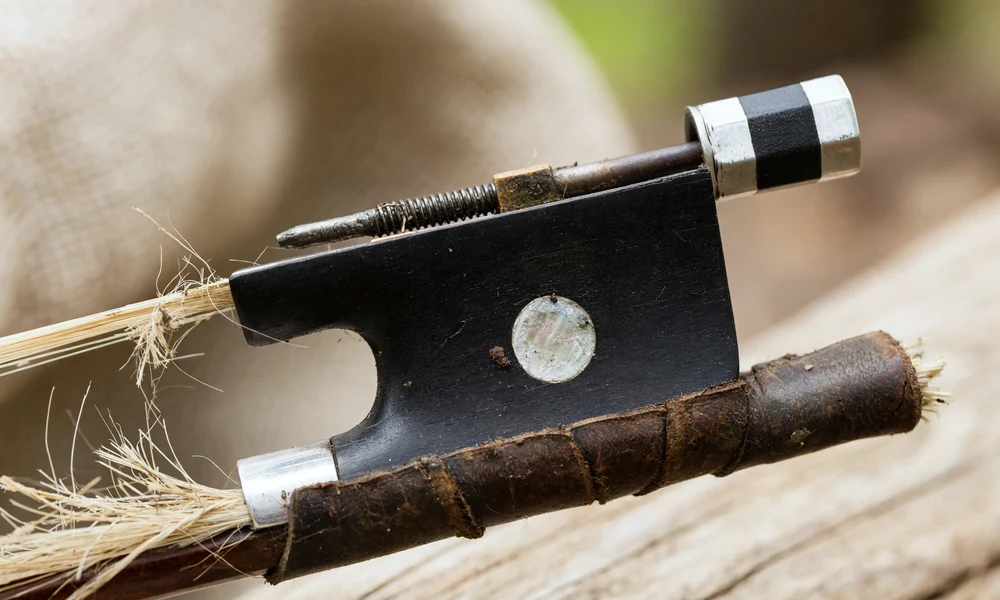
The second problem is the hair, which is where cheap bows cut the deepest corners. A good bow has hair that is even, clean, and well seated, with enough grip to catch the string and enough give to let it sing. A bad one has hair that is thin, brittle, and badly fitted, shedding strands with every practice session until the bow is bald in the middle. The rosin never helps, because the hair is too smooth to hold it, and the sound stays scratchy no matter how much rosin is applied. Cheap bows also skimp on the fittings, so the frog wobbles on the stick, the screw sticks when it is turned, and the button falls off in the case. A player who cannot trust their bow cannot practise, and a bow that sounds bad will not be used for long.
The Main Types of Violin Bow, and Where They Go Wrong
Wooden student bows are the usual first recommendation, and they are the hardest to get badly wrong, which is exactly why the bad ones stand out. A good wooden bow is straight, with a stick that has a gentle camber and a frog that moves smoothly. A bad one has a stick that is already warped out of the box, a camber that bends the wrong way, and a frog that sticks halfway along the stick. The wood is often the giveaway: a good one is dense and even, while a bad one is soft and pale, with knots and grain that runs across the stick instead of along it. The screw is another weak point, rough and gritty on the cheapest models, so the hair cannot be tightened evenly.
Carbon fibre bows promise straightness and durability, and the bad ones fail in a different way. They are straight and strong, but the balance is wrong, with a tip that feels dead and a frog that feels heavy, so the bow never feels alive in the hand. The extra features are often a trick: the bow claims a fancy winding and a leather grip, but the grip slips within weeks and the winding unravels at the ends. Fibreglass bows look like a bargain, yet the cheap ones have a stick that flexes too much, so the bow bounces on the string instead of drawing a clean sound. A bow that cannot hold a straight line is not a professional tool, no matter how straight the stick claims to be.
The Faults That Matter Most
Warping is the fault that ends most cheap bows. The stick is the part that does the actual work, and on a bad bow it bends first. The bow curves sideways, the hair no longer meets the string evenly, and the sound goes thin on one side of the stroke and scratchy on the other. Once the stick warps, the bow cannot be fixed, and no amount of careful storage can straighten wood that was never seasoned properly. The hair fails next: the strands break, the ribbon thins in the middle, and the bow that once gripped the string now slides across it without making a sound. A player who cannot trust their hair stops practising long notes, and the whole point of a bow is lost.
Balance is the other fault that matters, because a bow is held, lifted, and moved constantly. A bad bow has a frog that is too heavy, a tip that is too light, and a screw that adds weight in the wrong place, so the hand tires within minutes. The grip is often the weakest link of all, thin leather that peels away from the stick, leaving bare wood that slips in a sweaty hand. Heat and damp are another trap: cheap bows have no proper finish, so the stick swells in a damp room and shrinks in a dry one, and the hair goes slack overnight. The right guide helps here too, and our look at the best violins of 2026 covers the instruments that get the basics right, from solid wood to honest setup, so the first lesson feels like the start of a skill rather than a test of patience.

How to Spot a Bad One Before You Pay
Start with the straightness, because it tells the truth faster than any review. Hold the bow up at eye level and look down the stick from frog to tip. A good bow runs straight, with the hair sitting evenly above the stick all the way along. A bad bow curves sideways, and the hair drifts to one side, or the stick bends down in the middle. Try the balance too: hold the bow at the balance point and see if it sits level in the hand, or if the tip drops. Then test the screw the same way, turning it to tighten and loosen the hair, and listen for a smooth turn every time. If the screw sticks or grinds, it will fail in the case.
Next, test the bow on the strings, not just in the air. Play a long slow note on an open string and listen for an even sound from frog to tip, then play a fast passage and listen for skips. Any scratching, skipping, or uneven volume is a fail, and it will only get worse as the hair wears. Check the hair as well, because a bow with thin or broken strands is a bow that needs new hair on day one. Look at the frog while you play: if it wobbles or the button turns on its own, the fittings are too loose. A bow that cannot draw a clean long note is not a bargain at any price.
The Hidden Costs of a Bad Bow
The price on the box is never the real price of a bad violin bow. A player who buys the cheapest bow usually pays again within a year, first for a replacement, then for a rehair when the hair falls out, then for a repair when the stick warps. The cheap bow also costs practice time, because every session starts with fiddling: hair that needs tightening twice, a screw that sticks, a frog that wobbles. Those lost minutes add up, and a beginner who spends more time fixing the bow than playing will stop practising altogether. The frustration is worse than the money, because it arrives exactly when the player is most enthusiastic, in the first weeks of lessons, and it teaches the wrong lesson: that violin is hard, when the truth is that the bow is bad.
There is a musical cost too, because a bow that cannot draw a clean sound teaches the ear nothing. A player who cannot hear the difference between a smooth note and a scratchy one never learns to listen, and a player who cannot hold a long note repeats the same mistakes for months. A bad bow also limits what the player can learn: without a straight stick there is no sense of bow control, without even hair there is no sense of tone, and without honest balance there is no sense of playing with others. The player ends up learning to compensate for the bow instead of learning the violin, and those compensations have to be unlearned later on a proper bow. Buying right the first time is cheaper, faster, and far better for the ear than buying twice.

What to Buy Instead
The safest buy is a bow from a maker with a long record in string instruments, even if it means a simpler model or a used one. A well-made wooden bow holds its straightness for years, while a cheap fibreglass one is tired after one season. Check a used bow the same way you would check a new one: sight down the stick, test the screw, and play a long note from frog to tip. The same thinking applies to the rest of the setup: the right instrument matters as much as the bow, which is why our guide to the best violas of 2026 starts from the same advice, check the build, check the balance, and never trust a bow you have not played with your own hands.
One last check before paying: ask to try the bow on your own violin, not the shop’s demo instrument. A bow that sounds good on a shop violin and bad on yours is no good to you, and a bow that draws a clean note on your own instrument in the shop will draw one at home too. The best test is always your own violin, your own strings, and your own ears.
The Bottom Line
The worst violin bows of 2026 share the same faults: sticks that warp, hair that sheds, screws that stick, and a balance that tires the arm. They are easy to spot once you know what to look for, and they are easy to avoid. Sight down the stick, play a long note, and test the screw before you pay. The same thinking applies to the rest of the setup: the other gear matters just as much, which is why our guide to the best cellos of 2026 starts from the same advice, check the straightness, check the hair, and never trust a bow you have not played.