A yoga towel has one job: to keep you from slipping when sweat turns your mat into a slide. The worst yoga towels of 2026 fail at it in ways that leave you sliding out of a pose, fighting a towel that has bunched under your knees, or peeling a damp cloth off your face mid-practice. They slip when wet, which is the one moment they must grip. They are too small to cover the mat, too thin to absorb anything, or made from fabric that sheds lint all over your leggings. Owners buy them expecting a dry, steady practice. What they get is a towel that makes the slipping worse. A towel that makes slipping worse is worse than no towel at all, because it gives a false sense of safety that a bare mat never would.

Towels That Slip When Wet
Grip when wet is the whole point of a yoga towel, and the worst ones lose it exactly when sweat arrives. Smooth microfibre slides across a mat instead of gripping it, towels with no silicone dots skate under hands and feet, and a towel that grips when dry but not when damp is worse than no towel at all, because it gives a false sense of safety. The failure shows up in the middle of a hot class, when a hand slides forward in a plank and a shoulder takes the strain. A hand that slides forward in a plank puts the shoulder under strain it was never meant to take, and a towel that slides is a towel that causes the injury it was bought to prevent.
The test takes thirty seconds and a wet hand. Dampen the towel, press your palm onto it on a mat, and push forward. A good towel holds its place, with grip dots or a suede-like texture that bites when wet. A bad one moves with your hand, which is exactly what it will do under your feet. Check the underside too: a towel with a grippy backing stays put, while a towel that is smooth on both sides is a rug waiting to slide. Our guide to the best yoga mats of 2026 shows which mats grip on their own, and which ones need a towel to help.
Too Small, Too Thin, Too Bunchy
Size decides whether a towel works, and the worst ones are cut like hand towels pretending to be yoga towels. A towel that covers only the middle of the mat leaves hands and feet on bare, sweaty rubber, and a towel that is too narrow for a wide mat slides sideways with every move. Thin towels are worse still: they soak through in minutes, go cold and clammy against the skin, and offer no cushioning for knees on a hard floor. A towel should cover the mat fully and absorb a whole session of sweat. A towel that covers only the middle of the mat leaves hands and feet on bare, sweaty rubber, which is exactly where grip matters most.
Bunching is the failure owners notice last and curse most. A towel with no weight to it rides up under knees in a lunge, folds under feet in a standing pose, and needs straightening every few breaths, which breaks the flow of a practice. Heavier towels with a suede finish stay flat, while light, silky ones wander. Lay the towel on your own mat, step onto it, and move through three poses. If you have to fix it once, you will fix it fifty times in a class, and that is fifty interruptions you did not pay for.
Fabric That Sheds, Smells, and Shrinks
Cheap microfibre is the quietest failure in a yoga towel, because it looks fine until the first wash. It sheds lint onto dark leggings, pills into hard little balls that scratch the skin, and holds onto sweat smell no matter how often it is washed. Some towels come out of the machine a different size from the one that went in, shrinking lengthways until they no longer cover the mat, or stretching sideways until they hang over the edges. A towel that changes shape in the wash is a towel you will replace within months. A towel that comes out of the machine a different size from the one that went in will not cover the mat it was bought for, however good it looked in the shop.
Dyes are part of the same problem. Bright towels that bleed colour in the wash stain pale mats and pale clothing, and a towel that fades unevenly looks tired long before it wears out. Wash a new towel alone first, and check the water: if it runs coloured, the towel will mark everything it touches. A good towel survives dozens of washes without shrinking, shedding, or smelling, because it is made from dense, well-finished fabric rather than the cheapest cloth a factory could find.
Grip Dots That Give Up
Silicone grip dots are the feature that separates a towel that stays put from one that wanders, and the worst ones lose their dots within weeks. Cheap dots peel off in the wash, crack with heat, or were never properly bonded in the first place, leaving smooth patches that slide exactly where your hands need grip most. A towel that starts with full grip and ends with half its dots missing is a towel that fails slowly, which is worse than failing at once, because you keep trusting it. A towel that starts with full grip and ends with half its dots missing fails slowly, which is worse than failing at once, because it keeps being trusted.
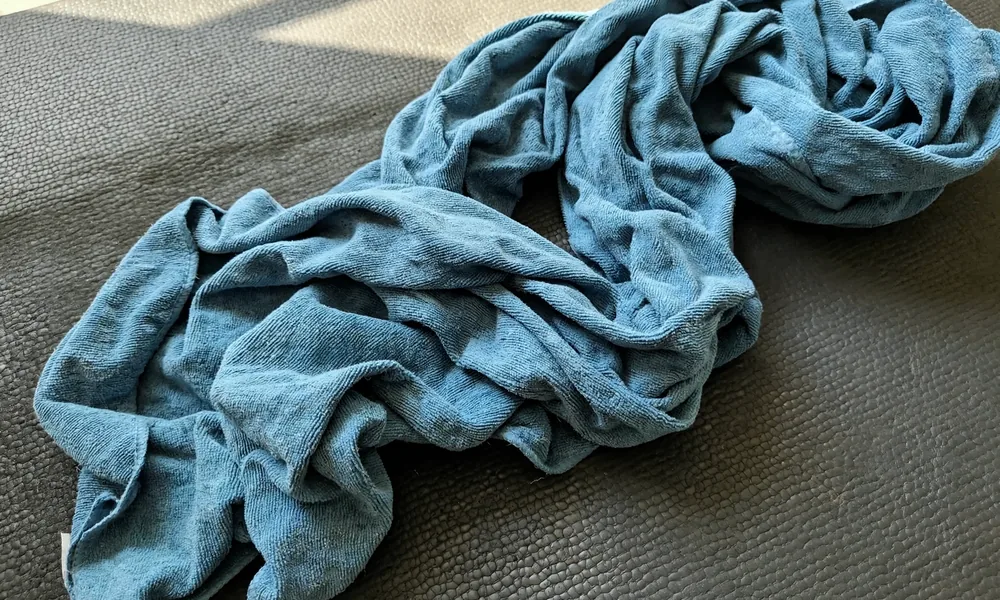
Rub a dot with your thumbnail before you buy, and wash the towel twice before you trust it in a hot class. Dots that survive two hot washes will usually survive fifty, while dots that peel early never get better. A towel with dots only in the middle is another trap: hands and feet land at the edges of the mat, not the centre, so grip needs to reach the corners. If the dots stop halfway across the towel, the towel stops working halfway across the mat.
Towels That Stink After One Class
A towel that smells after a single hot class is a towel made from the wrong fabric. Cheap synthetic cloth holds onto sweat smell no matter how often it is washed, because bacteria live in the fibres and survive a cool wash. A towel that comes out of the machine smelling damp will smell worse by the middle of the next class, and a towel that smells is a towel that will be left at home. The fix starts with washing hot enough to kill bacteria, and ends with a fabric that dries fully between uses. A towel that comes out of the machine smelling damp will smell worse by the middle of the next class, and a towel that smells is a towel that gets left at home.

Air-drying matters as much as washing: a towel left screwed up in a gym bag stays damp for hours, which is exactly how mildew starts, while a towel hung up to dry properly is ready for the next session. A splash of white vinegar in the rinse helps with smell, and a towel that still smells after a hot wash and a proper dry has fabric that is finished. Buy a towel that dries fast, wash it hot, hang it up, and it will stay fresh for years rather than weeks.
Hot Yoga Needs More Than a Towel
Hot yoga produces far more sweat than a gentle class, and the worst towels pretend one thin cloth is enough. A towel that soaks through in the first ten minutes of a hot class leaves the rest of the practice on a wet mat, which is exactly the slipping problem the towel was bought to solve. Hot practice needs a towel that absorbs a whole session, or two towels layered, or a towel plus grip socks, and a towel sold as universal rarely says which of those it can do. A towel that soaks through in the first ten minutes leaves the rest of the practice on a wet mat, which is exactly the problem it was bought to solve.
The honest answer is to carry a spare. A second towel, folded and dry, can replace the first halfway through a long hot class, and a pair of grip socks covers the feet when the towel gives up. A mat designed for hot yoga, with a surface that grips when wet, helps more than any towel, and the towel becomes a backup rather than the only line of defence. If a towel claims to handle hot yoga on its own, test it in a hot class before trusting it, because a towel that fails in heat fails where it matters most.
What to Buy Instead
The towels worth buying share a short list of features, and none of them is expensive on its own. A size that covers your whole mat, with a weight that keeps it flat. A suede-like or grippy texture that holds when wet, with silicone dots that reach the corners and survive the wash. Fabric dense enough to absorb a full session without going cold and clammy, and a dye that stays put through dozens of washes. If a towel fails any one of those checks, keep looking. A towel that works on day one and still works in a year is worth every penny, and a towel that fails in the first month teaches the same lesson for free.
Fit matters as much as build, and the towel should suit the practice in front of you rather than the practice in the photograph. Hot yoga needs maximum grip and absorption, gentle yoga needs softness and warmth, and a travel practice needs a towel that packs small without losing its grip. Try the towel on your own mat, with wet hands, through three poses, and wash it twice before the first real class. A towel that works on day one and still works in a year is worth every penny. If you travel with your practice, our guide to the best travel towels of 2026 covers the towels that pack small and dry fast.
The Bottom Line
The worst yoga towels of 2026 share a pattern: they slip when wet, they are too small or too thin to cover a mat, their fabric sheds and shrinks, and their grip dots peel off in the wash. Avoid those four failures and you avoid almost every towel regret. Wet your hand, press the towel, check the size against your mat, and wash it twice before you trust it. Do that, and the towel you buy will be the one that stays flat, stays dry, and stays put through the whole practice. And if you want the rest of your kit to match, our guide to the best gym essentials of 2026 covers the basics that earn their place in every bag.