Every beginner cook starts with the same hopeful mistake. You walk into a kitchen shop, or scroll through an online store late at night, and suddenly every tool looks essential. The worst kitchen tools beginners should skip are not always cheap or obviously useless. Many look clever and well made, and they promise faster chopping and better meals with less effort.
A new kitchen works best when it is small, simple, and used every day. A sharp knife, a solid board, one good pan, and a pot you trust will teach you more than a drawer full of gadgets ever will. The tools below are the ones beginners buy first and regret fastest. Some are hard to clean. Some only do one job.
This guide is about spending wisely and learning in the right order. Skip the worst kitchen tools for now, learn what you actually cook, and add tools later when a real need appears.
Key takeaways
- Buy versatile tools first. A good knife, board, pan, and pot cover most beginner cooking.
- Skip single-use gadgets until you cook the dish they serve at least once a month.
- Cheap knife sets and flimsy pans cost more in replacements than one good tool costs once.
- Counter space is cooking space. Every gadget left out makes prep slower and messier.
- Learn the skill before buying the shortcut. Technique beats equipment almost every time.

Why Beginners Buy Too Much, Too Soon
Beginners do not buy bad tools because they are careless. They buy them because cooking looks complicated from the outside, and equipment feels like a shortcut to confidence. A video shows a chef using a special slicer. A recipe mentions a particular pan. A friend swears by a gadget that changed everything. Each suggestion sounds reasonable alone, but together they crowd a kitchen before its owner has cooked twenty meals.
Marketing makes this worse. Tools are sold as solutions to fear: fear of cutting yourself, fear of burning food, fear of wasting time, fear of looking like an amateur. A gadget that promises to remove that fear is easy to buy, even when the fear would fade after a few weeks of practice. Most beginner mistakes come from heat that is too high, seasoning that is too light, or timing that is slightly off. No gadget fixes those things. Only practice does.
The Worst Kitchen Tools Beginners Should Skip
The tools below are the worst offenders for beginners. They are not all bad in every situation. A keen baker may love one of them. But for someone still learning, each one is a poor use of money and space.
Single-Use Gadgets That Do One Small Job
Avocado slicers, egg separators, garlic presses, strawberry hullers, and corn strippers share the same flaw: they do one narrow job that a knife or spoon already does well enough. They also need cleaning, drying, and storage, so a thirty-second task becomes a three-minute job once washing is included. A garlic press saves a few seconds of chopping, then takes longer to clean than the chopping took. Many of them quietly fill the kitchen, as explained in our guide to the worst kitchen gadgets that waste counter space.
Cheap Knife Sets in a Wooden Block
A big knife set looks like value. Ten or twelve knives in a handsome block, often at a price that seems too good to miss, feels like a complete solution. In practice, most of the knives are never used. Beginners need one good chef’s knife, one small paring knife, and perhaps a serrated bread knife. The rest sit in the block, dulling slowly. Cheap sets are often made from soft steel that loses its edge quickly and is hard to sharpen well. A dull knife is slower, less accurate, and more dangerous than a sharp one, because it slips instead of cutting.
Oversized and Specialist Pans
Beginners are often tempted by large, heavy, or specialist pans: a giant stock pot for meals they never cook in bulk, a wok they use twice a year, a paella pan, or a copper pan that needs careful handling. These are not bad tools, but they are bad first tools. They are heavy, hard to store, and often wrong for the small, everyday meals a beginner actually makes. Start with one medium frying pan that heats evenly and one medium saucepan with a lid. Those two cover frying, sautéing, boiling, simmering, and reheating.
Electric Gadgets You Will Not Use Weekly
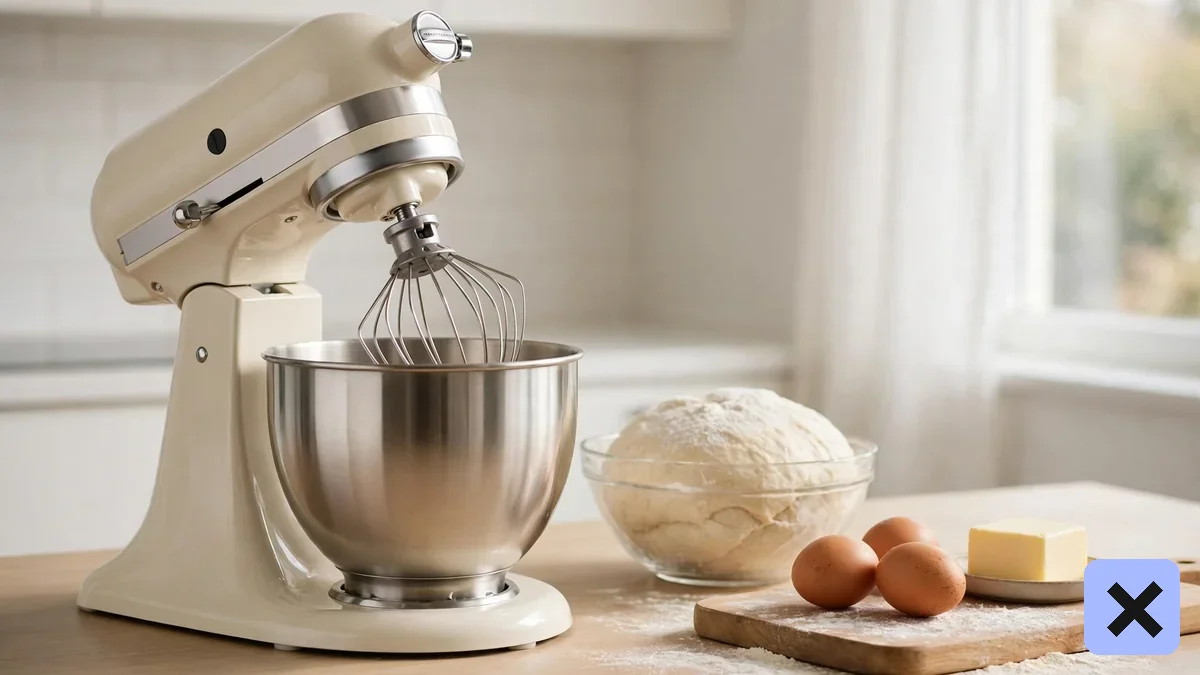
Electric gadgets are the most expensive version of the single-use problem. A bread maker, a juicer, a pasta machine, or an ice cream maker each promise a new habit, but habits are hard to build around a machine that needs assembly, cleaning, and storage. Most are used enthusiastically for a month, then moved to a cupboard and forgotten. They also cost far more than the manual alternative, and they fail in ways a simple tool cannot: motors burn out, seals leak, and parts go missing. There are exceptions. If you already make smoothies every morning, a blender earns its place. The test is the same as for every tool: does your current cooking already demand it?
Novelty Tools and As-Seen-On-TV Gadgets
Novelty tools are designed to be bought, not used. They appear in short videos where a simple task looks magical, usually with bright colours and a cheerful presenter. The video never shows the cleaning, the storage, or the tenth use, when the novelty has worn off and the tool is just another thing in the drawer. Many are flimsy, made from thin plastic that cracks or warps, and they often do a worse job than the basic tool they replace. The deeper cost is distraction: every novelty tool is a small decision, a small cleaning job, and a small piece of clutter.
What to Buy Instead
A beginner kitchen needs far less than the shops suggest. The table below compares the common beginner purchase with the better alternative. The better option is usually simpler, cheaper over time, and used far more often.
| Common beginner buy | Why it disappoints | Better alternative |
|---|---|---|
| Cheap 12-piece knife set | Most knives unused; soft steel dulls fast | One good chef’s knife plus a paring knife |
| Single-use slicers and presses | Slow to clean; only one narrow job | A sharp knife, a board, and practice |
| Specialist and oversized pans | Heavy, hard to store, rarely used | One frying pan and one saucepan with lid |
| Electric novelty gadgets | Expensive, fiddly, quickly forgotten | Manual basics until the habit is proven |
| Flimsy utensil bundles | Handles melt or snap; poor balance | A wooden spoon, a spatula, and tongs |
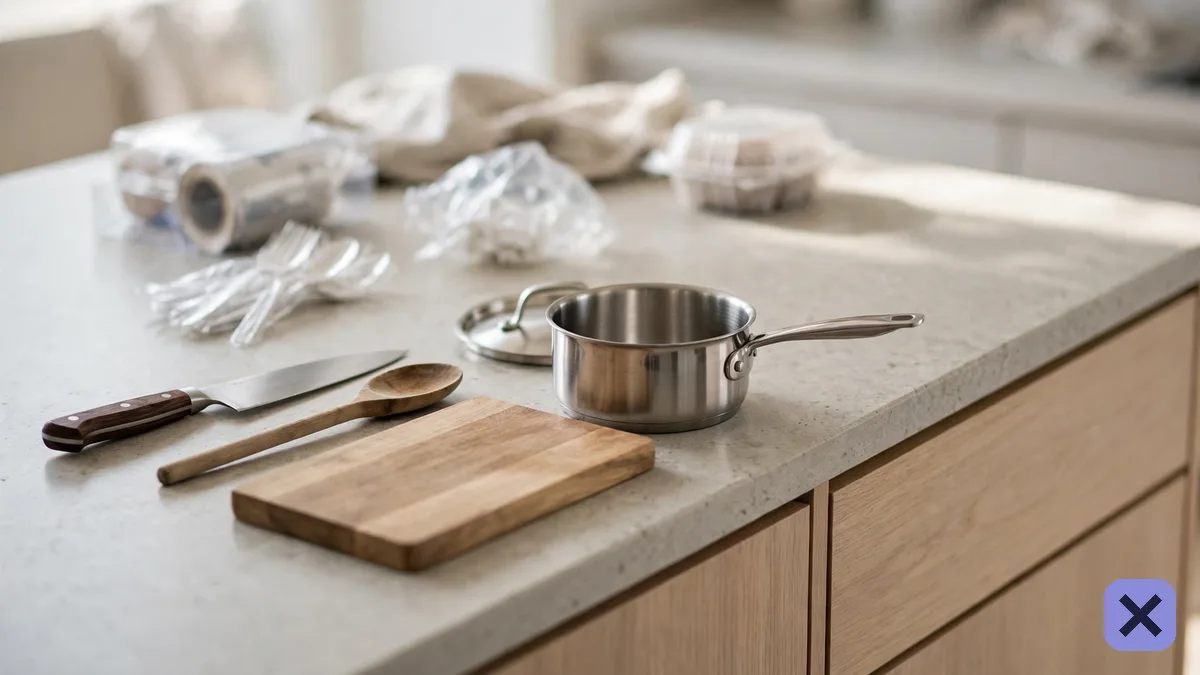
That short list is enough for most beginner cooking: a chef’s knife, a paring knife, a cutting board, a frying pan, a saucepan, a wooden spoon, a spatula, tongs, a colander, and a mixing bowl. Add a baking tray if you bake or roast. Everything else can wait until a recipe you love keeps asking for it.
How to Test a Tool Before You Buy It
A simple test saves more money than any sale. Before buying, ask three questions. First, what exact dish will I use it for, and how often do I cook that dish now? If the answer is less than once a month, skip it. Second, what do I use now to do the same job, and is that really failing? Often the current tool is fine, and the problem is technique, not equipment. Third, where will it live, and how will I clean it? If it needs a special shelf or a ten-minute wash, it will be used less than you expect. The same discipline applies to meals: when too many options make a simple task feel complicated, the answer is usually to simplify, a point our guide to why a menu should not need a strategy meeting makes in a different setting.
The Beginner’s Checklist: Before You Buy Another Tool
Use this checklist before any new kitchen purchase. It takes a minute, and it stops most regretted buys. If a tool passes all six checks, it is probably a sensible addition. If it fails two or more, put the money back in your pocket and cook with what you already have.
- I cook the dish this tool serves at least twice a month already.
- No tool I own does this job well enough with a little practice.
- I have a clear, easy place to store it where I can reach it daily.
- I can clean and dry it in under two minutes without special care.
- It is well made from materials that will last years, not months.
- It replaces two or more weaker tools, or it does one job I do constantly.
Keep this checklist near your shopping list. Impulse buys happen in the shop, when a tool looks useful and the price looks small. A written check slows that moment down just enough to think clearly. Over a year, those small pauses add up to real savings, and to a kitchen that contains only tools you actually trust.
How Clutter Slows Down Learning
A crowded kitchen does not just look messy. It slows learning directly. When every drawer is full, finding the right tool takes longer and starting a meal feels like a chore. The fix is simple: take everything out of one drawer, keep only what you used in the last month, and put the rest in a box for a month. This is the same idea behind avoiding the worst storage ideas that create more clutter: storage should make cooking easier, not hide the problem behind a tidier-looking mess.
Frequently Asked Questions
What kitchen tools should a beginner buy first?
A good chef’s knife, a paring knife, a cutting board, a frying pan, a saucepan with a lid, a wooden spoon, a spatula, tongs, a colander, and a mixing bowl. That set covers chopping, frying, boiling, simmering, stirring, draining, and mixing, the core moves in most everyday recipes. Add a baking tray if you bake or roast.
Are expensive kitchen tools worth it for beginners?
Some are, and some are not. One expensive tool you use daily, like a good chef’s knife or a solid frying pan, is worth the money because it lasts longer, works better, and is safer. An expensive single-use gadget is rarely worth it, because the cost is high and the use is low.
Should beginners buy a knife set or one good knife?
One good knife is the better choice for almost every beginner. A chef’s knife handles most chopping, slicing, and dicing, and a small paring knife covers the finer work.
How do I know if a kitchen gadget is a waste of money?
Ask how often you will use it, how long it takes to clean, and whether a tool you already own does the job. If you use it less than once a month, or cleaning takes longer than the task it saves, it is probably a waste of money for now.
Is it better to buy cheap tools and upgrade later?
It is better to buy fewer good tools than many cheap ones. Cheap tools often break, dull, warp, or melt, and replacing them costs more than buying well once.
What should I do with kitchen tools I already regret buying?
Keep any tool you use at least once a month. For the rest, put them in a box for a month and see if you miss them. If you do not open the box, donate them to someone who will use them. Clearing them out gives you back counter and drawer space, and it makes the tools you keep easier to find.
The Bottom Line
The worst kitchen tools beginners should skip are the ones that promise a shortcut and deliver clutter: single-use gadgets, cheap knife sets, oversized specialist pans, electric machines bought on hope, and novelty tools built to be sold rather than used. None of them will teach you to cook better.