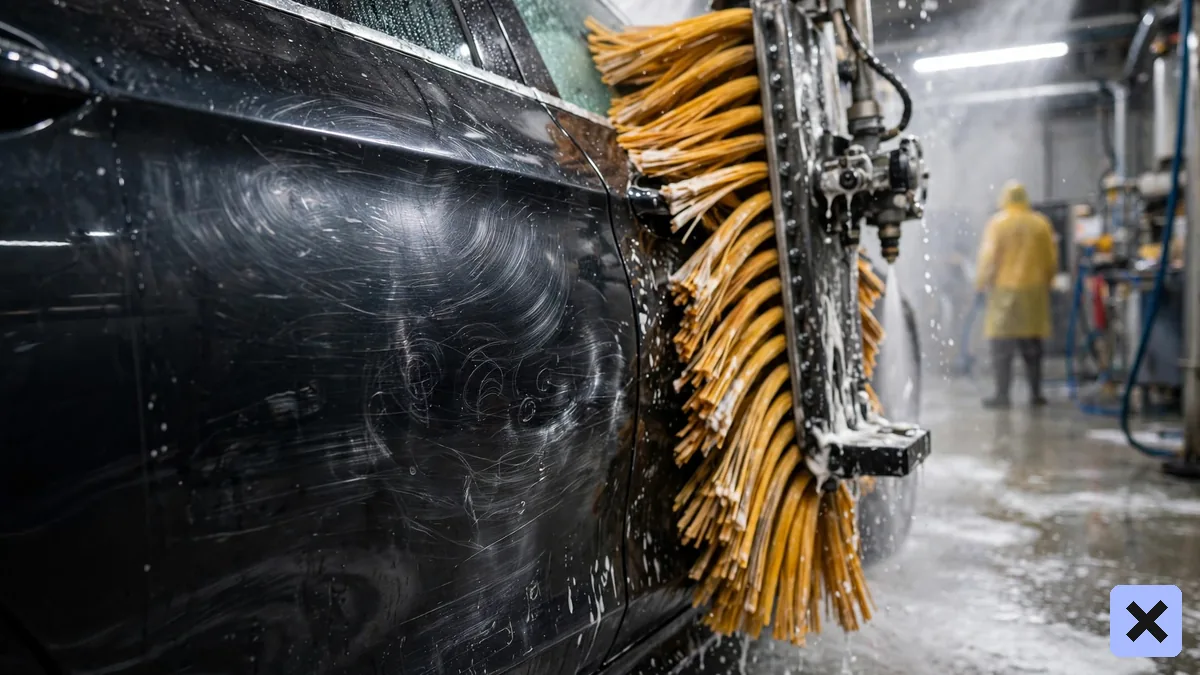
A clean car should feel like a small win, not the start of a repair bill. Yet the worst car washes for paint damage are often the most convenient ones: the quick drive-through, the cheap tunnel wash, and the roadside hand wash that promises a shine in ten minutes.
The car comes out looking wet and glossy, and only later, in bright sunlight, do the fine circular scratches, dull patches and hazy panels appear. Paint damage from washing is rarely caused by one event. It builds up visit after visit, as dirt, grit and worn brushes are dragged across the clear coat.
Each pass adds a few more scratches. On dark paint they show up first, as a web of swirls that kills the deep reflection. Once the clear coat is scratched through, the only proper fix is machine polishing or a respray.
Key takeaways
- Old automatic brush washes are the worst for paint damage, because dirty, stiff bristles drag grit across the clear coat on every car.
- Swirl marks are the most common result, and they are hardest to see on light paint, so a wash can be damaging your car long before you notice.
- Cheap hand washes that reuse one bucket and one sponge for every car can scratch paint just as badly as a bad machine wash.
- Touchless washes are gentler on paint but rely on strong chemicals, so they are a compromise, not a perfect solution.
- The safest routine is a proper two-bucket hand wash with clean mitts, or a well-maintained touchless wash when time is short.
Why Some Car Washes Damage Paint
Modern car paint is a layered system. On top of the colour coat sits a thin layer of clear coat, usually only about as thick as a sheet of cling film, which gives paint its shine and protects the colour underneath. It is tough, but anything carrying grit can mark it.
Most wash damage is abrasion. A brush, mitt or towel that has picked up sand, brake dust or dried mud acts like sandpaper, and even a soft-looking cloth becomes abrasive once it is dirty. Pressure makes it worse, pushing the grit into the surface instead of lifting it away.
How Swirl Marks Form
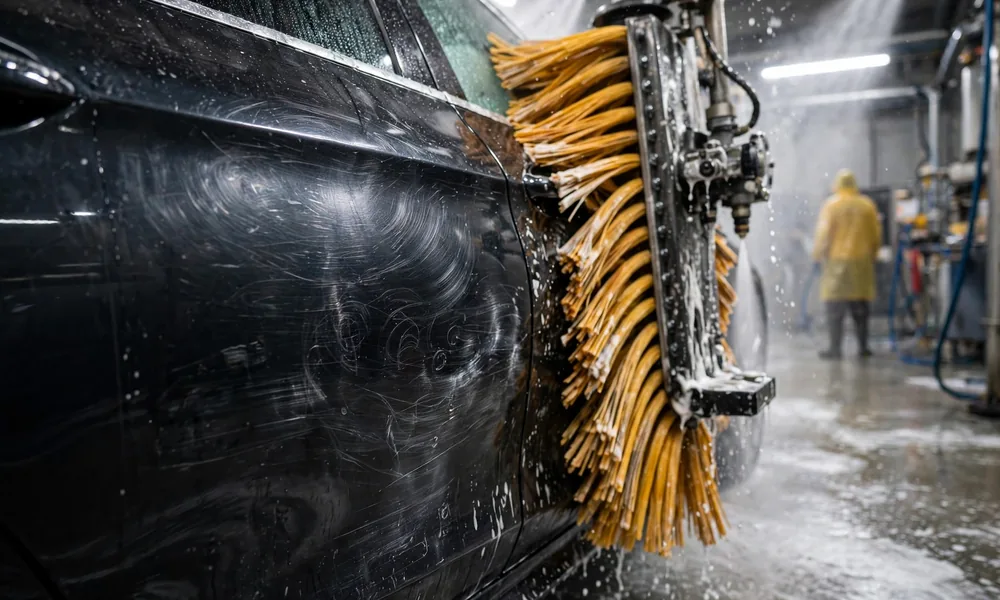
Swirl marks are fine, circular scratches in the clear coat. They form when something moves in a circle across dirty paint, which is exactly what a rotating brush does, and what a worker does when they wipe a bonnet in circles with a dirty sponge. In shade they can be almost invisible, but in direct sun they turn the paint into a hazy web, especially on black, dark blue and dark grey cars.
The Worst Car Washes for Paint Damage
Not every wash is equally risky. Some are bad because of the equipment, some because of the chemicals, and some because of the way the work is done.
1. Old Automatic Brush Washes
The classic tunnel wash with big rotating brushes is the worst car wash for paint damage, and it is not close. The brushes are often stiff plastic or cloth strips that have been in service for years, carrying grit and sand picked up from previous cars, which they press into the clear coat at speed. A single visit can leave visible swirls on a dark car, and regular visits can leave the whole car hazy within a year.
2. Cheap Roadside Hand Washes
Roadside hand washes look gentler than machines, because a person is doing the work. In practice, many of the cheapest ones are just as damaging. The usual setup is one bucket, one sponge and one towel, used on car after car without proper rinsing, so the sponge carries grit from one car to the next. Workers are often paid per car and work fast, so they scrub rather than wash, pressing the sponge into the paint instead of loosening dirt first. They dry with the same chamois they have used all day, dragging any remaining grit across the surface.
3. Washes That Reuse Dirty Water
Water recycling is common in commercial washes, and it is not automatically bad. The problem is when the filtration is poor or the filters are not maintained. Fine grit, brake dust and road salt stay in the water and are sprayed back onto the next car at pressure, driving grit into the paint before the brushes even touch it. If the water in the wash bay looks murky, or the rinse water leaves a gritty film on the car, the filtration is not doing its job.
4. High-Pressure Jet Washes Used Too Close
A jet wash on its own is not a bad tool. The damage comes from how it is used: a narrow nozzle held a few centimetres from the paint, at full pressure, aimed at the same spot. That can strip wax, lift the edges of stone chips, and force water under trim and badges, and on older or repaired paint it can even lift flakes of clear coat. Use a wide fan nozzle, not a needle jet, keep the lance moving, and never aim it directly at panel gaps, mirrors or number plates at close range.
5. Petrol Station Brush Washes With No Maintenance
Petrol station washes are convenient, but many are maintained to a minimum. The brushes may be replaced only when they are visibly falling apart, and the cloth strips may be left until they are stiff and matted. Detergent dosing may be set once and never checked, so the wash is either too weak to clean or so strong that it strips protection. Some forecourt washes also skip a proper pre-rinse and go straight to the brushes, so the dirt on your car is still there when the brushes arrive.
6. Washes That Use Harsh Chemicals
Touchless washes avoid brushes, but some replace friction with chemistry. Strong alkaline cleaners and traffic film removers can strip wax and sealant in one pass, leaving the paint unprotected. Used regularly, they can dry out rubber seals and trim and leave a chalky film. The car looks clean, but the protection is gone, so the next layer of dirt sticks harder. Cheap hand washes sometimes use washing-up liquid or industrial degreaser instead of proper car shampoo, which strips wax and dries out the clear coat.
Warning Signs to Spot Before You Drive In
You can judge most washes in under a minute. Start with the brushes: if they look matted, stained, stiff or frayed, walk away. Look at the water: if it is cloudy or the bay floor is covered in grit, the filtration is poor. If the cars coming out are covered in water spots, streaks or a dull film, yours will be too. Watch the staff at a hand wash: do they rinse the car before touching it and use separate buckets? Price is also a clue, because a wash far cheaper than every other option in the area is saving money somewhere.
What the Damage Costs You
Paint damage is easy to ignore because it does not stop the car from working, but it costs real money, and the costs rise sharply once the clear coat is damaged. A light polish to remove swirls is the cheapest fix, but it is still a professional job, and it needs repeating if the wash habit does not change. Deeper scratches need spot repairs, and damage through the clear coat needs a respray. The hidden cost is resale value: buyers notice dull, swirled paint immediately. Choosing a car colour that holds its value matters, but even the best colour loses its advantage when the paint is covered in wash marks.
| Type of damage | Typical cause | Usual fix | Relative cost |
|---|---|---|---|
| Light swirl marks | Dirty brushes, sponges or towels | Machine polish | Low to moderate |
| Deep scratches | Grit dragged under pressure | Spot repair and polish | Moderate |
| Water spot etching | Hard water dried in the sun | Polish, sometimes wet sanding | Moderate to high |
| Clear coat failure | Repeated abrasion and harsh chemicals | Panel respray | High |
| Stripped wax and sealant | Strong alkaline cleaners | Reapply protection | Low |
Prevention is cheaper than repair. A bottle of proper car shampoo and a clean wash mitt cost far less than a single machine polish. The most expensive option is the wash that looks cheapest at the time, damaging the paint a little on every visit until the bill arrives all at once.
Safer Ways to Wash Your Car
The safest wash is a proper hand wash, done with the two-bucket method. One bucket holds clean soapy water, the other holds rinse water, and the mitt is rinsed in the second bucket before it goes back into the first. The car is rinsed first, washed with a soft mitt using straight lines rather than circles, rinsed again, and dried with a clean microfibre towel. It takes longer than a drive-through, but it gives you full control over what touches the paint.
If you do not have the time or space for a full hand wash, a well-maintained touchless wash is the next best option. It uses high-pressure water and detergent instead of brushes, so there is no friction on the paint, but it will not clean as thoroughly as a hand wash and is best used occasionally. Never wipe a dusty car with a dry cloth, because the dust acts as an abrasive, and never use a petrol station squeegee on the paintwork. Some car features cost far more to repair than they are worth, so keep high-pressure jets at a safe distance from sensors, cameras and trim as well.
Checklist: Choosing a Car Wash That Will Not Damage Your Paint
- Check the brushes or cloth strips first: if they look stiff, matted or dirty, do not use the wash.
- Look for a proper pre-rinse that removes loose dirt before anything touches the paint.
- At a hand wash, check for separate wash and rinse buckets and clean mitts, not one sponge for every car.
- Avoid washes where the water looks cloudy or the bay floor is covered in grit.
- Choose a touchless wash over an old brush wash when you are short on time.
- Dry the car with a clean microfibre towel, and never let hard water dry on the paint in direct sun.
Frequently Asked Questions
Are automatic car washes bad for paint?
Old brush washes are bad for paint, because dirty, stiff brushes drag grit across the clear coat. Touchless washes avoid contact altogether, but no automatic wash is as safe as a proper hand wash.
Can swirl marks be removed?
Yes, light swirls can usually be removed by machine polishing. Deep scratches that have gone through the clear coat cannot be polished out and need a repair or respray.
Is a touchless car wash safe for paint?
A touchless wash is safer than a brush wash because nothing touches the paint, so it does not cause swirls. The trade-off is stronger chemicals, which can strip wax and sealant, and it will not clean as thoroughly as a hand wash.
Do hand car washes damage paint?
Good hand washes do not damage paint, but cheap ones that reuse one bucket, one sponge and one towel for every car can cause just as much damage as a bad machine wash.
Why does my black car show swirl marks more than other colours?
Dark paint reflects light cleanly, so any break in the clear coat stands out. Light paint hides swirls better, but the damage is still there, dulling the finish.
How often should I wash my car to protect the paint?
Most cars benefit from a wash every one to two weeks. A gentle wash every two weeks protects paint far better than a harsh wash every week, so method matters more than frequency. Small driving habits can also wear a car out faster than expected, so the way you drive and the way you wash both matter.
The bottom line: The worst car washes for paint damage are old brush washes, cheap hand washes that reuse dirty sponges, and any wash that skips a proper pre-rinse or uses murky, recycled water. Choose a proper hand wash with clean mitts, or a well-maintained touchless wash when time is short.