Top Camping Cots for Bad Backs in 2026
A bad back can turn a camping trip into a test of endurance, and the right camping cot is the simplest fix. Sleeping on the ground means every stone and root presses into you, cold seeps up from the earth all night, and getting up in the morning becomes a slow, stiff negotiation. A camping cot lifts you off the ground on a folding frame, so your back rests on a flat, taut fabric surface. The best camping cots for bad backs in 2026 combine a strong frame, a high weight limit, enough width for side sleepers, and a height that lets you stand without a struggle. This guide explains how cots work, how the main types compare, and how to pick one that lets you wake up ready to walk.
Key takeaways
- A cot lifts you 30 to 45 centimetres off the ground, which keeps cold away and makes getting in and out far easier.
- Check the weight limit first: a cot rated well above your weight stays taut instead of sagging overnight.
- Width matters for side sleepers: at least 65 centimetres, and 75 or more if you roll over a lot.
- A firm, taut fabric surface supports your spine better than a soft, sagging one, and a thin pad on top adds comfort.
- Test the cot at home before your trip: if it is hard to assemble in your living room, it will be worse in a tent at midnight.
Why sleeping on the ground hurts a bad back
Ground sleeping punishes a bad back in three ways. First, the ground is never flat: stones and roots create pressure points, and your spine twists to compensate all night. Second, bare earth draws heat away faster than cold air does, so your muscles tighten and you wake up stiffer. Third, getting up from ground level means rolling over and pushing yourself up, the awkward movement that triggers a spasm. A cot solves all three at once.
It helps to be clear about what a cot is and is not. A camping cot is a folding frame, usually aluminium or steel, with a taut fabric sleeping surface stretched across it. It holds you off the ground, and that is its whole job. A camping mattress is a different product: a thick foam or air bed that sits on the ground or on top of a cot. The best camping mattresses of 2026 are excellent at what they do, but a mattress on the ground still leaves you sleeping at ground level, still getting up from the floor, and still feeling every lump underneath it. A cot plus a thin pad gives you the best of both: the height and flat support of the frame, with the cushioning of the pad. Home air mattresses are guest beds for a spare room, not camp kit.
How a camping cot actually works
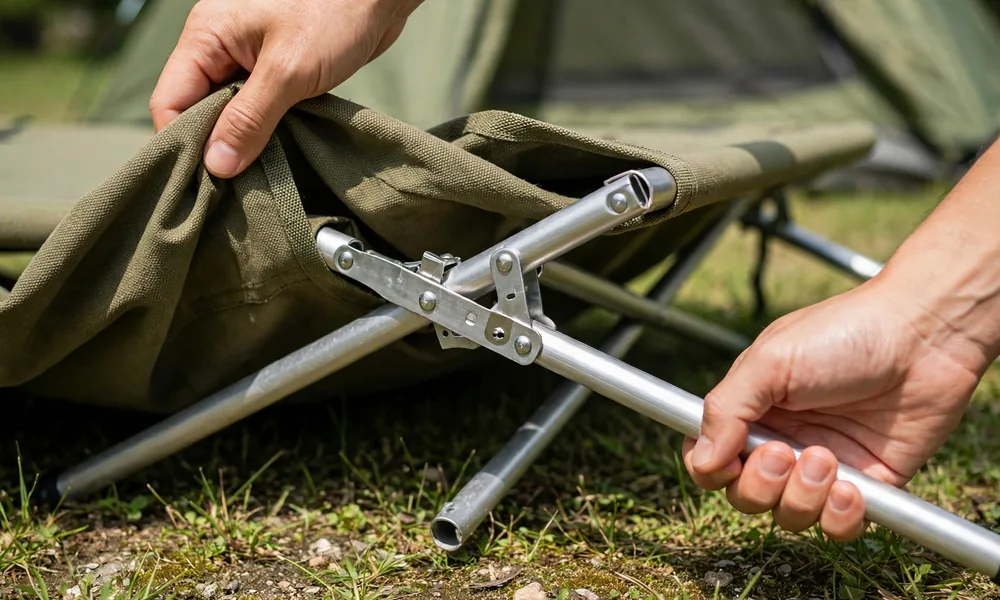
A cot is simple: two side rails run the length of the bed, joined by crossbars or an X-frame, with legs that fold out and lock. The fabric, usually a heavy polyester or nylon canvas, stretches between the rails and is held taut by the frame tension. Your weight spreads across the taut surface instead of concentrating on one point, and the fabric gives just enough to cradle you without sagging. The height, usually 30 to 45 centimetres, is what matters for a bad back: you sit and stand the way you would from a chair, instead of hauling yourself up from the floor. Air circulates underneath, which keeps you cooler in summer and stops condensation under your sleeping bag.
Frame material decides most of the trade-offs. Aluminium frames are lighter and do not rust, but they cost more and support less weight. Steel frames are heavier and cheaper, and they carry higher weight limits, which suits larger campers. The fabric matters too: a tight, heavy weave stays taut for years, while a loose fabric stretches and sags. Look for double stitching where the fabric meets the frame and reinforced corners.
The main types of camping cot, compared
Camping cots fall into four broad types. Standard folding cots are the most common: a simple X-frame design that opens in seconds, supports 100 to 150 kilograms, and suits most car campers. They are cheap and sturdy, but heavy and bulky when folded. Lightweight backpacking cots use aluminium frames to cut weight, sometimes under 3 kilograms, but they cost more, support less weight, and can feel narrow. Oversized or double cots are wider, often 75 to 100 centimetres, with weight limits up to 200 kilograms or more. They are the most comfortable for bad backs, but they are heavy, and they may not fit a small tent. Finally, cot-and-pad combos come with a thin mattress included, though the pad is often thin and worth replacing.
| Type | Weight | Weight limit | Packed size | Best for |
|---|---|---|---|---|
| Standard folding | 7 to 10 kg | 100 to 150 kg | Large | Car camping |
| Lightweight | Under 3 kg | 90 to 120 kg | Small | Backpacking |
| Oversized or double | 10 to 14 kg | 150 to 200 kg | Very large | Bad backs, big sleepers |
| Cot-and-pad combo | 8 to 11 kg | 100 to 150 kg | Large | First-time buyers |
For a bad back, the oversized cot is usually the right choice, if your tent and car can take it. The extra width stops you feeling squeezed, and the higher weight limit keeps the fabric taut instead of sagging. If an oversized cot will not fit your tent, a standard folding cot with a high weight limit is next best: look for one rated at least 20 kilograms above your weight, at least 65 centimetres wide. Lightweight cots suit people who carry their kit on their back, but they are not the best choice for a bad back if you drive to camp.
Size, weight limits and packed size
Size is where most cot buyers go wrong, because cots look bigger in a photo than they feel in a tent. Length is the first check: a cot should be at least 10 centimetres longer than you are tall, so your head and feet do not press the end bars. Standard cots are around 190 centimetres long, but taller campers should look for 200 centimetres or more. Width matters more for bad backs: 65 centimetres is the minimum for comfortable side sleeping, and 75 or more is better if you roll over at night. Measure your tent floor before you buy, because a cot that fits with no room to spare leaves nowhere for your bag and boots.
Setting up: assemble it at home first
Every cot is easy to assemble in a shop and harder in a dark tent after a long drive, so practise at home first. Open the frame fully, lock every joint, and check all four legs sit flat. Most cots need a firm pull to tension the fabric on the last bar: if it is not fully tensioned, the cot sags from the start and your back pays for it. Learn the trick at home rather than discovering it at midnight with a torch in your teeth.
Comfort for bad backs: firmness, pads and pillows
Firmness is the most misunderstood part of cot comfort. A soft, sagging cot feels comfortable for the first five minutes and terrible by morning, because your spine spends the night curved instead of straight. A firm, taut cot feels hard at first and far better by morning, because it holds your spine in a neutral position all night. The best camp beds are supportive, not soft. If the cot feels too hard, add a thin pad on top rather than choosing a softer cot. A self-inflating pad of 3 to 5 centimetres adds cushioning without letting your hips sink, and it insulates you from the cold air underneath. A thick air mattress on a cot is the opposite of what you want: it wobbles and slides. Pair the cot with a roomy sleeping bag for camping, so you can shift position during the night without fighting the zip.

Care, storage and making a cot last
A good cot should last for years, and most wear comes from storage rather than use. Always let the fabric dry fully before you fold the cot away: a damp cot stored in its bag will grow mildew. Brush off mud and sand before folding, because grit wears out the joints. Check the frame joints every few trips, tighten any loose bolts, and replace worn end caps on the feet. Store the cot flat, not piled under heavy boxes, because a bent frame never sits level again.
Who should buy a cot, and what else to pack
A cot is the right choice for car campers and anyone who camps in one place for more than a night, especially if you have a bad back or trouble getting up from the ground. It is the wrong choice for backpackers carrying everything on their backs, and for very small tents, where it will not fit. If you are unsure, hire or borrow one for a weekend: a single night on a cot tells you more than any review. Pack it as a sleep system: the cot for height and support, a thin pad for cushioning, a roomy sleeping bag, and a proper pillow. A good camping essentials list will help you check you have not forgotten the small things, from a torch to a water bottle within reach.
How to choose: a six-point checklist
- Check the weight limit first: choose a cot rated at least 20 kilograms above your body weight, so the fabric stays taut.
- Measure the width: at least 65 centimetres for most adults, and 75 or more if you sleep on your side.
- Check the height: 30 to 45 centimetres lets you sit and stand like getting out of a chair.
- Test the assembly at home: it should open, lock and tension in under five minutes, in daylight and in the dark.
- Feel the fabric: a tight, heavy weave with double stitching at the corners stays supportive for years, while thin fabric stretches and sags.
- Measure your tent: the cot should fit with room to spare for your bag and boots, and in your car when folded.
Frequently asked questions
Are camping cots good for bad backs?
Yes. A cot holds your spine flat and supported, lifts you off cold, uneven ground, and lets you sit and stand without hauling yourself up from the floor.
What weight limit do I need?
Choose a cot rated at least 20 kilograms above your body weight, so the extra margin keeps the fabric taut.
Do I need a mattress on top of a cot?
A thin pad of 3 to 5 centimetres is ideal: it adds cushioning and insulation without losing support. A thick air mattress is not a good idea on a cot, because it wobbles.
Will a cot fit in my tent?
Measure first. A standard cot is about 190 by 65 centimetres, and oversized cots are wider still. You need room beside it for your bag and boots.
Are cots better than camping mattresses?
They do different jobs. A mattress cushions and insulates but leaves you at ground level. A cot lifts you off the ground onto a flat, firm platform.
How heavy is a camping cot to carry?
A standard cot weighs 7 to 10 kilograms and folds to about a metre long, fine for car camping. Lightweight cots weigh under 3 kilograms but support less weight.
The bottom line
A bad back does not have to mean giving up camping. A cot lifts you off the cold, uneven ground, holds your spine flat on a firm, taut surface, and lets you get in and out of bed like getting out of a chair. Pick a cot rated well above your weight, wide enough for how you sleep, and simple enough to assemble in the dark. Add a thin pad and a proper pillow, test it at home, and you will wake up ready for the day.