A steam cleaner is the closest thing to a magic wand in the cleaning cupboard: it turns plain tap water into hot vapour that loosens grease, grime and dried-on dirt, and then you simply wipe the mess away. No sprays, no fumes, no gloves, no rinsing a chemical film off the surface afterwards. For anyone who wants a home that is genuinely clean without filling it with bottles, a steam cleaner earns its place fast. The trick is buying the right kind, because the machines on sale in 2026 range from pocket-sized handhelds to rolling canisters, and they do very different jobs.
The best steam cleaners of 2026 are the ones that hold steady heat, come with the attachments you will actually use, and are light enough that you reach for them instead of the spray bottle.
Key Takeaways
- Steam loosens grime with heat, not chemicals: water heated past boiling point softens grease and dried dirt so a cloth can lift it away.
- Handheld steam cleaners suit small, detailed jobs like grout, taps and oven corners, while canister models suit whole-room jobs like upholstery and mattresses.
- Look for at least three bars of steam pressure and a heat-up time under five minutes, or the machine will feel slow and weak in use.
- Attachments decide the result: a small brush for grout, a wide nozzle for upholstery and a squeegee for glass cover most homes.
- Steam is not for everything: keep it away from unsealed wood, delicate silk, waxed surfaces and anything electrical.
The Best Steam Cleaners of 2026 at a Glance
Use this table to narrow your choice, then read on to see which type suits the jobs in your home.
| Pick | Type | Best For | Typical Price |
|---|---|---|---|
| Best overall | Canister | Whole-home cleaning, upholstery and floors | $150–$300 |
| Best handheld | Handheld | Grout, taps, ovens and small detailed jobs | $50–$120 |
| Best for upholstery | Canister with wide nozzle | Sofas, armchairs and mattresses | $180–$320 |
| Best for kitchens | Handheld with brush set | Ovens, hobs, tiles and grout lines | $70–$150 |
| Best value | Compact handheld | Flats and occasional deep cleans | $40–$90 |
How Steam Actually Lifts Grime
A steam cleaner heats water until it turns to vapour, usually well above 100 degrees, and pushes that vapour through a nozzle or brush. The heat does three things at once: it softens grease so it stops clinging, it dissolves dried food and soap scum, and it loosens dirt trapped in tiny gaps like grout lines and fabric weave. A cloth, pad or brush then wipes the loosened dirt away. Nothing is dissolved by a chemical, so there is no residue left behind and no smell once the surface dries, which takes minutes because so little water is involved.
That last point is what surprises most first-time owners. A steam cleaner uses far less water than a bucket and mop, and the surface is only damp, not wet. That is why steam is so good on upholstery and mattresses: the fabric gets clean without soaking through to the filling, and it dries in an hour or two instead of a day. Our guide to the best mattress cleaners of 2026 covers the other ways to keep a bed fresh, but for a mattress that needs a deep refresh without chemicals, steam is hard to beat.
A Steam Cleaner Is Not a Steam Mop
This is the distinction that decides whether you buy the right machine. A steam mop is a stick with a flat pad that cleans sealed hard floors, and only floors. A steam cleaner is a separate machine, handheld or canister, that comes with a set of attachments and cleans almost anything except floors as its main job: grout, ovens, taps, windows, upholstery, mattresses, car seats and shower screens. The two overlap only at the edges, and buying one when you need the other is the most common mistake in this category.
If your main problem is dirty floors, read our guide to how to pick a steam mop that actually lifts grime instead, because it covers heat-up times, pads and sealed floors in detail. If your floors are already handled and your problem is the grout between the tiles, the grease inside the oven, the marks on the sofa and the haze on the shower glass, you need a steam cleaner, not a mop.
The Types of Steam Cleaner That Matter
Handheld steam cleaners
A handheld steamer is a small unit you hold in one hand, with a water tank of roughly 250 to 500 millilitres and a set of clip-on nozzles. It heats up in two to four minutes and gives you ten to twenty minutes of steam, which is enough for a bathroom, an oven or a round of grout. It is the best choice for flats, for kitchens, and for anyone who wants a machine that lives under the sink and comes out for a specific job.
Canister steam cleaners
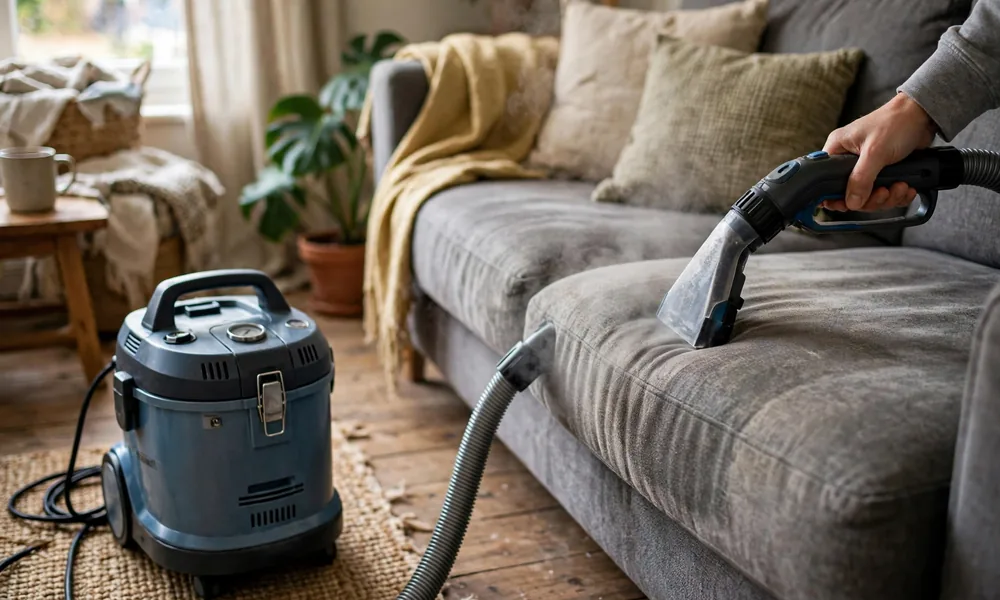
A canister steamer sits on the floor like a small vacuum cleaner, with a hose, a handle and a large tank of one to two litres. It gives you thirty to sixty minutes of continuous steam, stronger pressure, and room for bigger attachments like a wide upholstery nozzle and a floor head. It is the best choice for a family home, for anyone with fabric sofas or a lot of tile, and for the twice-a-year deep clean of the whole house.
What to Check Before You Buy
Steam pressure is the first number that matters, because it decides how far the steam penetrates. Look for at least three bars on a handheld and four bars on a canister. Below three bars, the steam is more of a warm puff than a cleaning tool, and you will find yourself going over the same patch again and again.
Heat-up time decides whether the machine becomes a habit. The best handhelds are ready in under three minutes and the best canisters in under five. A machine that takes eight minutes to heat up gets used only on cleaning day, and then not at all. Check whether the tank can be refilled while the machine is hot: a removable tank you can top up mid-job is worth more than it sounds.
Attachments are where cheap machines cut corners, so read the box carefully. You want a small round brush for grout and taps, a wide flat nozzle with a cloth for upholstery, a squeegee for glass and mirrors, and a jet nozzle for tight corners. Also check the cord and hose length: a five-metre cord and a two-metre hose let you clean a whole room from one socket, while a short hose means moving the canister constantly.
Where Steam Cleaners Shine
Grout and tiles
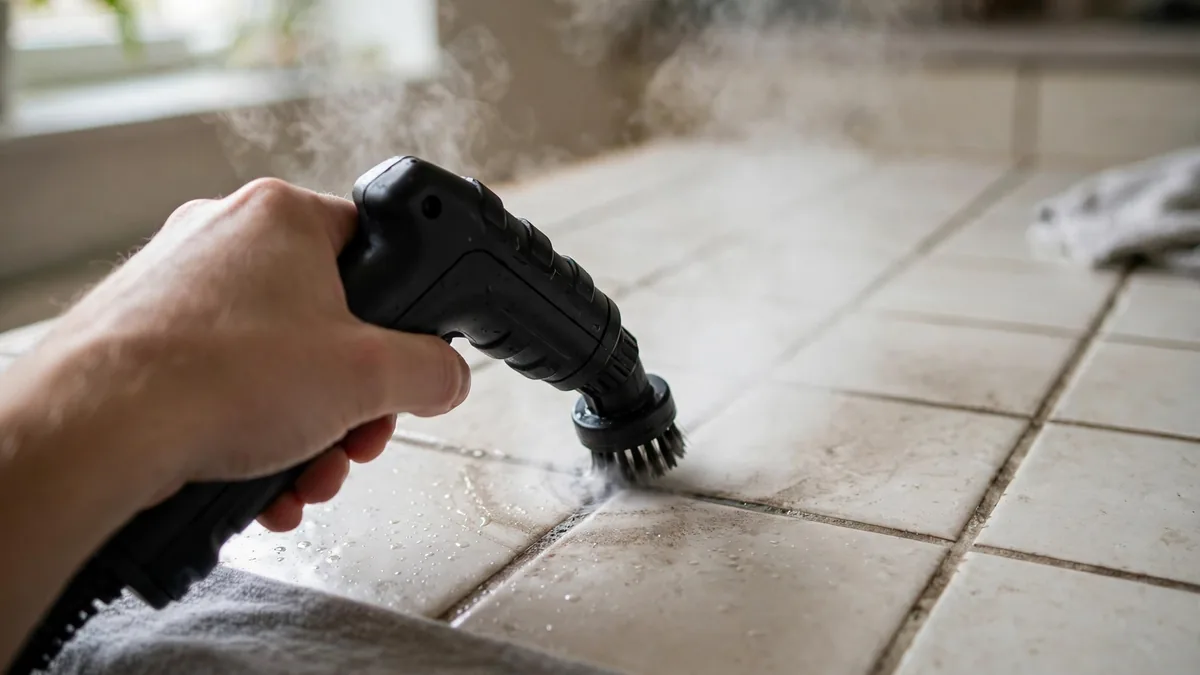
Grout is the single best job for a steam cleaner. The lines between tiles hold grease, soap and dried spills that a normal cloth only wets, and hot steam softens them so a small brush lifts them out in one pass. Work in short sections, hold the brush on the line for a few seconds, and wipe with a cloth as you go. For the jobs where steam alone is not enough, our guide to the best grout cleaners of 2026 covers the sprays and pastes worth keeping alongside the steamer.
Ovens, hobs and kitchen grease
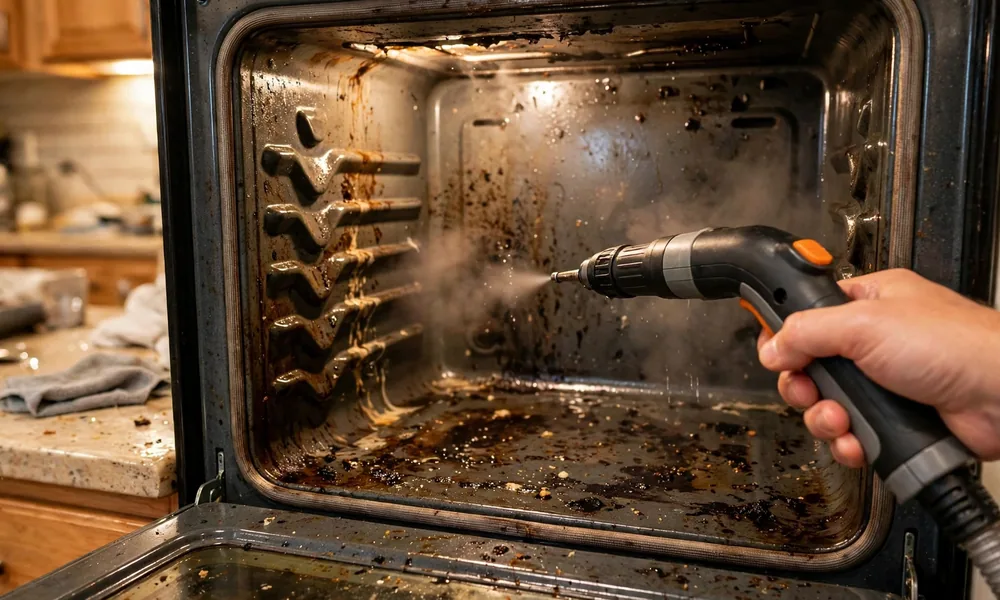
Baked-on grease inside an oven is the job that converts most sceptics. Steam softens the carbonised layer so it wipes off instead of needing to be scraped, and there is no chemical smell filling the kitchen. Use the jet nozzle on the corners and the brush on the racks, and wipe with a damp cloth while the surface is still warm. The same approach works on hob surrounds, extractor filters and the seal around the fridge door.
Upholstery, mattresses and car interiors
Fabric sofas, armchairs, mattresses and car seats all benefit from steam, because the heat lifts body oils, dust and odours out of the weave without soaking the filling. Use the wide nozzle with a cloth cover, move slowly, and let the fabric dry with the windows open.
Where Steam Does Not Belong
Steam is powerful, and that power has limits. Never use it on unsealed wood, waxed floors or laminate with open seams, because the moisture swells boards and lifts finish. Keep it off delicate fabrics like silk and velvet, off painted walls that are already flaking, and well away from anything electrical, including plug sockets, light fittings and the inside of appliances.
Using a Steam Cleaner Properly
Fill the tank with tap water unless your water is very hard, in which case distilled water stops limescale building up inside the boiler. Let the machine reach full temperature before you start: steam that is not hot enough is just damp air. Work in small sections, hold the nozzle close for a few seconds to let the heat work, then wipe with a clean cloth while the dirt is still soft.
Afterwards, empty the tank and leave the lid open so the boiler dries. A machine that is emptied and dried after every use lasts years longer than one left full and damp in the cupboard.
Buying Checklist
- At least three bars of steam pressure on a handheld, four on a canister.
- Heat-up time under five minutes, with a removable tank you can refill mid-job.
- A brush for grout, a wide nozzle for upholstery and a squeegee for glass in the box.
- A cord of at least five metres and a hose long enough to reach across a room.
- A weight you can hold comfortably for fifteen minutes without a break.
- On-board storage for every attachment, so nothing gets lost between uses.
Frequently Asked Questions
Do steam cleaners really clean without chemicals?
Yes, for everyday grime. The heat softens grease and dirt so a cloth lifts it away, and no detergent is involved. Heavily soiled surfaces may still need a pre-treatment, and steam does not remove limescale, but for routine cleaning it genuinely works with water alone.
Can I use a steam cleaner on my sofa?
Yes, on most fabric sofas, using the wide upholstery nozzle with a cloth cover and slow passes. Test a hidden patch first, let the fabric dry fully, and avoid leather, suede, silk and velvet, which steam can mark.
Is a steam cleaner better than a steam mop?
They do different jobs. A steam mop cleans sealed hard floors and little else, while a steam cleaner handles grout, ovens, upholstery, mattresses and glass. If your problem is floors, buy a mop; if it is everything else, buy a steam cleaner.
How long does a tank of water last?
A handheld tank of 250 to 500 millilitres gives roughly ten to twenty minutes of steam, while a canister of one to two litres gives thirty to sixty minutes. A removable tank you can refill while the machine is hot extends that without a wait.
Can steam cleaners damage grout or tiles?
Sealed grout and glazed tiles handle steam well, and it is one of the best ways to clean them. Avoid steam on cracked grout, unsealed stone and damaged tiles, where moisture can get underneath and loosen the surface.
Do I need distilled water?
Tap water is fine in soft-water areas. In hard-water areas, distilled water prevents limescale building up in the boiler, which keeps the pressure strong and extends the life of the machine.
The Bottom Line
A steam cleaner earns its place by doing the jobs nothing else does well: grout that stays grey, ovens that defeat every spray, sofas that smell faintly of everyday life. Buy a handheld if your jobs are small and specific, buy a canister if you want one machine for the whole house, and judge either by pressure, heat-up time and the attachments in the box. Keep it off unsealed wood and delicate fabrics, empty the tank after every use, and the machine will quietly replace half the bottles under your sink.