
Grout Cleaners That Bring Tiles Back to White in 2026
Grout cleaners that bring tiles back to white are the fastest way to make a bathroom or kitchen look newly tiled without replacing a single tile. Grout starts out pale and clean, then slowly turns grey, yellow or brown as soap scum, grease, hard water and everyday dirt settle into its porous surface. The tiles themselves still look fine, but the dark lines between them make the whole room look tired. A good grout cleaner lifts that ground-in dirt out of the grout instead of just bleaching the surface, and the difference shows at the first rinse.
This guide covers the grout cleaners worth buying in 2026: the main types, what makes one work on stained grout without damaging tiles or sealant, and how to use them properly. It covers cleaners made for the grout lines between floor tiles, wall tiles and shower tiles. It is not about general tile cleaning, and our guide to the best all-purpose cleaners of 2026 covers the everyday spray for the tile surface itself.
Key Takeaways
- A gel grout cleaner is the best all-round choice, because it clings to vertical grout lines and stays in contact long enough to work.
- Oxygen bleach cleaners are the safest option for coloured grout and sealed stone, because they lift stains without harsh fumes or discolouration.
- Chlorine bleach cleaners whiten the fastest, yet they can damage coloured grout and should never be mixed with anything else.
- A narrow stiff grout brush does more work than any cleaner on its own, because grout lines are too thin for a sponge or cloth to reach into.
- Seal the grout after cleaning, and it will stay white for months instead of staining again within weeks.
Why Grout Turns Grey
Grout turns grey because it is porous. Unlike the glazed tile around it, grout is a cement-based filler full of tiny holes that soak up whatever lands on them. In the shower that means soap scum and shampoo, in the kitchen it means cooking grease and splashed food, and on the floor it means dirt carried in on shoes. Each layer sinks a little deeper, and a surface wipe only touches the top.
That is why ordinary cleaning fails on grout. A mop passes over the lines without reaching into them, and a spray wiped off after thirty seconds never gets time to dissolve dirt that has had months to settle in. A grout cleaner works differently: it sits in the line, soaks into the pores, and loosens the dirt from inside so a brush can lift it out.
The Main Types of Grout Cleaner
Grout cleaners come in four main forms, and each one attacks stained grout in a different way. The right choice depends on whether the grout is white or coloured, how badly it is stained, and where the tiles are.
Gel Cleaners
A gel grout cleaner is the best grout cleaner for most homes in 2026. The thick formula is squeezed straight along the grout line, where it stays put instead of running off, even on vertical shower walls. That contact time is what lifts ground-in dirt, and a gel usually clears in one application what a thin spray needs two attempts to shift.
Oxygen Bleach Cleaners
Oxygen bleach cleaners use sodium percarbonate, which releases oxygen bubbles that lift stains out of the grout without harsh fumes. They are the safest choice for coloured grout, because they clean without bleaching the colour out, and they suit sealed stone tiles that chlorine would damage. The trade-off is time: an oxygen bleach cleaner needs a longer dwell, often thirty minutes or more, and badly stained lines may need a second round.
Chlorine Bleach Cleaners
Chlorine bleach cleaners whiten white grout faster than anything else, and they kill mould at the same time, which makes them the first choice for a stained shower. The trade-off is safety: chlorine fumes are strong, the cleaner can strip colour from coloured grout, and it should never be used on natural stone or mixed with any other cleaner. Wear gloves, open a window, and use it only on white grout.
Grout Pens and Stain Markers
A grout pen is not a cleaner at all, but a paint that coats the grout line white again. It is the best fix for grout that is clean but permanently discoloured, or for a small area such as a single row of tiles. The finish looks fresh for months if the grout is clean and dry first, but a pen over dirty grout peels quickly. Clean first, then paint only what cleaning could not save.

What Makes a Grout Cleaner Good or Bad
A good grout cleaner is judged the way it is actually used: squeezed along the lines in a shower or kitchen, left to work, brushed, and rinsed. The first test is stain-lifting power: does it bring a grey shower grout line back to white with one application and a short brush, or does it need three rounds and hard scrubbing?
Cling comes next, because a cleaner that runs off a vertical grout line cannot clean it, however strong its formula. Surface safety is the test most people skip until it is too late: a chlorine cleaner can bleach coloured grout and etch stone, while a gentle oxygen cleaner is safe on almost everything. For the floors around the tiles, the best steam mops of 2026 guide covers the tool that lifts grime from grout lines with heat.
Grout Cleaners Compared
| Type | Best for | Dwell time | Safe on coloured grout | Effort |
|---|---|---|---|---|
| Gel | Most stained grout | 10 to 30 minutes | Check the label | Low |
| Oxygen bleach | Coloured grout, stone | 30 to 60 minutes | Yes | Medium |
| Chlorine bleach | White grout, mould | 10 to 15 minutes | No | Low |
| Grout pen | Permanent discolouration | Drying time only | Yes, recoats the line | High |
Speed and gentleness pull in opposite directions, and no cleaner is fast, fume-free, safe on every surface and able to lift a year of stains in one go. A gel used properly beats a premium chlorine cleaner scrubbed in a hurry and rinsed too soon.
How to Clean Grout Properly
The method matters as much as the product. Start by sweeping or vacuuming the floor, or rinsing the shower tiles, so loose dirt is gone before the cleaner goes on. Apply the cleaner directly along the grout lines, working in sections of about a square metre so it does not dry out before you reach it. Give it the full dwell time on the label, and keep the room ventilated while it works.
When the time is up, scrub each line with a narrow stiff grout brush, using short strokes along the line rather than across it. A toothbrush works for a small area, but a proper grout brush reaches into the line and does the job far faster. Rinse with clean water and a sponge, then dry the tiles so dirty water does not settle back into the lines. For everyday floor cleaning between deep cleans, our guide to the best spray mops of 2026 covers the quickest way to keep tiled floors tidy.
Mistakes That Make Grout Worse
The most common mistake is scrubbing too soon. Squeezing cleaner on and immediately attacking the line with a brush wastes the product and scratches the grout, and the stain stays put. The second mistake is using the wrong cleaner for the grout: chlorine bleach on coloured grout strips the colour out, and an acidic cleaner on stone tiles can etch the surface permanently.
Using a wire brush or a harsh abrasive is another error. Steel bristles cut through the stain, but they also cut through the grout itself, and the rough surface they leave behind collects dirt faster next time. Skipping the rinse is the last mistake: leftover cleaner dries in the lines and attracts dust, so the grout looks grey again within days. Always rinse twice and dry the tiles.
Keeping Grout White Between Deep Cleans
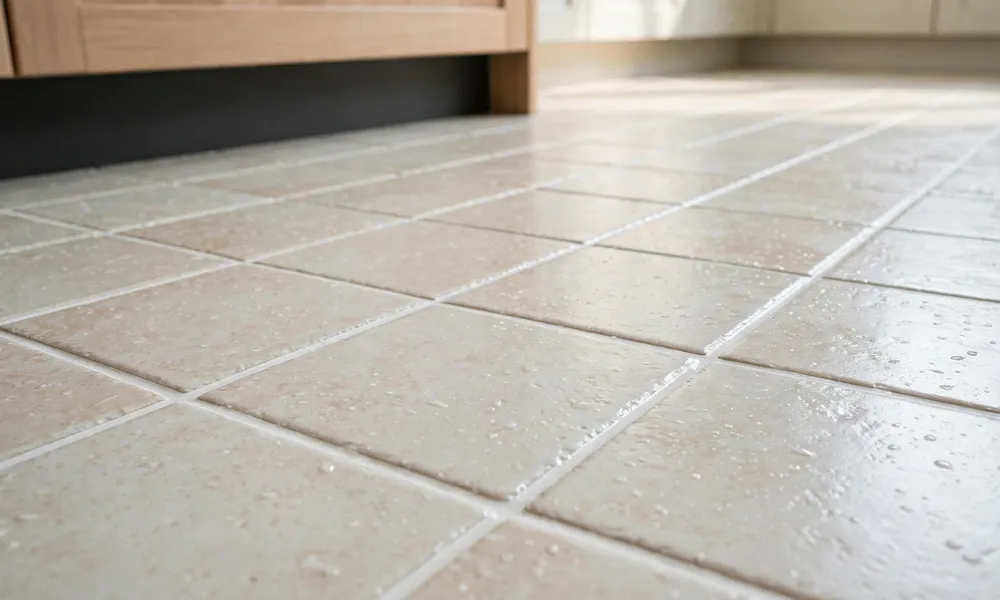
Grout that is cleaned properly should stay white for months, and the step most people skip is sealing it. A grout sealer is brushed onto the clean, dry lines, where it fills the pores and stops dirt soaking in. Sealed grout wipes clean with a damp cloth, while unsealed grout stains again within weeks. Reseal once a year in a shower, and every year or two on floors.
Between deep cleans, a weekly wipe of the shower tiles and a quick mop of the kitchen floor stops fresh dirt baking into the lines. Wipe up spills on the kitchen floor straight away, especially tomato sauce, coffee and cooking oil, because a splash wiped off in ten seconds never becomes a stain. In the shower, a quick squeegee after use keeps soap scum off the tiles and out of the grout.
Checklist: Choosing and Using a Grout Cleaner
- Pick a gel for most stained grout, and an oxygen bleach cleaner for coloured grout and stone tiles.
- Check the label for your grout colour and tile type, and never use chlorine bleach on coloured grout or stone.
- Wear rubber gloves, open a window, and keep children and pets out of the room while it works.
- Give the cleaner the full dwell time on the label, and work in small sections so it does not dry out.
- Scrub along the line with a narrow stiff grout brush, then rinse twice and dry the tiles.
- Seal the clean grout and reseal yearly, so it stays white instead of staining again within weeks.

Frequently Asked Questions
How often should I clean my grout?
A deep clean every three to six months is enough for most homes, with a weekly wipe in between. The sign it is time is not the calendar but the grout: if the lines look grey next to a tile that is still white, they are overdue.
Can I use bleach on coloured grout?
No, chlorine bleach can strip the colour out of coloured grout and leave it patchy. Use an oxygen bleach cleaner instead, which lifts stains without bleaching the colour, and test it on a hidden line first if you are unsure.
Is grout cleaner safe on natural stone tiles?
It depends on the cleaner. Oxygen bleach and pH-neutral gels are usually safe on sealed stone, but chlorine bleach and acidic cleaners can etch marble, limestone and travertine. Check the label for stone safety, and test a hidden tile first.
Why does my grout look grey again a week after cleaning?
Either cleaner residue was left in the lines, or the grout was never sealed. Residue attracts dust and dries grey, and unsealed grout soaks up new dirt within days. Rinse twice, dry the tiles, and seal the lines once fully dry.
Can I clean grout with baking soda instead?
Yes, a paste of baking soda and water scrubbed with a grout brush will lift light staining. It needs more scrubbing than a commercial cleaner and struggles with deep or mould-stained grout, so it suits regular maintenance rather than a rescue clean.
Should I seal grout in a shower?
Yes, shower grout benefits most from sealing, because it faces water and soap every day. Seal only once the grout is fully clean and completely dry, and reseal once a year, or sooner if water stops beading on the lines.
The Bottom Line
The best grout cleaners of 2026 match the grout and the tiles they are used on. A gel is the strongest all-round pick for stained grout, because it stays on the line long enough to lift the dirt out. An oxygen bleach cleaner suits coloured grout and stone tiles if given the longer dwell it needs. A chlorine cleaner is the fastest fix for white shower grout with mould, used with gloves and ventilation. Whichever type is chosen, use the full dwell time, scrub with a proper grout brush, rinse twice, and seal the clean lines so the white lasts.


