Every morning starts the same way for most of us: we step into the bathroom and make a small choice that shapes the rest of the day. Deciding on a shower vs bath daily routine is about far more than habit. It affects how much time you spend getting ready, how much water and energy your home uses, how your skin feels, and even how well you sleep at night.
Showers are fast, efficient and easy to fit into a busy schedule, while baths offer a slower, warmer soak that feels like a small daily luxury. Both have loyal fans, and both have real drawbacks. A long hot bath can dry out your skin and use a surprising amount of water, while a rushed shower can leave you feeling tense before the day has even begun.
This guide compares the two options side by side, looking at time, cost, hygiene, skin health and relaxation, so you can choose the routine that genuinely fits your life, your home and your budget.
Key takeaways
- A shower is the faster, cheaper daily option, using less water and fitting easily into a busy morning.
- A bath is better for relaxation, muscle recovery and winding down before bed.
- Showers generally suit oily or acne-prone skin, while short lukewarm baths can soothe dry or sensitive skin.
- A standard bath uses roughly twice as much water as a five-minute shower, so daily baths cost more over a year.
- The best routine for many people is a mix: quick showers on weekdays and a relaxing bath once or twice a week.

The Quick Answer
If you want one simple rule, take a shower on busy days and save the bath for when you have time to enjoy it. A shower gets you clean in five to ten minutes, uses less water and costs less to heat. A bath takes longer and uses more water, but it gives you something a shower cannot: a full-body soak that relaxes muscles and calms the mind.
Your skin type matters too. People with oily skin or who exercise daily usually do better with a shower, because it rinses sweat and oil away quickly. People with dry, itchy or sensitive skin often find a short lukewarm bath more comfortable, especially when followed by moisturiser. Neither option is wrong, and the right answer depends on your schedule, your bathroom and your body.
Shower vs Bath Head to Head
The table below sums up the main differences at a glance, so you can see where each option wins before we look at each factor in detail.
| Factor | Shower | Bath |
|---|---|---|
| Time needed | 5 to 10 minutes | 20 to 40 minutes |
| Water used | About 40 to 60 litres | About 100 to 150 litres |
| Running cost | Lower | Higher |
| Relaxation | Moderate | Excellent |
| Skin care | Good for oily skin | Good for dry skin |
| Accessibility | Easy to step into | Harder to climb in and out |
As the table shows, showers win on speed, water and cost, while baths win on relaxation and comfort. The rest of this guide explains why those differences matter in real daily life, and how to get the best of both.
Time and Convenience
A shower is built for speed. You turn it on, step in, wash, rinse and step out, all in a few minutes. That makes it the natural choice for weekday mornings, gym sessions and anyone with children to get ready. A shower also fits into a small bathroom, needs no preparation and leaves little to clean up afterwards.
A bath is a slower ritual. Filling the tub takes several minutes, and a proper soak takes twenty minutes or more, which is hard to justify before an early meeting.
Keeping Your Shower Fresh
Showers do need regular care to stay pleasant. Soap scum builds up on glass and tiles, and damp corners can attract mould if they are never dried or ventilated. Choosing the right fittings and keeping the area dry makes a real difference, and it is worth knowing the worst shower curtains for mould before you buy, since a poor curtain can turn a clean shower into a damp, musty corner in a matter of weeks.
Water, Energy and Cost
Water use is where the gap between the two is widest. A five-minute shower with a standard showerhead uses roughly 40 to 60 litres of water, while a full bath uses 100 to 150 litres. That means one daily bath can use more than twice as much water as a daily shower, and the difference adds up to thousands of litres over a year.
Heating that water costs money too. A bath needs a large volume of hot water, which puts more demand on your boiler or water heater and raises your energy bill. A low-flow showerhead cuts shower water use further, to as little as 30 litres, making the shower the clear winner for anyone watching bills or trying to reduce their household footprint.
Cutting Costs Without Losing Comfort
You do not have to give up baths completely to save money. Limiting baths to once or twice a week and showering the rest of the time keeps the luxury while cutting water and energy use by more than half. Shorter showers, a water-saving showerhead and turning the water off while you shampoo are simple habits that save money every single day.
Hygiene and Skin Health
Both options clean you well, but they clean in different ways. A shower rinses dirt, sweat and soap away under running water, so grime leaves your body instead of sitting in the water around you. That makes showers the better choice after exercise, on hot days, or when you need to feel truly fresh.
A bath soaks the whole body at once, which can soften skin and help it absorb moisture. For dry or sensitive skin, a short lukewarm bath followed by moisturiser within a few minutes can leave skin softer than a shower. The catch is time and temperature: long, very hot baths strip natural oils from the skin and can leave it dry, tight and itchy.
Protecting Your Skin Either Way
Whatever you choose, keep the water warm rather than hot, keep the wash short, and use a gentle cleanser instead of a harsh soap. Pat your skin dry with a towel instead of rubbing it, and apply moisturiser while your skin is still slightly damp. These small habits matter far more than whether the water comes from a showerhead or a tap.
Relaxation, Sleep and Recovery
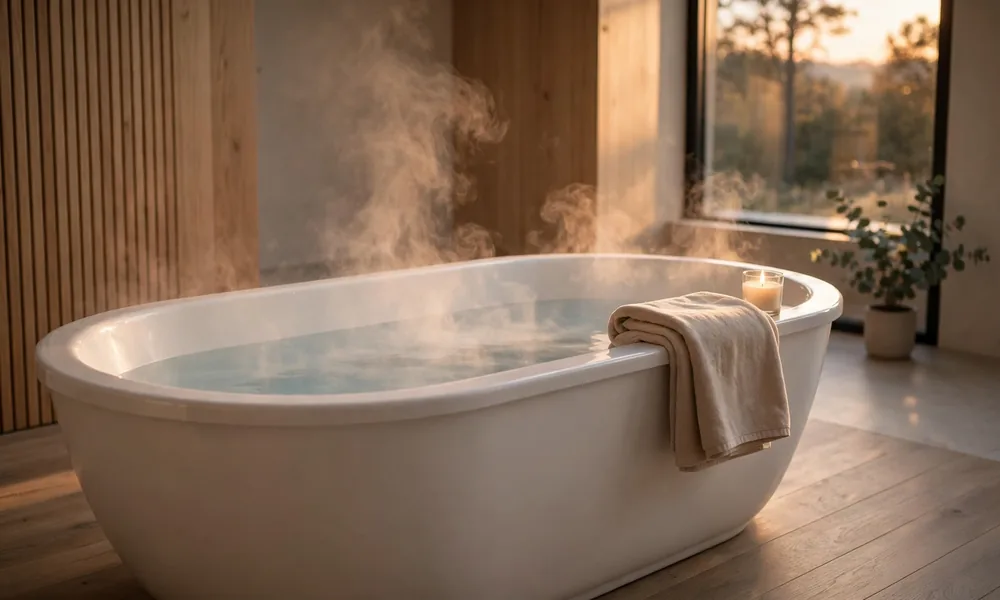
This is where the bath earns its place. Sitting in warm water relaxes tight muscles, eases stiff joints and slows your breathing, which is why a bath feels so calming after a long day. Many people find that an evening bath helps them switch off from work and fall asleep more easily, because the warm water raises body temperature and the cooling down afterwards signals the body that it is time to rest.
A shower can relax you too, especially a warm one at the end of the day, but it is harder to fully unwind while standing under running water. If stress, poor sleep or sore muscles are part of your daily life, a regular bath may be worth the extra water and time. Think of it less as washing and more as a short, simple form of self-care.
Recovery After Exercise
After a hard workout, a warm bath can soothe aching muscles and reduce stiffness the next day. A cold or cool shower, on the other hand, can feel refreshing and help you cool down quickly. Some people use both: a cool shower right after training, then a warm bath later in the evening to relax before bed.
Which One Fits Your Home and Budget
Your bathroom itself often decides the question. A small bathroom may only have room for a shower, while a larger one can fit a full-size tub. Older homes sometimes have small water heaters that struggle to fill a bath, and flats with low water pressure can make a bath slow to fill and a shower weak.
Cost matters too. Installing or replacing a bath is a bigger job than fitting a shower, and a full bathroom refit can run into thousands. Before spending that money, it pays to check the worst bathroom renovations for your money, so you avoid the upgrades that look good in a showroom but add little value to your home or your daily routine.
Design That Lasts
A bathroom should feel good to use every day, not just on the day it is finished. Bold, fashionable fittings can look dated within a few years, while simple, classic choices age well and suit more buyers if you ever sell. It is worth looking at home design trends that date fast before you commit, so your bathroom still feels fresh long after the renovation dust has settled.
Your Daily Routine Checklist
Use this checklist to build a routine that works for your schedule, your skin and your home.
- Shower on busy mornings and save baths for evenings or weekends when you have time to enjoy them.
- Keep showers to five to ten minutes and baths to twenty minutes or less.
- Use warm water, not hot, to protect your skin from drying out.
- Moisturise within a few minutes of towelling off, while skin is still slightly damp.
- Ventilate the bathroom after every wash to prevent damp and mould.
- Review your water and energy bills once a season and adjust your routine if costs are climbing.
Frequently Asked Questions
Is it better to shower or bathe every day?
A daily shower is usually the better everyday choice, because it is quicker, uses less water and rinses sweat and dirt away efficiently. A daily bath is fine if you enjoy it and your skin tolerates it, but keep it short and lukewarm, and moisturise afterwards.
Do baths use a lot more water than showers?
Yes. A full bath uses roughly 100 to 150 litres of water, while a five-minute shower uses about 40 to 60 litres. A low-flow showerhead reduces that further, so switching most baths to showers can save thousands of litres a year.
Which is better for dry skin, a shower or a bath?
A short lukewarm bath is often kinder to dry skin, because it soaks and softens it without the constant flow of a shower.
Can a bath help you sleep better?
Yes, for many people. A warm bath one to two hours before bed raises your body temperature, and the cooling down afterwards helps signal that it is time to sleep. Keep the bath relaxing rather than very hot, and avoid screens straight after.
Are showers more hygienic than baths?
Showers have a small edge, because running water carries dirt and soap away from your body instead of letting it sit in the tub. Baths are still perfectly hygienic when the tub is clean and you rinse off afterwards, so the difference is modest rather than dramatic.
Can I mix showers and baths in one routine?
Absolutely, and for most people this is the best answer. Take quick showers on busy weekdays, then enjoy a longer bath once or twice a week to relax and recover. You get the speed and savings of the shower and the comfort of the bath.
The Bottom Line
For most people, the best daily routine is a quick shower on busy days and a relaxing bath when time allows. Showers win on speed, cost and water use, baths win on relaxation, recovery and comfort, and mixing the two gives you the best of both. Choose the balance that fits your mornings, your skin and your home, and your daily wash becomes one of the easiest wins in your whole routine.