
A bird bath has one job: to give garden birds clean, safe water to drink and bathe in. The worst bird baths for gardens of 2026 cannot do it. They leak from the day they arrive, turn green within a week, and tip over in the first strong wind. The box shows a garden full of songbirds splashing in sparkling water. What it delivers is a shallow dish that dries out by noon, a basin the birds will not touch, and a pedestal that wobbles every time a blackbird lands on the rim. Garden birds need water they can trust, and a bad bird bath fails them in every way that matters.

What Makes a Bird Bath Bad for a Garden
Birds are fussy about water in ways people rarely expect. A bird will not drink from a bath that smells stale, and it will not bathe in water that feels wrong under its feet. A good bath gives birds a shallow, textured basin with a gentle slope, water that stays fresh for days, and a rim they can grip. A bad bath does none of these. Either the basin is too deep and smooth, so small birds cannot stand in it safely, or the water goes green so fast that the birds avoid it, or the whole thing is so unstable that a magpie landing on the edge sends it rocking. Birds learn quickly. A bath that frightens them once may sit unused for a whole summer, however pretty it looks from the kitchen window.
A bird bath also lives outside in all weathers, and cheap materials do not survive that life. Thin resin cracks in the first frost. Painted concrete flakes after one winter. A pedestal that looks solid in the shop may be hollow, and a hollow pedestal is a bath waiting to fall over. When a bath tips, it can crack the basin and crush the plants underneath. A bath that needs replacing every year is not a bargain, whatever the price tag said. Judge a bird bath by what it will look like after two winters, not what it looks like in the box. If the answer is faded, cracked and leaning, it belongs on the list of the worst bird baths for gardens, and the garden deserves better.
Basins That Leak From the First Week
A leaking bird bath is the most common complaint of all, and it is also the most frustrating, because the leak is often invisible until the damage is done. The basin looks fine when it is filled in the morning. By the afternoon the water level has dropped by half, and by the next morning the basin is dry. The birds arrive, find nothing, and go elsewhere. Some leaks come from hairline cracks that open as the material warms in the sun. Others come from a porous finish that was never sealed properly, so the water soaks slowly into the concrete instead of sitting in the basin. A few come from a drainage hole nobody noticed, drilled for a different use and never plugged.
The test is simple, and it is worth doing before the bath goes anywhere near the garden. Fill the basin to the brim, mark the water level with a pencil, and leave it standing on a dry patio for a full day. If the level has dropped by more than a few millimetres, and no bird has visited, the basin is losing water through the material itself. A bath that cannot hold water for a day cannot serve birds through a hot weekend, and it will need filling twice a day just to stay usable. That is not a bird bath. That is a chore disguised as garden furniture, and it earns its place among the worst bird baths for gardens of 2026.
Water That Turns Green in Days
Green water is the second sign of a bad bird bath, and it is the one that puts birds off fastest. Algae grows in any still water left in the sun, but a well-designed bath slows it down. A deep, dark basin in full sun is an algae farm. A pale, shallow basin with a rough surface and a little shade stays clear far longer. The worst baths combine every mistake at once: a dark glazed bowl that absorbs heat, a smooth interior that gives algae a perfect surface to cling to, and a shape that holds a deep pool of still water with no shallow edge for the birds to stand on. Within a week the water is green, the basin smells sour, and the birds have stopped coming.
Cleaning helps, but only if the bath is designed to be cleaned. Some basins have a shape that no brush can reach, with a narrow neck or a rolled rim that traps dirt underneath. Others have a textured finish that looks rustic and holds algae in every groove. The owner ends up scrubbing for twenty minutes every few days, and the water still goes green by the weekend. A bath that needs that much work will be neglected, and a neglected bath is worse than no bath at all, because stale water can spread disease between the birds that do visit. If you want to know what a good bath looks like, read our guide to the best bird baths and notice how the winners are all easy to empty, easy to scrub, and shallow enough to stay fresh.
Pedestals That Wobble and Tip
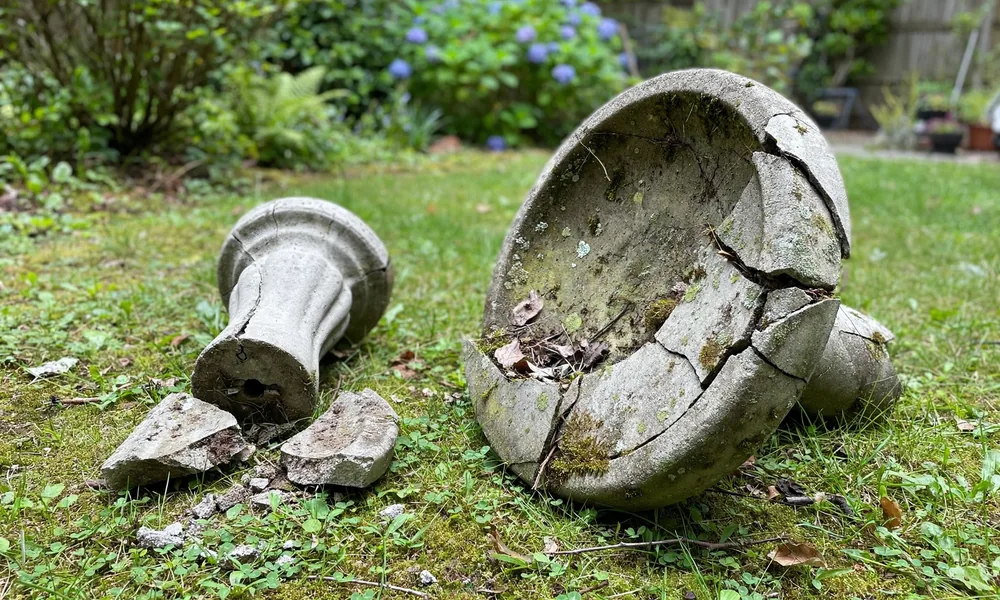
A bird bath that tips over is not just an inconvenience. It is a hazard to the birds that use it and a recurring mess for the garden. The worst pedestals are tall, narrow and top-heavy, with a wide basin balanced on a thin column. A blackbird landing on one side is enough to start it rocking. A gust of wind finishes the job. Some pedestals are made in two pieces that simply rest together, with no bolt or socket holding them, so the basin slides off at the slightest knock. Others have a base so small that the whole bath leans after the first rain softens the soil underneath.
The test for stability takes ten seconds. Stand the bath on a flat surface, press down firmly on one edge of the rim, and see how far it moves before it feels solid again. A good bath barely shifts. A bad one rocks like a boat, and a really bad one lifts its base clean off the ground. In a real garden the problem is worse, because the ground is never perfectly flat and the soil softens after rain. A bath that wobbles on a patio will fall over on a lawn. Look for a wide, heavy base, a low centre of gravity, and a basin that is fixed to its pedestal rather than simply resting on it. If the bath needs a bag of sand to stay upright, the design has already failed.
Basins Too Deep and Too Smooth for Small Birds
Small birds are the visitors a garden bath is really for, and the worst baths are built as though small birds do not exist. A basin that is deep in the middle with steep, smooth sides is a trap for a sparrow or a blue tit. The bird lands on the rim, leans down to drink, and finds nothing to grip. If it slips in, it cannot climb out, because the glazed surface gives its feet no purchase. Birds know this instinctively, and they will not use a bath they cannot trust. A bath that only large birds can use is a bath that has failed most of the garden.
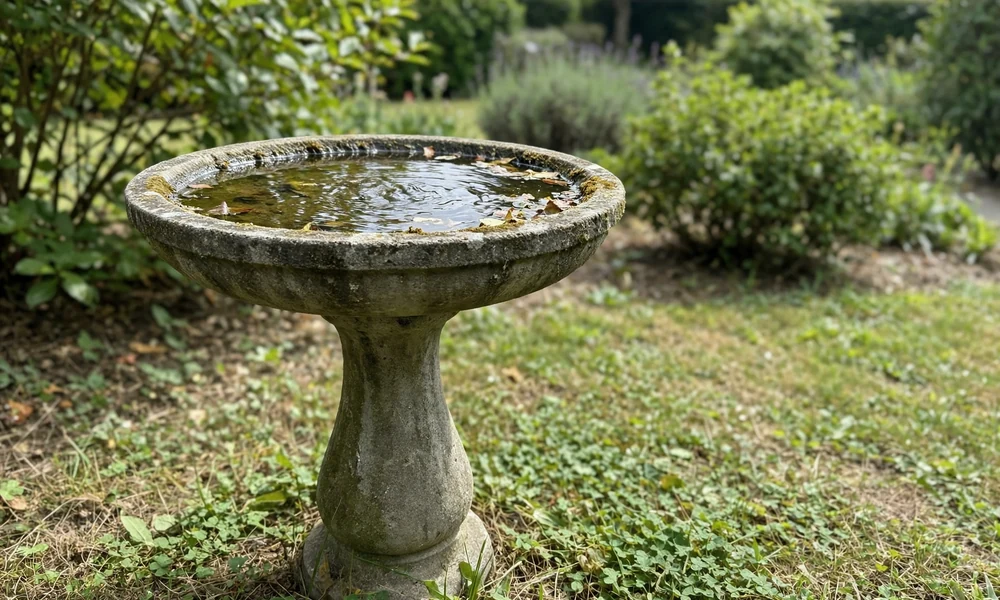
The right basin is shallow, with a depth of no more than five centimetres at its deepest point, and a gentle slope from the rim to the centre. The surface should be rough enough for tiny feet to grip, like unglazed stone or textured concrete. A rim with a flat edge gives birds somewhere to perch while they decide whether the water is safe. Some of the worst baths have the opposite of all this: a deep, glossy bowl with a rounded rim that offers no grip at all, finished in a dark colour that makes the water look deeper than it is. From the kitchen window it looks elegant. From a sparrow’s point of view it looks dangerous, and the sparrow is right.
How to Spot a Bad Bird Bath Before You Buy It
The best time to spot a bad bird bath is in the shop, before any money changes hands. Start with the water test: fill the basin, mark the level, and wait a day. Then check the depth with your fingers. If the middle is deeper than your knuckles, it is too deep for small birds. Run a hand over the inside surface. If it is glossy and smooth, a sparrow will not be able to stand in it. Press the rim on one side and watch the base. If it rocks, it will tip. Pick the bath up. If it feels light for its size, the material is thin and it will not survive a frost. Look at the join between the basin and the pedestal. If the basin simply rests on top, a magpie will knock it off.
Then think about the garden it is going into. A bath that needs flat paving will not work on a lawn. A bath that cannot be emptied and scrubbed in under a minute will not be cleaned often enough, and dirty water drives birds away. The right bath is shallow, rough, heavy, stable and easy to clean, and it sits in the open where birds feel safe, with shrubs a couple of metres away for escape. Under a tree, falling leaves foul the water and a cat can drop down from above, and against a wall the bird has no escape route on one side. If you are building a garden that birds love, a good bath sits beside good shelter and good food, which is why our guides to the best bird houses and the best bird seed matter just as much. Get the bath right, keep the water fresh, and the birds will come back every day.
The Verdict on the Worst Bird Baths for Gardens
The worst bird baths for gardens of 2026 all fail in the same few ways. They leak, they turn green, they tip over, or they are too deep and too smooth for the small birds they are meant to serve. They look fine in a photograph and fail in a garden, and the birds are the ones who notice first. A bath that needs filling twice a day, scrubbing every weekend and propping up after every gust of wind is not a bird bath. It is a chore, and a chore that the birds will not thank you for. The good news is that the faults are easy to spot before you buy: fill it, press it, pick it up, and check the depth with your fingers. A bath that passes those four tests will serve birds for years. A bath that fails even one of them will be an ornament by next spring, and the garden will be quieter for it.


