
A smoker grill has two jobs: to cook low and slow like a smoker, and to sear hot and fast like a grill. The worst smoker grills of 2026 cannot do either. They cannot hold a steady temperature for more than an hour, they leak smoke from every seam, and when you open the vents to sear a steak, the fire either dies or flares out of control. The photograph shows a brisket with a dark bark and a perfect smoke ring. What arrives is a thin metal box that swings forty degrees in an hour, burns through a bag of charcoal by lunchtime, and gives you meat that is dry on the outside and raw in the middle. A smoker grill has to do two hard jobs at once, and a bad one fails at both.
What Makes a Smoker Grill Bad
The first thing to understand about a smoker grill is that smoking and grilling need opposite things. Smoking needs a low, steady heat, a sealed chamber, and a fire kept far from the food. Grilling needs intense heat directly under the food, with air moving fast. A good smoker grill is built to do both, with a heavy body that holds heat, a tight lid, and vents that actually control the fire. A bad smoker grill is a thin grill with a smoker label, or a thin smoker with a grill grate. It has no weight to hold heat, no seal to hold smoke, and vents that do nothing at all.
The second problem is that a smoker grill is used for long cooks, and long cooks expose every weakness. A short grill session hides a thin body, because the fire is hot and fast. A twelve-hour smoke exposes it, because the metal cools the moment the wind rises, the temperature swings with every gust, and the cook spends the whole day feeding the fire and watching the thermometer. A smoker grill that cannot hold heat for twelve hours is not a smoker grill. It is a grill with a chimney, and it earns its place among the worst smoker grills of 2026.
Units That Hold No Steady Temperature
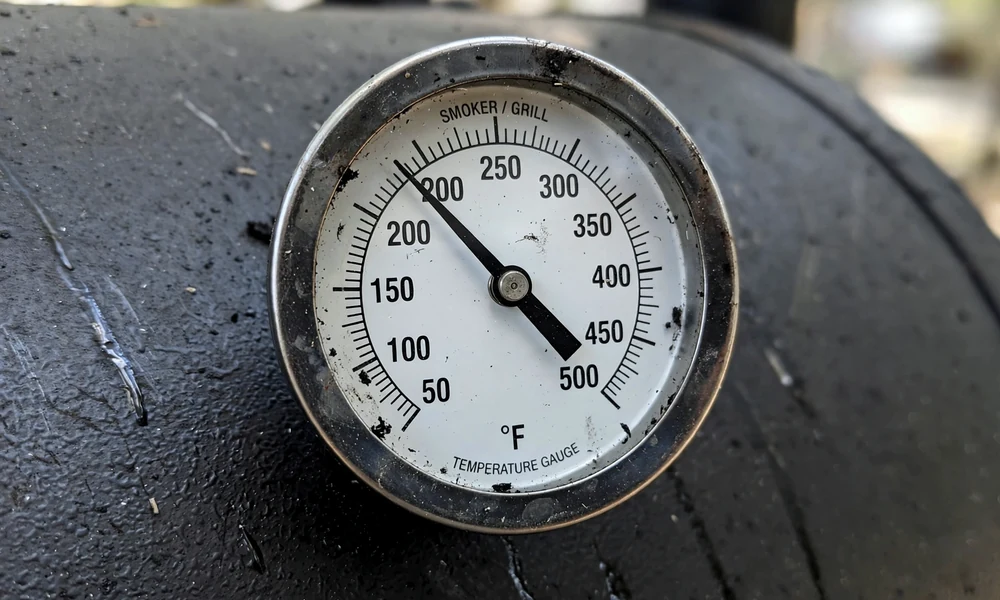
Temperature swings are the most common complaint about smoker grills, and they are also the most damaging, because smoking is entirely about steady heat. A brisket needs hours at a low, even temperature to turn tough collagen into tender meat. A smoker grill that swings between too hot and too cold gives you meat that is dry on the outside, tough in the middle, and bitter from the smoke that comes with every flare. The cause is usually thin metal and bad vents. Thin metal loses heat fast when the wind rises, and vents that are loose or badly placed cannot control the fire at all.
The test is to run the smoker grill empty for three hours and watch the thermometer. A good unit holds within ten degrees of its target, with only small adjustments. A bad one swings forty degrees or more, and the cook has to adjust the vents every twenty minutes to keep it in range. If you want to know what steady smoking looks like, read our guide to the best smokers and notice how the winners are all heavy, sealed and easy to control. The worst smoker grills are light, leaky and impossible to hold steady, and a windy day always finds them out.
Seals That Leak Smoke From Every Seam
Smoke that leaks out of the lid is smoke that never reaches the food, and the worst smoker grills leak everywhere. The lid does not sit flat, the door gaps, and the chimney joint is loose, so smoke pours out of every seam and the chamber never fills. The meat gets a faint smokiness on the outside and nothing inside, and the cook burns twice as much fuel trying to keep the smoke going. Some units leak so badly that the smoke stains the outside of the body black within a month, while the inside of the meat stays pale.
The test is to light a small fire, close the lid, and watch where the smoke comes out. In a good unit, almost all of it comes out of the chimney. In a bad one, it comes out of the lid, the door, and every joint at once. A smoker grill that leaks smoke is a smoker grill that wastes fuel, and a smoker grill that wastes fuel is a smoker grill that will cost a fortune to run through a long cook. Look for a lid that sits flat, a door with a proper seal, and joints that are welded, not bolted. If smoke escapes from the seams, the seal has failed, and the food will be the worse for it.
Grills That Cannot Sear
A smoker grill that cannot sear is a smoker grill that has failed half its job. Searing needs intense heat directly under the food, and the worst smoker grills cannot deliver it. Their firebox is too small, their grate sits too far from the coals, or their vents cannot feed the fire fast enough. The steak goes on, the grate is warm but not hot, and the meat steams instead of searing. It comes off pale, grey and wet, with no crust at all. The owner ends up finishing the steak in a pan indoors, which defeats the purpose of buying a grill in the first place.
The test is to light a full fire, open the vents, and hold a hand over the grate. A good grill sears within minutes, and the grate is hot enough to mark the meat in seconds. A bad one takes an age to heat up and never gets hot enough to sear properly. The problem is worst in units where the smoker side and the grill side share one small firebox, because the fire cannot be both low and slow and hot and fast at the same time. If the grill cannot sear, it is not a grill. It is a smoker with a grate on top, and a smoker with a grate is not a smoker grill.

Thin Metal That Rusts and Warps
Thin metal is the fault that kills a smoker grill fastest, because a smoker grill lives in heat, smoke and rain. The worst units are made of steel so thin that it warps after a few hot cooks, so the lid no longer sits flat and the seals leak even worse. The paint burns off the firebox, rust spreads from every screw hole, and within a year the body is pitted and the grate is flaking. Some units rust from the inside out, so the outside looks fine while the firebox corrodes, and the owner only discovers it when the bottom falls out.
The materials that last are thick steel, heavy cast iron, and ceramic. They are heavier, and they cost more, but they hold heat, they do not warp, and they survive rain after rain without a mark. When you look at a smoker grill, tap the body. If it sounds thin and tinny, it is thin, and thin metal will warp and rust. If the paint is already chipped at the edges, it will not survive a season. A smoker grill that rusts in a year is a smoker grill you will replace in two, and the money spent on fuel in between will be wasted too.
Fuel and Ash Problems
Some smoker grills fail not because of heat or smoke, but because of fuel and ash. The worst units burn through a bag of charcoal in a few hours, because their thin bodies lose heat and their leaky seals waste smoke. The owner spends the whole cook feeding the fire, and the cost of the fuel soon exceeds the cost of the meat. Others have an ash tray that is too small, too hard to reach, or missing entirely, so ash builds up under the fire, chokes it, and the temperature crashes halfway through a long cook.
The test is to check the fuel use and the ash system before you buy. A good smoker grill states its fuel use honestly and has a large, accessible ash tray that can be emptied without stopping the cook. A bad one hides its fuel use and has an ash tray that needs tools to reach. If you are comparing cookers, our guide to the best grills shows what a proper grill does with fuel and ash. A smoker grill that eats fuel and chokes on ash is a smoker grill that will ruin a long cook, and a ruined long cook is a wasted day and a wasted brisket.
How to Spot a Bad Smoker Grill Before You Buy It
The best time to spot a bad smoker grill is in the shop, before any money changes hands. Tap the body. If it sounds thin and tinny, it will warp and rust. Close the lid and look at the seam. If it does not sit flat, smoke will leak. Check the vents. If they are loose or badly placed, the fire cannot be controlled. Look at the grate. If it sits too far from the firebox, the grill will never sear. Ask about fuel use. If the maker will not state it, the unit burns too much. Check the ash tray. If it is small or hard to reach, ash will choke the fire halfway through a long cook.
Then think about the cooks you will actually do. A smoker grill that cannot hold a steady temperature for twelve hours is not a smoker, and a smoker grill that cannot sear a steak in minutes is not a grill. The right unit is heavy, sealed, controllable, and honest about its fuel use. Everything else is a thin box with a chimney. If you want to see how the two jobs compare, our guide to the best vs worst grills will help you judge grills on their own terms. Get the smoker grill right, and low and slow becomes the best cooking you do all year. Get it wrong, and the meat will be dry, the fire will be hungry, and the unit will be rusting in the corner by next spring.

The Verdict on the Worst Smoker Grills
The worst smoker grills of 2026 all fail in the same few ways. They cannot hold heat, they leak smoke, they cannot sear, or they rust within a year. They look fine in a photograph and fail over a real fire, and the meat is the one that pays for it, dry on the outside, tough in the middle, and bitter from the smoke of every flare. A smoker grill that cannot hold a temperature and cannot sear a steak is not a smoker grill. It is a thin box with a chimney, and a chimney does not cook dinner. The good news is that the faults are easy to spot before you buy: tap the body, check the lid, test the vents, and ask about fuel use. A unit that passes those four tests will serve a backyard for years. A unit that fails even one of them will be rusting in the corner by next spring.


