
A patio heater for a small space has one job: to warm the people sitting near it without taking over the patio, eating through fuel, or becoming a hazard. The worst patio heaters for small spaces of 2026 cannot do it. They throw out a thin ring of heat that fades before it reaches the next chair, stand so tall and wide that they block the only path across the patio, and burn through a gas bottle or a power bill in a single evening. The photograph shows friends lingering over dinner in the glow. What arrives is a heater that warms one elbow, leaves everyone else cold, and has to be dragged inside every time it rains. A small patio needs heat that fits the space, and a bad heater fails at everything a small space demands.
What Makes a Small-Space Heater Bad
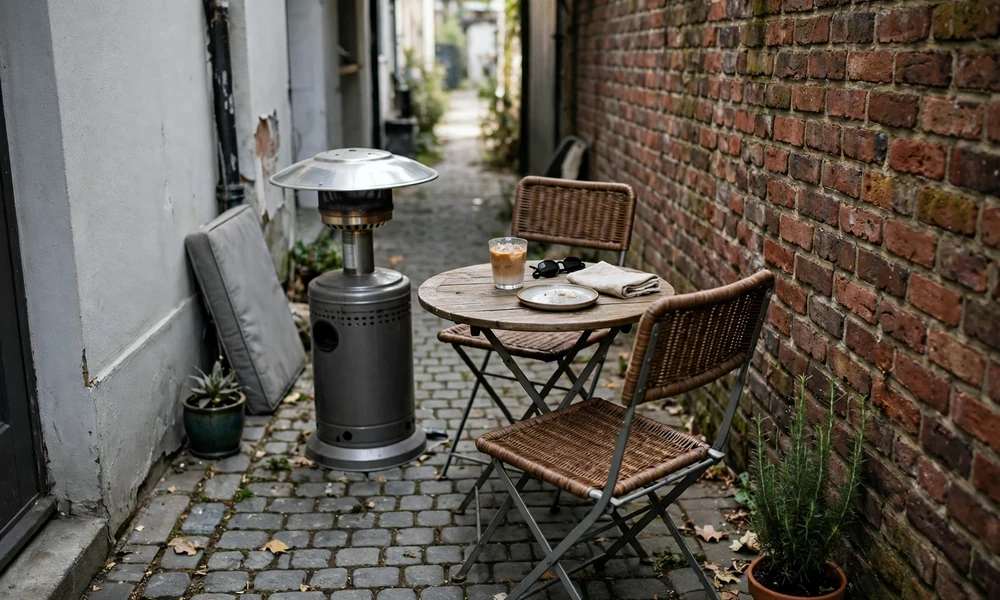
The first thing to understand about a small patio is that every centimetre matters. A heater that is right for a large terrace is wrong for a balcony or a courtyard barely wider than a table. A good small-space heater is compact, stable, and aimed at the people sitting near it, with heat that spreads sideways rather than straight up. A bad heater is a large heater shrunk in the photograph. It is tall, top-heavy, and wide at the base, so it eats the floor space where a chair should go. Its heat rises in a narrow column, warming the air above the table while the people below stay cold.
The second problem is that a small space punishes waste. A heater that burns gas or electricity faster than it warms people is expensive on a large terrace and ruinous on a small one, where the heat escapes over the wall in minutes. The worst heaters combine a small heat output with a large appetite: a weak burner that still drinks fuel, or an electric element that draws full power and gives back a faint glow. A heater that costs more to run than the evening it warms is not a heater. It is a hole in the wallet with a flame on top, and it earns its place among the worst patio heaters for small spaces of 2026.
Heaters That Barely Warm One Chair
Weak heat is the most common complaint about small patio heaters, and it is also the most disappointing, because it only shows up on the first cold evening. The heater lights, the element glows, and the person sitting beside it feels a faint warmth on one side and nothing on the other. The cause is usually a burner or element that is too small for outdoor use, where wind strips heat away in seconds. Indoors, a small heater can warm a room. Outdoors, the same heater warms a bubble of air that drifts away before it reaches anyone.
The test is to sit where you would actually sit and feel for heat on both sides of your body. A good heater warms your front and your hands from a metre away, even with a light breeze. A bad one only warms the hand you hold near it, and the moment you lean back the warmth is gone. If you want to know what real outdoor heat looks like, read our guide to the best patio heaters and notice how the winners are all rated for outdoor wind, not indoor rooms. The worst heaters are indoor heaters with an outdoor label, and a light breeze always finds them out.
Heaters Too Big for the Space
Size is the fault that a small patio punishes hardest. The worst heaters are tall mushroom heaters built for restaurant terraces, sold for home patios without a word about the space they need. They stand over two metres high, their base is wider than a dining chair, and their heat reflector is a disc the size of a dustbin lid. On a small patio they block the path to the door, shade the table, and leave no room for a second chair.
The problem is worse because a big heater on a small patio is also a hazard. A tall, top-heavy heater tips easily when it is brushed in the dark, and a tipped gas heater is a fire risk on a patio full of cushions and wooden furniture. A heater that is too big also wastes heat, throwing it over the wall and into the neighbour’s garden instead of onto the people sitting below it. The right heater for a small space is short, narrow and stable, with a base that fits under a table edge and heat that spreads sideways. If the heater is the biggest thing on the patio, it is the wrong heater, and the patio will be colder and more crowded for it.
Heaters That Eat Gas and Power
Running costs are where a bad patio heater hurts most, because the bill arrives after the evenings are over. The worst gas heaters burn through a full bottle in a handful of evenings, and the owner only discovers it when the flame dies halfway through dinner. The worst electric heaters draw two or three kilowatts and give back a glow that barely warms the hands. In both cases the problem is the same: the heater converts fuel into heat, and most of the heat goes straight up into the sky instead of sideways onto the people.
The test is to check the fuel use before you buy. A gas heater should state its consumption in kilograms per hour, and an electric heater should state its wattage. Then compare that with the warmth you actually feel. A heater that burns a kilogram of gas an hour and still leaves you cold is a bad heater, whatever its price. A heater that draws three kilowatts and warms one chair is worse. The right heater for a small space uses a modest amount of fuel and aims it well, so the people sitting near it feel the difference within minutes. If the heater needs a new gas bottle every weekend, it is not warming the patio. It is warming the sky, and the sky does not pay the bill.

Heaters That Blow Out or Overheat
A heater that will not stay lit is a heater that ruins evenings. The worst gas patio heaters blow out in a light breeze, and the owner spends the evening relighting them, holding the button down, and watching the flame die again. Some have a wind guard that is too small to work. Others have a burner that is so exposed that any draught kills it. Electric heaters have the opposite fault: they overheat, trip their own safety cut-out, and switch off just as the evening gets cold, then refuse to restart until they have cooled down.
Both faults come from the same cause: a heater designed for a sheltered showroom and sold for a real garden. A good outdoor heater has a burner shielded from the wind and a cut-out that only trips in a real emergency, not on a normal evening. The worst heaters have neither, and the owner learns the truth on the first breezy night. The test is to light the heater on a day with a light wind and watch it for an hour. If it blows out, or if it cuts out and will not restart, it is not fit for a small patio, where there is nowhere to shelter it from the wind. A heater that cannot stay lit outdoors is not an outdoor heater.
Heaters That Rust in a Single Season
Rust is the fault that shows how cheaply a heater was made, and it shows fast. The worst patio heaters are built from thin steel with a coat of paint that looks fine in the shop and fails in the first rain. Within a season the reflector is stained orange, the base is pitted, and the burner cover will not open because the hinge has seized.
The materials that last are stainless steel, powder-coated aluminium, and heavy gauge steel with a proper finish. They cost more, but they survive rain after rain without a mark. When you look at a heater, check the reflector and the base first, because those are the parts that fail. If the metal feels thin, if the paint is already chipped at the edges, or if the screws are bare steel, the heater will rust. If you want to know what a heater built for real weather looks like, read our guide to the best outdoor heaters and notice how the winners are all rated for rain, not just for show. A heater that rusts in a season is a heater you will replace in a year.
How to Spot a Bad Small-Space Heater Before You Buy It
The best time to spot a bad patio heater is in the shop, before any money changes hands. Measure it against the space it has to fit. If the base is wider than a dining chair, it is too big for a small patio. Sit beside it while it runs and feel for heat on both sides of your body. If the warmth fades half a metre away, it is too weak for outdoors. Check the fuel use on the label. If it burns a kilogram of gas an hour or draws three kilowatts for a faint glow, it will cost more than the evenings it warms. Look at the metal. If it feels thin or the paint is already chipped, it will rust within a season.
Then think about the patio it is going onto. A heater that needs shelter from the wind will not work on an open patio, and a heater that tips easily will not work where people walk in the dark. The right heater is compact, stable, windproof and economical, and it warms the chairs around it within minutes of being lit. Everything else is a photograph of warmth, not warmth itself. If you are heating a room as well as a patio, our guide to the best space heaters will help you judge indoor heat on its own terms. Get it wrong, and the heater will stand in the corner all winter, rusting quietly, while everyone stays inside.

The Verdict on the Worst Patio Heaters for Small Spaces
The worst patio heaters for small spaces of 2026 all fail in the same few ways. They are too weak, too big, too thirsty, or too fragile for the space they are sold for. They look fine in a photograph and fail on a real patio, and the people sitting around them are the ones who notice first. A heater that warms one elbow, blocks the only path, and needs a new gas bottle every weekend is not a heater. It is an ornament with a flame, and a flame does not make a patio warm. The good news is that the faults are easy to spot before you buy: measure it, sit beside it, check the fuel use, and look at the metal. A heater that passes those four tests will warm a small patio for years. A heater that fails even one of them will be rusting in the corner by next spring.


