Choosing the best camping tents 2026 has to offer is the most important decision you will make before your next trip outdoors. A tent is your shelter from wind and rain, your storage for gear, and the base camp where every good morning on the trail begins.
The market in 2026 is full of strong options, from featherweight backpacking shelters to roomy family tents that feel more like a small cabin. The differences matter more than most first-time buyers realise: a tent that is perfect for a solo hiker can be a miserable choice for a family of four.
This guide compares the standout tents of the year, explains what the specifications mean, and shows you how to match a tent to the way you really camp.
Key takeaways
- Match the tent to your trip: backpacking tents prioritise weight, family tents prioritise space and headroom.
- Look for a fly rated at least 1,500mm and a bathtub floor for real rain protection.
- A three-season tent suits most campers; four-season tents are only needed for snow and high winds.
- Check peak height and floor area, not just the stated sleeping capacity.
- Practice pitching your tent at home once, so the first night at camp is quick and stress-free.

What Makes a Great Camping Tent
A great tent does four things well. It keeps you dry, it stands up to wind, it gives you enough room to sleep and move, and it packs down small enough to carry or store without a struggle.
Weather protection is the first test. The rainfly is the outer skin that sheds rain, and the floor keeps ground moisture out. A full-coverage fly that reaches close to the ground protects far better than a small fly, and sealed seams matter just as much as the fabric, because water will find any stitching left open.
Ventilation is the quiet partner of weather protection. A tent that seals out rain but traps every breath you exhale will wake you to condensation dripping on your sleeping bag. Good tents balance the two with mesh panels and adjustable vents.
Understanding Tent Specifications
Only a few numbers really matter. The hydrostatic head rating, measured in millimetres, tells you how much water pressure the fabric can resist before it leaks. A rating of 1,500mm handles ordinary rain and 3,000mm handles heavy sustained rain.
Floor area and peak height describe the living space. A tent rated for four people might hold four sleeping pads edge to edge, but that leaves no room for bags or boots. Buy one person of capacity more than the number of people who will sleep in it, and check the floor length if you are tall.
Packed weight and size decide how the tent travels. Backpackers should look at the trail weight, which excludes stakes and stuff sacks, while car campers can ignore weight and focus on space.
Three-Season Versus Four-Season Tents
Most campers need a three-season tent, designed for spring, summer, and autumn, with mesh panels and a fly that handles rain and moderate wind. They are lighter, cheaper, and more comfortable in warm weather than four-season models.
Four-season tents use stronger poles, less mesh, and steeper walls that shed snow. They are heavier and warmer inside, which is a disadvantage on a summer night. Unless you camp in winter or above the treeline in bad weather, a four-season tent is money spent on protection you will not use.
The Best Camping Tents of 2026 Compared
The tents below stand out in 2026 for the same reasons: reliable weather protection, sensible weight, and thoughtful details that make camp life easier. They cover the main ways people camp, from solo backpacking to family base camps.
Before you compare prices, decide how you will use the tent most often. A tent that is brilliant for a weekend at a drive-up campground can be a burden on a ten-mile hike.
| Tent type | Best for | Sleeps | Peak height | Trail weight |
|---|---|---|---|---|
| Ultralight backpacking | Solo hikers and long trails | 2 | 40 in | 2.9 lb |
| Lightweight backpacking | Couples and weekend trips | 2 | 42 in | 4.1 lb |
| Three-person backpacking | Small groups and tall campers | 3 | 44 in | 5.3 lb |
| Family dome tent | Car camping with kids | 4 | 60 in | 12.5 lb |
| Large cabin tent | Long stays and big groups | 6 | 72 in | 24.0 lb |
| Four-season expedition | Winter and alpine trips | 2 | 41 in | 7.8 lb |
Ultralight and Backpacking Tents
Ultralight tents are the pick for anyone who carries their shelter on their back. The best models in 2026 weigh under three pounds for two people, pack down to the size of a water bottle, and still offer a full rainfly and two doors. The trade-off is space: you will sit up comfortably, but you will not stand, and your gear will mostly live in the vestibule.
What separates the good ultralight tents from the fragile ones is the pole structure and the fabric. Strong aluminium poles and a 20-denier or tougher fly hold their shape in wind, while thinner fabrics save weight at the cost of durability.
Two doors and two vestibules are worth having on any two-person backpacking tent. They mean you can get in and out without climbing over your partner, and each person gets their own gear storage.
Family and Car Camping Tents
Family tents play by different rules. Weight barely matters when the tent travels in a car boot, so designers spend the budget on space, headroom, and features like room dividers and big windows. The best of 2026 offer enough peak height to stand upright and a living area for rainy afternoons.
Look closely at the door design. A large D-shaped door is easy to step through with an armful of bedding, and a second door on the opposite side stops the tent feeling like a corridor. Dark-rest bedrooms, a feature on several newer models, block early morning light and help children sleep longer.
Pitching time matters more with a big tent, so check how the poles work before you buy. Colour-coded poles and clips are faster than sleeves you have to thread, and a tent that one person can pitch alone is worth a premium. Avoiding the worst camping gear mistakes beginners make starts with choosing a tent you can actually set up without an argument.
How to Choose the Right Tent for You
Start with the number of people, then add one. A two-person tent is right for a solo camper who wants room to spread out, a three-person tent suits most couples, and a four-person tent is the practical minimum for a family of three.
Next, think about the season. Mesh panels are a joy in summer and a cold draught in late autumn, while solid fabric walls stay warm but can feel stuffy on a hot night. If you camp all year, adjustable vents give you the most flexibility.
Finally, be honest about how far you carry it. If the walk from the car to the pitch is fifty metres, weight is irrelevant and you should buy for comfort. If you hike for hours with the tent on your back, every gram counts.
Weatherproofing and Ventilation
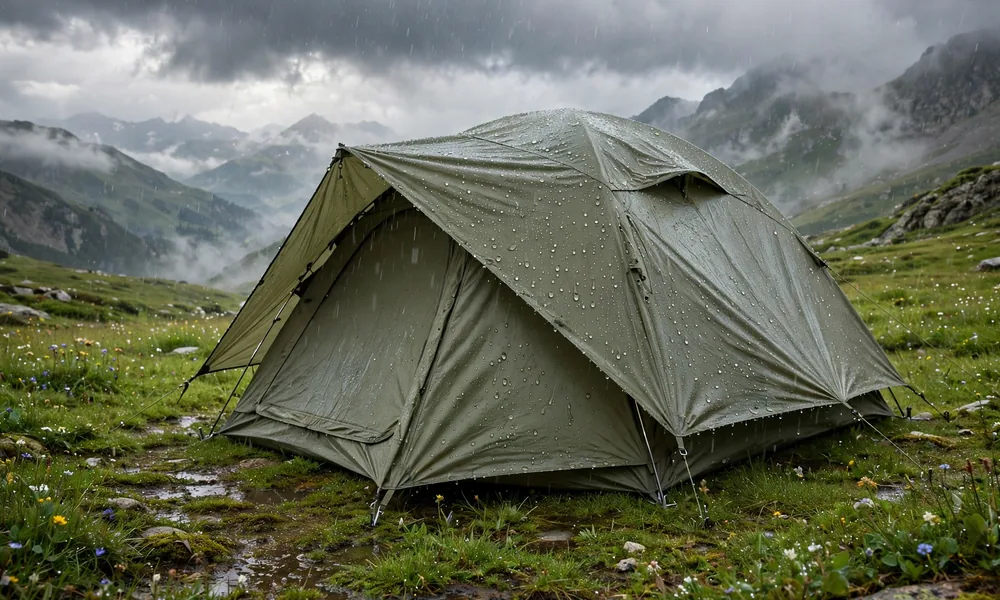
Rain protection depends on the whole system, not just the fabric rating. A full-coverage fly, sealed seams, a bathtub floor that rises several inches up the walls, and guy lines that hold the fly away from the inner tent all work together. If the fly touches the inner wall, water can wick through.
Ventilation prevents the condensation that ruins many camping nights. Warm air from your breath rises and meets the cold fly, and without airflow it turns to water droplets. Mesh inner walls and roof vents help, and in humid conditions you should leave the vents open even when it rains.
Wind resistance comes from the shape of the tent and the strength of its poles. Low, aerodynamic shapes with crossing poles handle gusts better than tall, boxy tents. Always use the guy lines in windy weather, even if the evening feels calm when you pitch.
Setting Up and Looking After Your Tent
A good tent lasts for years with simple care. Pitch it on flat, clear ground, and use a footprint or groundsheet underneath to protect the floor from stones and thorns.
Take your time with the pitch. Stake out the corners first, then raise the poles, then attach the fly and tension the guy lines evenly. Even tension keeps the tent quieter in wind and puts less strain on the seams.
When you pack up, the tent should be as dry as you can make it. If you pack a wet tent, dry it fully within a day of getting home, or mildew will set in and the coating will start to break down.
Common Pitching Mistakes to Avoid
The most common mistake is pitching on a slope or in a dip where water collects. Even a gentle hollow can become a puddle in heavy rain, and sleeping on a slope means sliding downhill all night.
The second mistake is skipping the guy lines. They take two minutes to set and transform how a tent handles gusts, so make them part of every pitch. Reading about the worst road trip mistakes travellers make is a useful reminder that most outdoor problems come from small planning slips, not bad luck.
Before You Buy Checklist
Use this checklist in the shop or while you compare tents online. If a tent fails on any of the first four points, keep looking.
- Capacity: room for your group plus one extra person?
- Weather rating: fly rated at least 1,500mm, sealed seams, bathtub floor?
- Peak height: sit up comfortably, or stand up in a family tent?
- Doors and vestibules: a door and gear storage for everyone?
- Weight and packed size: fits your pack or car boot?
- Pitching: can you set it up alone, with colour-coded poles?
Frequently Asked Questions
How much should I spend on a camping tent?
A good two-person backpacking tent costs roughly 150 to 350 dollars in 2026, while a quality family tent costs 200 to 500 dollars. Cheaper tents can be fine for fair-weather use, but they usually cut corners on the fly and the poles.
What size tent do I need for two people?
Most couples are happiest in a three-person tent. A two-person tent fits two sleeping pads and little else, while a three-person tent leaves room for bags.
Are expensive tents worth it?
For frequent campers, yes. Expensive tents use stronger fabrics and better poles, and they last longer. For occasional campers, a mid-priced tent from a reputable brand is the sweet spot.
Can I use a three-season tent in winter?
You can use one in light snow and calm weather, but it is not designed for snow loading or high winds. Heavy snow can collapse the poles, and the mesh panels let in spindrift. For real winter conditions, a four-season tent is the safe choice.
How do I stop condensation inside my tent?
Open the vents, keep the fly staked out so air can flow, and avoid cooking inside the tent. Good ventilation is the only reliable fix.
How long does a camping tent last?
A well-made tent that is dried before storage and kept out of prolonged sun can last eight to ten years. The waterproof coating wears out first, usually after five or six seasons, but a spray-on treatment can refresh it.
The Bottom Line
The best camping tents 2026 has to offer share the same strengths: honest weather protection, enough space for the people who sleep in them, and a pitch that does not fight you at the end of a long day. Choose your size first, match the tent to the season and the way you travel, and spend your money on the fly, the poles, and the seams. Pair it with the right carrying kit, and a guide to the best travel backpacks for 2026 will help you round out a setup that is ready for the trail.