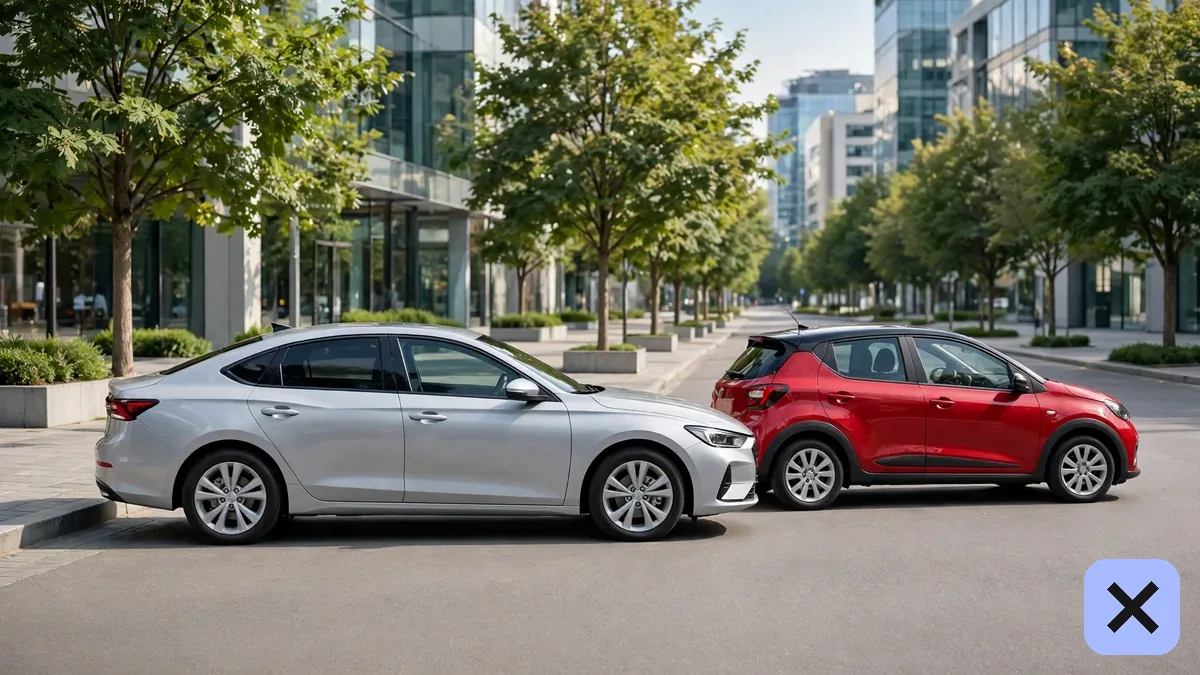
Choosing a sedan vs hatchback for city driving is one of the most practical decisions a car buyer can make. The car that feels perfect on an open motorway can feel like the wrong tool on a crowded city street, where tight parking bays and narrow lanes shape what makes a car easy to live with.
A sedan brings a longer body, a separate boot, and a quieter, more settled ride. A hatchback brings a shorter body, a rear door that opens onto the whole cabin, and a turning circle that makes tight streets feel easy. Neither body style is better in every situation.
What matters is which set of strengths lines up with your commute, your parking situation, your passengers, and the loads you carry. This comparison looks at the two body styles exactly as city drivers experience them, so you can choose with confidence rather than habit.
Key takeaways
- Hatchbacks are shorter and easier to park, with tighter turning circles for narrow streets and crowded car parks.
- Sedans are quieter and more comfortable on longer journeys, with a separate boot that keeps noise away from passengers.
- Fuel economy is usually close between equivalent models, so running costs rarely decide the contest on their own.
- Hatchbacks win on flexible loading, because folding rear seats and a wide tailgate swallow bulky items a sedan boot cannot.
- The best choice depends on your daily routine: frequent parkers suit a hatchback, while long-distance commuters often prefer a sedan.

What Really Changes in the City
On a motorway, a sedan and a hatchback built on the same platform feel almost identical. In the city, the differences appear quickly, because city driving constantly tests a car at low speed, in tight spaces, and under stop-start strain. A driver covering ten miles of urban roads a day will notice turning, parking, and visibility far more than outright performance.
City driving rewards compactness. Every foot of length is a foot you must thread through a gap or fit into a parking bay. A hatchback is typically 30 to 50 centimetres shorter than a comparable sedan, which sounds small until you try to parallel park on a busy street. Visibility matters too: hatchbacks have a more upright rear window and a shorter tail, so judging the back of the car comes naturally.
Stop-Start Traffic and Low-Speed Manners
In crawling traffic, the hatchback often feels calmer. Its shorter body makes lane changes less of a commitment, and its lighter weight makes it feel a touch more responsive when gaps open and close. If your commute is mostly motorway, the sedan’s quieter cabin starts to count for more. If you are also weighing up a larger car, our comparison of a sedan versus SUV for daily driving shows how the trade-offs change again when ride height and bulk enter the picture.
Size, Parking and Turning
Parking is where the hatchback earns its reputation. A shorter car fits into more spaces, needs less room to manoeuvre, and leaves more margin for error when the bay is tight. Multi-storey car parks, with their narrow ramps and tight pillars, are far less stressful in a hatchback. A sedan can still park anywhere a hatchback can, but it takes more care and occasionally a second attempt.
Turning circle captures this difference in one number. Many hatchbacks turn in under 10 metres kerb to kerb, while a comparable sedan needs 10.5 to 11 metres. That half-metre gap is the difference between a clean U-turn and a three-point turn on a narrow street.
Garages, Driveways and Street Parking
Measure your parking space before you choose. Many older city garages were built for smaller cars, and a sedan that is 4.7 metres long may not fit where a 4.2-metre hatchback fits comfortably. If you park on the street every night, the hatchback’s advantage grows. If you have a generous driveway, it shrinks to almost nothing.
Sedan vs Hatchback: Head-to-Head Comparison
The table below summarises how the two body styles compare across the areas that matter most to city drivers, comparing typical equivalent models rather than any single car.
| Area | Sedan | Hatchback | City Winner |
|---|---|---|---|
| Parking ease | Good, needs more space | Excellent, fits tighter bays | Hatchback |
| Turning circle | Typically 10.5–11 m | Typically under 10 m | Hatchback |
| Boot flexibility | Fixed boot, narrow opening | Wide tailgate, folding seats | Hatchback |
| Ride comfort | Quieter, more settled | Good, slightly firmer | Sedan |
| Rear passenger space | More legroom usually | Adequate, tighter in small cars | Sedan |
| Fuel economy | Very similar to hatchback | Very similar to sedan | Tie |
| Running costs | Similar, dearer tyres | Similar, often cheaper parts | Hatchback |
| Motorway refinement | Quieter at speed | More road and wind noise | Sedan |
| Everyday loading | Deep boot, narrow opening | Tall, wide, flexible load area | Hatchback |
| Resale value | Strong for larger models | Strong for small models | Tie |
The pattern is clear: the hatchback wins the city-specific categories, while the sedan wins comfort and refinement. Fuel economy and running costs are close enough that they should not decide the purchase on their own. Your daily routine, not the specification sheet, is the tiebreaker.
Fuel Economy and Running Costs
Fuel economy is where buyers most often expect a big difference and find a small one. A sedan and a hatchback with the same engine return very similar consumption in city driving, usually within a few per cent. The hatchback’s lighter weight helps slightly in stop-start traffic, while the sedan’s longer body can be marginally more aerodynamic at speed, and the two effects largely cancel out.
What changes fuel bills is how you drive, not which body style you choose. Short trips with a cold engine and aggressive acceleration hurt economy far more than the difference between a boot and a tailgate.
Depreciation and the Purchase Itself
Small hatchbacks hold their value well because they are popular with first-time buyers and city drivers, while larger sedans hold theirs among buyers who want comfort and space. One warning applies to both: the purchase itself can cost more than it should. Before signing anything, read up on the common dealer traps to avoid when buying a car, because pressure tactics and hidden fees can wipe out years of fuel savings in a single afternoon.
Comfort and Refinement
Comfort is the sedan’s strongest card. Its longer wheelbase smooths out bumps, and its separate boot acts as a buffer that keeps road noise away from the cabin. On a long commute that mixes city streets with faster roads, a sedan feels calmer and less tiring, and rear passengers usually get more legroom too.
Hatchbacks have closed much of this gap. Modern small cars ride well and insulate their cabins effectively. The sedan is still the more relaxing car, but for journeys under half an hour, most drivers will not notice a meaningful difference.

Rear passenger space deserves a close look if you regularly carry adults in the back. Sedans usually give rear passengers more knee room, while smaller hatchbacks can feel tight for tall adults, though they are fine for children and short trips. Bring your usual passengers to the test drive and let them sit in the back before you decide.
Noise, Vibration and Everyday Calm
Noise is the subtle difference that grows with mileage. A sedan’s enclosed boot keeps road noise further from your ears, while a hatchback’s cabin is open to the load area. At 30 miles per hour the gap is minimal, so if your driving is almost entirely urban, refinement should rank below parking and loading. If your commute includes a daily stretch of motorway, the sedan’s quieter cabin becomes a real benefit.
Practicality: Boot Space and Everyday Loads
Practicality is where the hatchback fights back hardest. A sedan’s boot is deep and secure, but its opening is narrow and its shape is fixed. Large, awkward items such as a flat-pack bookshelf or a bulky pushchair often will not fit through the boot lid, even when the boot has enough volume on paper. The hatchback’s wide tailgate and folding rear seats turn the whole rear of the car into a load bay.
Measured boot volume can mislead. A sedan may quote 500 litres against a hatchback’s 380, yet the hatchback can carry the bigger single item because its opening is taller and wider.

For families, the hatchback’s tailgate also makes loading children easier: a pushchair folds straight in, and shopping bags sit at waist height. Sedans counter with a secure, hidden boot that keeps valuables out of sight.
The Weekly Shop Test
Try the weekly shop test on every car you consider. Load it the way you would on a normal Saturday, fold the seats if you need to, and see how much effort it takes. A car that fails the shopping test will frustrate you every single week.
Checklist: Which One Fits Your City Life?
Work through this checklist honestly, and the right body style usually reveals itself. Let the balance guide you rather than brand loyalty or habit.
- You park on the street or in tight multi-storey car parks most days, and you want the shortest car that still does the job.
- You regularly carry bulky items, flat-pack furniture, sports gear, or a pushchair that needs a wide, tall opening.
- Your trips are mostly short and urban, with little motorway driving and rare long journeys.
- Your commute includes a daily stretch of motorway or fast dual carriageway, where quiet and ride comfort matter.
- You often carry adult passengers in the rear seats and want generous legroom and a calm cabin.
- You value a secure, separate boot that hides luggage from view and keeps road noise away from passengers.
If the first three statements describe you, a hatchback is probably the better fit. If the last three describe you, a sedan is probably the better fit.
Frequently Asked Questions
Is a hatchback better than a sedan for city driving?
For most city drivers, yes. A hatchback is shorter, turns more tightly, and parks more easily. A sedan is better only when your driving includes regular long journeys.
Do hatchbacks use less fuel than sedans?
Not by much. Equivalent models return very similar fuel economy in the city, usually within a few per cent. Driving style, trip length, and traffic affect fuel bills far more than body style.
Can a hatchback carry as much as a sedan?
On paper, a sedan often quotes a larger boot volume, but a hatchback can usually carry bulkier single items because its tailgate opening is wider and taller and its rear seats fold flat. For shopping and flat-pack furniture, the hatchback is normally the more useful car.
Are sedans more comfortable than hatchbacks?
Generally, yes. A sedan’s longer wheelbase gives a smoother ride, its separate boot reduces cabin noise, and its rear seats usually offer more legroom. The difference is small on short city trips, but it grows on longer journeys.
Which is cheaper to run, a sedan or a hatchback?
Running costs are very close. Smaller hatchbacks can be slightly cheaper to insure, while larger sedans may cost a little more. The biggest differences come from the specific model, not the body shape. Fuel-hungry larger cars are another story, as our look at SUVs with the worst fuel economy makes clear.
Should I choose based on parking or comfort?
Choose based on what you do every day. If you park on the street and make short trips, prioritise parking and agility. If you commute long distances, prioritise comfort. The car that suits your daily routine is the car you will enjoy owning.
The Bottom Line
For pure city driving, the hatchback is the better tool: shorter, easier to park, tighter turning, and more flexible when loading. For drivers whose city life is mixed with regular longer journeys, the sedan’s comfort and quiet cabin make it the better all-rounder. Measure your parking space, try the weekly shop test, and test drive both body styles in real traffic.