
Food Storage Containers That Keep Leftovers Fresh Longer in 2026
Food storage containers that keep leftovers fresh longer do one job above all else: they seal properly. A container with a lid that clicks shut, a gasket that actually presses down, and a body that does not warp in the freezer will keep a meal edible for days longer than a tub with a loose lid, and the difference shows up in the bin. Food thrown away because it dried out, picked up fridge smells or went stale early is the most common kitchen waste, and in most cases the container is the reason, not the food.
This guide is about the containers that hold cooked food, leftovers and meal prep in the fridge and freezer, not the jars that organise a pantry or the bins that tidy a whole house. That distinction matters, because the demands are different. A leftover container has to survive temperature swings, seal against air and smells, stack neatly on a crowded shelf, and reheat without leaching or staining.
Key Takeaways
- The lid matters more than the tub: a container is only as airtight as its seal, so a snap-lock lid or a silicone-gasket lid beats a simple press-on lid every time.
- Glass keeps food fresher and never stains or holds smells, while good BPA-free plastic is lighter, cheaper and safer for the freezer and for lunch bags.
- Buy one footprint in two or three sizes so containers stack neatly in the fridge and the lids are interchangeable.
- Rectangular containers use fridge space better than round ones, and straight sides make them easier to fill, stack and clean.
- Label every container with the contents and the date, and eat refrigerated leftovers within three to four days.
What Makes a Container Keep Food Fresh
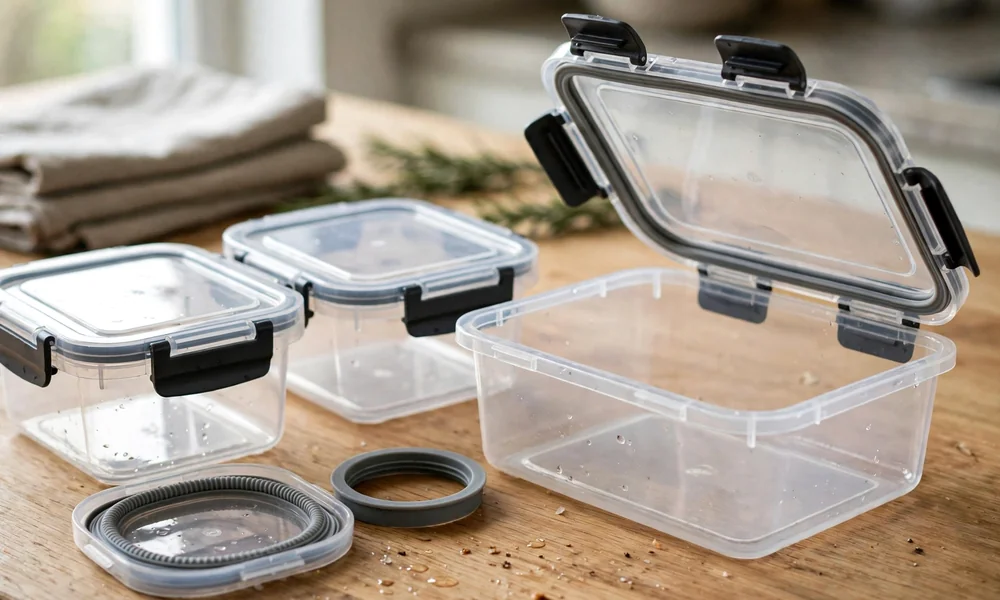
Freshness comes down to air, moisture and temperature, and a good container controls all three. Air is the main enemy: oxygen dries food out, dulls flavour and feeds the bacteria that spoil it. A lid that seals tightly slows that down dramatically, which is why the seal is the first thing to judge. Press the lid on, squeeze the tub gently and listen: if air hisses out around the edge, the seal is not doing its job. A proper snap-lock lid with four locking tabs and a silicone ring will hold its seal even when the tub is tipped on its side,
Moisture is the second factor. Some foods need to stay moist, like cooked rice and stews, while others need to stay dry, like salad leaves and fried food. A tight seal keeps moisture in for the first group, and for the second the answer is a vent or a paper towel inside to absorb condensation. Temperature is the third factor: what matters is that the tub can go from fridge to microwave to freezer without cracking or warping, because a tub that only survives one of those forces you to decant food into something else.
Glass vs Plastic vs Steel: Which Material Wins
There is no single best material, only the best material for how you cook and store. Most households end up with a mix, and knowing the trade-offs is what stops you buying the wrong one.
| Material | Seal and freshness | Stains and smells | Freezer safe | Microwave safe | Best for |
|---|---|---|---|---|---|
| Borosilicate glass | Excellent | Never stains or smells | Yes, with headspace | Yes, lid off | Home fridge storage and reheating |
| Polypropylene plastic | Good with snap-lock lids | Some staining over time | Yes | Yes | Meal prep, lunch bags and freezing |
| Tritan plastic | Good | Resists stains well | Yes | Yes | Clear, light containers you can see through |
| Stainless steel | Good with silicone seals | Never stains or smells | Yes | No | Packed lunches and transport |
| Silicone bags and tubs | Good when sealed flat | Can hold strong smells | Yes | Yes | Freezer storage and small portions |
Glass is the best choice for the home fridge.
Plastic wins for portability and for the freezer. A polypropylene tub is light, cheap, nearly unbreakable, and it survives being dropped in a lunch bag or stacked in a freezer drawer. The trade-off is staining: tomato, turmeric and beetroot will mark it over time, and strong smells like garlic and curry can linger even after washing. Whatever plastic you buy, check that it is labelled BPA-free and food-safe, and never microwave a tub that is not marked microwave-safe.
Where steel and silicone fit
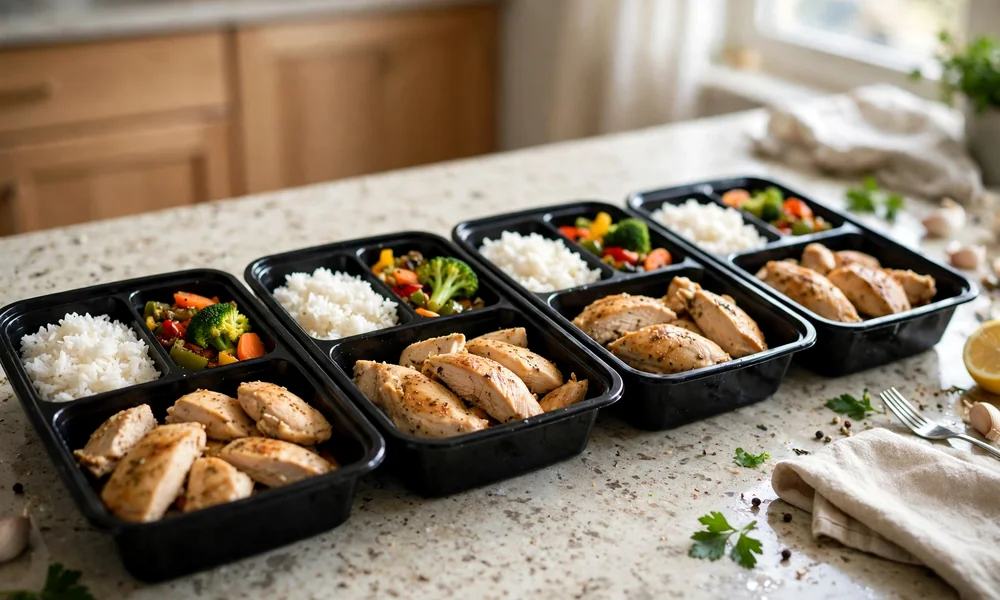
Stainless steel containers are the toughest option and the best for packed lunches, because they never crack, never stain and keep food cold for hours. Their weakness is the kitchen itself: you cannot see what is inside without opening them, and you cannot microwave them, so they suit transport more than storage. Silicone bags and collapsible tubs are the space-savers: they lie flat in a freezer drawer and expand when filled, which makes them ideal for soups and sauces.
Lid Designs That Actually Seal
The lid is where cheap containers fail and good ones earn their price. There are four designs worth knowing, and the difference between them is the difference between food that lasts four days and food that lasts one.
Snap-lock lids
A snap-lock lid has four hinged tabs that fold down over the rim of the tub, pressing a silicone gasket flat against it. This is the most reliable seal you can buy, and it is the design to choose for anything liquid: soups, stews, sauces and dressings. The tabs make the lid slightly slower to open, but that is a fair trade for a tub you can carry on its side.
Press-on and screw lids
Press-on lids are the simplest design: a lid that pushes onto the rim and holds by friction. They are fine for dry food and for short-term fridge storage, but they are not airtight and they will not survive being tipped over. Use press-on lids for dry goods and snacks, and keep snap-lock lids for anything wet.
Vented lids and steam valves
Some lids have a small vent or steam valve that you open before microwaving, so steam escapes instead of building up and popping the lid off. This is genuinely useful if you reheat food in the container, but the vent is also a weak point for the seal, so a vented lid is rarely as airtight as a solid snap-lock lid.
Sizes, Shapes and Stacking
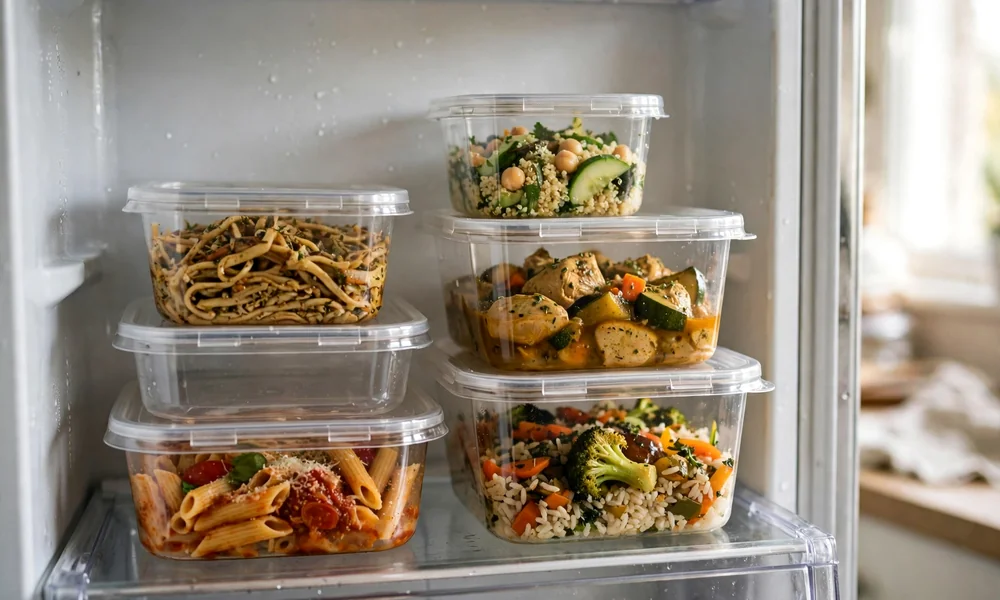
The wrong sizes are the most common reason a set of containers ends up unused. Too big, and food rattles around in stale air and goes off faster; too small, and you need three tubs for one meal. The right approach is to buy one footprint in two or three sizes, so every tub stacks on every other tub and every lid fits every tub of the same footprint.
For most households, three sizes cover everything: a small tub of about 500 millilitres for single portions, sauces and snacks; a medium tub of about one litre for a meal for one or a side dish; and a large tub of about two litres for family leftovers and batch cooking. If you meal prep, add divided containers with two or three compartments, so rice, protein and vegetables stay separate until you eat them. Shape matters too. Rectangular containers use fridge space far better than round ones, because they sit flush against each other with no wasted gaps. Round containers are better for soups and for reheating, because food heats more evenly with no corners to overcook.
Keeping Containers Clean, Fresh and Organised
A container that smells of last week’s curry is a container you will avoid, and the fix is mostly about cleaning properly. Wash lids and gaskets separately, and pull the silicone gasket out of its channel at least once a week, because food and moisture collect underneath it and that is where smells start.
Organisation is the other half of the job. Keep all the tubs of one footprint nested together and all the lids in a single upright file, so you can see at a glance what you have. Label every tub with the contents and the date, using masking tape and a marker or reusable labels, and eat refrigerated leftovers within three to four days. Retire a tub when its lid no longer seals, when the plastic is deeply stained or scratched, or when the glass is chipped, because a container that does not seal is just a bowl with a lid on top.
Food Storage Container Checklist
- Choose snap-lock lids with a silicone gasket for anything liquid, and keep press-on lids for dry food only.
- Buy one footprint in two or three sizes so tubs stack neatly and lids are interchangeable.
- Pick glass for home fridge storage and reheating, and BPA-free plastic for the freezer and for lunch bags.
- Prefer rectangular tubs for fridge space, with one or two round tubs for soups and even reheating.
- Check the safety marks: freezer-safe, microwave-safe and dishwasher-safe, before you buy, not after.
- Label every tub with contents and date, and eat refrigerated leftovers within three to four days.
Frequently Asked Questions
How long do leftovers last in food storage containers?
In a properly sealed container in the fridge, most cooked leftovers last three to four days. Rice, pasta and cooked vegetables are fine for three days, while stews, curries and roasted meat often last four. Anything with seafood should be eaten within two days.
Is glass or plastic better for food storage containers?
Glass is better for freshness, because it never stains or holds smells, and it can go from fridge to microwave without a second dish. Plastic is better for portability and for the freezer, because it is light, cheap and nearly unbreakable.
Are plastic food storage containers safe?
Good-quality food-grade plastic containers labelled BPA-free are safe for storing food. Look for polypropylene, marked with the number 5 in the recycling triangle, or Tritan, a newer clear plastic.
Why do my containers stain and smell?
Tomato, turmeric, beetroot and curry stain plastic because the pigments lodge in tiny scratches on the surface, and strong smells linger in the silicone gasket rather than the tub itself. A soak in warm water with baking soda removes most stains and smells, and removing the gasket for a separate wash fixes the rest.
Can food storage containers go in the freezer?
Yes, if they are marked freezer-safe. Glass tubs need headspace because food expands as it freezes, and they should be borosilicate glass to cope with the temperature change. Plastic tubs are ideal for the freezer because they never crack from cold.
What is the difference between food storage containers and storage jars?
Containers are for cooked food, leftovers and meal prep in the fridge and freezer, with airtight lids that seal against air and leaks. Jars are for dry pantry goods like flour, rice and pasta, where the job is keeping food visible, tidy and dry on a shelf. If you want to compare the pantry side, our guides to the best storage jars and the best mason jars cover it, and our best storage bins guide covers whole-house storage beyond the kitchen.
The Bottom Line
Food storage containers that keep leftovers fresh longer are the ones with a lid that genuinely seals, a size that fits the meal, and a material suited to where the food lives. Glass wins in the home fridge, BPA-free plastic wins in the freezer and the lunch bag, and a snap-lock lid with a silicone gasket beats a loose press-on lid every time. Buy one footprint in two or three sizes, label everything with a date, and eat refrigerated leftovers within three to four days.


