Top Milk Steamers for Silky Microfoam at Home in 2026
A milk steamer turns home coffee into café coffee. It blasts milk with pressurised steam, heating it and stretching it into silky microfoam: the difference between a flat white and a blob of bubbles. The best milk steamers of 2026 do that in under a minute, with steam dry and strong enough to texture milk rather than water it down. The worst hiss, spit, and leave hot milk and stiff foam that collapses before the cup reaches the table.
This guide covers the steamers worth buying: stovetop steamers for any hob, standalone electric steamers that need no coffee machine, and steam wands built into espresso machines. They are not the same purchase: the right one depends on how you already make coffee and whether you want latte art or just a hot, creamy latte. A steamer differs from a frother, and confusing the two is the most common mistake buyers make.
Key Takeaways
- A milk steamer heats milk with pressurised steam; a frother whips air in with a whisk. Steam gives finer, glossier microfoam.
- Stovetop steamers suit homes without an espresso machine and cost least, but need a hob and minutes to build pressure.
- Standalone electric steamers are the easiest route to steamed milk if you brew any other way, from moka pot to filter machine.
- An espresso machine wand is the best steamer if you own the machine, and the worst reason to buy one if you do not.
- Stop at 60 to 65 degrees Celsius: hotter milk tastes cooked, and the foam breaks down instead of pouring smoothly.
What a Milk Steamer Actually Does
A milk steamer pushes dry, pressurised steam through a narrow wand into cold milk. The steam heats the milk and injects thousands of tiny bubbles that the milk proteins wrap into smooth, glossy microfoam. Good microfoam looks like wet paint and blends into the coffee; bad foam looks like bubble bath: stiff, dry, and separate.
The difference between a steamer and a frother is the mechanism. A frother whisks air into milk, which makes foam quickly but coarsely, and most frothers heat the milk separately or not at all. A steamer uses only steam, so heat and texture arrive together and the bubbles are far smaller. That is why a steamed flat white tastes integrated and silky while a frothed one tastes like hot milk with a foam hat. Our guide to the best milk frothers of 2026 covers the whisk machines. But for café texture, steam is the way: wet steam thins the milk, while dry steam from a hot boiler textures it cleanly.
The Three Types of Milk Steamer
Every milk steamer falls into one of three families, differing in price, in what else you need, and in how much control you get.
Stovetop Steamers
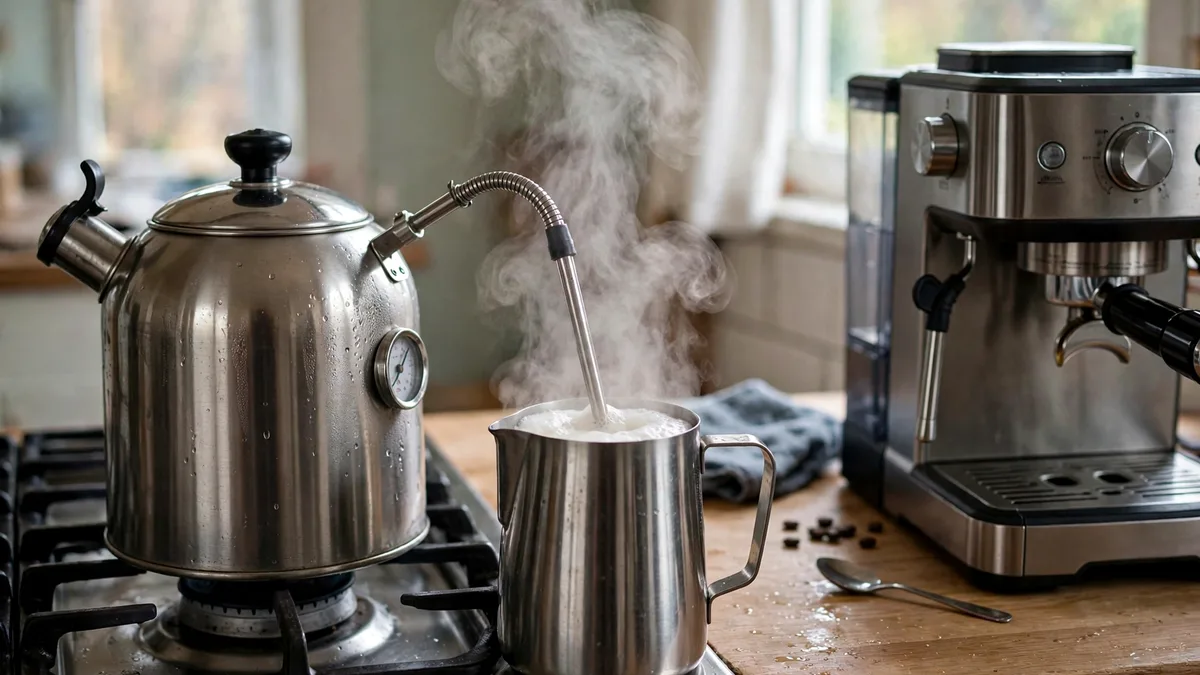
A stovetop steamer is a small steel boiler, usually kettle-shaped, heated on a gas or electric hob until it builds pressure, when you open a valve to send steam through a wand into your milk jug. It needs no electricity, no coffee machine, and no counter space beyond a shelf, and it makes genuinely dry steam once up to pressure.
The trade-offs are time and attention: three to five minutes to build pressure, enough steam for one or two drinks, then reheating. It gets very hot, so never overfill it, never block the safety valve, and let it cool before opening. For a moka pot or pour-over household, it is the smartest purchase in this guide. Our guide to the best moka pots of 2026 covers the stovetop makers these steamers pair with best.
Standalone Electric Steamers
A standalone electric steamer is a countertop appliance with its own boiler and wand, built for one job: steaming milk. Plug it in, wait a minute or two for the ready light, and steam. There is no hob, no flame, and no espresso machine to buy first. Most hold enough pressure for two or three drinks, and the better ones have a multi-hole tip, which textures milk faster and more evenly.
The catch is counter space and price: roughly the size of a small kettle, costlier than a stovetop model, and it does nothing else. It suits filter, French press, and pod homes that want café milk on top. If you already own an espresso machine with a wand, a standalone steamer duplicates what you have.

Espresso Machine Steam Wands
A steam wand is the metal pipe on an espresso machine that blasts steam into a jug of milk. On a good machine it is the best steamer you can own: large boiler, dry steam, multi-hole tip, and pressure that does not fade mid-jug. It is also the hardest to learn: you control tip depth, jug angle, and timing by hand.
The honest question is whether you are buying a steamer or a machine. If you already own a machine with a wand, use it: no separate steamer will beat it, and our guide to the best espresso machines of 2026 covers which models steam well and which only pretend to. If you do not own one, do not buy a whole machine just for the wand: a stovetop or standalone steamer gives the same milk for a fraction of the price.
How to Steam Milk Like a Café
Start with cold milk and a cold jug: more time to build fine bubbles. Fill the jug to just below the spout: milk roughly doubles as it steams. Purge the wand first, opening the steam for two seconds into the air to clear condensed water from the pipe.
Lower the tip just below the surface and open the steam fully: you should hear a gentle tearing sound as air is drawn in. That is the stretching phase, and it lasts only a few seconds: too long, and the foam gets stiff and dry. Once the milk has grown by about a third, sink the tip deeper and let the steam spin it into a whirlpool, where the bubbles shrink and the milk turns glossy. Keep your hand on the jug and stop when it feels too hot to hold, about 60 to 65 degrees. Tap the jug to pop large bubbles, swirl until the surface looks like wet paint, and pour straight away: milk that sits for a minute separates.
Which Milks Steam Best
Whole dairy milk steams easiest: its fat and protein build stable, creamy microfoam and forgive small mistakes. Semi-skimmed makes lighter foam that fades faster; skimmed makes big bubbles that collapse within a minute. Among plant milks, barista-style oat milk wins: a little extra fat, steams almost as well as dairy, and tastes neutral in coffee. Soya steams well but can split above 60 degrees, so stop early; almond makes thin, fragile foam. Start cold, and never re-steam: spent proteins make only flat, tired foam.

Milk Steamers Compared
| Steamer Type | Needs | Best For | Price Range | Steam Quality |
|---|---|---|---|---|
| Stovetop steamer | A hob | Moka pot and pour-over homes | Low | Dry, once up to pressure |
| Standalone electric | A socket | Filter and pod coffee homes | Mid-range | Good, two to three drinks |
| Espresso wand | An espresso machine | Daily lattes and latte art | Machine cost | Best, if the boiler is large |
| Handheld frother wand | Batteries | Not a steamer: whisk foam only | Low | No steam at all |
What to Look For Before You Buy
Steam pressure comes first: a steamer that cannot hold pressure through a full jug leaves half-textured milk, and no technique fixes a weak boiler. On a stovetop model, look for a pressure gauge and a safety valve you can trust. On an electric model, look for a boiler rather than a small thermoblock, which fades where a boiler holds pressure.
The steam tip comes second: three or four small holes texture milk faster and more evenly than one large hole, because the steam spreads instead of blasting one channel. Check the tip unscrews for cleaning: dried milk inside is the most common cause of weak steam. A pivoting wand matters too: a fixed wand forces an awkward tilt. Cleaning comes third: milk burns onto a hot wand in seconds, so wipe it with a damp cloth after every use and purge steam through it. Finally, measure your space: a stovetop steamer needs a shelf and a hob ring, and an electric steamer needs a counter spot near a socket.
Mistakes to Avoid With a Milk Steamer
The most common mistake is steaming milk that is already warm. Warm milk has no time to texture before it overheats, so it comes out thin and scorched. Always start cold. The second mistake is skipping the purge, which sends condensed water into the jug and thins the milk before the steam starts. The third is over-stretching: holding the tip at the surface too long makes stiff foam that sits on the drink instead of blending in. Never steam in a jug that is too small: the milk needs room to spin, and a cramped jug makes big bubbles. And never re-steam milk: its proteins are spent, and steaming it again only makes it taste cooked.

Checklist: Choosing a Milk Steamer
- Pick the type for your setup: stovetop for the hob, standalone electric for other brewers, wand if you own an espresso machine.
- Check the steam stays strong through a full jug, not just five seconds.
- Choose a multi-hole steam tip that unscrews for cleaning.
- Make sure the wand moves and the jug fits underneath it.
- Confirm you can wipe and purge the wand in seconds after every use.
- Buy a steel jug, cold milk, and a thermometer until your hand learns it.
Frequently Asked Questions
Is a milk steamer better than a milk frother?
For café texture, yes: a steamer uses dry steam to make fine, glossy microfoam while heating the milk; a frother whisks in larger bubbles and often heats separately or not at all. A frother is simpler and cheaper, but it cannot make latte-art microfoam.
Can I steam milk without an espresso machine?
Yes. A stovetop steamer works on any hob and needs no machine, and a standalone electric steamer needs only a socket. Both make real steam and real microfoam.
Why does my steamed milk taste watery?
Usually wet steam. Purge the wand for two seconds before you start, and make sure the boiler is fully up to pressure before you open the valve. Starting with a cold boiler sends water into the milk instead of dry steam.
What temperature should steamed milk reach?
Stop at 60 to 65 degrees, when the jug feels too hot to hold. Hotter milk tastes cooked and its foam breaks down. A thermometer helps for the first month; after that, your hand learns it.
Can I steam oat milk or soya milk?
Yes, with care. Barista-style oat milk steams almost as well as dairy. Soya steams well but can split above 60 degrees, so stop early. Almond makes thin, fragile foam, and no milk should ever be re-steamed: the proteins are spent after the first heating.
How do I clean a milk steamer?
Wipe the wand with a damp cloth straight after every use, while the milk is still wet, and purge a second of steam through it. Soak the tip in hot water if milk dries inside it, and never leave a wand crusted overnight: dried milk blocks the holes and weakens the steam.
The Bottom Line
Buy the steamer that fits the coffee you already make. A stovetop steamer is the cheapest route to real microfoam for moka pot and pour-over homes; a standalone electric steamer is the easiest if you brew any other way; and an espresso wand is the best of all, but only if the machine is already on your counter. Start with cold whole milk, purge the wand, stop at 65 degrees, and clean the wand every time, and your morning coffee will taste like it came from a café.