The Oyster Knives That Open Shells Without the Struggle in 2026
An oyster knife is a small, stubborn tool with one job: to open a shell that does not want to be opened. A good oyster knife slips into the hinge, twists the shell apart with a short, controlled turn, and leaves the oyster whole and swimming in its own liquor. A bad one slips, bends, or snaps. The difference is rarely the price. It is the blade shape, the thickness, the handle and the guard, and those four things are easy to judge once you know what an oyster knife is actually for.
Key Takeaways
- An oyster knife is a short, thick prying tool, not a cutting knife: it twists shells open rather than slicing through them.
- The blade tip decides which oysters it suits, so match the tip to the oysters you actually buy.
- A wide guard between blade and handle is the single most important safety feature on any oyster knife.
- Hold the oyster in a folded towel, never in a bare hand, and keep the blade pointed away from your fingers.
- Stainless steel blades need almost no care, while carbon steel blades need drying and oiling after every use.
What an Oyster Knife Actually Is
An oyster knife looks like a knife, but it works like a lever. The blade is short, usually six to eight centimetres, thick, and deliberately blunt, because its job is to wedge into the narrow hinge at the back of the shell and twist, not to cut. A sharp, thin blade would slice through the oyster meat and snap under the sideways force, while a thick, blunt blade spreads the force and pries the two halves apart.
The handle matters as much as the blade. A good oyster knife has a handle that fills the palm, with enough grip to hold on when your hands are wet and slippery, which they will be. The most important part of the handle is the guard, the wide flare where the handle meets the blade. When a knife slips, the guard is what stops your hand sliding forward onto the blade.
An oyster knife is not a general kitchen knife, and it should never be used as one. It cannot slice, dice or chop, and trying to use it that way will blunt the tip and strain the blade. It is also not a fillet knife, a paring knife or a clam knife. A clam knife is thinner and more flexible, made for the flatter, tighter shells of clams. Our guide to the best chef knives of 2026 covers the long, sharp blade that does most kitchen cutting, and an oyster knife is the opposite tool: short, thick and blunt, made for one stubborn job only.
The Main Types of Oyster Knife, Compared
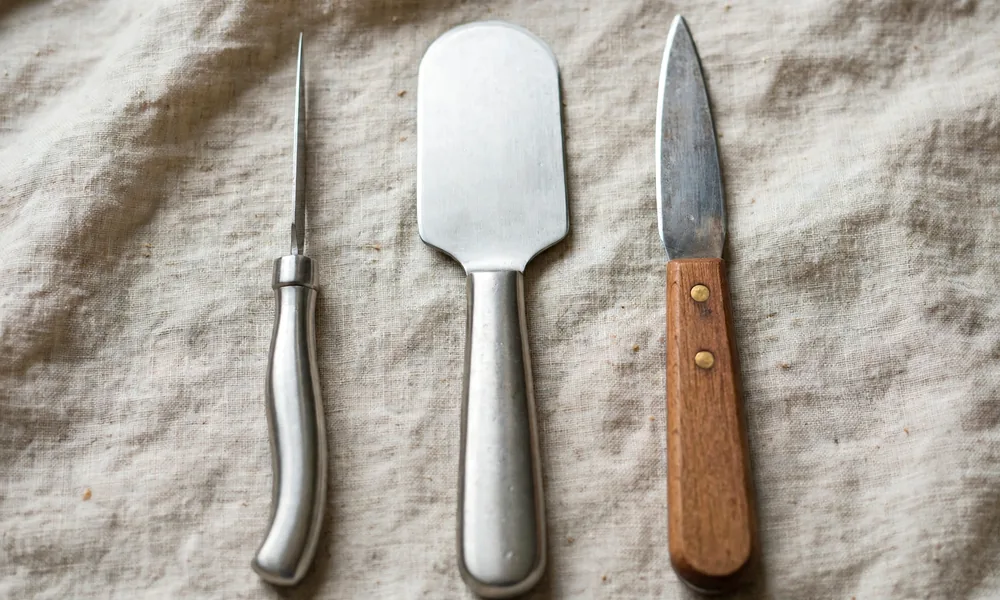
Almost every oyster knife falls into one of four designs, and the design decides which oysters it opens best. The Boston knife is the all-rounder, the New Haven knife is the specialist for small, tight oysters, the French knife is the curved one for larger shells, and the wide-blade knife is the one for beginners who want the most control.
| Type | Best For | Strength | Watch Out For |
|---|---|---|---|
| Boston | Most oysters | Short pointed tip, versatile | Tip can snap if twisted hard |
| New Haven | Small, tight oysters | Narrow blade reaches tight hinges | Too thin for large shells |
| French | Large, flat oysters | Curved blade follows the shell | Harder to control for beginners |
| Wide-blade | Beginners | Stable, hard to slip | Too wide for small hinges |
Boston Oyster Knives
The Boston knife is the best first buy for most people, because it handles the widest range of oysters. Its blade is short and pointed, with a slightly upturned tip that finds the hinge easily, and it is thick enough to take a firm twist without bending. The weakness is the tip: a pointed tip twisted too hard against a shell that will not move can snap. If the shell will not open with a gentle twist, stop, reposition the tip, and try again.
New Haven and French Oyster Knives
A New Haven knife has a longer, narrower blade with a rounded tip, made for small oysters with tight, narrow hinges that a Boston tip cannot enter. It is superb on the small, sweet oysters that are hardest to open, but it is too thin for large shells, where it can bend under the force. A French knife has a curved, almost hooked blade that follows the curve of a large, flat oyster shell. It takes more practice than a Boston knife, but once learned it opens large shells with less force.
Wide-Blade Oyster Knives
A wide-blade knife is the safest choice for a beginner, because the broad blade is hard to slip and easy to control. It spreads the force across a wider area, which means less pressure on any one point of the shell. The trade-off is size: a wide blade cannot enter a small, tight hinge, so it suits larger oysters and leaves the small ones to a narrower knife.
Blade Steel: Stainless or Carbon?
Most oyster knives are made from stainless steel, and for most people that is the right choice. Stainless steel resists rust, survives being left wet, and needs almost no care beyond a wash and a dry. Carbon steel is harder and takes a finer tip, but it rusts quickly if it is left wet, and an oyster knife is always wet.
Blade thickness is worth checking before you buy. A good oyster knife blade is about three millimetres thick at the spine, which is roughly twice as thick as a kitchen knife blade, and that thickness is what stops it bending under a twist.
How to Open an Oyster Safely
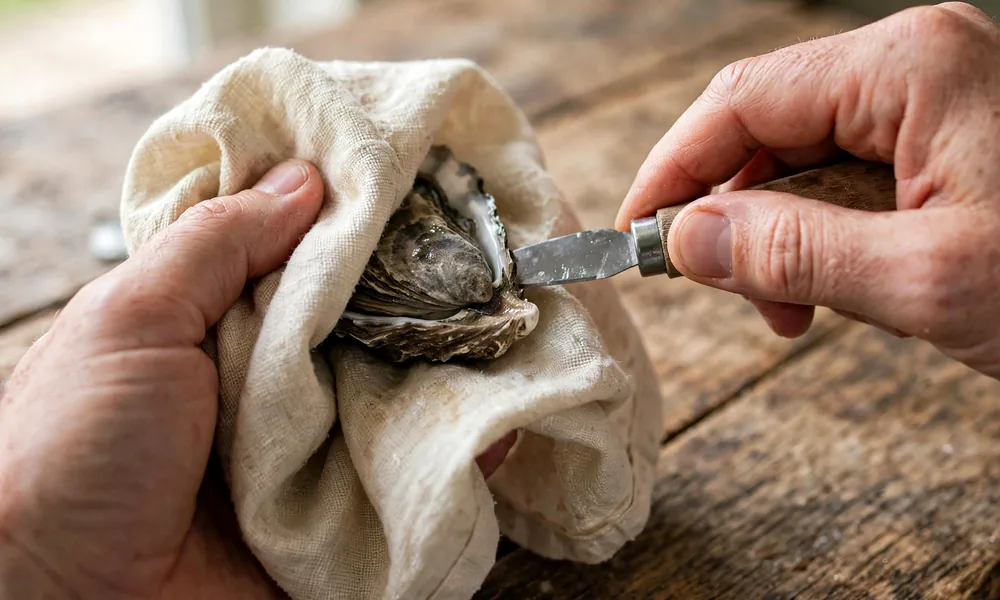
Opening an oyster is a technique, not a test of strength, and the technique is the same whatever knife you use. First, fold a thick towel into a pad and hold the oyster in it, flat side up, with the hinge pointing towards you and your fingers curled underneath, never on top of the shell. Second, find the hinge, the narrow point at the back of the shell where the two halves join, and push the tip of the knife into it gently, wiggling it until it seats. Third, twist the knife a quarter turn, like turning a key, and you will feel the shell pop as the hinge gives way. Fourth, slide the blade along the inside of the top shell to cut the muscle that holds it shut, lift the top shell away, and then slide the blade under the oyster to free it from the bottom shell.
The most common mistake is forcing the knife. If the shell does not open with a gentle twist, the tip is not seated properly, and forcing it will either snap the tip or send the knife forward into your hand. Stop, pull the knife out, and try again at a slightly different angle. The second mistake is holding the oyster in a bare hand, which is how most oyster injuries happen.
Choosing the Right Oyster Knife for You
Choosing an oyster knife takes about a minute in a shop, and it is worth doing before you pay. First, hold the knife: the handle should fill your palm without your fingers overlapping the guard, and it should feel grippy even when your hands are damp. Second, check the guard: it should be wide enough that your fingers cannot slide onto the blade. Third, look at the blade: it should be short, thick and blunt-tipped, with no wobble where it meets the handle.
Price is a poor guide on its own. A good oyster knife costs less than a good chef knife, because it is a simpler tool, and the most expensive oyster knife in the shop is not necessarily the best one for you.
Caring for Your Oyster Knife
An oyster knife needs little care, but it does need some. Wash it in hot soapy water after every use, because oyster liquor is salty and will corrode even stainless steel if it is left to dry on the blade. Dry it straight away, and store it in a drawer or a knife roll rather than loose in a drawer with other tools, where the tip can be damaged. Do not put an oyster knife with a wooden handle in a dishwasher: the heat and the detergent will crack the wood and loosen the handle.
An oyster knife rarely needs sharpening, because it is not a cutting tool, but the tip does wear down over time. A few gentle strokes on a whetstone will restore the tip without making the blade sharp. Our guide to the best knife sharpeners of 2026 covers the tools that keep kitchen blades in shape.
Serving Oysters Once They Are Open
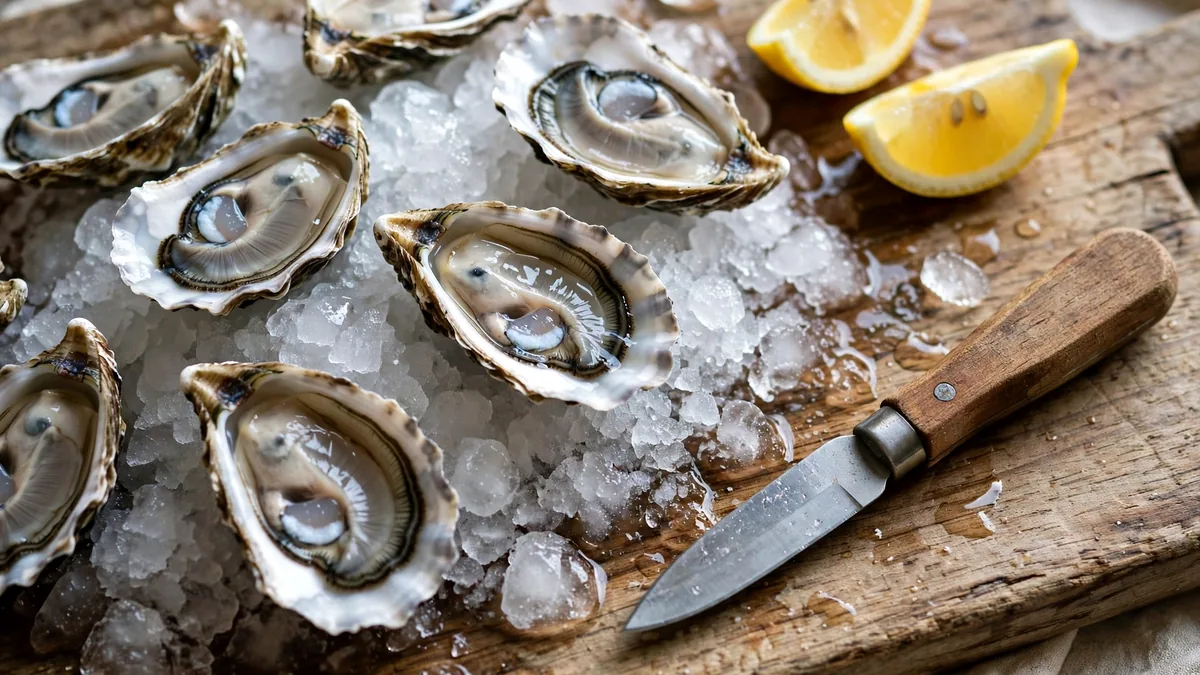
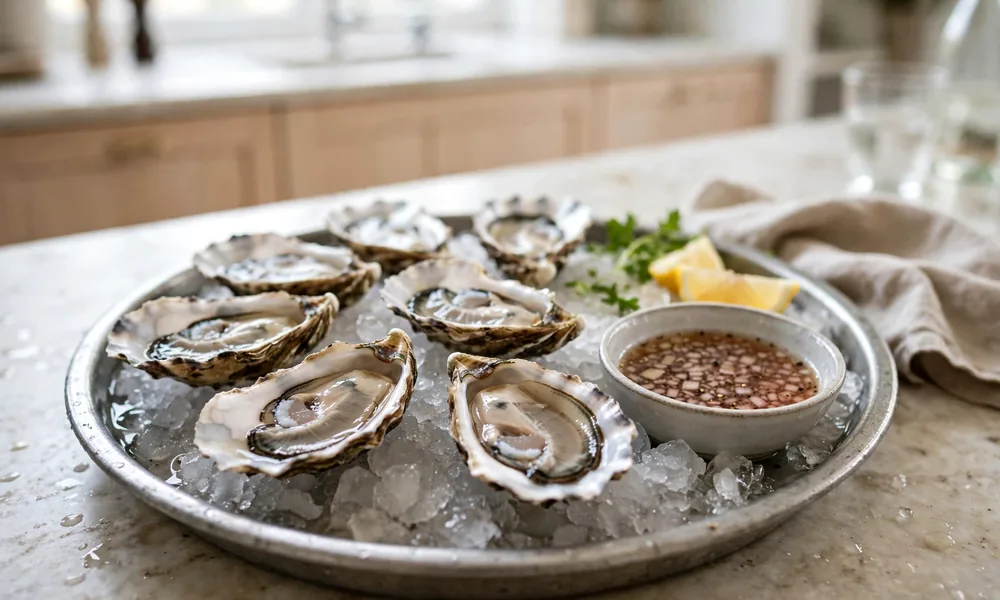
An opened oyster should be served straight away, on crushed ice, with the liquor still in the shell. The liquor is part of the flavour: it is the sea the oyster lived in, and an oyster served dry has lost half of what makes it worth eating. Serve them with lemon wedges and a little mignonette sauce, a mix of finely chopped shallot, red wine vinegar and cracked pepper. For days when fresh oysters are not available, our guide to the best canned oysters for quick, easy meals covers the cooked alternative.
Your Oyster Knife Checklist
- A short, thick blade, about three millimetres at the spine, with a blunt tip that finds the hinge.
- A wide guard between blade and handle, so a slip cannot slide your hand onto the blade.
- A handle that fills your palm and stays grippy when wet.
- Stainless steel, unless you are happy drying and oiling a carbon blade after every use.
- A folded towel and a cut-resistant glove for the hand holding the oyster.
- A knife that matches the oysters you buy: Boston for most, narrow for small, wide for beginners.
Frequently Asked Questions
Can I use a normal kitchen knife to open oysters?
No. A kitchen knife is thin, sharp and flexible, and it will bend or snap under the sideways force of prying a shell open. An oyster knife is thick, blunt and stiff, made to twist rather than cut.
What is the difference between an oyster knife and a clam knife?
A clam knife is thinner and more flexible, made for the flatter, tighter shells of clams, while an oyster knife is thicker and stiffer for the rounder, heavier shells of oysters.
How do I keep an oyster knife from slipping?
Hold the oyster in a folded towel, keep your fingers behind the guard, and twist gently rather than forcing the blade. A wide guard, a grippy handle and a cut-resistant glove all help.
Do oyster knives need sharpening?
Rarely. An oyster knife is a prying tool, not a cutting tool, so it does not need a sharp edge. The tip wears down over time, and a few gentle strokes on a whetstone will restore it.
Is stainless steel or carbon steel better for an oyster knife?
Stainless steel suits most people, because it resists rust and needs almost no care beyond washing and drying. Carbon steel takes a finer tip but rusts quickly if left wet, and it needs drying and oiling after every use.
How should I store an oyster knife?
Washed, dried and stored in a drawer or a knife roll, away from other tools that could damage the tip. Do not leave it wet, and replace it if the tip snaps or the handle comes loose.
The Bottom Line
The best oyster knife is the one that fits your hand, suits the oysters you buy, and has a guard wide enough to keep you safe: short, thick, blunt-tipped and stainless steel for most people, with a Boston blade as the best place to start. Hold the oyster in a towel, twist gently, never force it, and the shell will open cleanly every time.