Banana Slicers vs Mango Slicers: Which Fruit Slicer Earns Its Drawer Space in 2026
Banana slicers do one small job very well: they turn a peeled banana into even, round slices in a single press, with no knife and no board full of uneven chunks. If you slice a banana most mornings, the best banana slicers in 2026 save a minute every day and make breakfast look tidy. This guide explains how they work, how they compare with mango slicers, and how to choose one that cuts cleanly instead of mashing.
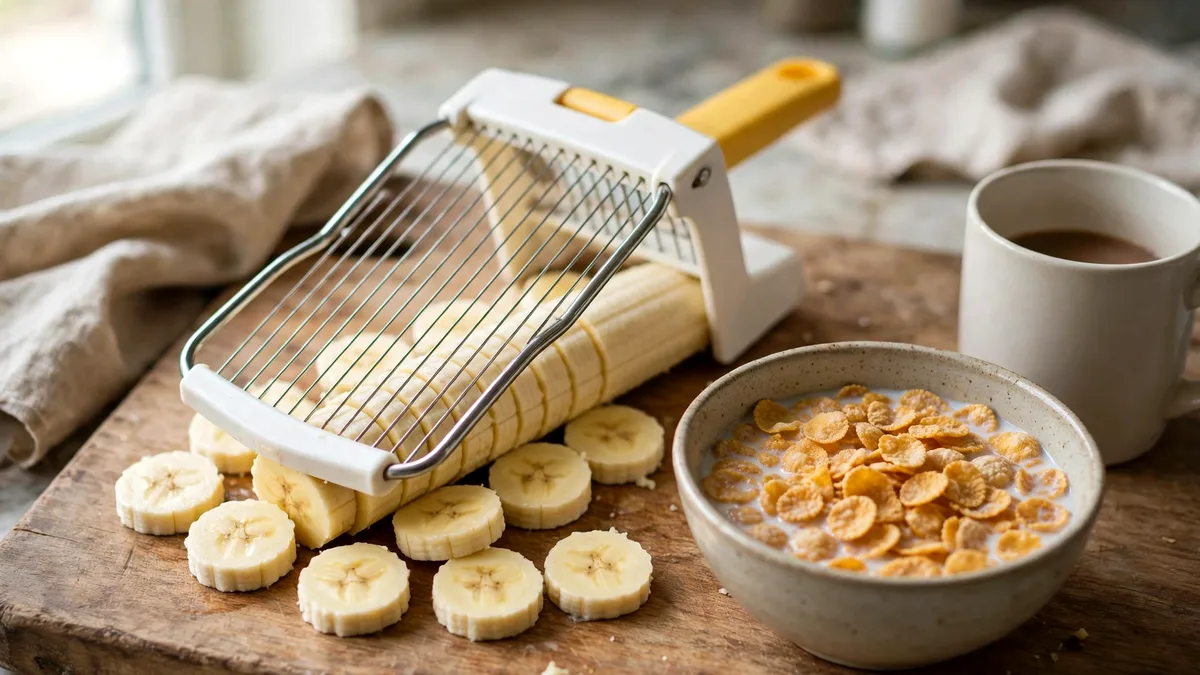
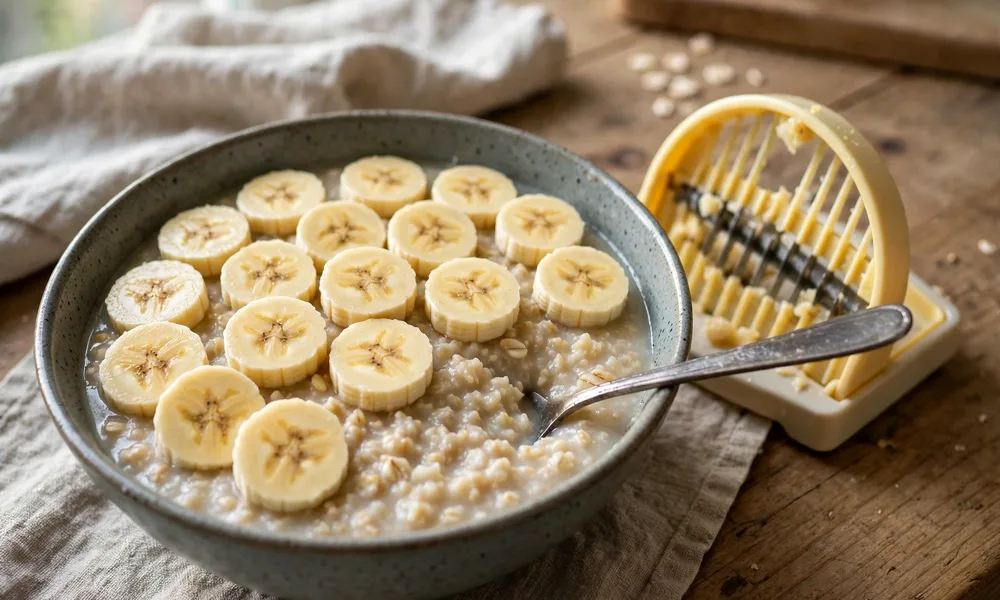
A banana is awkward to cut neatly: soft, curved, and quick to brown, so uneven knife work shows in the bowl. A slicer holds the fruit still while parallel wires pass through it in one motion, and the rounds come out the same thickness. Even rounds sit neatly on porridge, while ragged chunks turn soft and grey at the edges.
Key Takeaways
- A wire banana slicer is the best choice for most kitchens: one press turns a peeled banana into even rounds.
- Peel the banana first and slice just before serving, because cut banana browns fast.
- Look for taut stainless steel wires, evenly spaced, in a frame that holds a full-size banana.
- Pick a banana that is yellow with a few brown speckles: under-ripe fruit resists the wires, over-ripe fruit squashes.
- Rinse the slicer straight after use, because dried banana clogs the wires and dulls the edge.
What a Banana Slicer Actually Does
A banana slicer turns a soft, curved fruit into even rounds in a single motion. A banana is difficult to cut with a knife: the flesh is soft, the fruit curves away from the blade, and it is too slippery to hold firmly. A well-made slicer holds it still in a trough while parallel wires press through it.
It is worth drawing a clear line, because banana tools are easily confused. A banana slicer slices a peeled banana into rounds; it does not peel or mash anything. A banana masher is a different tool, a flat plate that crushes the fruit for baking or baby food. Press too hard on an over-ripe banana and a slicer can mash too, but that is a fault, not a feature. A slicer is also not a knife, which works slowly, one cut at a time, and it is not a mandoline, built for firm vegetables.
Even rounds matter more with bananas than with most fruit, because bananas are almost always eaten raw and on display: fanned across porridge or topping pancakes. Uneven slices look messy, slide off a pancake, and sink into porridge at different rates. The same logic sits behind our guide to the best strawberry slicers: a single-purpose slicer earns its place by doing one fiddly job faster and more evenly than a knife.
Banana Slicers vs Mango Slicers: The Real Difference
Banana slicers and mango slicers look like cousins in a drawer, but they solve different problems. A mango has a large, flat pit no blade can cut through, so a mango slicer is built around it: an oval frame with a blade that passes either side of the stone, cutting the cheeks away in one push. A banana has no pit and no core, so a banana slicer has nothing to work around. It simply cross-cuts a long, soft fruit into rounds.
The slice itself is different too. A mango slicer produces two big cheeks and leaves the pit behind, and the cook still has to score or cube the flesh. A banana slicer produces ten to twelve finished rounds in one press, ready to eat. That makes it the faster tool at breakfast, while the mango slicer does the harder job of getting flesh off a stone.
Effort and grip differ as well. A mango slicer needs a firm, straight push to drive the blade past the pit, and a weak grip can stall it halfway. A banana slicer needs only light pressure, because ripe banana flesh gives way easily, so it suits small hands and weak grips. The trade-off is fussiness about ripeness: too firm and the wires drag, too soft and the fruit squashes. Our guide to the best mango slicers covers the pit problem in full, and it is worth reading if you eat both fruits every week. Cleaning is where the banana slicer wins: with no pit to scrape, a rinse under the tap clears it in seconds.
The Main Types of Banana Slicer Compared
Most banana slicers fall into four designs. The classic wire-frame slicer is the most common: a hinged frame of parallel stainless steel wires that swings down onto the banana in a trough, like the wire slicers used for eggs and strawberries. It is cheap, light, and easy to clean, but only suits bananas that fit the trough.
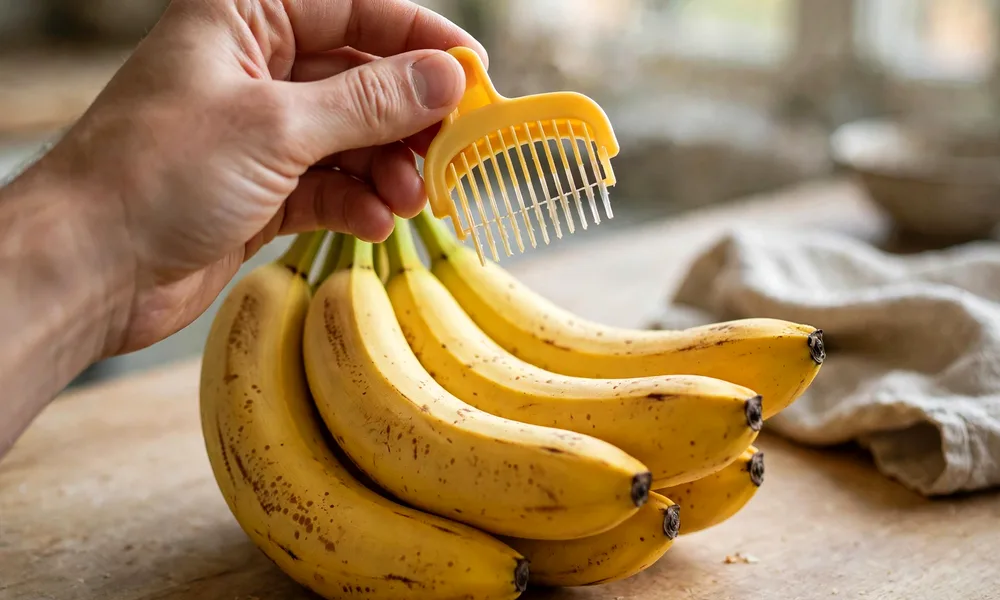
The handheld blade slicer is a small comb-like gadget with several parallel blades in a handle, pressed down through the banana. It is light, cheap, and easy to store, and gives even rounds without the bulk of a frame. The trade-off is control: the tool is only as steady as your hand, and the blades flex if you press hard. It is a good second tool, but a wire-frame slicer is the better first buy.
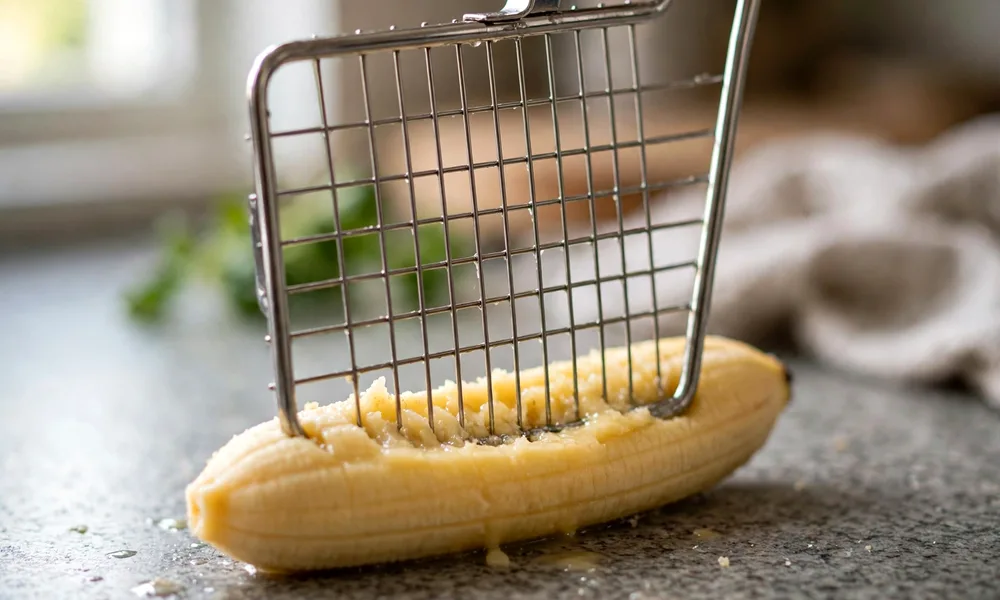
The grid cutter presses a square grid of wires through the banana, cutting it into small cubes rather than rounds. It suits baking, smoothies, and baby food, where small pieces mix in faster, but it is the wrong choice for porridge or pancakes, since cubes sink and look untidy.
The slicer-and-holder pairs a cutting frame with a holder that grips the banana while you cut, so the fruit cannot roll. It suits anyone who slices bananas for children or a lunchbox every day, keeping the fruit straight and your fingers clear of the wires, though it has a smaller cutting area than a dedicated frame.
| Banana Slicer Type | Best For | Cut Shape | Why It Stands Out |
|---|---|---|---|
| Wire-frame slicer | Everyday breakfast rounds | Even rounds | Cleanest cut |
| Handheld blade slicer | Small kitchens, travel | Even rounds | Lightest |
| Grid cutter | Baking, smoothies, baby food | Small cubes | Fastest for small pieces |
| Slicer-and-holder | Lunchboxes, children | Even rounds | Fruit cannot roll |
How to Choose a Banana Slicer
Start with the wires or blades, because they decide whether the tool slices or squashes. Stainless steel wires cut cleanly through ripe flesh without tearing, while plastic blades drag and bruise. The wires should be taut and evenly spaced at about a centimetre, giving rounds thick enough to handle but neat enough to fan out. Much wider spacing makes thick, clumsy rounds; much closer makes thin rounds that fall apart.
Next, look at the trough. It should be long enough for a full-size banana and curved to match the fruit, so the banana sits still instead of rolling as you press. A trough that is too short leaves the ends unsupported, and the last rounds come out ragged. One that is too wide lets the banana slide sideways, bending the wires. The same sizing logic applies to our guide to the best apple slicers, where the frame must match the fruit, but a banana is longer and softer, so the fit matters even more.
The handle comes third. A banana slicer is used with wet hands over a wet board, so grip matters. Look for a handle that is comfortable, slightly textured, and long enough to keep your knuckles clear of the wires. A handle that is too thin twists when you press, and one that is too smooth slips at the worst moment. Hinged frames should open and close smoothly, with no wobble, because a loose hinge presses unevenly.
Material is fourth, and it is mostly about the frame. A sturdy plastic frame is fine if it is thick and rigid, but a thin frame flexes and the wires go slack. Stainless steel frames are the most durable, though they cost more. Whatever the frame, the wires must be firmly fixed: a wire that pulls loose will fail, and a blade that flexes cuts unevenly. Cleaning is fifth: a banana slicer should rinse clean under a tap in seconds, with no joints where banana can hide.
Getting Clean Rounds Every Time
Ripeness is the first thing to get right. The best banana for slicing is yellow with a few brown speckles: firm enough to hold its shape, soft enough to cut without resistance. A green-tinged banana resists the wires and tears, while a heavily speckled one squashes and sticks. If the banana is too soft for rounds, do not force it through the slicer; use it for baking or smoothies instead.
Peel the banana fully, and lay it in the trough curve-down, so it sits flat and cannot roll. Press straight down in one smooth motion, without rocking, because rocking bends the wires and gives wedge-shaped rounds. Lift the frame straight up, and tip the rounds out gently rather than scraping them off the wires, which tears the edges. Slice just before serving, since cut banana browns within minutes. For a lunchbox, a squeeze of lemon juice slows the browning, though it changes the flavour slightly.
Store the slicer where you can reach it. It earns its drawer space only if it is used most mornings, and a tool buried at the back of a drawer never gets used. Keep it near the cereal bowls, rinse it straight after use, and it will last for years. The wires are the only part that wears: if they go slack or drag instead of cut, replace the tool, since a dull slicer bruises more fruit than it saves.
Before You Buy: The Checklist
- Wires are stainless steel, taut, evenly spaced at about a centimetre, and firmly fixed into the frame.
- The trough is long enough for a full-size banana and curved so the fruit sits still.
- The handle is comfortable and slightly textured, with a hinge that opens and closes smoothly.
- The frame is rigid, and the tool rinses clean in seconds with no pulp-trapping joints.
- You slice bananas at least three times a week, so the tool earns its drawer space.
- The price matches the build: a solid frame and taut wires beat a fancy handle every time.
Frequently Asked Questions
Do banana slicers work on all banana sizes?
Most fit a standard banana, but a very small or very large one may not sit well in the trough. Check the trough length before you buy.
Can a banana slicer cut other fruit?
It can cut other soft fruit of a similar size, such as a peeled kiwi, but the rounds come out best on a banana. Firm fruit like apples needs a different tool.
Is a banana slicer worth buying if I own a knife?
Yes, if you slice a banana most days. A knife does the job slowly and unevenly, while a slicer gives even rounds in one press.
How do I stop sliced banana from browning?
Slice just before serving, since browning starts within minutes. A squeeze of lemon juice slows it for a lunchbox.
Are wire slicers better than blade slicers?
Wire slicers cut the cleanest rounds, because thin taut wires pass through soft flesh without pressing it flat. Blade slicers are lighter, but the blades can flex if you press hard.
How do I clean a banana slicer?
Rinse it straight after use under a running tap, and brush the wires gently if pulp sticks. Dry it before storing so the wires do not spot.
The Bottom Line
A banana slicer is a small, cheap tool that earns its place by doing one daily job faster and more neatly than a knife. Buy a wire-frame slicer with taut stainless steel wires and a trough that fits a full-size banana, and slice yellow, lightly speckled bananas just before serving. A mango slicer does a different job on a different fruit, so if you eat both every week, the two tools sit side by side.