
How to Choose the Best Pet Dental Chews 2026
The best pet dental chews of 2026 do one job well: they clean your pet’s teeth while your pet thinks it is getting a treat. A good dental chew scrubs plaque off the tooth surface as your pet bites through it, freshens breath, and gives you a simple daily habit that actually protects gums. A bad one is too hard and risks a cracked tooth, too small and becomes a choking hazard, or so full of sugar and fillers that it does more harm than good. This guide explains how they work and how to pick one safely.
Key Takeaways
- A pet dental chew cleans by scrubbing: ridges and texture scrape soft plaque off teeth as your pet chews, and some add enzymes that slow plaque forming again.
- Size matters more than brand: a dental chew must be big enough that your pet has to bite through it, never small enough to swallow whole.
- Look for the VOHC seal of acceptance, which means the chew has been tested and shown to reduce plaque or tartar.
- Check calories and ingredients: a daily dental chew should fit inside your pet’s daily food allowance, with a short, readable ingredient list.
- A dental chew supports brushing but never replaces it, and pets with loose teeth, gum disease or a sensitive stomach need a vet’s advice first.

What a Dental Chew Actually Does
Plaque is the soft, sticky film that forms on teeth within hours of eating. If it is not removed, minerals in saliva harden it into tartar within days, and tartar can only be removed by a vet. By the age of three most dogs and cats show some sign of gum disease, which starts with plaque. A dental chew works before plaque hardens: chewing rubs the tooth surface and extra saliva washes food particles away.
A dental chew helps in two ways. The first is mechanical: ridges and a slightly flexible texture scrub the tooth as your pet bites down. The second is chemical: some chews contain enzymes or zinc that slow the bacteria that form plaque. Neither replaces brushing, but together they make a real difference every day.
A dental chew cannot remove hard tartar, fix a loose tooth, or cure bad breath caused by gum disease or a stomach problem. If your pet’s breath suddenly smells much worse, or the gums bleed when you lift the lip, that is a vet visit, not a shopping trip.
The Main Types of Dental Chew
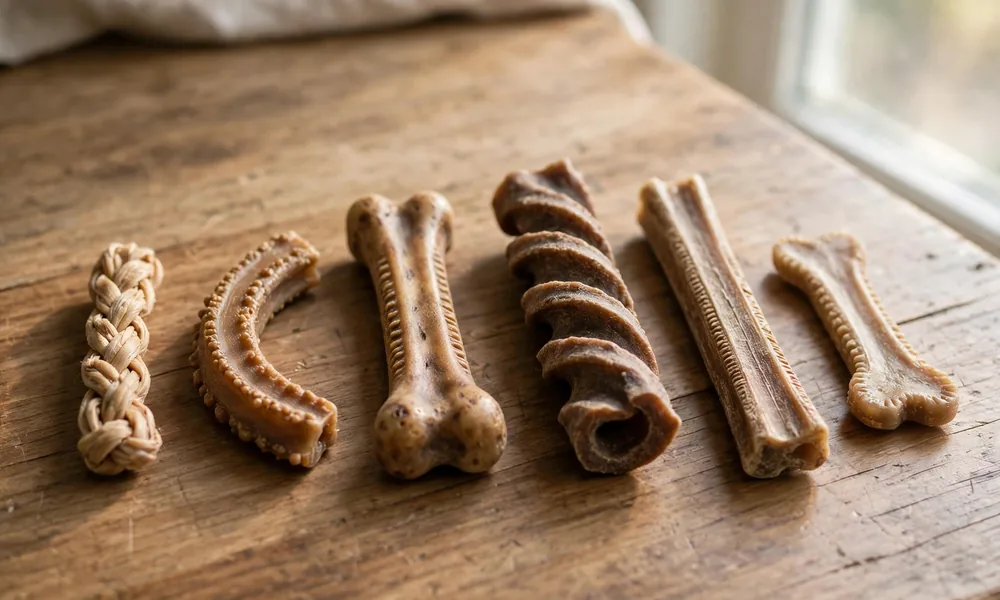
Ridged Dental Sticks
Ridged sticks are the classic dental chew: a firm, grooved stick your pet bites through slowly, with ridges that flex against the tooth and scrape plaque as the chew breaks down. They suit most adult dogs and are the easiest type to find. The downside is that a fast chewer can finish one in a minute, and a chew that disappears that fast does very little cleaning.
Enzymatic Dental Chews
Enzymatic chews add active ingredients that break down the film plaque needs to form, and they are often softer than ridged sticks. That softness suits older dogs, small breeds and pets with sensitive teeth, though they do less scrubbing, so they work best alongside brushing or a harder chew on other days. Avoid any chew that lists sugar or corn syrup early in its ingredients.
Rawhide-Free Dental Chews
Rawhide-free chews are made from digestible ingredients such as rice or potato starch, pressed into a dental shape. They break down safely in the stomach, which suits dogs with sensitive digestion, and they tend to be softer and quicker to finish than a dense ridged stick. Check the weight range, because a chew sized for a large dog can be a choking risk for a small one.
Dental Treats for Cats
Cat dental treats are small, crunchy pieces with a fibrous texture that resists crumbling, so the tooth sinks in and gets scrubbed before the piece breaks. Cats are far fussier than dogs: a dental treat your cat refuses cleans nothing. Start with a small bag, and never give a cat a dog dental chew, because the size and hardness are wrong for a cat’s smaller jaw.
Dental Chews for Puppies and Seniors
Puppies and older pets need softer dental chews. Puppy teeth are still developing and break easily, so a chew should bend slightly under your thumbnail and crumble rather than snap. Senior pets often have worn teeth or sore gums, and a hard stick can hurt them or crack what is left. For both groups, a soft enzymatic chew or a small dental treat is safer. Our guide to the best dog chews of 2026 covers the wider world of long-lasting chews, including which ones are too hard for puppies and seniors.
How to Choose the Right Dental Chew
Match the Size to Your Pet’s Weight
Every reputable dental chew lists a weight range on the packet, and it is the first thing to check. A chew that is too small can be swallowed whole, while one that is too large will frustrate a small pet and go uneaten. As a rule, the chew should be longer than your pet’s muzzle is wide. Between two sizes, choose the larger one and supervise the first sessions.
Test the Hardness
Use the thumbnail test before you buy: press your thumbnail into the chew, and if you cannot make a small dent, it is probably too hard for most pets. A chew harder than tooth enamel can crack a tooth, and a cracked tooth is painful and expensive to fix.
Read the Ingredient List
A good dental chew has a short ingredient list you can understand: one main protein or starch, a dental active such as an enzyme, and nothing hard to pronounce. Avoid chews with added sugar, artificial colours and long lists of fillers. If your pet has a food allergy, check the protein source first.
Count the Calories
A dental chew is food, and a daily chew can add up: some large sticks carry as many calories as a small meal, which matters for a pet that is already overweight. Treats, including dental chews, should stay under ten percent of daily calories, so subtract the chew from the food allowance rather than adding it on top. A low-calorie dental treat may be a better daily choice for a pet on a diet.
Look for the VOHC Seal
The Veterinary Oral Health Council awards a seal of acceptance to products tested and shown to reduce plaque or tartar. It is the clearest independent signal that a dental chew does what it claims. A chew without the seal is not necessarily useless, but its dental claims are the manufacturer’s own words, not a tested result.
Pet Dental Chews Compared
| Type | Best For | Cleaning Action | Watch Out For |
|---|---|---|---|
| Ridged dental sticks | Most adult dogs | Strong scrubbing from ridges | Fast chewers finish them too quickly |
| Enzymatic chews | Seniors, small breeds, sensitive teeth | Enzymes slow plaque forming | Softer, so less scrubbing |
| Rawhide-free chews | Sensitive stomachs | Gentle scrubbing, safe to digest | Can be finished quickly |
| Cat dental treats | Cats of all ages | Crunchy texture scrubs teeth | Fussy cats may refuse them |
| Soft puppy chews | Puppies under a year | Gentle cleaning, safe hardness | Must be sized correctly |
Mistakes to Avoid With Dental Chews
The most common mistake is treating a dental chew as a substitute for brushing or vet care. A chew slows plaque down, but it does not reach every tooth surface, and the back molars are the hardest for any chew to clean. Brushing even a few times a week with a pet toothpaste does far more than any chew alone.
The second mistake is leaving a pet unsupervised with a new chew: watch the first few sessions, because some dogs try to swallow large pieces. The third mistake is buying one size for every pet in the house: a chew sized for a large dog is dangerous for a small one. Buy per pet, per weight.
Finally, do not be fooled by a chew that claims to be dental simply because it is shaped like a tooth. Shape alone cleans nothing: the texture, hardness, size and active ingredients matter. If a packet makes big dental claims but lists sugar high in its ingredients and carries no VOHC seal, it is a treat wearing a dental costume. The same rule applies to the pet toys that survive aggressive chewers: the material and design matter far more than the marketing on the packet.

Your Dental Chew Checklist
- Choose the size by your pet’s weight, never by guesswork, and size up when your pet sits between two sizes.
- Press your thumbnail into the chew first: if it will not dent, it is too hard for most pets.
- Look for the VOHC seal of acceptance on the packet before you buy.
- Read the ingredients and skip chews with sugar, artificial colours or a protein your pet is allergic to.
- Count the chew inside the daily calorie allowance, keeping all treats under ten percent.
- Supervise the first few sessions, and ask your vet first if your pet has loose teeth, gum disease or a sensitive stomach.
Frequently Asked Questions
How often should I give my pet a dental chew?
Once a day is the usual routine, because plaque starts forming again within hours of eating. A daily chew keeps the cleaning effect going, while a weekly chew leaves too many gaps. If your pet is on a calorie-controlled diet, a smaller daily chew or a low-calorie dental treat is a better fit than a large stick.
Do dental chews replace brushing my pet’s teeth?
No. A dental chew cleans the surfaces it touches, but it cannot reach every tooth, especially the back molars and the inner faces. Brushing with a pet toothpaste, even a few times a week, removes plaque far more thoroughly.
Are dental chews safe for puppies?
Soft dental chews made for puppies are safe, but adult dental sticks are not: they are too hard for developing teeth and too large for a small mouth. Choose a puppy-specific chew, check the weight range, and supervise every session.
Can cats use dog dental chews?
No. Dog dental chews are too large and too hard for a cat’s jaw, and they can crack a cat’s teeth or cause choking. Cats need their own small, crunchy dental treats, and our guide to the best cat treats of 2026 covers dental options that fussy cats will accept.
What does the VOHC seal mean?
The Veterinary Oral Health Council seal means the product has been tested in trials and shown to reduce plaque or tartar by a set amount. It is awarded by an independent council, not by the manufacturer, so it is the strongest evidence a dental chew works.
When should I see a vet instead of buying a dental chew?
See a vet if your pet has bleeding gums, a loose tooth, very bad breath, difficulty eating, or visible tartar a chew cannot remove. Those signs mean gum disease or tooth damage is already present, and only a vet can treat it.
Bottom Line
The best pet dental chew is the one your pet will actually chew every day, sized to its weight, soft enough to dent with a thumbnail, and carrying the VOHC seal. Pick a ridged stick for a healthy adult dog, a soft enzymatic chew for a senior or a small breed, and a small crunchy treat for a cat. A daily dental chew, plus brushing a few times a week, keeps a pet’s teeth and gums healthy for years.


