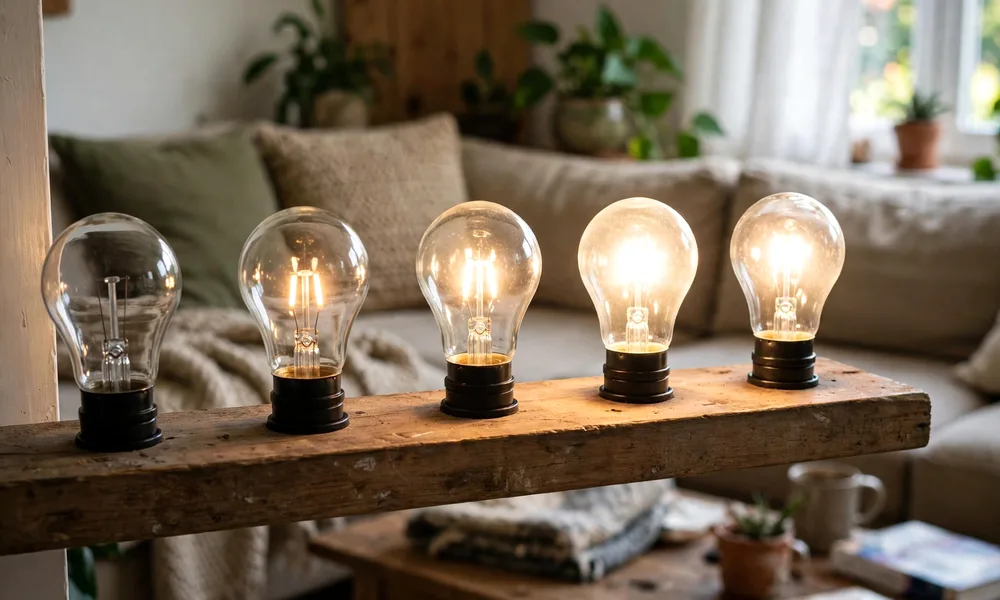
A dimmer switch is a light switch that lets you turn the brightness of a room up or down instead of simply switching it on or off. Where an ordinary switch gives you two settings, full light or darkness, a dimmer switch gives you the whole range in between, from a soft evening glow to full brightness for reading or cooking. It sits in the same wall box as a standard switch, but handles the power differently. If you have ever wished a room felt less harsh at night, a dimmer switch is the simplest upgrade that does it.
Dimmer switches are not new, but the bulbs they control have changed. The old dimmers of twenty years ago were built for incandescent bulbs that dimmed smoothly. Today most homes run LED bulbs, which dim in a different way, and that is why so many people fit a dimmer and end up with flicker, buzzing or lights that refuse to go properly dim. Choosing the right dimmer switch in 2026 is mostly about matching the dimmer to the bulbs you already own.
Key Takeaways
- A dimmer switch controls brightness, not just on and off, and fits in a standard wall box.
- Trailing-edge dimmers suit LED bulbs best; leading-edge dimmers were built for old incandescent bulbs.
- Only dimmable bulbs can be dimmed, so check the box before you buy, and match the dimmer to the bulb type.
- Flicker and buzzing usually mean a mismatch between dimmer and bulb, not a faulty switch.
- Set the minimum brightness level so lights never drop low enough to flicker or cut out.
What a Dimmer Switch Actually Does
An ordinary switch is a simple gate: it either lets the full mains power through to the bulb or stops it entirely. A dimmer switch sits in the same place but chops the power into smaller pieces, many times a second, so the bulb receives less energy and glows less brightly. The bursts come fifty times a second, far too fast for your eye to notice, so the light looks steady. The lower you set the dimmer, the shorter each burst of power, and the dimmer the light.
Rotary, slider and touch dimmers
Most dimmer switches come in one of three styles. A rotary dimmer has a small knob you turn, and it usually clicks off at the lowest setting, which many people find easy to use in the dark. A slider dimmer has a lever you push up or down, and it shows at a glance where the brightness sits. A touch dimmer has a flat glass plate you tap or swipe, and it looks the most modern, though it can be harder to find by touch in a dark hallway. The control style does not change how well the light dims, so choose the one your household will enjoy using.

Leading Edge vs Trailing Edge: The Choice That Matters Most
There are two main ways a dimmer chops the power, and they suit different bulbs. A leading-edge dimmer cuts the front of each power wave, which worked well for old incandescent and halogen bulbs with a simple filament. A trailing-edge dimmer cuts the back of each power wave, which is gentler, quieter and far better suited to the electronics inside modern LED bulbs.
Most LED bulbs sold today expect a trailing-edge dimmer. Fit a leading-edge dimmer to LED bulbs and you are likely to get flicker at low brightness, a buzzing sound, and lights that jump from dim to bright instead of fading smoothly. Some dimmers are universal, meaning they switch between leading and trailing edge, and those are a safe choice if you have a mix of bulb types. If you run LED bulbs, choose trailing-edge or universal, and skip leading-edge entirely.
Matching Dimmers to Your Bulbs
The most common dimmer mistake is fitting a good dimmer to bulbs that were never designed to be dimmed. A bulb that is not marked dimmable will behave badly on any dimmer, no matter how expensive the switch. Check the box or the base of the bulb for the word dimmable before you spend anything. If the bulb is not dimmable, replace the bulb first, then choose the dimmer.
LED bulbs
LED bulbs are the trickiest to dim well, because each bulb contains a small driver circuit, and different drivers behave differently, so two LED bulbs from different brands can dim very differently on the same switch. Buy bulbs and dimmers that the maker lists as compatible, and test one room before you commit to a whole house. Our guide to the best light bulbs of 2026 explains which bulb types dim most reliably. As a rule, buy dimmable LEDs from one brand for a single room, so every bulb on the circuit behaves the same way.
Smart bulbs
Smart bulbs have their own dimming built in, controlled by an app or a voice assistant, and they usually should not be dimmed by a wall dimmer at the same time. A smart bulb expects full power and dims itself, so a wall dimmer can confuse it, cause flicker, or shorten its life. If your room is full of smart bulbs, keep an ordinary switch on the wall and dim from the app instead. If you want wall control as well, fit a smart dimmer made for your bulb system, and read our guide to the best smart switches of 2026 first, because the wireless standard and the neutral wire matter more than the dimming itself.
Single-Pole, 3-Way and Multi-Location Dimmers
Most rooms have one switch for one set of lights, which is a single-pole setup, and any dimmer will do. Hallways, staircases and large living rooms often have two switches controlling the same lights, one at each end, which is a 3-way setup. In a 3-way setup you need a dimmer designed for it, and usually only one of the two switches is the dimmer. Fitting two dimmers on the same circuit causes flicker, so check the wiring before you buy.
Some homes have three or more switches for one set of lights, usually in a large open-plan space. That needs a multi-location dimmer system, which costs a little more and sometimes needs a matching companion switch. If you are not sure which setup you have, take a photo of the back of the existing switch with the power off and show it to the shop, or ask an electrician.
The Flicker and Buzz Problem
Flicker is the most common complaint about dimmer switches, and it almost always has one of three causes: a non-dimmable bulb, whose driver cannot handle reduced power; a leading-edge dimmer on LED bulbs, which needs a trailing-edge or universal replacement; or a dimmer set below the bulb’s minimum level, so the bulb keeps dropping out and restarting. Most modern dimmers have a small adjustment that sets the minimum brightness, and turning it up a fraction usually fixes the flicker completely.
Buzzing usually comes from the bulb, not the switch: the dimmer’s chopped power makes the bulb’s driver vibrate. Cheaper bulbs buzz more, and a different brand of bulb on the same dimmer is often silent. If the switch itself buzzes loudly, it may be overloaded, so check that the total wattage of the bulbs on the circuit is within the dimmer’s rating.
Dimmer Switch Types Compared
| Type | Best for | LED friendly | Typical feel |
|---|---|---|---|
| Rotary trailing-edge | Bedrooms and living rooms | Yes | Turn the knob, click off at the bottom |
| Slider trailing-edge | Kitchens and dining rooms | Yes | Push up or down, quick to read |
| Touch dimmer | Modern minimalist rooms | Yes | Tap or swipe a flat plate |
| Universal dimmer | Mixed bulb types | Yes | Switches between leading and trailing edge |
| Smart dimmer | App and voice control | Yes, if compatible | Wall control plus phone and voice |
| Leading-edge dimmer | Old halogen only | No | Cheap, but flickers with LEDs |
Smart Dimmers vs Manual Dimmers
A manual dimmer does one job, and it does it without Wi-Fi, apps or accounts. It always works, even when the internet is down, and anyone in the house can use it without a phone. A smart dimmer adds schedules, voice control and the ability to dim lights from another room. The trade-off is complexity: smart dimmers often need a neutral wire, they need to match your voice assistant or hub, and they cost more.
For most homes the answer is simple. If you want reliable dimming in one or two rooms, buy a good manual trailing-edge dimmer and spend the money you save on better bulbs. If you already run a smart home, or you want lights that follow a schedule, buy a smart dimmer from the same system as your other devices. Either way, the dimming quality comes from the match between dimmer and bulb, not from the smart features.

Before You Buy: A Six-Point Checklist
- Check every bulb on the circuit is marked dimmable, and replace any that are not before you buy the switch.
- Choose trailing-edge or universal for LED bulbs, and avoid leading-edge dimmers.
- Count the switches that control the same lights, and buy a 3-way or multi-location dimmer if there is more than one.
- Add up the total wattage of the bulbs and check it sits inside the dimmer’s minimum and maximum ratings.
- Look for a minimum-brightness adjustment on the dimmer, so you can stop the lights dropping into flicker.
- Test one room first, with the exact bulbs you plan to use, before fitting dimmers through the whole house.
Frequently Asked Questions
Can I fit a dimmer switch myself?
A like-for-like switch swap is a simple job for a confident DIYer, with the power off at the breaker and the circuit tested dead first. If the wiring looks unfamiliar, or you are adding a dimmer where none existed, hire a qualified electrician. Never work on a live circuit.
Why do my LED lights flicker on a dimmer?
The usual causes are a non-dimmable bulb, a leading-edge dimmer on LED bulbs, or the dimmer set below the bulb’s minimum level. Fit dimmable bulbs, switch to a trailing-edge or universal dimmer, and raise the minimum-brightness setting.
Do dimmer switches work with all LED bulbs?
No. Only bulbs marked dimmable work properly on a dimmer, and even dimmable LEDs vary by brand. Buy bulbs and dimmers listed as compatible, keep one brand per room, and test one room first.
Can I use a dimmer with smart bulbs?
Usually not. Smart bulbs dim themselves through an app or voice assistant and expect full power from the wall. A wall dimmer can confuse them and cause flicker, so keep an ordinary switch for smart bulbs.
How much electricity does a dimmer save?
A dimmed bulb uses less power than the same bulb at full brightness, so you save a small amount whenever lights run below full. The saving is modest with LEDs, which already use little power, so buy a dimmer for comfort first, and treat the energy saving as a bonus.
What is the difference between a dimmer and a smart switch?
A dimmer controls brightness, while a smart switch controls a light from an app, a voice assistant or a schedule. Some smart switches also dim, and some dimmers are smart, but the two jobs are different. If you only want softer light, a manual dimmer is enough. If you want remote control, you need a smart switch.
The Bottom Line
A dimmer switch is one of the cheapest ways to make a room feel better, but only when the dimmer matches the bulbs. Choose a trailing-edge or universal dimmer, fit dimmable LED bulbs from one brand per room, set the minimum brightness so the lights never flicker, and test one room before you do the house. Get those four things right and the lights will fade smoothly for years. If you want the same soft light in more places, LED strips are the easiest room upgrade in 2026 for adding a dimmable glow where no wall switch exists.