
A light bulb is the smallest change you can make to a home, and one of the most noticeable. Swap the bulb in a living room lamp and the whole room changes: the walls look warmer, faces look healthier, reading gets easier and the evening feels calmer. Get it wrong and the same room feels cold, flat and tiring, even though nothing else has changed. The best light bulbs of 2026 are not the brightest or the most expensive ones. They are the ones that match the room, the fitting and the way you actually live in the space.
What Makes a Good Light Bulb
A good bulb does four things well. It gives enough light for the job, it gives light of the right colour, it fits the socket and the shade, and it keeps doing all of that for years without buzzing, flickering or fading. Price matters, but only after those four are settled. A cheap bulb that is too dim, too cold or too wide for the shade is not a bargain. It is a bulb you will replace within weeks, and the room will feel wrong until you do.
The Main Types of Light Bulb
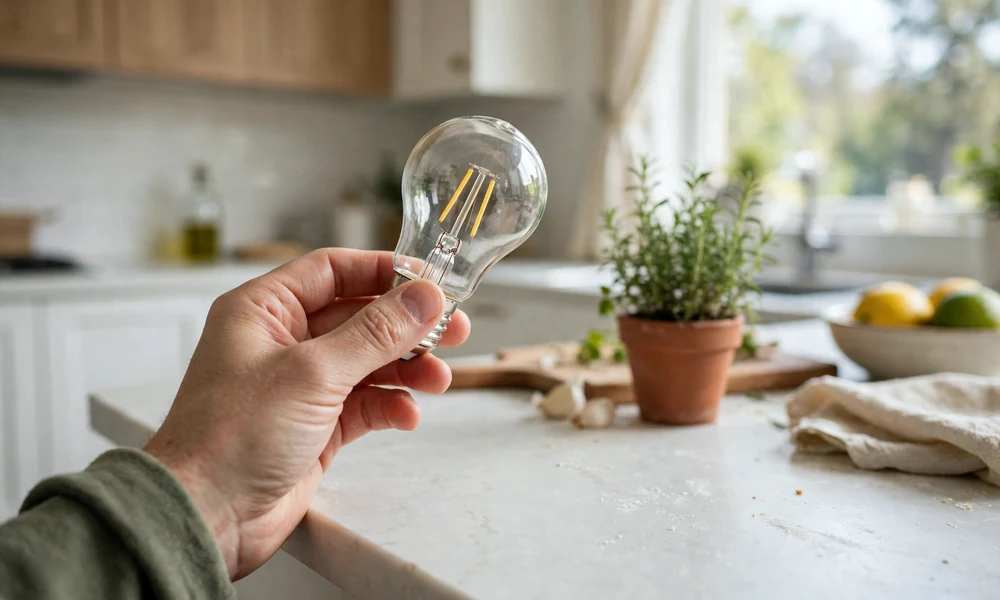
Most homes in 2026 are lit by LED bulbs, and for good reason. An LED bulb uses a small fraction of the electricity of an old-style bulb for the same amount of light, stays cool to the touch, switches on instantly at full brightness and can last for many years of normal use. It is the sensible default for almost every room, and it is where most people should start. Our guide to the best LED bulbs of 2026 goes deeper into choosing between them, but the short version is simple: buy by lumens, check the colour temperature, and make sure the base fits.
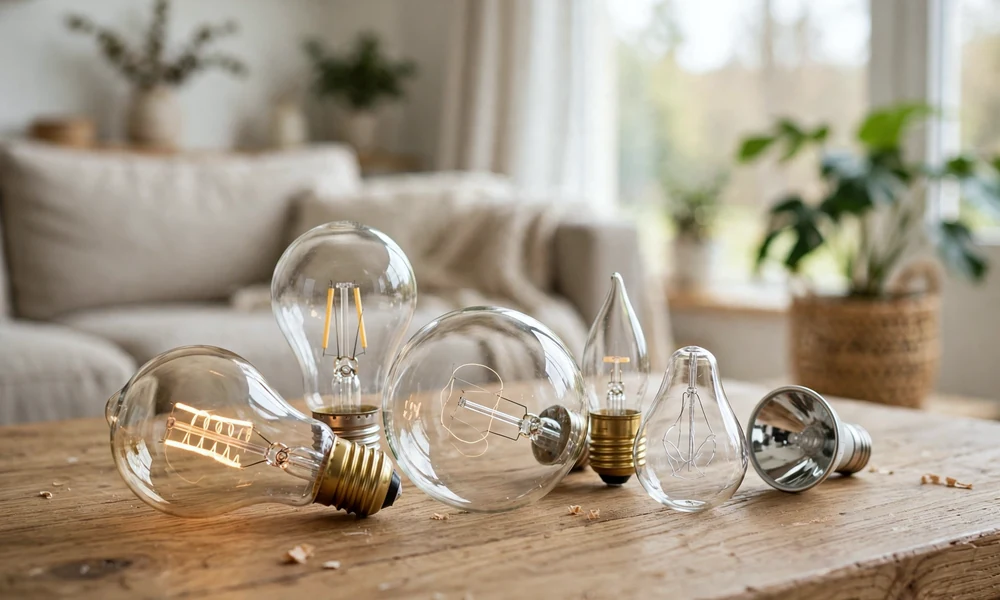
The old incandescent bulb, the one with a glowing wire inside a glass envelope, is still loved for its warm, flattering light. It dims beautifully, renders colours richly and costs very little to buy. Its weakness is waste: most of the electricity it uses becomes heat rather than light, and it burns out far sooner than a modern bulb. It still has a place in a fitting where its look matters more than its running cost, such as a decorative pendant with clear glass, but it is no longer the sensible choice for everyday lighting.
Halogen bulbs are a brighter, whiter version of the incandescent idea. They give a crisp, sparkling light that suits kitchens, bathrooms and display lighting, and they dim smoothly. They run very hot, however, and they use far more electricity than an LED bulb of the same brightness. They also have a shorter life. They are best kept for the few places where their particular quality of light is genuinely worth the extra heat and cost.
Compact fluorescent bulbs, the spiral-shaped CFLs that were common a decade ago, have largely been overtaken by LEDs. They use much less electricity than incandescent bulbs and last longer, but they can take a moment to reach full brightness, they do not always dim well, and their light can look flat or slightly green. If you still have them, they will work until they wear out, but there is little reason to buy new ones when LED bulbs do the same job better.
Smart bulbs are LED bulbs with a radio and a small computer inside. They screw into an ordinary socket, yet they can change colour, dim from a phone or voice command, follow a schedule and switch off when you leave the house. They cost more than a plain LED bulb, and they need a phone or a hub to get the most from them, but they are the easiest way to change the mood of a room without rewiring anything. If that sounds appealing, our guide to the best smart bulbs of 2026 explains which features are worth paying for and which ones you will never use.
Brightness: Buy by Lumens, Not Watts
The single most useful change in bulb buying is also the simplest: buy by lumens, not watts. Watts measure how much electricity a bulb uses. Lumens measure how much light it gives out. With old bulbs the two moved together, so a 60-watt bulb was always about the same brightness. With modern bulbs they do not. An LED bulb can give the same light as a 60-watt old bulb while using only about 9 watts, so the wattage on the box no longer tells you how bright the bulb will be.
As a rough guide, around 450 lumens suits a small lamp or a hallway, around 800 lumens replaces a 60-watt bulb and suits most living rooms and bedrooms, around 1,100 lumens replaces a 75-watt bulb and suits kitchens and workspaces, and around 1,600 lumens replaces a 100-watt bulb for large rooms and task lighting. These are starting points, not rules. A room with dark walls, a deep shade or a high ceiling needs more light than a small white room, and two smaller bulbs often light a room more evenly than one very bright one.
Colour Temperature: Warm, Cool or Daylight
Colour temperature is measured in kelvins, written as K, and it decides whether light feels warm and cosy or cool and alert. Warm white, around 2700K, looks like the glow of an old bulb or candlelight. It flatters skin, wood and fabric, and it suits living rooms, bedrooms and dining rooms. It is the colour most people mean when they say a room feels warm.
Neutral white, around 3500K to 4000K, is cleaner and more honest. It suits kitchens, bathrooms, hallways and home offices, where you need to see clearly and judge colours properly. Daylight, around 5000K to 6500K, is bright and blue-white. It can be useful for detailed work, a garage or a craft table, but in a living room it often feels harsh and clinical, especially in the evening.
Bases and Shapes: Check Before You Buy
The most common reason a new bulb goes straight back to the shop is the wrong base. In most homes the two common screw bases are the large Edison screw and the smaller Edison screw, and the two common bayonet bases are the large bayonet cap and the small bayonet cap. They look similar in a photograph and they are not interchangeable. Before you buy, take the old bulb out and look at its base, or take it with you. A minute of checking saves a wasted trip.
Shape matters too. A standard pear-shaped bulb suits most lamps and ceiling fittings. A candle-shaped bulb suits chandeliers and wall lights where the bulb is visible. A globe bulb suits bathroom mirrors and vanity lights. A reflector bulb suits spotlights and downlights, where the light needs to be thrown in one direction. And a bulb that is too wide or too long for its shade will stick out, overheat or look unfinished, so check the height and width as well as the base.
Choosing Bulbs Room by Room
In the living room, aim for layers rather than one bright ceiling light. A warm bulb of around 800 lumens in a table lamp beside the sofa, another in a floor lamp across the room, and a dimmable ceiling light give you a room that can be bright for reading and soft for an evening film. A lamp with a fabric shade softens the light further, and the right bulb makes the shade glow rather than glare. If you are choosing the lamp itself as well, our guide to the best table lamps of 2026 covers the shapes and sizes that work best in real living rooms.
In the kitchen, brightness and honesty matter most. Choose neutral white bulbs of around 1,100 lumens for the main ceiling lights, and brighter task lighting over worktops and the hob. A high colour rendering index, known as CRI, matters here: a bulb with a CRI of 90 or above makes food, skin and colours look natural, while a low CRI can make everything look grey or washed out. The same applies in the bathroom, where a CRI of 90 or above and neutral white light make the mirror trustworthy.
In the bedroom, choose warm white and dimmable wherever you can. A bulb of around 450 to 800 lumens in a bedside lamp is enough for reading without flooding the room, and a dimmer lets you lower the light as the evening goes on. Avoid bright daylight bulbs in the bedroom, especially late at night. In a home office, the opposite applies: a neutral white bulb of around 800 to 1,100 lumens, placed so it lights the desk without shining into your eyes or onto the screen, keeps you alert without strain.

Mistakes Worth Avoiding
The most common mistake is buying on price alone. A very cheap bulb often has a low colour rendering index, an optimistic brightness claim and a short life. The saving at the till is wiped out by the first replacement, and the room looks worse in the meantime. Spend a little more on a bulb from a maker that publishes honest lumen, kelvin and CRI figures, and keep the box or note the details so you can buy the same one again.
Frequently Asked Questions
How long do LED bulbs really last? A good LED bulb is rated for many years of normal use, often fifteen thousand hours or more, which is far longer than an old incandescent bulb. The exact life depends on how many hours a day it is used and how hot the fitting gets, so a bulb in a cool, open lamp will usually outlast the same bulb in a small enclosed fitting.
Can I use an LED bulb in any fitting? In most cases, yes, as long as the base matches and the bulb physically fits the shade or enclosure. Check that the bulb is rated for enclosed fittings if it will go in one, and check dimmer compatibility if the fitting has a dimmer switch. A bulb that is too wide, too long or too hot for its fitting is the wrong bulb, even if the base fits.
Do smart bulbs use electricity when they are switched off? A smart bulb stays connected so it can respond to a command, so it draws a tiny amount of power even when the light is off. The amount is very small, roughly comparable to a phone charger left plugged in, and it is far less than the electricity saved by switching the light off properly or dimming it when full brightness is not needed.
The best light bulb is the one that fits your fitting, your room and your evening. Choose the right brightness in lumens, the right colour in kelvins, a base that actually fits and a quality that will last, and the room will look better every night without you thinking about it again. Start with the rooms you use most, change one room at a time, and keep a note of what worked, so the next bulb you buy is the right one first time.


