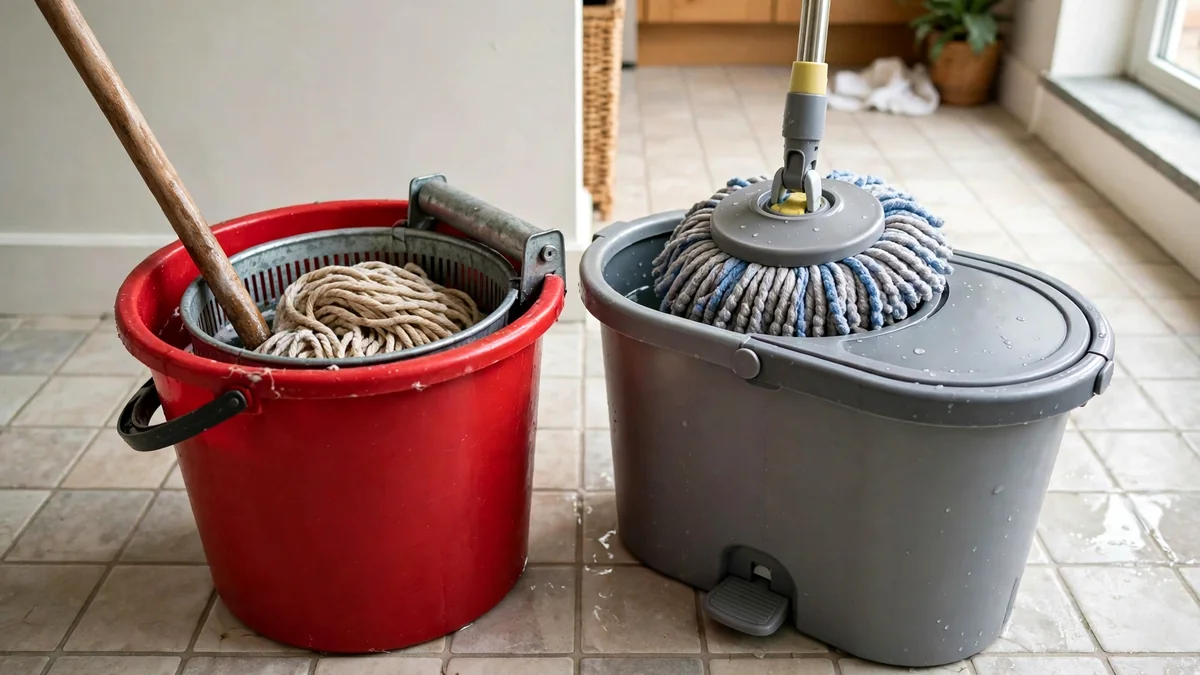
Bucket mops vs spin mops is the oldest argument in the cleaning cupboard, and it is worth settling before you spend money, because the two systems clean in genuinely different ways. A bucket mop is the classic setup: a string mop and a bucket with a press wringer that squeezes the head dry by hand. A spin mop is its modern cousin: a round microfiber head and a bucket with a spinning basket that flings the water out. Both are bucket systems, and both use a bucket, so the real question is not bucket or no bucket, but which wringing system suits your floors, your strength and your storage.
Key Takeaways
- A spin mop wrings drier than a press wringer, so floors dry faster with fewer streaks, which matters most on large tiled floors.
- A classic bucket mop holds more water and copes better with rough floors and heavy spills, where a flat or round pad would snag or dry out.
- Spin mops cost more up front and only work with their own matching heads, while a bucket mop takes cheap, widely available string heads.
- Bucket mops need more arm and back effort to wring; spin mops move the work to a foot pedal or a pump of the handle.
- Choose a spin mop for large tiled homes and a bucket mop for rough floors, garages and heavy dirt, or small budgets.

First, What Each One Actually Is
A bucket mop, in the classic sense, is a string mop: a bundle of cotton or synthetic strands on a stick, used with a bucket that has a press wringer built in. You dip the mop, lift it into the wringer, press the lever down, and the rollers squeeze the water out. The bucket holds fifteen to twenty litres, enough for a kitchen and a hallway without a refill. It is the cheapest good mop you can buy, and it has been cleaning rough floors for decades because nothing else holds as much water.
A spin mop is a wet mop with a round microfiber head on a long handle, used with a bucket that has a built-in spinning basket. You dip the head in clean water, place it in the basket, and spin it, either by pumping the handle or pressing a foot pedal. Centrifugal force throws the water out of the fibres, leaving the head damp rather than wet. Our guide to the top spin mops that leave floors streak-free explains the pump and pedal designs.
The two overlap more than the argument suggests. A spin mop is a kind of bucket mop: it comes with a bucket, and the bucket is half the product. The difference is the wringer. One squeezes with rollers, the other spins with centrifugal force, and that one difference changes the dampness, the effort, the cost and the storage.
Bucket Mops vs Spin Mops at a Glance
| Feature | Bucket mop | Spin mop |
|---|---|---|
| Head | String bundle, cotton or synthetic | Round microfiber head |
| Wringing | Press wringer, lever and rollers | Spin basket, pump handle or foot pedal |
| How dry the head gets | Damp, edges can stay wet | Barely damp, driest of any bucket system |
| Best floors | Rough tiles, quarry tiles, heavy spills | Large smooth tiles, vinyl, sealed wood |
| Effort | Arm and back work on every wring | Foot pedal or handle pump, hands stay dry |
| Typical price | $15 to $30 | $40 to $80 |
| Spare heads | Cheap, widely available, mostly universal | Must match the basket, buy on day one |
| Storage | Tall bucket, needs a cupboard corner | Big bucket, needs a cupboard of its own |
Wringing: Where the Two Systems Part Ways
Wringing decides the result more than any other feature, because a mop that wrings nearly dry leaves a thin film of water that evaporates in minutes, while a mop that stays sodden leaves puddles and streaks. The spin mop wins this round clearly. A spinning basket throws water out of the fibres evenly, and you control the dampness by how long you spin.
A press wringer is less even. The rollers squeeze the middle of the string bundle hard, but the edges can stay wet, and a string head is hard to wring evenly at the best of times. On smooth floors that uneven dampness shows up as streaks, and on wood or laminate it shows up as water sitting in the seams. The wringer has one advantage, though: it is simple, with few parts to break, and a press wringer will still be working in ten years, while a cheap spin basket can wobble or seize up.
Effort matters too. A press wringer needs a firm press of the lever on every wring, dozens of times per clean, and lifting a wet string mop in and out of the wringer is arm and back work. A spin mop moves that work to a foot pedal or a pump of the handle, and your hands stay clean and dry. Anyone with sore wrists or a bad back will feel the difference within the first room. Our guide to mop buckets that make floor cleaning easier compares the wringer types in detail, including dual-compartment buckets that keep the rinse water clean.

Cleaning Power on Different Floors
On large smooth tiled floors, the spin mop is the better tool. The round microfiber head lifts dust and grease, the spin wrings it drier than any hand wringer, and the floor dries streak-free in minutes rather than half an hour.
On rough floors, the bucket mop fights back. Quarry tiles, slate and textured stone have grout lines and pits that a round microfiber pad skates over, while a string head reaches into the texture. A string mop also copes better with heavy spills, and garages and utility rooms belong to the bucket mop for the same reason.
Wood and laminate sit in the middle, and dampness decides them. Sealed wood wants the least water of any floor, so a spin mop wrung nearly dry is the safer choice, while a string mop needs a second pass with a dry pad to pick up the water it leaves behind. Unsealed wood suits neither: a soaking head of any kind will damage it.
Cost, Spares and How Long Each One Lasts
A classic bucket mop is the cheapest good mop you can buy. A string mop with a basic wringer bucket costs little, the heads are cheap and mostly universal, and a worn head costs a fraction of a new mop. A string head that starts to shed or smell is replaced in minutes for the price of a coffee.
A spin mop costs two to three times as much up front. A spin bucket only works with the spin mop it was made for, so a replacement head has to match the basket, and the heads cost more than string refills. Buy spare heads on day one. A stainless steel basket lasts longer than a plastic one, and a cheap plastic basket that wobbles is the most common reason a spin mop gets thrown away.
Durability splits by part. The bucket mop has almost nothing to break: a tub, a wringer and a stick. The spin mop has moving parts, a pedal or a pump mechanism, and a basket bearing, and cheaper sets skimp on exactly those parts. A well-made spin set will last years, but a bargain one may not survive its first year.
Storage and the Daily Habit
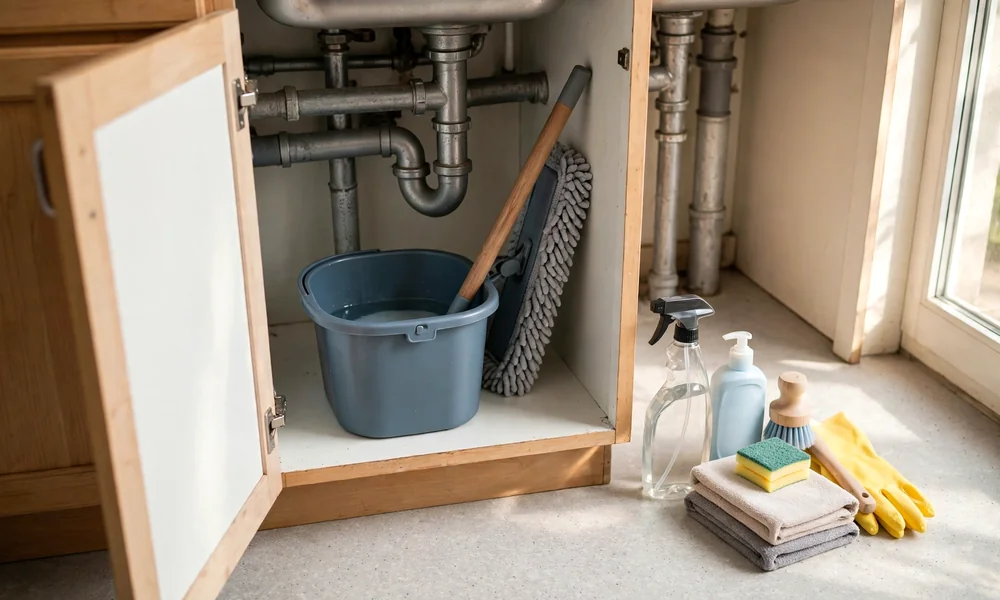
Both systems need a cupboard, and neither is small. A full bucket of either kind weighs ten kilos or more, so measure where it will live before you buy.
The daily habit is where the spin mop usually wins. It is ready in seconds, the pedal keeps your hands dry, and the floor dries fast enough to walk on, so people actually mop twice a week instead of once a fortnight. The bucket mop is better for the weekly deep clean, but the wringing effort puts people off the quick midweek mop.
Many homes keep both: a spin mop for the twice-weekly clean of the tiled floors, and a cheap bucket mop in the garage for muddy boots, heavy spills and rough floors. Our guide to the mops that clean floors without the streaks compares all the wet-mop systems side by side.
Which One Should You Buy?
Choose a spin mop if most of your home is smooth tile or vinyl, the rooms are large, and you mop at least twice a week. The drier head and lighter effort will pay for the higher price within the first month. Make sure you have somewhere to keep the bucket, and buy spare heads on day one.
Choose a classic bucket mop if your floors are rough or textured, if you mop up heavy spills and muddy footprints, if the budget is tight, or if the mop will live in a garage or utility room. The string head holds more water, the wringer is simple and lasts for years, and a replacement head costs almost nothing.
If you cannot decide, let the size of your floors decide for you. Large smooth floors point to the spin mop, small or rough floors point to the bucket mop, and a home with both probably wants both.
Checklist: Before You Buy Either One
- Measure your floors: large smooth tiles favour a spin mop, rough or small floors favour a bucket mop.
- Test the wringer: a spin basket should spin smoothly and stop quickly, a press wringer should press with one hand.
- Check spare heads: spin heads must match the basket, string heads should be cheap and widely available.
- Lift a full bucket in the shop: ten kilos of water is heavier than it looks, and wheels help in large homes.
- Measure your storage: both buckets need a cupboard, and a bucket that does not fit will live in the way.
- Buy spare heads on day one, because a dirty head spreads dirt instead of lifting it.
Frequently Asked Questions
Is a spin mop just a type of bucket mop?
Yes, in the sense that it comes with a bucket. The difference is the wringer: a spin mop uses a spinning basket, while a classic bucket mop uses a press wringer.
Which mop dries floors faster?
The spin mop, by a clear margin. The spinning basket wrings the head drier than any press wringer, so the floor dries in minutes with fewer streaks. A bucket mop leaves more water behind and usually needs a second pass with a dry pad.
Can a bucket mop clean as well as a spin mop?
On rough floors and heavy spills, yes, because a string head holds more water and reaches into texture. On large smooth tiles, no: the spin mop wrings drier and the microfiber head lifts grease a string head pushes around.
Are spin mop heads expensive to replace?
More expensive than string heads, and they must match the basket, so they are not interchangeable between brands. Buy two spares with the mop, and check the price of replacements before you buy the set.
Which mop is better for a bad back?
The spin mop. A foot pedal or handle pump does the wringing, your hands stay dry, and you never lift a heavy wet string mop into a wringer. A press wringer needs a firm lever press on every wring, which is real arm and back work.
Do I need both a bucket mop and a spin mop?
Not necessarily, but many homes keep both: a spin mop for the regular clean of tiled floors, and a cheap bucket mop in the garage for muddy boots, heavy spills and rough floors.
Bottom Line
Buy the spin mop for large smooth floors and regular cleaning, where its drier head and lighter wringing earn the higher price. Buy the classic bucket mop for rough floors, heavy dirt and tight budgets, where its cheap heads and simple wringer are the smarter spend. If your home has both kinds of floor, keep both mops.


