
The best lint brushes of 2026 are the ones that live by the front door and get used every single morning, because a brush you reach for without thinking beats a perfect tool that stays in a drawer. A lint brush lifts pet hair, dust, and fluff off your clothes in a few quick strokes, with no sticky sheets to tear off and no refills to buy. It works on the dark wool coat that shows every hair and the suit jacket that needs to look sharp ten minutes before a meeting.
Lint is a daily problem, not a weekly one. A cat sleeps on your jumper overnight, a dog brushes past your trousers at the door, and a woollen scarf sheds onto everything it touches. A lint roller solves the problem for a price: every pass costs a sheet. A lint brush solves the same problem for free, pass after pass, year after year. This guide compares the main types of lint brush in 2026 and shows how to pick the one that suits your wardrobe.
Key Takeaways
- A lint brush removes lint and pet hair with reusable bristles or velvet, so it costs nothing per use and never runs out of sheets.
- Natural-bristle brushes suit wool, suits, and tailored coats, while velvet brushes suit smooth fabrics and fine pet hair on dark cloth.
- A self-cleaning base or a simple thumb groove keeps the brush working: a brush clogged with hair cleans nothing.
- Brush in one direction, with the grain of the fabric, and finish with a downward stroke so the lint lifts off instead of spreading.
- Keep the brush by the door, not in a drawer, and pair it with a roller for the heaviest pet-hair days if you need a backup.
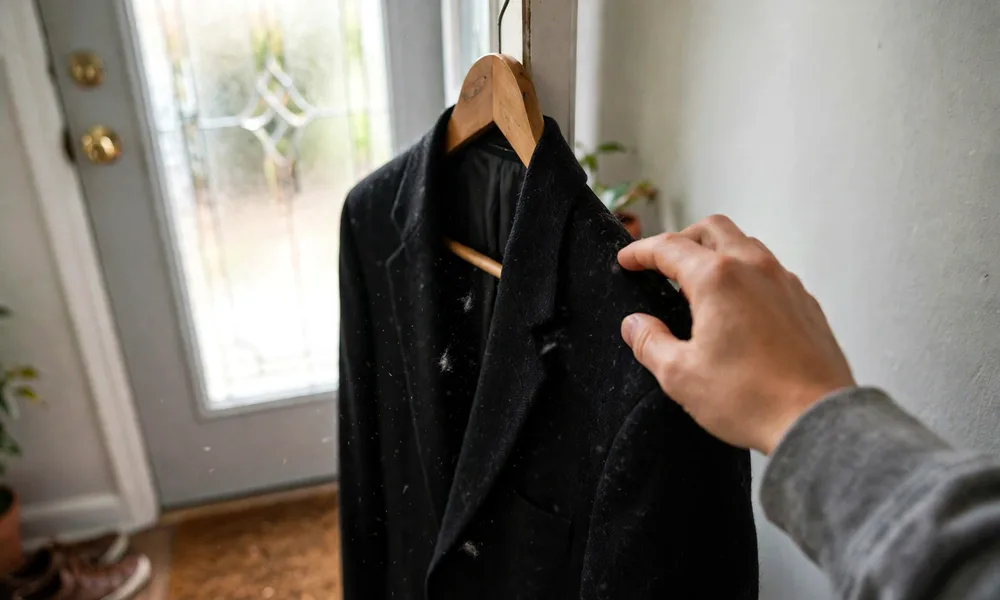
What a Lint Brush Actually Does
A lint brush works by friction and static, not by stickiness. The bristles or the velvet surface catch loose fibres and hair as they pass over the fabric, gather them into a small line, and release them when you clean the brush. No adhesive pulls at the weave and no residue is left behind. A roller grabs with glue, which works, but the glue can leave a faint film on dark fabric and it always costs a sheet.
The details matter. Pet hair wraps itself into wool and fine dust settles into a dark sweater. A brush that is too soft pushes the hair around instead of lifting it, and one that is too stiff can rough up a smooth fabric. The right brush matches the fabric: firm enough to lift, gentle enough to leave the cloth looking new.
The Main Types of Lint Brush
Every lint brush falls into one of four families, defined by what the cleaning surface is made of. Each has a clear strength and a wardrobe it suits best.
| Brush type | Best for | Key strength | Watch out for |
|---|---|---|---|
| Natural bristle | Wool, suits, tailored coats | Lifts hair without flattening the weave | Needs cleaning often |
| Velvet | Smooth fabrics, fine pet hair | Grabs fine hair in one direction | Useless stroked backwards |
| Rubber and silicone | Sofas, car seats, heavy pet hair | Rinses clean under a tap | Too grippy for fine tailoring |
| Double-sided | Mixed wardrobes, travel | Two surfaces in one handle | Each side is smaller |
Natural-Bristle Clothes Brushes
The natural-bristle brush is the classic clothes brush, and still the best choice for wool and tailoring. The bristles are usually boar hair or a stiff plant fibre, set densely into a wooden handle, and they lift hair and dust out of the weave without pressing it flat. A good one feels firm but not harsh: the bristles bend slightly, then spring back. It suits suits, wool coats, and tweed, where the fabric has a nap that needs to keep its loft. The trade-off is care: bristles need cleaning after every few uses.
Velvet Lint Brushes
A velvet brush uses a short, dense velvet pad instead of bristles, and it works in one direction only. Stroked with the grain, the velvet grabs fine hair and lint and holds it in a neat line at the edge of the pad. Stroked backwards, it does nothing at all. That one-way action is what makes it so effective on smooth fabrics and dark cloth, where fine pet hair is the hardest thing to shift. Many come with a self-cleaning base that strips the collected hair off in one pass.
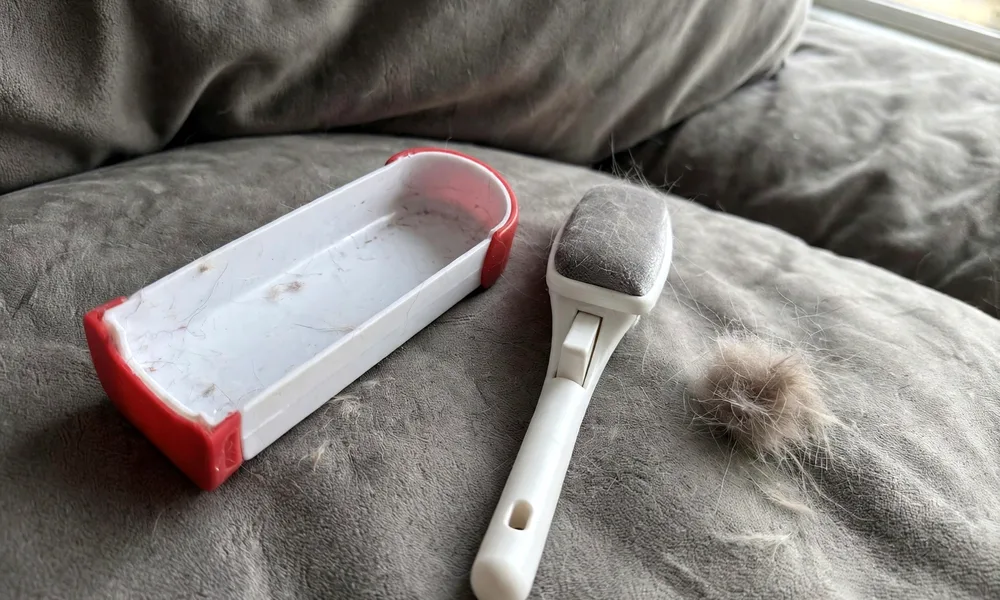
Rubber and Silicone Brushes
Rubber and silicone brushes are the heavy lifters. Their surface is a field of soft rubber nubs or fins that grip hair through static and friction, and they pick up the thickest pet hair in a single pass. They are the best choice for sofas, car seats, and the dog bed, where the hair is dense and a bristle brush would clog in seconds. Rinse one under a tap and it is clean again. On clothes, though, rubber is too much: the grip that clears a sofa can drag on a fine suit. Keep a rubber brush for furniture and the car, and a bristle or velvet brush for clothes.
Double-Sided and Travel Brushes
A double-sided brush puts two surfaces on one handle, usually velvet on one side and bristles on the other, so one tool covers smooth fabrics and wool alike. They suit mixed wardrobes and small homes. The compromise is size: each side is smaller than a dedicated brush, so a full coat takes more strokes. Travel brushes are the same idea made pocket-sized: handy for a wedding or a job interview, but too small for the daily coat.
How to Choose a Lint Brush
Choosing a lint brush means matching the surface to the fabric you actually wear. Five features decide whether it earns its place by the door.
Match the Surface to the Fabric
Start with the fabric, not the brush. Wool and tailored coats need natural bristles, which lift without flattening the nap. Smooth fabrics and fine pet hair need velvet, which grabs what bristles push around. Heavy pet hair on furniture needs rubber. Buy the brush for the clothes you wear most, and add a second one later if it leaves a gap.
Pick the Right Size
A brush head around 15 centimetres wide covers a coat front in a few strokes without being clumsy in the hand. Smaller brushes suit travel but take too long on a full coat. For a first brush, go for the middle size: it handles a coat, a sweater, and a pair of trousers without tiring your wrist.
Check How It Cleans
A brush full of hair cleans nothing, so the cleaning method matters as much as the bristles. A self-cleaning base is the easiest option: slide the brush through the cradle and the hair comes off in one clump. A thumb groove or a simple comb does the same job with a little more effort, and a rubber brush rinses under a tap. Avoid a brush with no cleaning method at all.
Handle and Storage
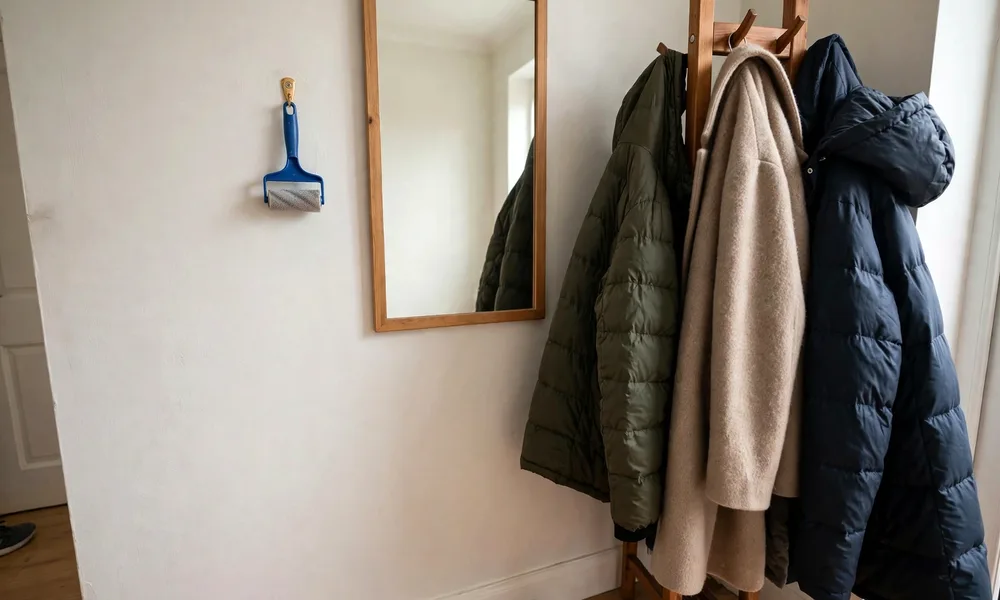
A wooden handle stays cool, looks good on a hook, and lasts for years, but it can crack if soaked. A plastic handle is lighter and cheaper. Look for a hanging hole or a loop, because a brush stored on a hook by the door gets used, and a brush in a drawer gets forgotten. A handle around 15 to 20 centimetres long gives the best control.
Lint Brush vs Lint Roller: Which One Wins
The roller and the brush do the same job with opposite economics. A roller is faster on the heaviest pet hair, because the adhesive grabs everything in one pass. A brush is free to run, never leaves residue, and never runs out. For most people, the brush wins the daily routine and the roller wins the emergency. Our comparison of the best vs worst lint rollers of 2026 shows what to look for in a roller: wide tear-off sheets, strong adhesive, and a firm handle. Keep a roller for the days the brush cannot handle, such as a coat covered in long dog hair after a walk in the rain. On delicate clothes the brush is also safer: a roller can pull at loose threads, while a brush glides over the surface and leaves nothing behind.
How to Use a Lint Brush Well
Technique matters, because a brush used wrongly spreads lint instead of removing it. Hang the garment up, so the fabric hangs straight. Brush in one direction, with the grain of the fabric, using long, even strokes from the shoulder down. Velvet brushes only work in one direction, so find the direction that grabs and stick to it. Work from the top down, so the lint you lift falls away from the clean fabric. After every few strokes, clean the brush: slide it through its base, run a thumb across the bristles, or rinse it if it is rubber. A clogged brush pushes hair around instead of lifting it. Finish with a downward stroke on each section.
Your Lint Brush Checklist
- Match the surface to your fabric: bristles for wool and suits, velvet for smooth dark cloth, rubber for furniture.
- Pick a head around 15 centimetres wide, with a comfortable handle and a hanging hole for the door.
- Check the cleaning method before you buy: a self-cleaning base, a thumb groove, or a rinse-clean surface.
- Brush in one direction, top to bottom, and clean the brush every few strokes.
- Store the brush on a hook by the front door, where you will actually use it every morning.
- Keep a lint roller as a backup for the heaviest pet-hair days, and replace a brush when its bristles splay.
Frequently Asked Questions
Do lint brushes work on pet hair?
Yes, and they are the cheapest way to deal with it daily. A velvet brush is best for fine pet hair on dark clothes, a natural-bristle brush suits wool, and a rubber brush clears the thickest hair from sofas and car seats.
Are lint brushes better than lint rollers?
For daily use, yes: a brush costs nothing per pass, never runs out, and leaves no sticky residue. A roller is faster on the heaviest hair. Most homes are best served by a brush, with a roller kept as a backup.
How do I clean a lint brush?
Slide a velvet brush through its self-cleaning base, run a thumb or a comb across natural bristles, or rinse a rubber brush under a tap. Clean the brush every few strokes while you work.
Can a lint brush damage my clothes?
A brush matched to the fabric will not damage it. Bristles suit wool and tailoring, velvet suits smooth cloth, and rubber should stay on furniture, not fine suits. Press lightly and brush with the grain.
What is the difference between a lint brush and a fabric shaver?
A lint brush removes loose hair, dust, and fluff from the surface of the fabric. A fabric shaver removes pills, the small balls of tangled fibre that form on sweaters over time. Our guide to the best fabric shavers for pilling sweaters covers the shaver side in full.
Where should I keep my lint brush?
By the front door, on a hook, where you pass it every time you leave the house. A brush in a drawer gets forgotten. If you keep your coats in a wardrobe, our guide to closet organizers that double your storage space shows how to give the brush a proper home near the coats it cleans.
The Bottom Line
The best lint brushes of 2026 are the simple ones: a natural-bristle brush for wool and suits, a velvet brush for smooth dark cloth and fine pet hair, and a rubber brush for the sofa and the car. Buy the surface that matches the fabric you wear most, check that it cleans easily, and hang it by the door. It costs less than a few rolls of sticky sheets, it never runs out, and it keeps your clothes clean every morning.


