Every morning starts the same way in millions of kitchens: someone half asleep reaches for something hot, and the first decision of the day is which machine does the work. A kettle vs coffee maker for the morning shapes how fast you get your first cup, how good it tastes, and how much effort the ritual takes.
A kettle does one thing brilliantly: it heats water fast, leaving you free to make tea, instant coffee, pour over coffee, or oatmeal. A coffee maker does one thing brilliantly too: it turns ground coffee and cold water into a full pot with almost no input from you.
Neither appliance is the wrong answer for everyone. The right pick depends on what you drink, how many people are drinking it, how much time you have, and how much control you want. This comparison looks at speed, taste, cost, and convenience, so you can pick the machine that fits your morning.
Key takeaways
- A kettle heats water in two to four minutes and suits tea, instant coffee, and pour over drinkers.
- A coffee maker brews a full pot with almost no effort, making it the better pick for two or more coffee drinkers.
- For a single cup, the kettle is usually faster, because a coffee maker must brew a whole cycle.
- Pour over coffee made with a kettle gives you more control over flavour, while a drip machine gives you more consistency.
- The kettle is cheapest, the coffee maker most convenient.

What Each One Actually Does
They look like rivals, but they solve different problems.
The Kettle
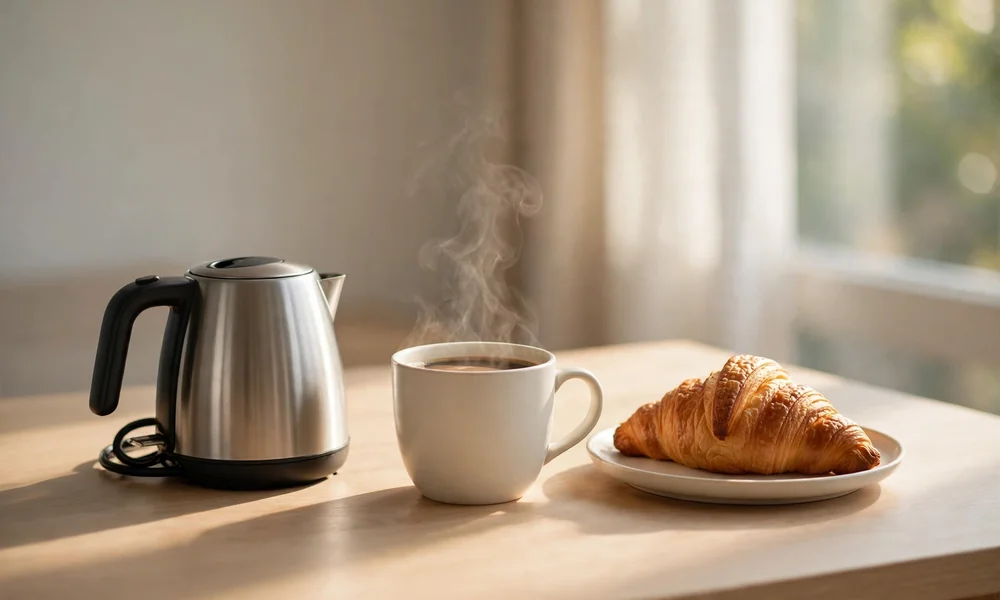
A kettle heats water, and that is all it does. An electric kettle boils a litre in roughly three minutes, and many models let you pick a temperature, which matters for green tea and delicate coffee. Once the water is hot, you decide: pour it over tea leaves, stir it into instant coffee, bloom pour over grounds, or mix it into porridge.
Modern electric kettles switch themselves off when the water boils, pour cleanly, and take up a small patch of counter. The best electric kettles for the home combine fast boiling with precise temperature control, and a good one lasts for years with an occasional descale. The trade off is that a kettle never makes coffee by itself. Every cup needs you to brew it, whether with a tea bag, a French press, or a pour over dripper, and on a rushed morning that extra step can feel like a lot.
The Coffee Maker
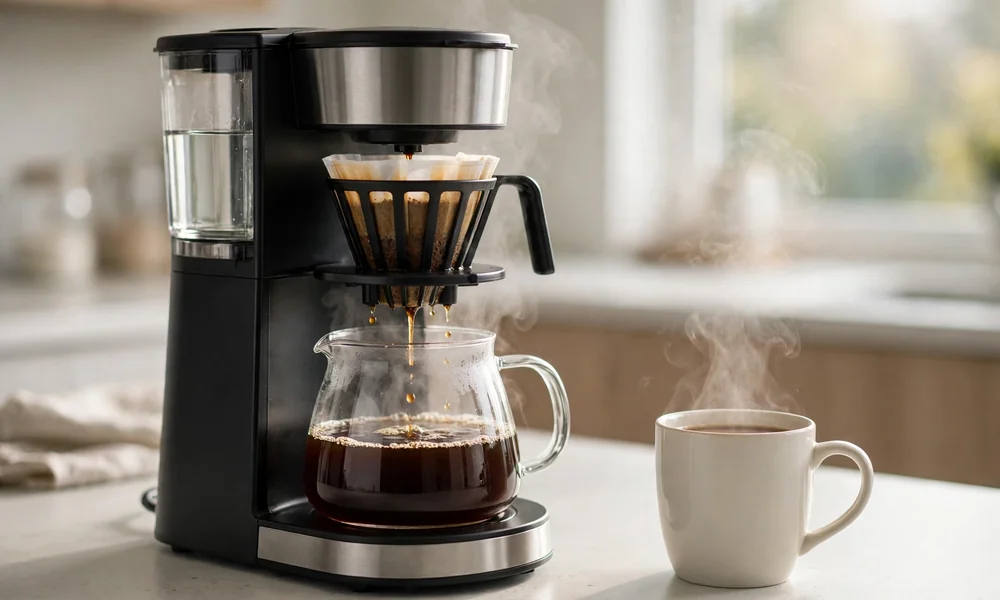
A coffee maker is a complete system. You add water and ground coffee, press a button, and a few minutes later a pot of brewed coffee is waiting. Drip machines heat the water, shower it over the grounds, and collect the finished coffee in a carafe, all without you standing over it. Load it the night before, set a timer, and wake up to coffee that is already brewed.
The best coffee makers for home use also handle larger volumes gracefully. A ten or twelve cup machine serves a family in one cycle, and a thermal carafe keeps the second cup warm. The trade off is flexibility. A coffee maker makes coffee, and little else. It will not make tea properly, and it ties you to one style of brewing. If coffee is your only morning drink, that narrow focus is fine.
Speed: Who Gets You Caffeinated First
Speed matters most before the first cup. A kettle wins the single cup race: it boils water for one mug in about two minutes, and instant coffee or a tea bag turns it into a drink in seconds. Pour over takes around four minutes from switching on to first sip, but the kettle itself is never the slow part. If you live alone and you want one cup quickly, the kettle is hard to beat.
A coffee maker is slower for one cup, because it brews a full pot whether you want one mug or four. A typical drip cycle takes five to eight minutes, and the first cup is only ready when it finishes, unless your machine has a pause and serve feature. With more than one person drinking, the comparison changes. A coffee maker brews four mugs in roughly the time a kettle and pour over setup takes to make two, while you get dressed or make breakfast. The kettle is faster for one person, and the coffee maker is faster for a household.
A programmable coffee maker can start brewing before your alarm goes off, which means the effective waiting time is zero. No kettle can do that.
Taste and Control
Taste is where the two machines differ most. A kettle gives you control. With a gooseneck kettle and a pour over dripper, you choose the water temperature, pour speed, and bloom time, and those choices shape the flavour. Coffee made this way can be brighter and cleaner than drip coffee, and tea brewed at the right temperature tastes noticeably better. If you enjoy the ritual and care about small differences in flavour, the kettle rewards you.
A coffee maker gives you consistency. It uses the same water temperature and brew time every morning, so the coffee tastes the same every morning. That reliability is a virtue when you are half awake and in no mood to think about extraction. It may not reach the heights of a careful pour over, but it never sinks to the lows of a rushed one either. Espresso and filter coffee suit different daily routines, and the same logic applies here: the method that fits your habits will taste better to you than the method that fights them.
Tea is the clearest win for the kettle. A coffee maker cannot brew tea well, and tea run through one leaves flavours that spoil the next pot of coffee. A kettle makes every kind of tea properly, from a quick builders brew to green tea at seventy five degrees. A variable temperature kettle makes the difference obvious, because green tea scorched with boiling water turns bitter in seconds. If anyone in the house drinks tea, the kettle earns its counter space on that fact alone.
Cost, Energy and Counter Space
Both machines are cheap by kitchen appliance standards, but the kettle edges ahead on price. A good electric kettle costs less than a good drip coffee maker, with no filters to buy, no carafe to replace, and fewer parts to break. A coffee maker needs paper filters, regular descaling, and eventually a new carafe, and those costs add up over a few years. Neither will strain a household budget, but the kettle costs less over its lifetime.
Energy use should not decide the purchase. A kettle uses a lot of power briefly, while a coffee maker uses less power for longer, and the total energy per cup is similar. The real difference is waste: a kettle heats only the water you need, while a coffee maker often brews a full pot and leaves half of it to go cold. If you regularly throw away unfinished coffee, the kettle is the more economical choice. Descaling every month or two with vinegar or a descaling solution keeps both machines heating quickly and tasting clean.
Counter space favours the kettle as well. Kettles are slim and tuck into a corner, while drip machines are wider, taller, and need clearance above them. A kettle and a small pour over dripper take up less room than a full size coffee maker, and are easier to put away.
| Feature | Kettle | Coffee Maker |
|---|---|---|
| Best for | Tea, pour over, instant | Batch brewed coffee |
| Single cup time | 2 to 4 minutes | 5 to 8 minutes |
| Serves | One cup at a time | 10 to 12 cups |
| Timer brewing | No | Yes |
| Running costs | Very low | Filters and descaling |
| Counter space | Small footprint | Larger footprint |
Who Should Choose the Kettle
Choose the kettle if you drink tea, or switch between tea and coffee. It is also the right pick if you live alone, like pour over coffee, or have a small kitchen. It suits people who enjoy a short morning ritual and do not mind three minutes making a cup properly. It is the flexible, low cost, low fuss option, and it never goes out of date.
Who Should Choose the Coffee Maker
Choose the coffee maker if coffee is your main drink and more than one person drinks it. It is the right pick for busy households, for people who want coffee ready when they wake up, and for anyone who would rather press a button than stand over a kettle before caffeine. It turns a chore into a background task, and on a weekday that convenience is worth more than a small improvement in flavour.
The coffee maker also wins for entertaining. A full pot serves guests without brewing cup after cup, and a thermal carafe keeps coffee hot through a long breakfast. If your mornings involve feeding a family, hosting friends, or drinking three cups before nine, the coffee maker is the practical choice.
Morning Checklist
- Count the coffee drinkers. Two or more points to a coffee maker, one points to a kettle.
- Check whether anyone drinks tea. If yes, a kettle is almost essential.
- If you want coffee waiting for you, choose a coffee maker with a timer.
- A small kitchen favours the slim kettle over a wide drip machine.
- Pour over fans should pick the kettle, consistency fans should pick the coffee maker.
- Consider buying both: together they cover every morning drink for less than most single appliances.
Frequently Asked Questions
Is a kettle faster than a coffee maker in the morning?
For a single cup, yes. A kettle boils water for one mug in about two minutes, while a drip coffee maker needs five to eight minutes for a full cycle. For two or more cups, the coffee maker catches up, because it brews a whole pot at once.
Can a kettle replace a coffee maker?
Yes, if you are happy to brew coffee yourself with a French press, a pour over dripper, or instant coffee. A kettle only heats water, so it needs a brewing method alongside it.
Can a coffee maker replace a kettle?
Not really. A coffee maker brews coffee, but it cannot make tea properly or heat water without leaving coffee flavours behind.
Which is cheaper to run, a kettle or a coffee maker?
The kettle. It costs less to buy, has no filters to replace, and heats only the water you need. A coffee maker needs filters and descaling, and often brews more than gets drunk.
Which makes better tasting coffee?
It depends on the effort you want to spend. A kettle with a pour over dripper gives more control and a brighter cup. A coffee maker gives the same reliable cup every morning with no effort.
Should I buy both a kettle and a coffee maker?
For many households, yes. Together they cover tea, instant coffee, pour over coffee, and batch brewed coffee. Both are inexpensive and last for years, so owning both removes any compromise.
The Bottom Line
For a single person who drinks tea or enjoys pour over coffee, the kettle is the best morning companion: fast, cheap, flexible, and small. For a household of coffee drinkers who want a full pot ready with no effort, the coffee maker wins: convenient, consistent, and built for volume. If your mornings include both tea and coffee, buy both. There is no single winner, because the best machine is the one that matches the way you start your day. Start with the drink you reach for most days, and let that decide.