
What Is the Warmest Pair of Mittens for Winter in 2026?
The best mittens for winter in 2026 are the warmest thing you can put on your hands, and the reason is simple physics: your fingers share one warm pocket instead of sitting in four cold ones. A good mitten traps the heat your hands make, holds it still, and keeps the wind and wet snow out. A bad mitten looks thick, feels soft in the shop, and goes cold and damp twenty minutes into a walk.
Mittens are not just gloves with the fingers sewn together. Gloves trade warmth for dexterity, so you can hold a phone, turn a key and zip a coat. Mittens trade dexterity for warmth, so your hands stay comfortable when you are standing still in the cold, watching a match or walking the dog in a snowstorm. If your hands are always cold, mittens are usually the fix, not a thicker glove. We judged every mitten here on warmth in still cold air, warmth when wet, wind resistance, fit and cuff seal, and how long the pair lasts before the lining packs down. The seven picks below cover deep cold, everyday errands, wet snow, smart everyday wear and tight budgets, so there is a right pair here whatever your winter looks like.
Key takeaways
- Mittens are warmer than gloves because your fingers share one pocket of warm air instead of four separate cold ones.
- Warmth comes from trapped air and a windproof shell, not thickness alone: a fleece or down lining inside a windproof outer beats a thick knit that lets the wind straight through.
- Waterproofing matters more than insulation once snow starts melting: a wet mitten is a cold mitten, whatever the lining.
- The cuff is half the mitten: a long gauntlet or a snug ribbed cuff that seals under your sleeve stops the cold draught at your wrist.
- Buy mittens that fit snugly across the palm with no loose fabric at the fingertips, and size up only if the lining is very thick.
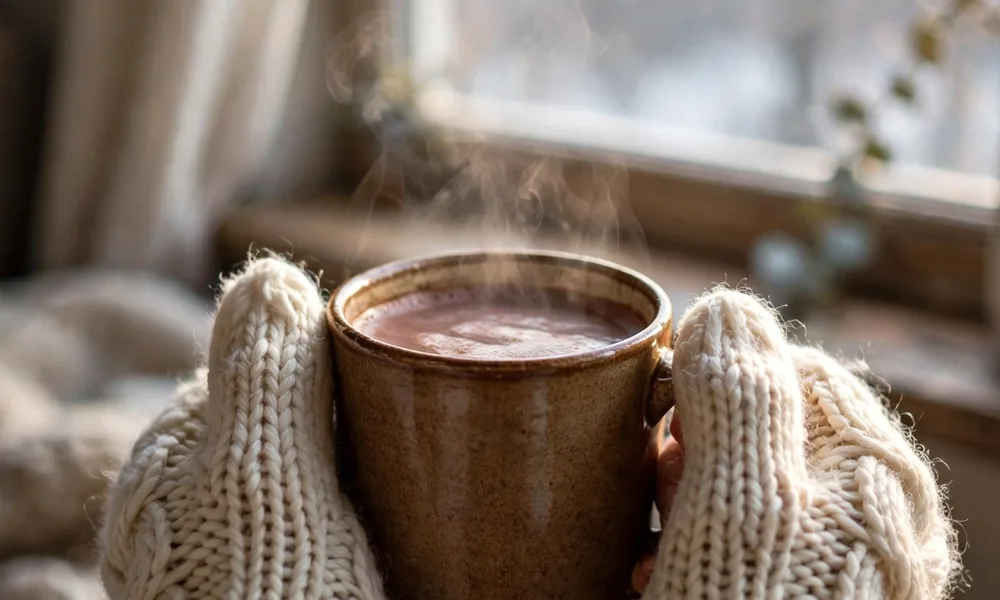
How we judged warmth, waterproofing and fit
Every mitten here was tested on the same five points: warmth standing still in cold wind, warmth when wet, wind resistance, fit and cuff seal, and durability. A mitten earns a recommendation only when it passes warmth and weatherproofing together. A warm mitten that soaks through in wet snow is a fair-weather mitten, and a waterproof mitten with a thin lining is a rain mitten, not a winter one.
The best mittens at a glance
| Mitten | Best for | Warmth | Waterproof | Approx. price |
|---|---|---|---|---|
| Insulated ski mittens | Deep cold and snow | Very high | Yes | $40–$90 |
| Knit wool mittens | Everyday errands | Medium–high | No | $20–$45 |
| Lined leather mittens | Smart everyday wear | Medium–high | Water-resistant | $50–$110 |
| Waterproof shell mittens | Wet snow and rain | High | Yes | $35–$80 |
| Heated mittens | Very cold hands | Very high | Yes | $90–$180 |
| Convertible flip-top mittens | Mittens with finger freedom | Medium | No | $25–$55 |
| Budget fleece mittens | Mild cold, layering | Low–medium | No | $10–$20 |
The 7 best mittens in 2026
1. Best overall: insulated ski mittens
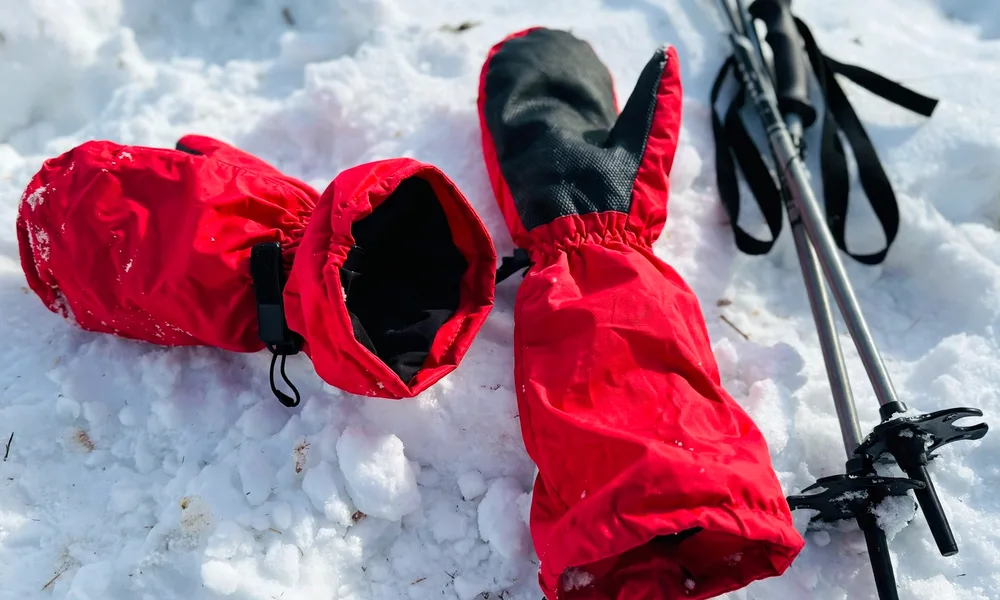
The insulated ski mitten is the best all-round winter mitten because it takes warmth and weather seriously at the same time. A waterproof shell keeps wet snow out, a thick synthetic or down lining traps warm air, and a long gauntlet cuff seals the gap between mitten and sleeve. The palm is usually textured, so poles, handrails and car doors stay firmly in hand.
2. Best for everyday use: knit wool mittens
The knit wool mitten is the pair most people actually need. Wool holds warm air close to the skin, the slim fit means you can still find coins and hold a coffee cup, and they look right with any winter coat. They are warm enough for commuting and dog walks in ordinary winter weather, but they are not waterproof, so they are for dry cold rather than wet snow.
3. Best smart pick: lined leather mittens
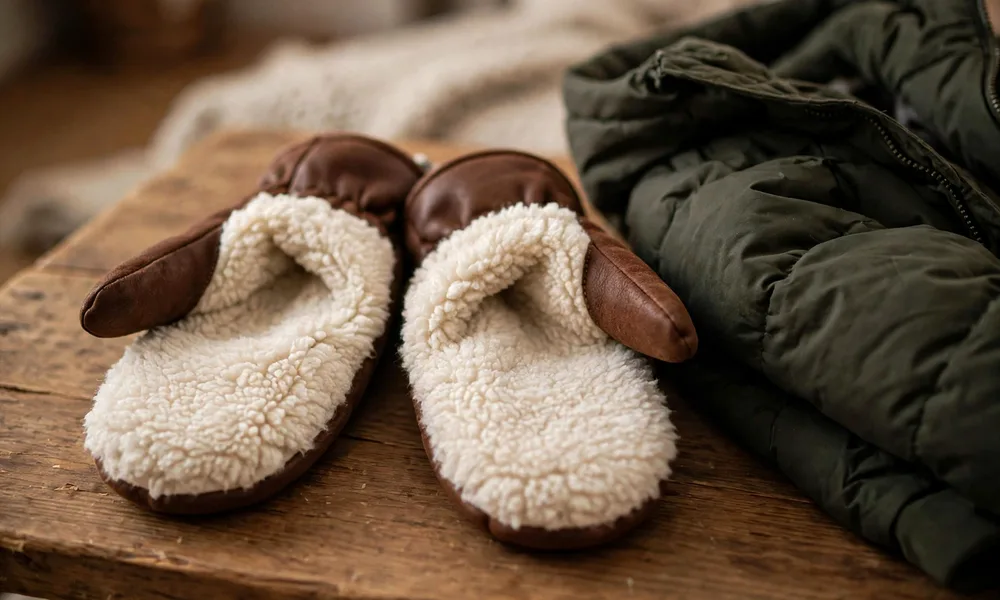
Lined leather mittens are the smartest-looking option that still works hard. Leather grips naturally, moulds to your hand over a few weeks, and blocks wind far better than knit. A cashmere or fleece lining adds the warmth leather alone cannot provide. They last for years if you feed the leather occasionally, and they handle a steering wheel better than any other mitten here.
4. Best for wet weather: waterproof shell mittens
Wet cold is a different problem from dry cold, and the waterproof shell mitten is built for it. A breathable membrane stops rain and wet snow from soaking the lining, while the insulation underneath stays dry and keeps working. The palm is usually reinforced, so wet handles and railings stay grippy instead of slippery.
5. Best for very cold hands: heated mittens
Heated mittens are for people whose hands are always cold, whatever they wear. Thin heating elements run along the fingers and the back of the hand, powered by a small rechargeable battery in the cuff, with two or three heat settings. On the highest setting they stay warm for a couple of hours, enough for a long walk or a commute.
6. Best flexible pick: convertible flip-top mittens
Convertible mittens solve the one real drawback of mittens: you cannot use your fingers. A flap folds back from the fingertips and fastens with a button or magnet, turning the mitten into a fingerless glove while you tap a phone, find a key or pay at a till, then folds back down again. The warmth is a little lower than a sealed mitten, because the flap seam lets some heat out.
7. Best budget pick: fleece mittens
Fleece mittens are the cheapest way to take the edge off a cold morning. They are light, they dry fast, they pack into a coat pocket, and they are warm enough for mild frost and for layering inside a larger mitten on the coldest days. What they cannot do is block wind or keep out rain, so they are a fair-weather winter mitten rather than a storm mitten.
Mittens vs gloves: when each wins
The honest answer is that you probably need both. Gloves win whenever your fingers have to work: driving, typing, handling money, using a phone, holding a small child’s hand. Our guide to the best gloves covers the pairs that keep your hands warm without losing your grip. Mittens win whenever your hands mostly have to stay warm: standing at a match, walking in a snowstorm, waiting outside, or sitting on a cold train platform. In still cold air, a good mitten keeps hands comfortable for roughly twice as long as a glove of the same thickness.
Mittens are also the warmer choice for children and older people, whose hands lose heat faster and who rarely need fine finger work outdoors. For babies, the choice is different again: our guide to the best baby mittens covers scratch mittens and stay-on cuffs, which are a safety product as much as a warmth product, and adult mittens are not a substitute.
The materials that matter
Wool is the classic mitten material for a reason. It stays warm when damp, it breathes, and it holds its shape for years. A wool blend with a little nylon wears longer at the palm. Leather is the best wind blocker and the best gripper, but it needs a lining to be warm, and it needs occasional feeding to stay supple. Synthetic shells with a waterproof membrane are the best choice for wet snow, and down or synthetic fill gives the most warmth for the least bulk. Fleece is the best budget lining, though it packs down over time.
Fit: how a mitten should feel
A mitten should fit like a soft pocket, not like a tight glove. There should be a little air at the fingertips, because that air is what holds the warmth, but not so much that the mitten flops or the thumb sits in the wrong place. The cuff should reach past your wrist bone and seal under your coat sleeve, with no gap for cold air. If the lining is thick, size up one size; if it is thin, buy your usual size.
Looking after your mittens so they last
Most mittens last far longer than gloves, because there are no finger seams to split, but they still need care. Dry wet mittens at room temperature, never on a radiator, and stuff them loosely with newspaper so they keep their shape. Wash knit mittens by hand in cool water and dry them flat. Feed leather mittens once a season, and reproof waterproof shells when water stops beading.
Before you buy checklist
- Match the mitten to the weather: waterproof shell for wet snow, knit wool for dry cold, heated for hands that are always cold.
- Check the lining: fleece or down for warmth, and make sure it is stitched in, not loose, so it does not bunch up.
- Test the cuff: it should seal under your coat sleeve with no gap at the wrist.
- Hold something: a handrail, a lead, a steering wheel. If you cannot grip it, the mitten is too bulky for daily use.
- Try both mittens on, over a watch if you wear one, and walk around the shop for a few minutes.
- Buy a spare budget pair for the car or bag, because mittens are easy to lose and miserable to be without.
Frequently asked questions
Are mittens really warmer than gloves?
Yes, and by a clear margin. Your fingers share one pocket of warm air in a mitten, so they warm each other, while in a glove each finger loses heat on its own. In still cold air a good mitten keeps hands comfortable roughly twice as long.
What is the warmest mitten material?
Down fill inside a windproof, waterproof shell is the warmest combination, followed closely by thick synthetic insulation. Wool is the warmest natural material and stays warm when damp.
Can I wear mittens in the rain?
Only waterproof shell mittens are truly rain-proof. Knit and fleece mittens soak through quickly and then lose their warmth, so they are for dry cold. If your winters are wet, buy a waterproof pair.
Do mittens work for driving?
Leather mittens with a grippy palm work well for driving, because leather grips a steering wheel naturally. Bulky ski mittens are harder to drive in, so keep a slimmer pair in the car.
How do I stop my mittens getting damp inside?
Sweat is the usual cause. A breathable shell and a moisture-wicking lining help, and taking the mittens off for a minute when you come inside lets the damp escape. Fleece linings dry fastest.
Should children wear mittens or gloves?
Mittens, almost always. Children lose heat from their hands faster than adults, they rarely need fine finger work outdoors, and mittens are far easier for small hands to put on. A long cuff stops snow getting in at the wrist.
The bottom line
The best mittens of 2026 are the ones that match your winter, not the thickest pair on the shelf. For deep cold and snow, buy insulated ski mittens with a waterproof shell. For everyday dry cold, knit wool mittens are warmer than they look. For wet winters, only a waterproof shell will do. And if your hands are always cold whatever you wear, heated mittens are worth every penny. Our guide to the best scarves covers the other half of the winter kit, and worn together, the two make a cold morning feel like a short one.


