The Worst Tennis Courts of 2026 — What to Skip
The worst tennis courts of 2026 are not the oldest courts or the plainest ones. An old court with a true bounce, a firm footing and a net at the right height can host a wonderful match. The worst tennis courts fail in simpler ways: the surface cracks under your feet, the ball bounces anywhere but where it was aimed, the net sags in the middle, and the fence has gaps big enough to lose every wide ball.
Key takeaways
- The worst tennis courts are types and patterns, not places: the same seven faults turn up on courts everywhere.
- The surface decides the match. A court that will not bounce true ruins every rally, however new the net looks.
- A sagging net and a broken fence cost points and balls. Check both before you play, because neither can be fixed mid-match.
- Drainage matters as much as the surface: a court that holds puddles after light rain wastes the whole booking.
- Check the bounce, the lines, the net and the drainage before you play, and walk away from any court that fails two of them.
How the worst tennis courts of 2026 were chosen
Every type below was scored on five measures. Bounce comes first: does the ball come off the surface true, or does it leap, die or skid without warning? Footing is second, judged on cracks, loose grit and slippery patches that twist ankles. Net and posts are third, covering sagging nets, leaning posts and winders that no longer work. Fences and run-back are fourth, because a court with low or broken fencing loses every wide ball and leaves no room to play. Drainage and light are fifth: drying after rain and evening light.
Two notes before the list. First, no single court is named as the worst, because the same seven faults appear on courts everywhere, and what matters is learning to recognise the pattern before you book. Second, this is about outdoor tennis courts, the open-air surface, net and fence; our guide to the worst sports courts of 2026 covers indoor multi-sport halls, where the floor under your feet is a different problem from the court outside.

Comparison table: the worst tennis courts of 2026
| Rank | Court type | Main failure | Worst moment |
|---|---|---|---|
| 1 | The Cracked Hard Court | Cracks and loose surface | A ball dying on a crack mid-rally |
| 2 | The Dust-Bowl Clay | Dry, unwatered, dusty clay | A slide ending in a cloud of dust |
| 3 | The Worn Grass Court | Bare patches, uneven turf | A serve skidding off bare earth |
| 4 | The Sagging Net Court | Net drooping, posts leaning | A net cord deciding every point |
| 5 | The Fence-Failure Court | Low or broken fencing | Every wide ball lost to the road |
| 6 | The Floodlit Flicker | Dim, uneven evening lights | Losing the ball in the dark corner |
| 7 | The Puddle Court | No drainage, standing water | A whole booking lost to one shower |
The worst tennis courts of 2026
1. The Cracked Hard Court: a surface that eats the bounce
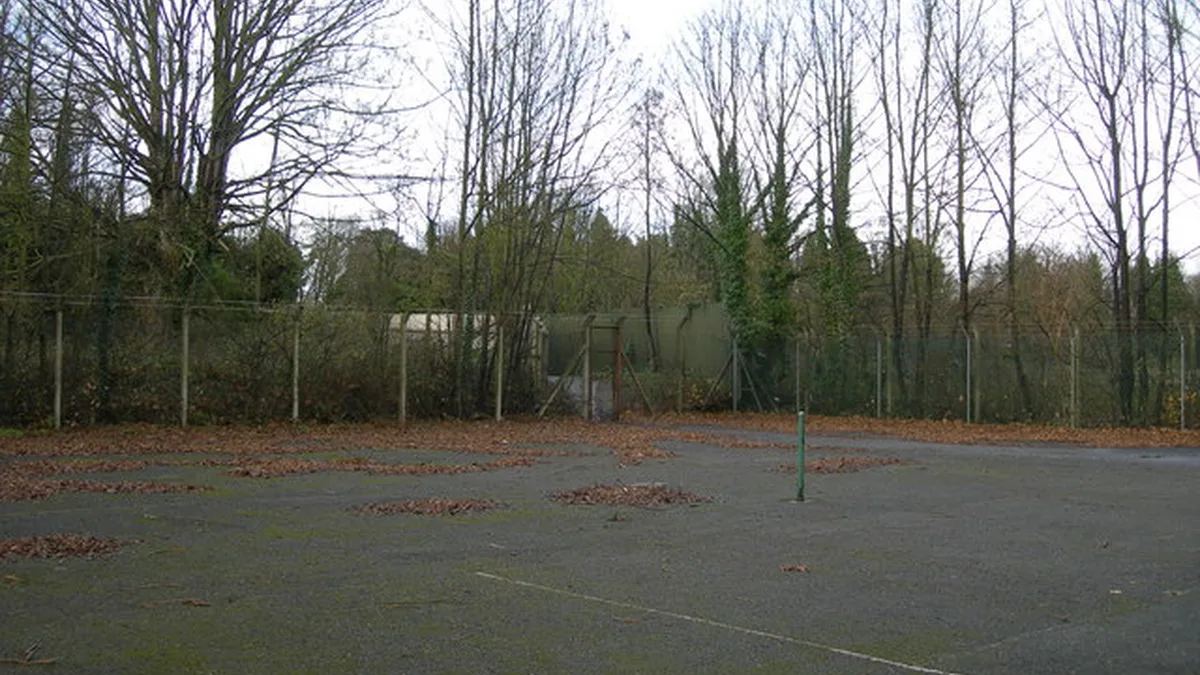
A hard court should give you the most honest bounce in tennis. On the cracked hard court, the surface has split, lifted and worn away in patches, and the ball does whatever the crack tells it to. A good rally ends when a ball hits a ridge and leaps over your racket, or drops dead where the surface has crumbled.
The damage is easy to spot if you look down instead of at the net. Walk the court before you play and look for long cracks across the baseline and patches where the top coat has flaked off.
2. The Dust-Bowl Clay: clay that was never watered
Clay is the kindest surface in tennis when it is kept properly, soft underfoot and true in the bounce. The dust-bowl clay court has been left dry for weeks: the top layer has turned to loose dust, the lines have drifted, and every slide kicks up a cloud that hangs in the air.
Check the clay with your shoe before you book the hour. Good clay is firm, damp and even, and your foot leaves a shallow print; bad clay is powdery, and your shoe sinks and slides with nothing to grip.
3. The Worn Grass Court: bare patches where the ball should bounce
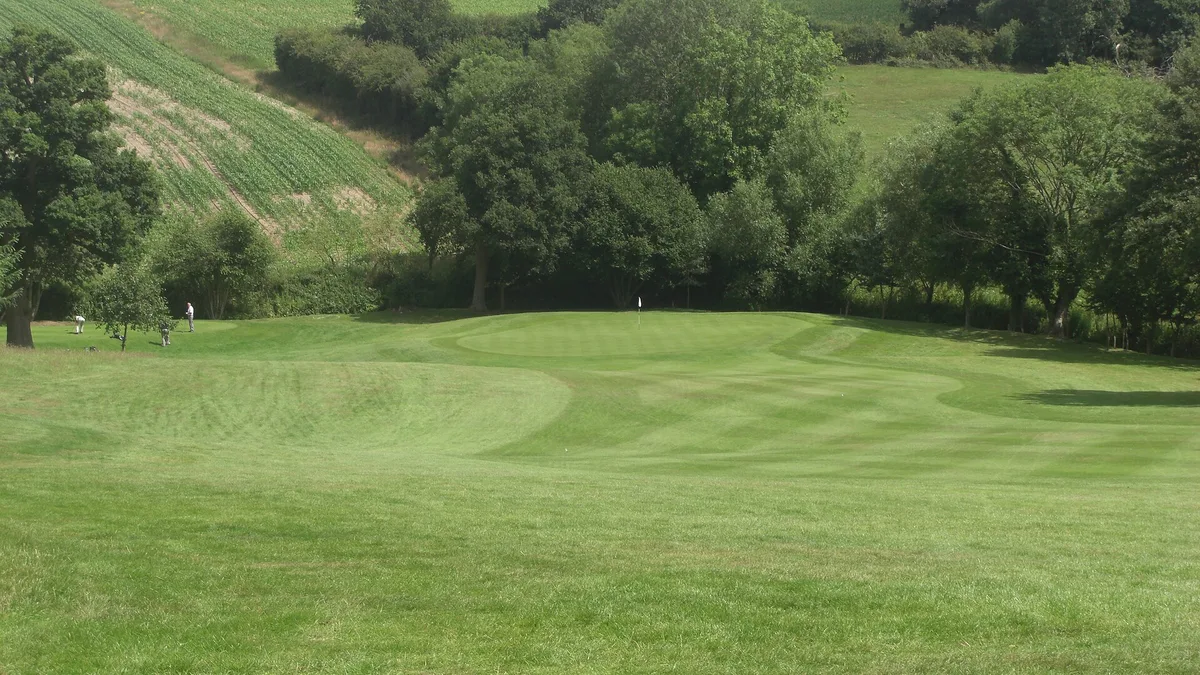
Grass is the fastest and prettiest surface in tennis, and also the hardest to keep. On the worn grass court, the baselines have been played to bare earth, the service boxes are patchy, and the ball skids low off the dirt where the grass has gone.
Look at the baselines and the centre of the court before you play. Good grass is even and springy across the whole playing area; bad grass is green at the edges and brown where the points are actually played. If the baseline is bare earth, the court is past its season.
4. The Sagging Net Court: a net that decides the match
The net is the simplest part of a tennis court, which is why a bad one is so frustrating. On the sagging net court, the centre strap is loose, the winder no longer holds tension, and the net droops several inches below the right height in the middle. Every other shot clips the tape and drops, or clears it by luck, and the match is decided by the net rather than by either player.
Check the net before the first serve. Stand at the centre strap and look along the top tape: it should run straight and level, with the middle only slightly lower than the posts. Press the tape down with your hand; a good net springs back, while a sagging one stays where you push it.
5. The Fence-Failure Court: nowhere for a wide ball to go
A tennis court needs fences the way a room needs walls. On the fence-failure court, the fencing is low, torn or missing in places, and every ball that goes wide is gone: over the fence, into the road, down a bank or into the bushes. You spend the match fetching balls instead of playing points, and a wide serve that should be a fault becomes a five-minute hunt.
Walk the boundary before you play. Good fencing is high all the way round, with no gaps at the gates or the corners and no torn sections at the back. Look behind the baselines in particular, because that is where most balls go.

6. The Floodlit Flicker: lights that hide the ball
Evening tennis depends on light, and bad light is worse than no light at all. On the floodlit flicker court, half the lamps are out, the rest buzz and flicker, and one corner of the court sits in shadow while the other glares. The ball disappears against the dark background, reappears too late, and every fast exchange becomes a guess.
Test the lights before you book an evening slot. Ask when the lamps were last replaced, and look at the court from the far end at dusk: the light should be even across the whole surface, with no dark corners and no glare in your eyes at the baseline. If two lamps are out, play in daylight instead.
7. The Puddle Court: a booking lost to one shower
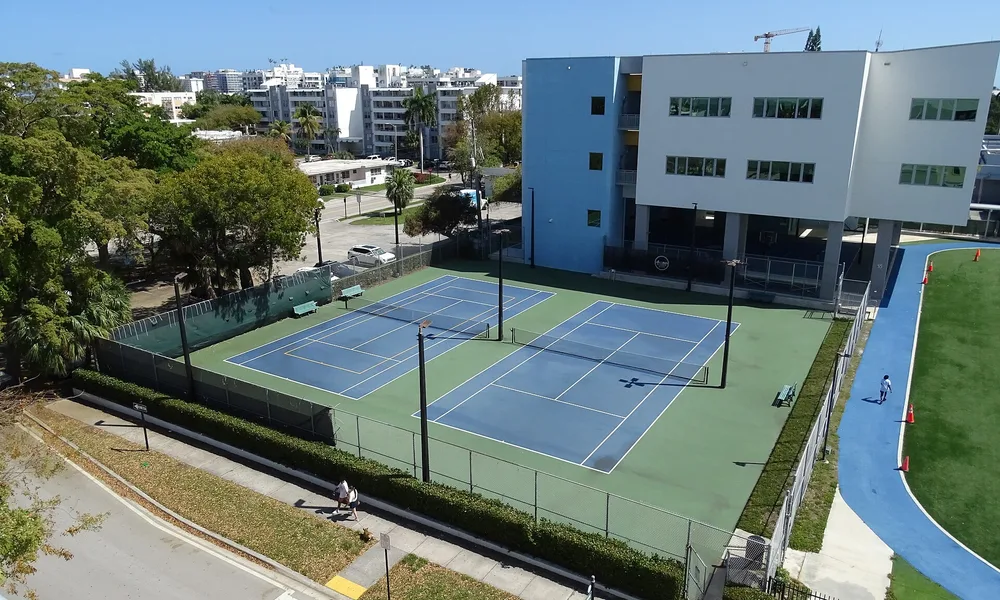
Some courts dry in twenty minutes after rain. The puddle court does not dry at all. Its surface has no fall, no drainage and no camber, so a single shower leaves standing water in the low spots for the rest of the day. The ball dies in the puddles, your shoes soak through, and the surface turns slippery where the water sits. The court looks playable from the gate, all blue and green in the sun, and then your first step tells you the booking is wasted.
Check the forecast and the court before you pay. If it rained in the last few hours, look at the lowest corners of the court from the gate: standing water, dark wet patches and a surface that shines are all warnings. Ask the venue how long the court takes to dry after rain.
What to avoid when booking a tennis court
The most common regret is not a bad court but a wrong booking: an hour paid for before anyone checked the surface, a court booked the morning after rain on a site famous for puddles, or an evening slot on a court whose lights have not worked for months. Avoid the trap by checking three things before you pay: the bounce, the net and the drainage. The same checks work on any equipment you bring to the court, and our guide to the worst sports rackets of 2026 makes the same point about gear that lets players down.
Read recent player photos, not the venue website gallery. The website shows the court freshly painted in summer sun; a player photo from last week shows the cracks, the sagging net and the puddles as they are now.
Checklist: booking a tennis court in 2026
- Drop a ball from shoulder height in several spots, and walk away if the bounce changes from corner to corner.
- Look along the top tape of the net and press it down, and skip any court where the net sags or will not hold tension.
- Walk the fence line for gaps, tears and low sections before you play, and bring extra balls if the fence is poor.
- Check the rain from the last few hours and the low corners, and skip any court still standing in water.
- Test the lights before an evening booking, and play in daylight if two lamps are out or a corner is dark.
- Read recent player photos of the surface and the lines, not just the venue’s own gallery.
Frequently asked questions
What makes a tennis court bad rather than just old?
An old court with a true bounce, a firm footing and a net at the right height is a good court. A bad court fails on maintenance: cracks that kill the bounce, a sagging net, broken fences, puddles that never drain and lights that leave corners dark.
How can I check the bounce before I book?
Drop a ball from shoulder height in several spots on the court. On a true surface it comes back to the same height every time.
Is clay always slower than a hard court?
Yes, clay is slower and the ball bounces higher, which is part of its character. But slow is not the same as bad.
What should I do if the court is wet when I arrive?
Ask the venue about a rain check before you start, and know the policy before you pay.
Are grass courts always hard to play on?
Grass is fast and low-bouncing, which takes getting used to, but a kept grass court is a joy to play on.
How high should the fence around a tennis court be?
High enough that an ordinary lob stays inside, which usually means well above head height all the way round, with no gaps at the gates or corners.
Bottom line
The worst tennis courts of 2026 are the ones that fail the basics: surfaces that will not bounce true, nets that sag, fences that lose every wide ball, lights that hide the ball and courts that never drain. Check the bounce, the net, the fence and the real price before you book, and pick a court that respects your time and your game. The ball matters too, and our guide to the worst sports balls of 2026 shows how a bad ball can spoil a good court in the same way.