The best baking sheets for cookies can be the difference between a tray of evenly golden, crisp-edged chocolate chip cookies and a batch that burns on the bottom while staying pale on top. Most home bakers blame their recipe when cookies spread too thin or bake unevenly, but the pan itself does far more work than it gets credit for.
The best baking sheets for cookies share a few traits: heavy-gauge metal, a flat surface that resists warping, and heat distribution that bakes the cookies in the corners at the same rate as the ones in the middle. Everything else is a matter of matching the pan to how you bake.
This guide rounds up the best baking sheets for cookies in 2026, from aluminium workhorses to nonstick and insulated options, and explains what matters when you shop and the mistakes that quietly ruin batches. Whether you bake once a month or every weekend, one of these sheets will make your cookies better.
Key Takeaways
- Heavy-gauge aluminium sheets bake cookies most evenly and are the best choice for most home bakers.
- A rimmed half-sheet pan, roughly 18 by 13 inches, is the most versatile size for cookies.
- Dark nonstick sheets brown cookies faster, so reduce the oven temperature by 25 degrees when using them.
- Warping is the most common fault in cheap sheets; thick metal and a reinforced rim resist it.
- Parchment paper protects the pan, prevents sticking, and makes cleanup far easier.
What Makes a Great Baking Sheet for Cookies
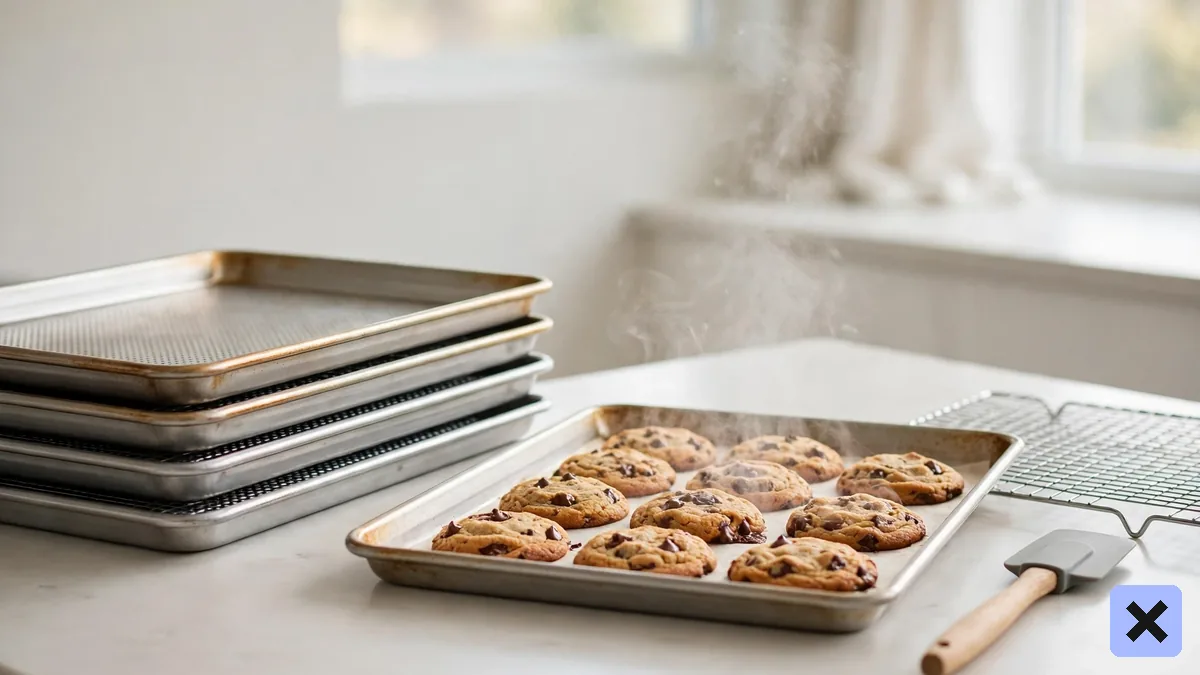
A baking sheet looks simple, but small design differences change how cookies turn out. Material, thickness, finish, and rim height all affect heat flow, and heat flow decides whether a cookie spreads, sets, and browns properly.
Material comes first. Aluminium is the standard for professional bakers because it conducts heat quickly and evenly, so the whole tray reaches baking temperature at the same time. Stainless steel is durable and resists rust, but it conducts heat more slowly and can produce paler cookies. Nonstick coatings add convenience, yet the dark surface absorbs more heat and can over-brown the bottoms.
Gauge, or thickness, matters just as much as material. Thin sheets heat up fast but warp when they hit a hot oven, and a warped sheet bakes unevenly because parts of it lift away from the rack. Heavy-gauge sheets, usually 18 gauge or thicker, stay flat through repeated heating and cooling.
Size is the third factor. The half-sheet pan, about 18 by 13 inches, is the workhorse of the home kitchen: it fits a standard oven rack and holds a dozen large cookies or up to two dozen smaller ones. Quarter sheets suit small batches, while full sheets only fit commercial ovens. For most bakers, two half-sheet pans are more useful than any other combination, since they let you rotate trays and bake a second batch while the first cools. A low rim is the best compromise for cookies, containing the dough without blocking airflow.
The Best Baking Sheets for Cookies 2026
These are the sheets that consistently produce the best cookies, judged on even browning, warp resistance, durability, cleaning, and value. Each suits a slightly different baker, so the best pick depends on how often you bake.
Best Overall: Heavy-Gauge Aluminium Half Sheet
The classic professional aluminium half sheet remains the best baking sheet for cookies for most people. Its thick, uncoated aluminium surface heats evenly across the whole tray, so the cookies in the corners finish at the same time as those in the centre. The reinforced rim keeps the pan flat even after hundreds of trips through a hot oven.
Because it has no coating, there is nothing to scratch or peel. Pair it with parchment paper for easy release and cleanup. It is affordable enough that buying two is sensible, and two pans make batch baking far more efficient. If you only buy one baking sheet, this is the one.
Best Nonstick: Dark Nonstick Half Sheet
A good nonstick sheet is the easiest option for bakers who want cookies to slide off with no fuss and cleanup to take seconds. The dark coating absorbs more heat, giving cookies a deeper golden colour and crisper edges. Lower the oven temperature by about 25 degrees and check cookies a minute early the first time you use it. Choose one with a heavy-gauge steel core so it resists warping, and avoid metal utensils that scratch the coating.
Best for Even Baking: Insulated Baking Sheet
Insulated sheets have two layers of metal with a cushion of air between them, which slows heat transfer to the bottom of the cookie — ideal for delicate cookies that burn easily, such as sugar cookies and shortbread. The trade-off is speed: they take slightly longer to bake, and cookies may need an extra minute or two in the oven.
Best Stainless Steel: Stainless Steel Half Sheet
Stainless steel sheets are the most durable option and the easiest to keep looking new. They will not rust, they resist staining, and they can take a scrubbing without damage. Cookies tend to come out paler and softer, because stainless steel transfers heat more gently — an advantage for thick cookies and bars.
Best Budget: Light Aluminium Cookie Sheet
If you bake occasionally and want a solid sheet without spending much, a light aluminium cookie sheet is a sensible buy. It is thinner than the professional pans, so it heats up quickly and bakes well, though it is more likely to warp over time. Use parchment paper to protect the surface and avoid the hottest oven settings, and it will serve a casual baker well.
Best for Small Batches: Quarter Sheet Pan
Quarter sheet pans, about 13 by 9 inches, are perfect for small batches, toaster ovens, and baking for one or two people. They hold six to eight cookies comfortably and heat up fast. Buy the same heavy-gauge aluminium construction as a full-size sheet and you get the same even baking in a smaller package.
Baking Sheets Compared
The table below summarises how the main types of baking sheet compare for cookie baking.
| Sheet Type | Heat Distribution | Browning | Warp Resistance | Best For |
|---|---|---|---|---|
| Heavy-gauge aluminium | Excellent | Even, golden | Excellent | Everyday cookie baking |
| Dark nonstick | Good | Deep, fast | Good | Easy release and cleanup |
| Insulated | Gentle | Light, pale | Good | Delicate and buttery cookies |
| Stainless steel | Moderate | Pale, soft | Excellent | Durability and thick cookies |
| Light aluminium | Good | Even, golden | Fair | Occasional bakers on a budget |
| Quarter sheet | Excellent | Even, golden | Excellent | Small batches and toaster ovens |
Heavy-gauge aluminium wins on the combination of even heat and warp resistance, which is why professional bakers rely on it. The right choice is the one that matches your baking habits rather than the most expensive pan on the shelf.
How to Choose the Right Baking Sheet
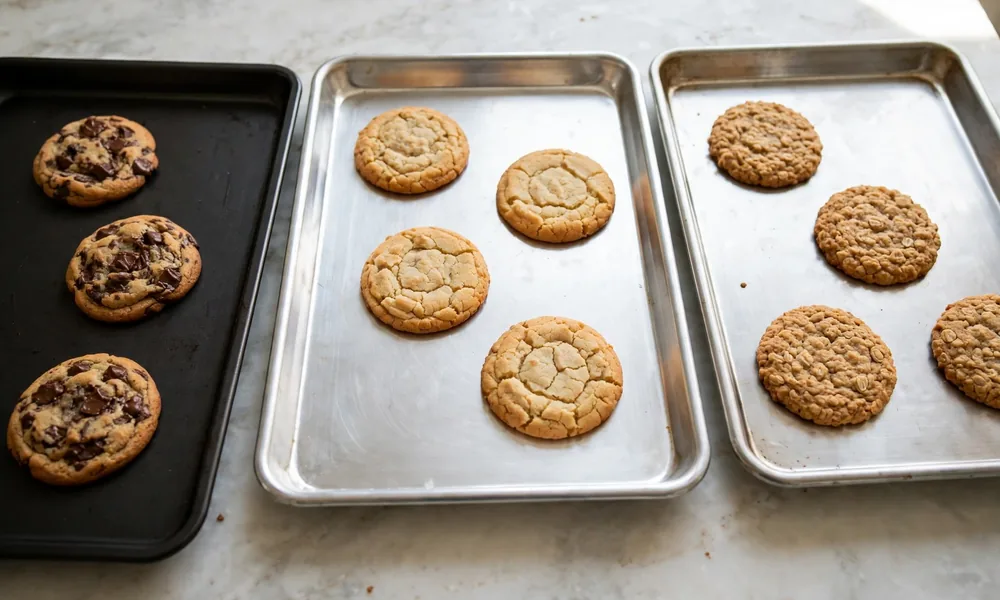
Choosing a baking sheet starts with how you bake. If you make cookies every week, invest in two heavy-gauge aluminium half sheets; the difference in results and durability is worth the modest price. If you bake once a month, a good nonstick sheet will be more convenient. If your cookies keep burning on the bottom, an insulated sheet will fix that specific problem.
Check the weight before you buy: a good pan feels solid and barely flexes when you press a corner. Look for a reinforced, rolled rim, the main defence against warping. Measure your oven before buying too, since a sheet that is too large will block airflow and bake unevenly.
Remember that the pan is only part of the equation. Good cookie baking also depends on accurate measurements, and using the best kitchen scales for weighing ingredients will do as much for your results as a new sheet. Good dough also starts with proper creaming, which is why many bakers keep the best hand mixers for baking on hand for cookie dough.
How to Use a Baking Sheet for the Best Cookies
Always preheat the oven fully before the sheet goes in. A pan that enters a cold oven heats unevenly, and the first cookies on it will spread differently from the rest. Place the sheet on the middle rack and leave space around it for air to circulate.
Line the sheet with parchment paper for most cookies. Parchment prevents sticking, protects the pan, and helps cookies bake evenly by insulating the bottom slightly. Space the dough at least two inches apart so cookies have room to spread, and bake one sheet at a time when possible, since two sheets on different racks bake at different rates.
Let the sheet cool between batches. Placing cold dough on a hot pan causes it to spread too fast and bake unevenly. While one batch cools on a rack, the second sheet can be in the oven.
Common Mistakes That Ruin Cookies
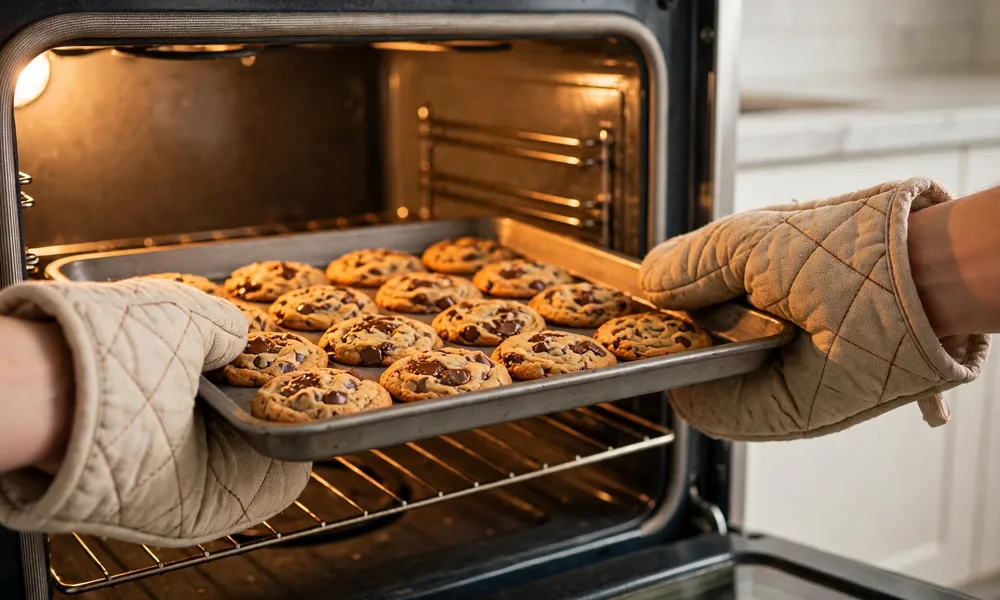
The most common mistake is using a warped sheet. Once a pan has bent, part of it sits higher than the rest, so cookies on the raised section bake faster and those in the dip lag behind. Replace warped pans rather than fighting them.
Overcrowding the sheet is another frequent error. Cookies need space to spread, and a crowded tray traps steam, which makes the edges soft instead of crisp. It is better to bake in two batches than to squeeze twelve cookies onto a sheet meant for nine. Many bakers also forget to adjust for dark pans, which absorb more heat — lower the temperature by 25 degrees and check a minute early.
Finally, do not skip the cooling step. Cookies continue to bake from residual heat after leaving the oven, so let them set on the sheet for five minutes before moving them to a rack.
Your Cookie Baking Checklist
- Choose a heavy-gauge aluminium half sheet as your main pan.
- Line the sheet with parchment paper before every batch.
- Preheat the oven fully and bake on the middle rack.
- Space dough at least two inches apart for even spreading.
- Let the sheet cool completely between batches.
- Cool cookies on the sheet for five minutes, then move them to a wire rack.

Frequently Asked Questions
What size baking sheet is best for cookies?
A half-sheet pan, about 18 by 13 inches, is the best size for most cookie baking. It fits a standard oven, holds a dozen large cookies, and is the size professional bakers use.
Are nonstick baking sheets good for cookies?
Yes, nonstick sheets are good for cookies and make release and cleanup easy. Because the dark surface absorbs more heat, lower the oven temperature by about 25 degrees and check cookies a minute early.
Why do my baking sheets warp in the oven?
Warping happens when thin metal expands unevenly in the heat. Cheap, light-gauge sheets are the most vulnerable, while heavy-gauge sheets with reinforced rims resist it.
Should I use parchment paper on a baking sheet?
Yes, parchment paper is recommended for almost all cookies. It prevents sticking, protects the pan, promotes even browning, and makes cleanup simple.
Can I use a baking sheet for other foods?
Absolutely. A good half sheet is one of the most versatile pans in the kitchen, useful for roasting vegetables, baking pastries, and cooking sheet-pan meals.
How do I clean a baking sheet properly?
Let the sheet cool, then wash it with warm soapy water and a soft sponge. Avoid harsh scouring pads on nonstick surfaces. For stubborn residue, soak the pan and use a paste of baking soda and water.
The Bottom Line
The best baking sheets for cookies are heavy-gauge aluminium half sheets: they heat evenly, resist warping, and last for years. Add parchment paper, a second pan for batch baking, and the right technique, and your cookies will come out better from the very first tray. If you want easy cleanup, a dark nonstick sheet is a strong second choice, and an insulated sheet is the answer if your cookies keep burning on the bottom. Many bakers also pair their sheets with one of the best stand mixers for baking for effortless mixing.