A good cast iron Dutch oven is the single most versatile pot you will ever own. It braises a chuck roast until it falls apart, bakes a loaf of bread with a crackling crust, and simmers soup for hours without scorching. The best cast iron Dutch ovens of 2026 do all of that while lasting long enough to be handed down to the next generation.
That longevity is why choosing one deserves care. The difference between a great one and a mediocre one shows up in the details: how evenly the lid seals, how heavy the pot feels when full, and whether the enamel chips after a year of use.
We tested the leading cast iron Dutch ovens for heat retention, lid fit, weight, cleaning, and everyday cooking performance. The nine below earned a place in our kitchen, from a premium French classic to a budget workhorse at a fraction of the price.
Key takeaways
- A 5.5-quart round Dutch oven is the most versatile size for most households, big enough for a family stew and small enough to lift.
- Enamelled cast iron is the best choice for most cooks because it needs no seasoning and handles acidic foods without trouble.
- Look for a tight-fitting lid, large loop handles, and a light-coloured interior so you can see browning clearly.
- The best budget Dutch ovens cook nearly as well as premium brands, so pay for fit and finish rather than a famous name.
- Never plunge a hot Dutch oven into cold water, and dry it thoroughly after washing.
What Makes a Great Cast Iron Dutch Oven?
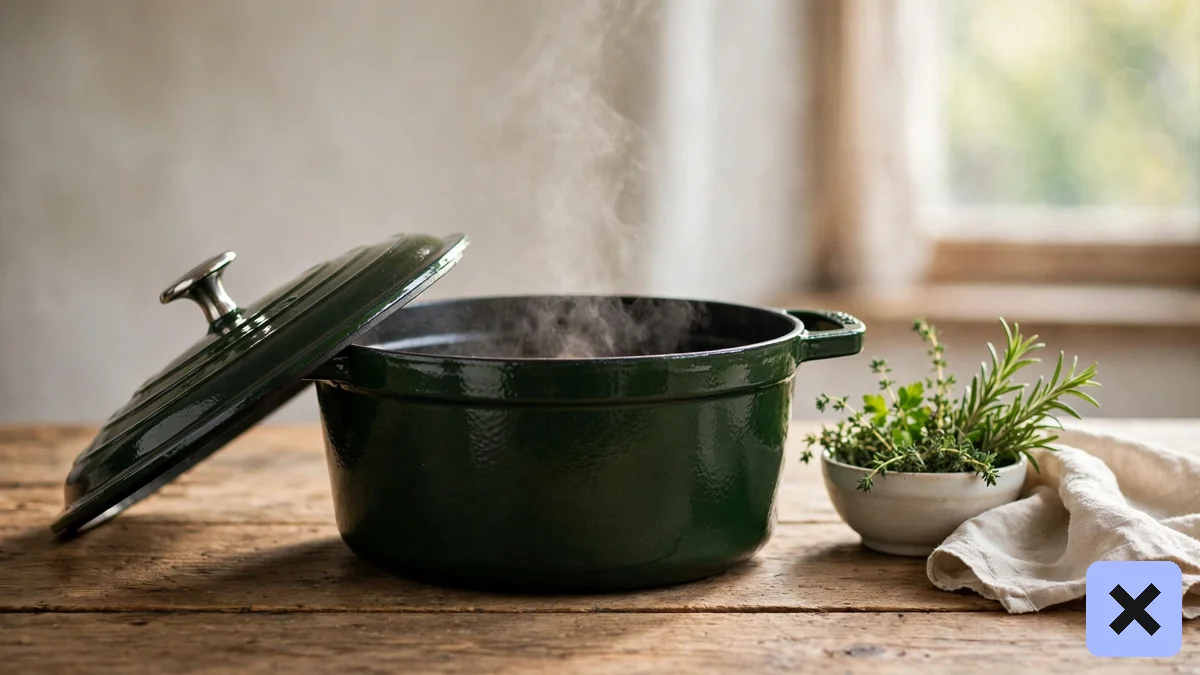
Cast iron earns its reputation through heat. It absorbs heat slowly, holds it steadily, and releases it evenly, which is exactly what slow braises and bread baking need. A thin pot creates hot spots that scorch sauces; a thick cast iron wall spreads the heat so food cooks gently from every side.
The lid matters as much as the pot. A heavy, well-machined lid traps moisture inside, so braised meat stays juicy and bread bakes in its own steam. Cheap lids wobble and let steam escape. When you shop, lift the lid and set it back down: it should sit flat, with no rocking or gaps around the rim.
Handles are the third detail people forget until they are carrying five litres of hot stew. Wide loop handles that fit a gloved hand make a heavy pot manageable, while small stubby handles force an awkward grip. A light-coloured enamel interior is also worth seeking out, because it lets you see when onions are properly browned. If you already love cooking with cast iron, our guide to the best cast iron skillets for home cooks covers the other essential piece.
The Best Cast Iron Dutch Ovens of 2026
We judged every pot below on cooking performance first, then on weight, lid fit, cleaning, and value. All nine are enamelled cast iron unless noted, and all are oven-safe.
1. Le Creuset Signature Round Dutch Oven
The Le Creuset Signature remains the benchmark for every other Dutch oven. Its light interior makes browning easy to judge, the lid seals beautifully, and the enamel resists chipping and staining better than any rival. It is heavy and expensive, but it is the pot most likely to still be cooking in forty years.
2. Staub Round Cocotte
Staub takes a different approach, with a matte black interior and small spikes under the lid that drip condensation back onto the food, keeping braises moist without lifting the lid. The result is deeply flavoured meat and vegetables with very little evaporation. It is slightly heavier than the Le Creuset, but for slow cooking it is hard to beat.
3. Lodge Enamelled Cast Iron Dutch Oven
Lodge proves that a great Dutch oven does not need a luxury price. Its enamelled pot browns well, seals tightly, and costs a fraction of the French brands. The enamel is a little less chip-resistant than the premium options, so use wooden or silicone utensils. For most home cooks, this is the smartest buy on the list.
4. Cuisinart Chef’s Classic Enamelled Dutch Oven
Cuisinart offers a well-balanced mid-range option with a light interior, comfortable handles, and a snug lid. It heats evenly on gas and electric hobs and cleans up easily after tomato-based dishes. It performs far above its price. Best for everyday cooking.
5. Tramontina Enamelled Cast Iron Dutch Oven
Tramontina has become a favourite among serious home cooks because it delivers premium-style performance at a mid-range price. The lid fits well, the enamel holds up to regular use, and the pot is a touch lighter than some rivals. Best for cooks who want premium feel without the premium price tag.
6. Le Creuset Signature Oval Dutch Oven
The oval shape earns its place for one reason: it fits a whole chicken or a long cut of meat that a round pot cannot hold. Everything else matches the round Signature, from the superb enamel to the tight lid. Best for roasting and large families.
7. Staub La Cocotte Tall Dutch Oven
The tall Staub is the specialist of the group, designed for soups, stocks, and big batches of stew. Its narrower footprint frees up hob space while the extra height keeps simmering liquids from splashing. Best for soup makers and stock lovers.
8. Lodge Bare Cast Iron Dutch Oven
The bare cast iron Lodge is the traditional choice, and it rewards cooks who enjoy seasoning and maintaining their iron. It handles screaming-hot searing better than any enamelled pot, costs very little, and lasts forever with basic care. It does react with acidic foods, so keep tomato sauces in an enamelled pot instead.
9. Our Place Perfect Pot
The Perfect Pot is the modern, lighter alternative, with a slimmer profile and a design-first look that suits smaller kitchens. It borrows the Dutch oven’s best ideas — a tight lid, even heat, and stovetop-to-oven versatility — in a package that is easier to lift and store. Best for small kitchens.
Comparison Table: The Best Cast Iron Dutch Ovens at a Glance
| Dutch Oven | Best Size | Interior | Best For | Price Band |
|---|---|---|---|---|
| Le Creuset Signature Round | 5.5 qt | Light enamel | Buy-once quality | Premium |
| Staub Round Cocotte | 5.5 qt | Matte black enamel | Braises and stews | |
| Lodge Enamelled | 6 qt | Light enamel | Best value | |
| Cuisinart Chef’s Classic | 5.5 qt | Light enamel | Everyday cooking | |
| Tramontina Enamelled | 5.5 qt | Light enamel | Premium feel, mid price | |
| Le Creuset Signature Oval | 6.75 qt | Light enamel | Whole roasts | |
| Staub La Cocotte Tall | 5 qt | Matte black enamel | Soups and stocks | |
| Lodge Bare Cast Iron | 6 qt | Bare iron | Searing and campfire | |
| Our Place Perfect Pot | 5.5 qt | Light non-stick | Small kitchens |
How to Choose the Right Size
Size is the decision that causes the most regret. A 3.5-quart pot suits one or two people and bakes a small loaf nicely, but it will feel cramped the first time you try a family stew. A 5.5-quart round pot is the sweet spot for most households: it holds a whole chicken, a big batch of soup, or a standard loaf of bread, and it is still light enough to lift when full.
Go larger only if you regularly cook for six or more people or batch-cook and freeze. A 7.25-quart pot full of stew can weigh over ten kilograms. If you are building out a whole kitchen from scratch, our round-up of the best cookware sets for beginners will help you cover the rest of the hob as well.
Enamelled vs Bare Cast Iron: Which Is Right for You?
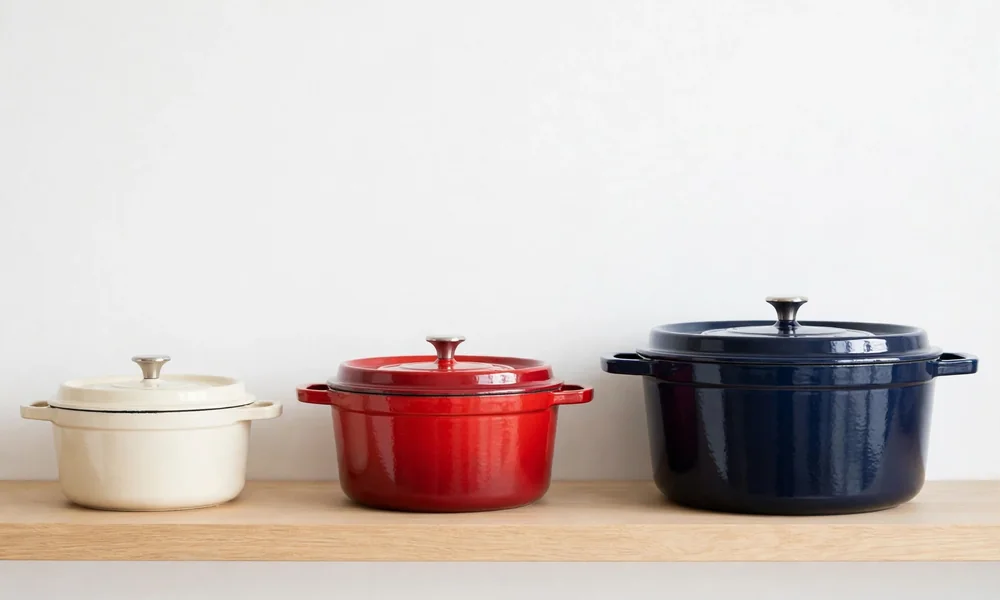
Enamelled cast iron has a glass-like coating fused to the iron, which means it never needs seasoning, never rusts, and never reacts with acidic ingredients. You can simmer a tomato sauce for hours and wash it with soap and water. The trade-off is that enamel can chip if you drop the lid or bang it with metal utensils, and it cannot take quite the same searing heat as bare iron.
Bare cast iron is the older tradition. It needs seasoning — a thin layer of oil baked onto the surface — and it rewards that care with a naturally non-stick finish that improves with use. It sears steak better than any enamelled pot and shrugs off campfire heat, but it will rust if left wet. Most cooks should start enamelled.
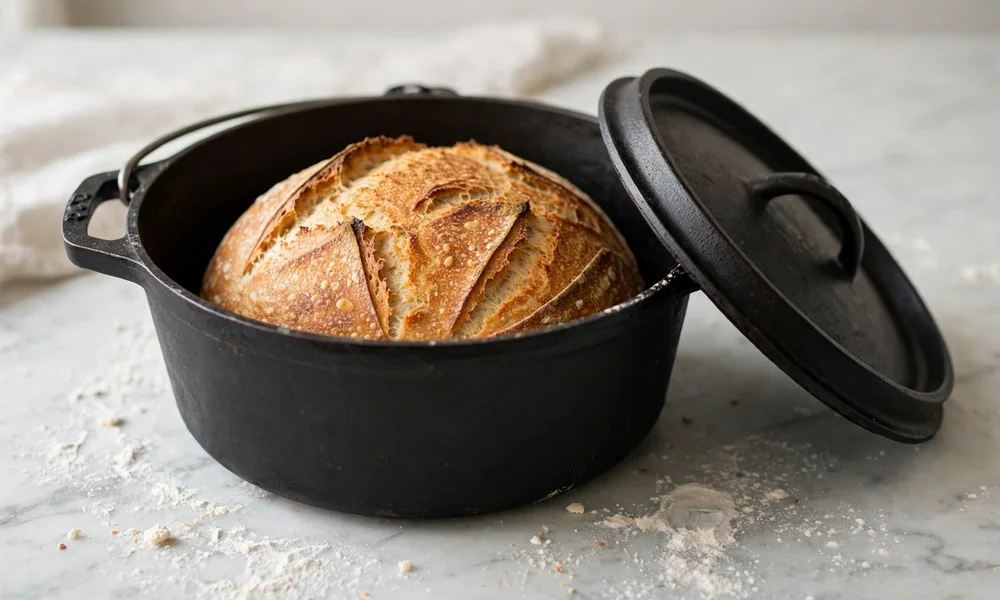
One practical difference is bread. Dutch oven bread baking works brilliantly in either type, because the heavy lid traps steam and gives the loaf a crackling crust. If bread is your main reason for buying, pick the cheapest 5.5-quart pot and spend the savings on good flour.
Care and Maintenance: Keeping Your Dutch Oven for Decades
Good care is simple, but the rules matter. Let the pot cool before washing, use warm water and mild soap, and dry it completely before putting it away. Enamelled pots can soak briefly to loosen stuck food, but never use steel wool or abrasive pads. A paste of baking soda and water lifts most stains without damage.
For bare cast iron, wash with hot water and a stiff brush, dry it on a warm hob for a minute, and rub in a whisper-thin layer of oil while it is still warm. Store bare iron with the lid ajar so air can circulate. Never put any cast iron pot in the dishwasher, and never plunge a hot pot into cold water.
Buyer’s Checklist: Before You Buy a Cast Iron Dutch Oven
- Pick the size first: 5.5 quarts suits most households, 3.5 for couples, 7.25 for big families.
- Choose enamelled for easy care and acidic foods, or bare iron for searing and campfire use.
- Check the lid: it should sit flat, feel heavy, and seal without rocking or gaps.
- Test the handles: wide loops that fit a gloved hand make a full pot far safer to carry.
- Prefer a light-coloured interior so you can see browning clearly while cooking.
- Compare weight honestly: a pot full of stew is heavy, so make sure you can lift it from a hot oven.
Frequently Asked Questions
What size Dutch oven should I buy first?
A 5.5-quart round Dutch oven is the best first buy for most households. It handles a whole chicken, a family stew, a batch of soup, and a standard loaf of bread, while staying light enough to lift when full.
Is an expensive Dutch oven worth it?
It can be, but only for fit and finish. Premium brands offer better enamel, tighter lids, and longer warranties, yet budget options like Lodge and Tramontina cook nearly as well.
Can I use a Dutch oven on any hob?
Enamelled cast iron works on gas, electric, and induction hobs, and in the oven. Always lift the pot rather than dragging it across a glass or induction surface.
Do I need to season an enamelled Dutch oven?
No. Enamelled cast iron never needs seasoning because the glass coating protects the iron underneath. Only bare cast iron needs regular seasoning to prevent rust.
What is the difference between a Dutch oven and a regular pot?
A Dutch oven is made from thick cast iron with a heavy, tight-fitting lid, so it holds and spreads heat far more evenly than a thin steel or aluminium pot. That makes it better for braising, slow cooking, and bread baking. If you are weighing materials more broadly, our comparison of ceramic vs stainless steel cookware explains the main options.
How do I clean a Dutch oven without damaging it?
Let it cool, wash with warm water and mild soap, and dry it thoroughly. For stuck food, soak briefly or use a baking soda paste. Avoid steel wool and the dishwasher, and never put a hot pot under cold water.
The Bottom Line
The best cast iron Dutch oven for most cooks in 2026 is a 5.5-quart enamelled pot with a tight lid, comfortable handles, and a light interior. The Le Creuset Signature is the finest you can buy, the Staub Cocotte is the best for slow braises, and the Lodge enamelled pot delivers nearly the same cooking for a fraction of the price. Pick the size that fits your table and choose enamelled for easy care.