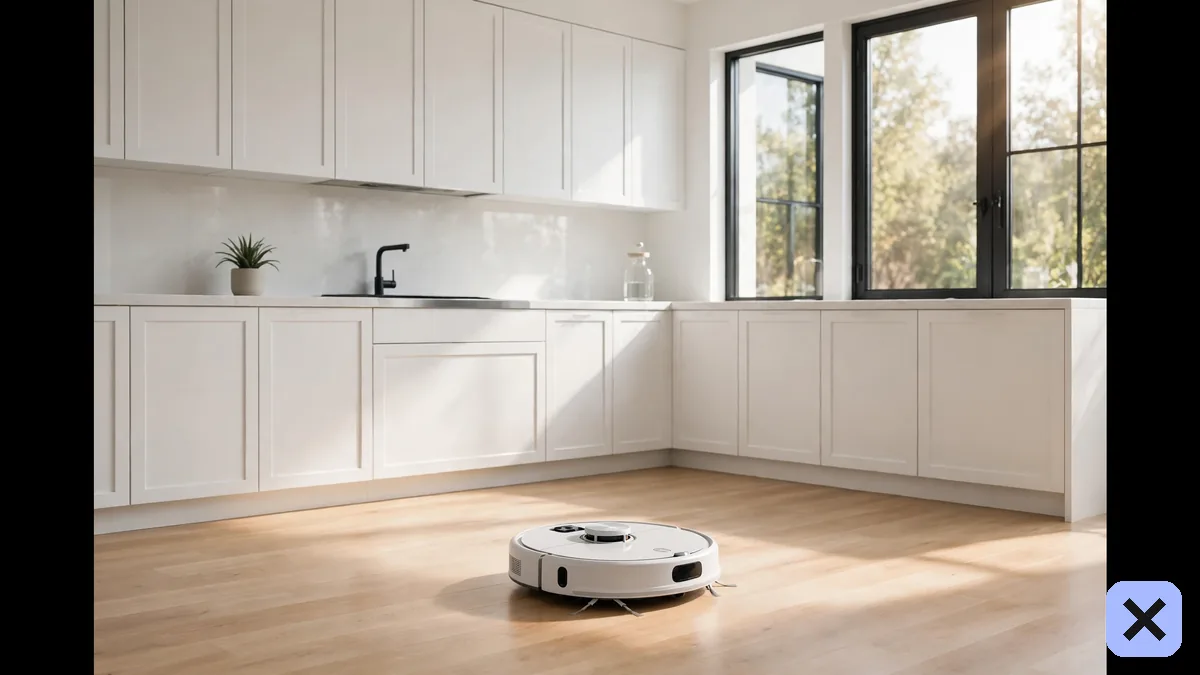
The best robot vacuums for kitchens earn their place by doing the one job every kitchen needs every single day: keeping the floor clean between proper deep cleans. Kitchens collect crumbs under the table, flour dust near the counters and coffee grounds by the machine. A robot vacuum built only for open living-room carpet will struggle here.
A kitchen is a small room with a big workload, and the best robot vacuums for kitchens are built for it: strong suction for dry debris, a mopping system that lifts sticky residue, and navigation smart enough to work around chair legs and the island.
This guide explains what separates a good kitchen robot vacuum from a mediocre one, compares the leading options for 2026, and shows you how to set one up properly.
Key Takeaways
- Choose strong suction and a real mopping system, since kitchens produce both dry crumbs and sticky spills.
- LiDAR navigation matters most in kitchens, where chair legs, islands and thresholds create tight, cluttered spaces.
- A self-emptying dock saves the most time in a kitchen, where the dustbin fills far faster than elsewhere.
- Carpet detection and mop lifting protect rugs while still mopping hard floors properly.
- Run the vacuum daily after meals and keep the floor clear of cords, small rugs and pet bowls.
Why Kitchens Are the Hardest Room for a Robot Vacuum
No other room challenges a robot vacuum quite like the kitchen. The floor changes constantly, the obstacles move, and the dirt is a mix of dry and wet mess that a single cleaning mode cannot handle.
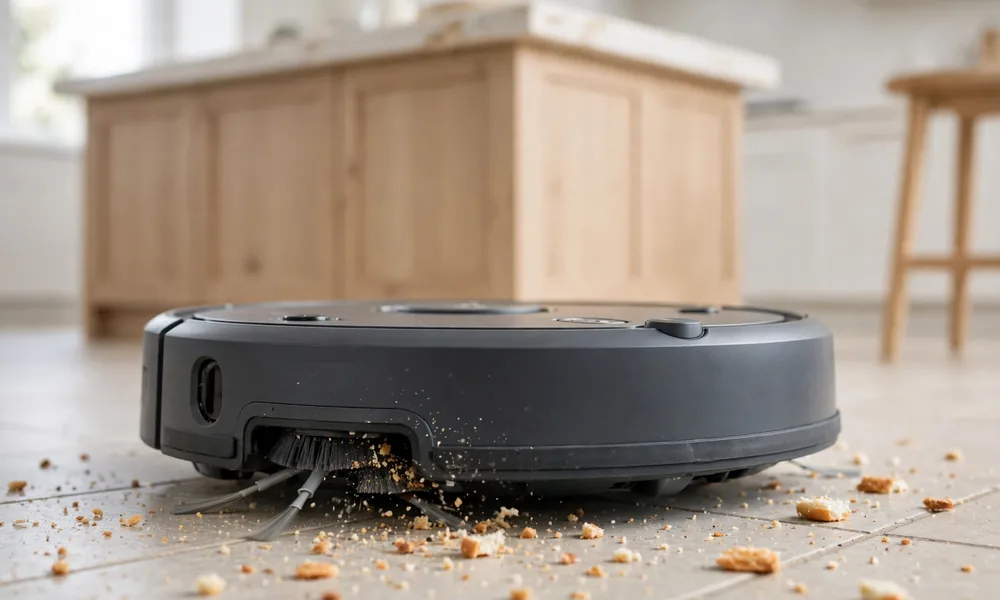
Crumbs are the obvious problem: toast under the table, rice from dinner, leaves that missed the plate. Then there is the wet mess, a splash of milk, a drip of oil, a smear of jam on the tile. A vacuum-only robot smears these around or ignores them, which is why mopping is a core requirement here, not a bonus. If you want a dedicated mopping comparison, our guide to robot mops built for kitchens covers machines that specialise in wet cleaning.
Navigation is the third challenge. Four chairs, a table, an island, a bin and a pet bowl can all sit within a few square metres. Older bump-and-turn robots bounce around these obstacles and miss the strips of floor between chair legs. Modern LiDAR navigation maps the room properly and cleans in straight lines.
What to Look for in a Kitchen Robot Vacuum
Suction Power and Brush Design
Suction matters most on hard floors, where fine dust and crumbs can be blown away by a weak machine. Look for adjustable suction that ramps up on concentrated debris, and a rubber brush roller, which resists hair tangles and wipes clean easily.
Mopping That Actually Cleans
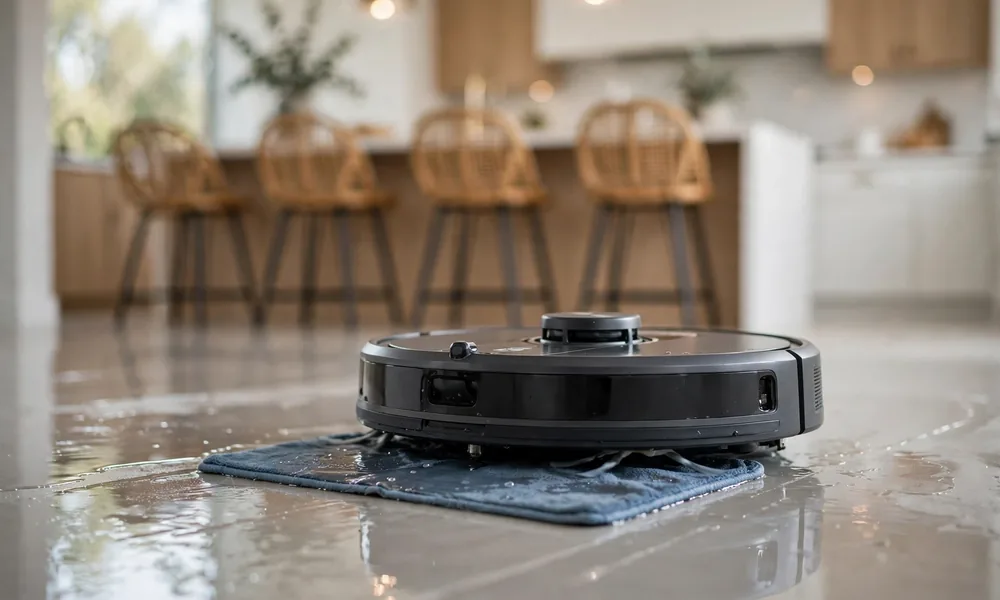
A pad that simply drags a damp cloth behind the vacuum will freshen a floor, but it will not lift dried sauce or coffee stains. Better systems use rotating or vibrating pads that press down with real force, and the best models lift their pads on carpet so they can vacuum a rug and mop tile in one run.
Navigation and Obstacle Avoidance
LiDAR navigation is the single most important upgrade for a kitchen: it builds an accurate map, cleans in efficient rows, and lets you set no-go zones around the pet bowl. Obstacle avoidance is the second half: a robot that recognises a dropped sock, a cable or a pet accident and steers around it saves you from far more mess than one that ploughs through everything.
Self-Emptying and Low Maintenance
A kitchen robot vacuum fills its dustbin fast: daily crumbs, dust and hair can fill a small onboard bin in a single run. A self-emptying dock sucks the debris into a larger bag in the base, letting the robot run for weeks without attention.
Battery Life and Noise
Most kitchens are small enough that battery life is rarely the limiting factor, but a robot that finishes the kitchen, hallway and dining area on one charge is more useful than one that recharges mid-clean. Noise matters too, since the kitchen is where people cook, talk and eat, and a quiet robot is a genuine improvement in open-plan homes.
The Best Robot Vacuums for Kitchens in 2026
The models below are the strongest all-round choices for kitchen floors in 2026. Each one vacuums and mops and handles the daily mix of crumbs, dust and spills that defines kitchen cleaning.
Best Overall: A Flagship Vacuum-Mop Combo
The best overall kitchen robot vacuum is a flagship vacuum-mop combo with LiDAR navigation, strong suction, rotating mop pads and a dock that also washes the pads. These top-tier machines clean in neat rows, detect carpet and lift their pads automatically, and return to the dock to empty the dustbin and rinse the pads unaided.
The trade-off is price and size: flagship docks are large, sometimes as wide as a small kitchen bin, and they need a clear patch of wall with a power outlet. If your kitchen has the space, schedule a clean after dinner and the floor is ready for breakfast.
Best Value: A Mid-Range LiDAR Model
A mid-range LiDAR model is the sweet spot for most kitchens. You get accurate mapping, room-by-room scheduling, solid suction and a basic mopping system at roughly half the price of a flagship. The mop is usually a vibrating or pressure pad rather than rotating pads, which handles fresh spills well even if it struggles with dried-on stains. The dock is smaller and simpler, often with self-emptying but without mop washing.
Best for Hard Floors: A Suction-First Specialist
If your kitchen has hardwood, tile or luxury vinyl throughout, a suction-first specialist is worth a close look. These models spend their budget on airflow, brush design and edge cleaning rather than fancy mopping hardware, and they pick up fine dust from grout lines better than most all-rounders. If your floors are mostly wood, our guide to robot vacuums for hardwood floors goes deeper on the models that protect and clean wood best.
Best for Pet Owners: A Hair-Tangle Resistant Model
Kitchens with pets face a double challenge: pet hair everywhere and food and water bowls that attract it. A pet-focused robot vacuum uses anti-tangle brush rollers and strong suction, and the anti-tangle design is key, because a brush wrapped in hair loses suction fast. For a fuller comparison, see our guide to robot vacuums for pet owners.
Best Compact Pick: A Slim Model for Tight Kitchens
Small and galley kitchens need a slim, compact robot. A low-profile model fits under low cabinets and navigates narrow gaps a taller flagship cannot enter. Compact models have smaller dustbins and shorter battery life, but in a small kitchen neither matters much. Look for one with LiDAR navigation, because random-navigation models miss too much in a tight space.
Comparison Table
| Pick | Best For | Vacuum and Mop | Navigation | Price Tier |
|---|---|---|---|---|
| Flagship vacuum-mop combo | Overall kitchen cleaning | Strong suction, rotating pads, self-washing dock | LiDAR with obstacle avoidance | Premium |
| Mid-range LiDAR model | Best value | Good suction, vibrating pad, self-emptying dock | LiDAR mapping | Mid-range |
| Suction-first specialist | Hardwood and tile floors | Excellent suction, basic mopping | LiDAR mapping | Mid-range |
| Pet-focused model | Homes with pets | Anti-tangle brush, strong suction | LiDAR with obstacle avoidance | Mid-range to premium |
| Compact slim model | Small and galley kitchens | Good suction, simple mopping | LiDAR or laser navigation | Budget to mid-range |
Kitchen Floor Types and What They Demand
Tile is the most common kitchen floor, and it is forgiving: grout lines trap fine dust, so strong suction and a good edge brush matter most. Tile tolerates water, so a vibrating or rotating mop pad works well on it.
Hardwood and laminate need a gentler approach: too much water can damage wood, so a robot with adjustable water flow and a mop-lift feature is important, and it should never leave standing water behind. Luxury vinyl and stone sit in the middle: they handle water well but hide dust poorly, so use both strong suction and regular mopping.
How to Set Up Your Robot Vacuum for the Kitchen
A good robot vacuum still needs a good setup. Spend twenty minutes getting this right and the machine will clean better every day.
Give the Dock a Proper Home
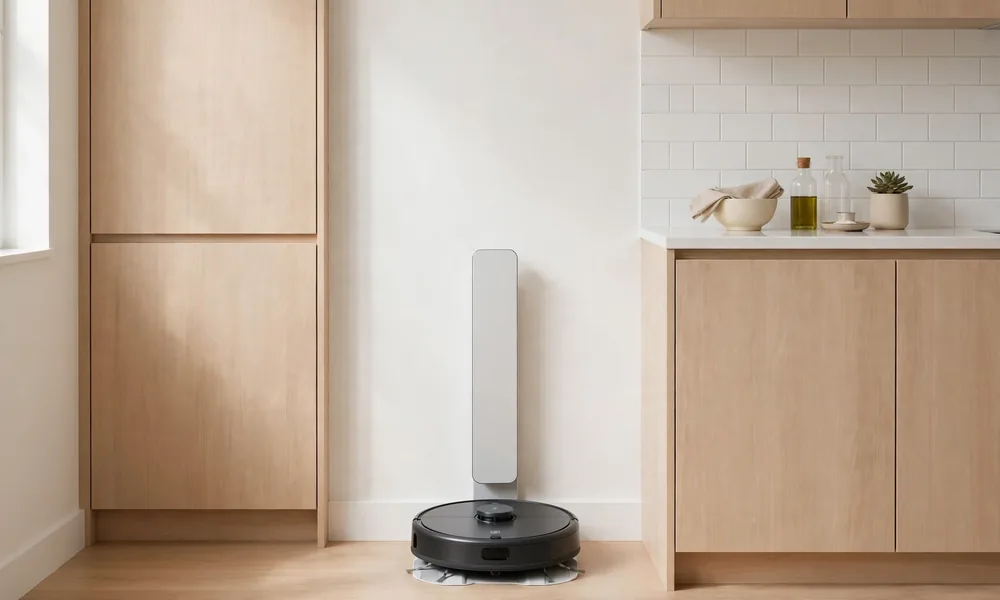
Place the dock against a wall with clear space around it, away from the cooker and sink, near a power outlet. Avoid tucking it behind the bin, where the robot will struggle to find it.
Map the Kitchen on a Quiet Day
Run the first mapping pass when the kitchen is tidy. The robot will build a more accurate map, and you can then set no-go zones around the pet bowls and schedule a daily clean after dinner.
Kitchen Robot Vacuum Checklist
- Clear cords, small rugs and lightweight mats from the floor.
- Move pet food and water bowls into a no-go zone.
- Push chairs in or set the table area as a separate zone.
- Check the dustbin, filter and brushes weekly, and rinse the mop pads.
- Set water flow low on wood floors and medium on tile.
- Schedule a daily run after the last meal, and a deeper run twice a week.
Mistakes to Avoid With a Kitchen Robot Vacuum
The most common mistake is expecting the robot to replace all floor cleaning. It is a daily maintenance tool, not a deep cleaner: it keeps crumbs and dust under control, but it will not scrub a dried-on spill that has been there for three days. A quick manual mop once a week still matters.
The second mistake is running the robot on a wet floor: soak up a large fresh spill first, because a vacuum through a puddle can damage the machine and spread the mess. The third is ignoring maintenance: a clogged filter or hair-wrapped brush quietly cuts cleaning performance in half.
Frequently Asked Questions
Can a robot vacuum handle kitchen grease and sticky spills?
A robot vacuum with a proper mopping system can handle light grease and fresh sticky spills, especially models with rotating or vibrating mop pads. Dried-on grease still needs manual cleaning first.
Do robot vacuums work on kitchen rugs and runners?
Yes, most modern robot vacuums handle low-pile kitchen rugs and runners well, and the best models detect carpet, increase suction, and lift their mop pads so the rug stays dry. For troublesome rugs, use rug tape or a no-go zone.
How often should a robot vacuum clean the kitchen?
Daily is ideal, and a short run after dinner covers the worst of the day’s mess. Homes with children or pets benefit from two short runs a day, plus a longer session twice a week.
Is a self-emptying dock worth it for a kitchen?
Yes, more than in any other room: kitchen debris fills a small dustbin quickly, and a full bin means the robot stops picking up dirt properly. A self-emptying dock lets it run for weeks without attention.
Will a robot vacuum fall down kitchen steps or get stuck under cabinets?
Modern robot vacuums have cliff sensors that stop them falling down steps, and LiDAR navigation helps them avoid getting stuck under low cabinets. Problems usually come from loose items on the floor, such as cables or socks.
Can I use a robot vacuum in a kitchen with pets?
Yes, and kitchens with pets are one of the best use cases, because pet hair and food crumbs accumulate fast. Choose anti-tangle brushes and strong suction, and set a no-go zone around the food and water bowls.
The Bottom Line
The best robot vacuums for kitchens treat the kitchen as a distinct challenge, not just another room. Strong suction for crumbs, a real mopping system for spills, LiDAR navigation for tight spaces, and a self-emptying dock for daily use are the four features that matter most. A flagship vacuum-mop combo is the best overall choice, a mid-range LiDAR model is the best value, and a suction-first specialist is the smartest pick for hardwood floors. Set it up properly and run it daily after meals.