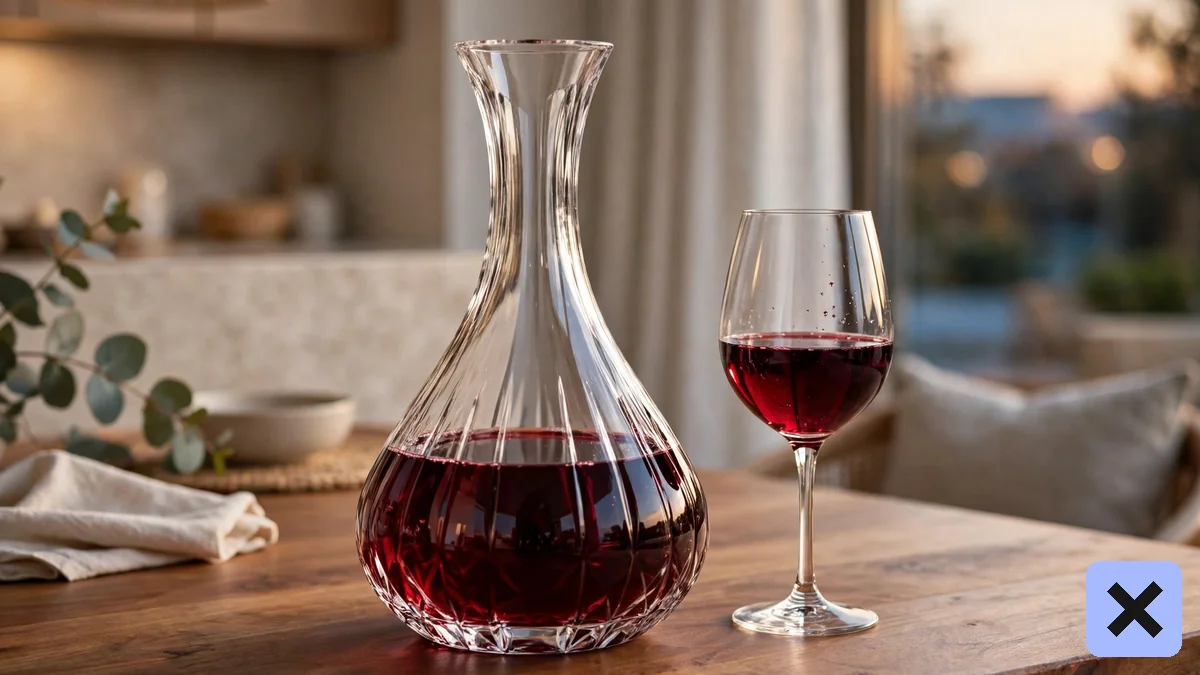
The best wine decanters for home turn an ordinary bottle into a better glass of wine. A good decanter lets a young red breathe so its aromas open up, and it keeps the sediment of an older bottle out of your glass. A tight, tannic Cabernet that tastes closed straight from the bottle can soften after thirty to sixty minutes in a decanter.
Choosing one is harder than it looks. Decanters come in dozens of shapes, and the shape genuinely matters: a wide base exposes more wine to air, which suits bold young reds, while a narrower vessel protects delicate older wines from over-oxidising.
This guide compares the best wine decanters for home in 2026 across every budget, from dependable glass under fifty dollars to hand-blown crystal. Every pick was chosen for how well it aerates, how easy it is to pour and clean, and how good it looks on the table.
Key takeaways
- Wide-bottomed decanters aerate young, tannic reds fastest; narrow decanters suit older, delicate wines.
- A 750 ml bottle needs a decanter of at least one litre so you can swirl without spilling.
- Lead-free crystal is lighter and clearer than standard glass, but good borosilicate glass performs just as well for everyday use.
- Most red wines improve with 30 to 60 minutes in a decanter; wines over 15 years old usually need 15 to 30 minutes at most.
- A wide opening is far easier to clean and dry than a narrow neck, so check it before you buy.
What Makes a Great Wine Decanter
Four details separate the great decanters from the decorative ones. The first is surface area: aeration happens where wine meets air, so a broad base that spreads the wine into a thin layer works faster than a tall, narrow vessel. That is why the classic ship’s decanter remains the standard for young reds.
The second detail is the neck. A long, narrow neck makes pouring more controlled, which helps with older wines, but it also makes cleaning a chore. A mouth of around two inches is the sweet spot: easy to fill, pour, and wash. The third detail is balance: a decanter full of wine weighs close to two kilograms, so a low centre of gravity matters. Finally, material: lead-free crystal is thin, clear, and light, while borosilicate glass is tougher and cheaper. Either works, as long as the glass is completely clear.
The Best Wine Decanters for Home in 2026
The decanters below cover the full range of home use, from an affordable first decanter to a hand-blown showpiece. Each holds a full bottle comfortably and is made from lead-free crystal or high-quality glass.
| Decanter | Capacity | Material | Best for | Price range |
|---|---|---|---|---|
| Riedel Cabernet Decanter | 1.25 litres | Lead-free crystal | Bold young reds | $100–$150 |
| Le Chateau Wine Decanter | 1.2 litres | Lead-free crystal | Everyday value | Under $50 |
| Zalto Denk’Art Axium Decanter | 1 litre | Hand-blown crystal | Fine and aged wines | $200+ |
| Wine Enthusiast U-Decanter | 1 litre | Lead-free crystal | Easy pouring and cleaning | $50–$100 |
| Crate & Barrel Marin Decanter | 1.1 litres | Glass | Modern homes | Under $50 |
| Rabbit Wine Decanter | 1.25 litres | Glass | First-time buyers | Under $50 |
Riedel Cabernet Decanter: Best Overall
Riedel has made wine glassware for over two centuries, and its Cabernet decanter shows it. The wide, flat base spreads a young Cabernet Sauvignon, Syrah, or Nebbiolo across a large surface, so the wine opens up in twenty to thirty minutes rather than an hour. The long neck gives a secure grip and a controlled pour, and the 1.25-litre capacity leaves room to swirl. The drawback is the narrow neck, which needs a brush or cleaning beads.
Le Chateau Wine Decanter: Best Value
The Le Chateau is the best value pick of 2026: its wide base aerates young reds effectively, its 1.2-litre capacity fits a full bottle with room to spare, and the lead-free crystal is clearer and lighter than the thick glass used by most budget decanters. It also comes with a pouring spout and cleaning beads in the box.
Zalto Denk’Art Axium Decanter: Best Premium Pick
Zalto glassware is hand-blown in Austria, and the Axium is a piece of functional sculpture. It is astonishingly light and thin, with an angled shape that increases the surface area of the wine while keeping the vessel stable. The wide, flat section of the bowl exposes a large area of wine to air, so it genuinely works as well as it looks. This is the decanter for collectors and fine, aged wines, and it should always be washed by hand.
Wine Enthusiast U-Decanter: Easiest to Clean
The U-shaped decanter solves the biggest annoyance of decanter ownership: cleaning. Its wide, open curve lets you reach inside with a sponge, and it dries far faster than a closed-neck design, which makes it the most practical choice for anyone who decants several times a week.
Crate & Barrel Marin Decanter: Best Modern Design
The Marin is the pick for modern homes. Its clean, sculptural silhouette looks like a design object rather than traditional glassware, and it sits happily on an open shelf or sideboard between uses. The glass is thick enough to feel substantial but light enough to pour one-handed, and the wide mouth makes filling and cleaning straightforward.
Rabbit Wine Decanter: Best for First-Time Buyers
If you have never owned a decanter, the Rabbit is the safest first buy. It is affordable and sturdy, shaped in the classic wide-base style that aerates well, so you will notice the difference in your wine immediately. The glass is thicker than crystal, which makes it more forgiving if it gets knocked, and the 1.25-litre capacity handles a full bottle with room to swirl.
How to Choose the Right Decanter for Your Home
Start with what you drink. If you lean towards bold young reds such as Cabernet Sauvignon, Syrah, Malbec, and Barolo, a wide-bottomed ship’s decanter is the right tool: maximum surface area, fastest aeration. If you mostly open older wines, choose a narrower decanter, because an old wine can fade quickly with too much air.
Consider the glassware it will sit beside. The right glass does as much for a wine as the decanter itself, so pair your decanter with the best wine glasses for home when you are building a home wine setup from scratch.
Size and Capacity
A standard bottle holds 750 ml, but never buy a decanter that holds exactly 750 ml. You need headroom to swirl and pour without spilling, so one litre is the practical minimum and 1.25 litres is the comfortable standard.
Shape and Aeration
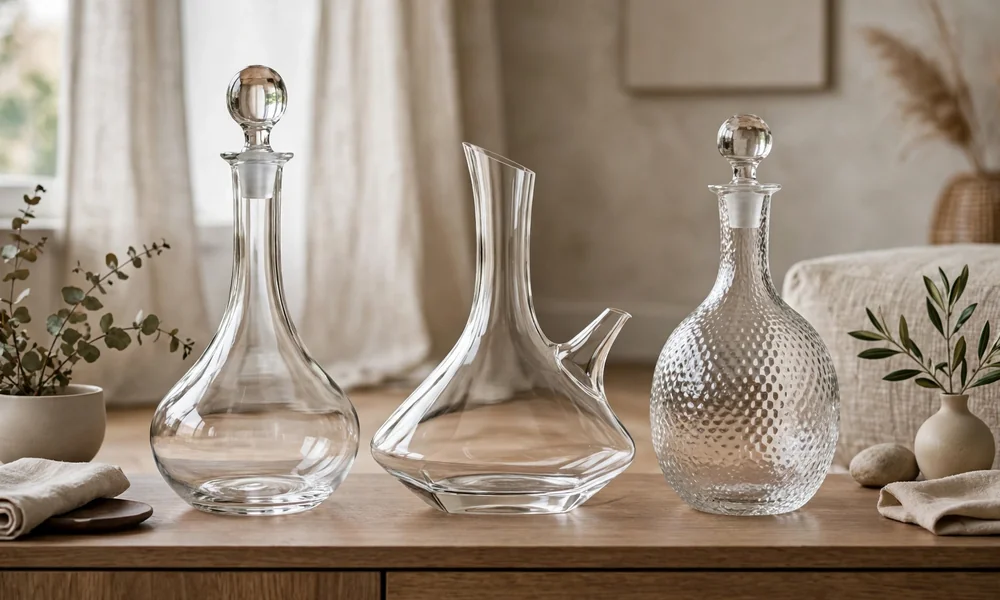
Shape is the main lever on aeration speed. A wide base spreads wine thin and opens it fast, which suits tannic young reds. A tall, narrow decanter exposes less surface and works slowly, which suits delicate older wines. Duck-shaped and swan-neck decanters sit in the middle: they look striking, but they are harder to clean. If you only buy one decanter, choose a wide-based ship’s shape.
Material: Crystal vs Glass
Lead-free crystal is thinner, clearer, and lighter than standard glass, and it shows the colour of the wine without distortion. Borosilicate glass is heavier and thicker, but it is tougher, cheaper, and more resistant to chipping, which makes it the better everyday material. Avoid lead crystal, which still appears in vintage pieces, and avoid coloured glass, which hides the wine.
Cleaning and Storage
A decanter you cannot clean is a decanter you will stop using, so check the neck before you buy. Wide-mouthed decanters wash with a sponge and dry upside down on a rack. Narrow-necked designs need a long brush or cleaning beads swirled with warm water. Store the decanter upright and uncovered so air circulates inside; a stopper traps moisture.
How to Decant Wine Properly
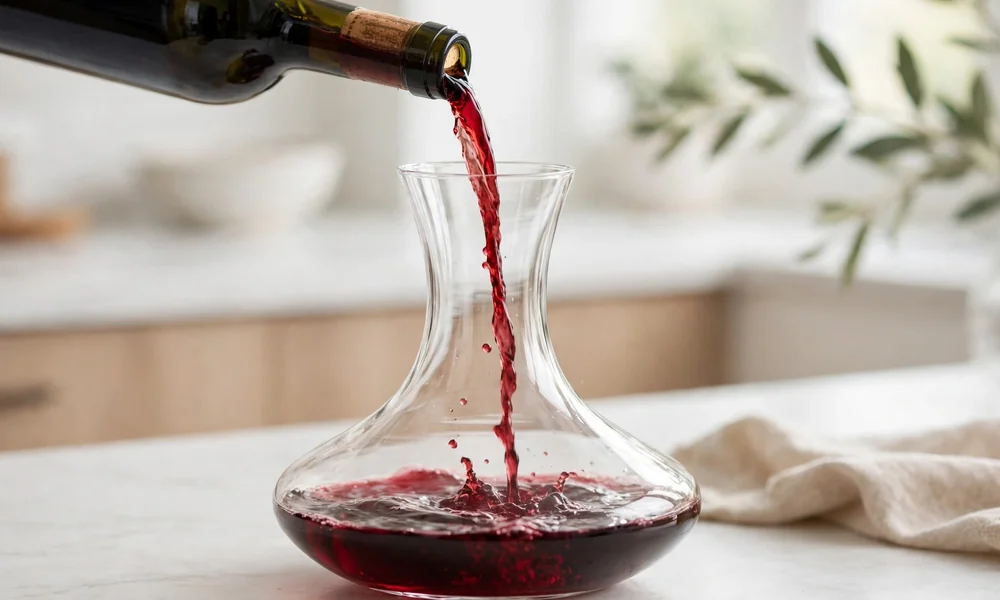
Stand the bottle upright for a few hours before opening, ideally overnight, so the sediment settles at the bottom. Pour the wine into the decanter in one steady stream, holding a light under the neck as you reach the last third, so you can see the sediment approaching and stop before it flows in.
Once poured, swirl gently and leave the wine to breathe. Young, tannic reds usually need thirty to sixty minutes. Full-bodied whites such as white Burgundy or oaked Chardonnay benefit from fifteen to twenty minutes. Old wines, over fifteen years, should be decanted just before serving and drunk within an hour.
Temperature matters as much as time. A decanted wine warms up faster than a bottled one, so start slightly cooler than your target, around 16 to 18 degrees Celsius for most reds. Pairing your decanter with the best wine chillers for home is the easiest way to hold it at serving temperature once opened.
Which Wines Benefit Most from Decanting
Young red wines gain the most. Cabernet Sauvignon, Syrah, Nebbiolo, Tempranillo, and Malbec under ten years old are often tight and tannic on opening, and an hour in a decanter softens their edges and lifts their fruit. Full-bodied whites such as oaked Chardonnay also improve with a short spell in a decanter.
Older red wines are decanted for a different reason: to separate the wine from its sediment rather than to aerate it. A twenty-year-old Bordeaux or Barolo should be poured slowly and served within the hour. Light wines such as Pinot Noir and Beaujolais need little or no decanting, and sparkling wines should never be decanted, since the process strips away their bubbles. For a celebration, the best sparkling wines are best opened, chilled, and poured straight into the glass.
Checklist: Before You Buy a Wine Decanter
- Capacity of at least one litre, ideally 1.25 litres, so a full bottle fits with room to swirl.
- Wide base for fast aeration if you drink young reds; narrower shape for older wines.
- Lead-free crystal or borosilicate glass, completely clear with no tint.
- Mouth wide enough for your hand or a cleaning brush.
- Low centre of gravity and a comfortable grip, so a full decanter pours steadily.
- A height and footprint that fits your table and your storage shelf.
Frequently Asked Questions
How long should wine stay in a decanter?
Most young reds need thirty to sixty minutes. Lighter reds and full-bodied whites need fifteen to thirty minutes. Wines older than fifteen years should be decanted just before serving and finished within an hour.
Can you decant white wine?
Yes. Full-bodied whites such as oaked Chardonnay and white Burgundy gain texture and aroma from fifteen to twenty minutes in a decanter. Light whites such as Sauvignon Blanc rarely need it, and sparkling wine should never be decanted.
Do cheap decanters work as well as expensive ones?
For aeration, yes. A well-shaped glass decanter under fifty dollars aerates wine just as effectively as a hand-blown crystal piece. Higher prices buy thinner, lighter crystal and finer craftsmanship, not better aeration.
How do you clean a wine decanter?
Rinse with warm water immediately after use, add a drop of mild washing-up liquid, and swirl. For narrow necks, use a long brush or cleaning beads. Rinse, drain upside down, and air dry uncovered.
Should you decant wine straight from the fridge?
No. Let the bottle come up towards serving temperature first, around 16 to 18 degrees Celsius for reds. Decanting cold wine slows aeration, and the wine warms quickly once spread across the base.
Can a decanter be used for spirits or water?
Yes, a glass decanter works well as a water carafe or for serving spirits, though spirits do not benefit from aeration the way wine does. Wash it thoroughly between uses so no flavour carries over.
The Bottom Line
The best wine decanters for home are the ones you will actually use: a wide base, a litre or more of capacity, clear lead-free material, and a mouth you can clean without a special tool. The Riedel Cabernet is the best all-round choice for bold reds, the Le Chateau is the best value for everyday drinking, and the Zalto Axium is the showpiece for special bottles. Pick the shape that matches what you drink.


