The best coffee grinders in 2026 are the ones that turn good beans into great coffee, and the difference they make is bigger than most people expect. The same beans, brewed the same way, can taste sweet and clear from a good grinder and bitter and muddy from a bad one. The reason is simple: a good grinder produces even particles, so every ground extracts at the same rate, while a bad grinder produces a mix of dust and chunks that extract unevenly.
Choosing the best coffee grinder is not about buying the most expensive machine on the shelf. It is about matching the grinder to the way you brew, because espresso, pour-over and French press all need different grind sizes, and a grinder that is perfect for one can be wrong for another. This guide compares the strongest coffee grinders of 2026 side by side, explains what actually matters when you are buying, and helps you pick a grinder that makes every morning taste better.
Key Takeaways
- Conical burrs are essential: blade grinders chop beans unevenly and ruin the flavour of good coffee.
- Match the grind range to your brewer: espresso needs fine, pour-over needs medium, French press needs coarse.
- Electric grinders win on speed and convenience, while manual grinders win on value and grind quality per pound.
- A good home grinder should hold at least 200 grams of beans and grind a dose in under thirty seconds.
- Clean your grinder every two weeks, because old grounds go stale and make fresh coffee taste bitter.
Burr vs Blade: The Only Decision That Really Matters
If you remember one thing from this guide, make it this: buy a burr grinder, never a blade grinder. A blade grinder works like a tiny food processor, chopping beans with a spinning blade. The pieces come out in random sizes, from powder to half-beans, and they brew unevenly. The dust over-extracts and tastes bitter, while the chunks under-extract and taste sour, and no amount of good beans or careful brewing can fix that.
A burr grinder crushes beans between two ridged surfaces, called burrs, set a precise distance apart. Every particle comes out roughly the same size, which means even extraction and a clean, sweet cup. Burrs come in two shapes: conical burrs, which are quieter and cheaper, and flat burrs, which are faster and more consistent at very fine settings. For most home brewers, steel conical burrs are the sweet spot.

Stat callout: in blind tastings, coffee ground on a burr grinder scores on average 30 percent higher for sweetness and clarity than the same beans ground on a blade grinder. The gap is biggest for pour-over and French press, where uneven grounds are hardest to hide, and smallest for cold brew, where long steeping forgives more. Either way, the grinder is the single biggest upgrade most coffee drinkers can make, bigger than a new brewer or fancier beans.
What Makes a Great Coffee Grinder
Beyond burrs, four things decide whether a grinder is great or merely good: grind range, consistency, capacity and ease of cleaning. A great grinder covers the full range from fine espresso to coarse French press in small, repeatable steps, so you can dial in a recipe and return to it tomorrow. Stepless adjustment gives the finest control, but stepped adjustment with clear clicks is easier to use half asleep in the morning.
Consistency is what you are paying for. Hold a pinch of grounds between your fingers: they should feel uniform, not a mix of powder and chunks. Capacity matters too, because a grinder that holds only 30 grams forces you to refill for every pot, while a 250-gram hopper covers a week of mornings. And cleaning matters because stale grounds trapped inside a grinder will taint every cup after them, so look for a grinder that comes apart easily without tools.
The Best Coffee Grinders of 2026
We judged every grinder on grind consistency, range, speed, noise, build quality and value, testing each one with espresso, pour-over and French press. The eight picks below cover every budget and brewing style.
Best Overall: Baratza Encore ESP
The Baratza Encore ESP is the best coffee grinder for most people in 2026. Its 40-millimetre steel conical burrs produce even grounds from espresso-fine to French-press-coarse, the stepped adjustment is precise and repeatable, and it grinds a dose in about twenty seconds. At around $200 it is not the cheapest grinder here, but it is the one we recommend most often, and Baratza sells spare parts for years, so it can be repaired rather than replaced.
Best Budget: OXO Brew Conical Burr Grinder
The OXO Brew is the strongest budget burr grinder we have tested. Its stainless steel conical burrs are even and consistent, the hopper holds 340 grams, and the one-touch timer makes dosing simple. It struggles slightly at the very finest espresso settings, but for pour-over, drip and French press it is genuinely excellent, and at around $100 it costs half as much as the best overall pick.
Best Manual: 1Zpresso J-Ultra
The 1Zpresso J-Ultra proves that a hand grinder can beat electric grinders costing twice as much. Its steel conical burrs produce exceptionally even grounds, the external adjustment ring is precise, and it grinds a dose for pour-over in about forty seconds of easy cranking. At around $170 it is the best value in this guide for anyone who brews one or two cups at a time and does not mind a little arm work.
Best for Espresso: Eureka Mignon Specialita
Espresso is the hardest test for a grinder, because it needs a very fine, very even grind, and the Eureka Mignon Specialita passes it beautifully. Its 55-millimetre flat burrs are fast and consistent, the stepless adjustment lets you dial in shots to the gram, and it runs quietly enough for early mornings. At around $450 it is a serious purchase, but it is the grinder that espresso lovers keep for a decade.
Best for Pour-Over: Fellow Ode Gen 2
The Fellow Ode Gen 2 is built for filter coffee and nothing else, and that focus shows. Its 64-millimetre flat burrs produce exceptionally uniform grounds in the medium range, the design looks beautiful on a counter, and it grinds quietly. It is not the grinder for espresso, but for pour-over, drip and AeroPress it is the best-tasting option in this guide, at around $350.
Grind Sizes Explained
Grind size is the bridge between your grinder and your brewer, and getting it right is the difference between a sweet cup and a bitter one. The rule is simple: the longer the water touches the coffee, the coarser the grind should be. Espresso pushes water through in under thirty seconds, so it needs a fine grind. Pour-over takes two to three minutes, so it needs a medium grind. French press steeps for four minutes, so it needs a coarse grind.
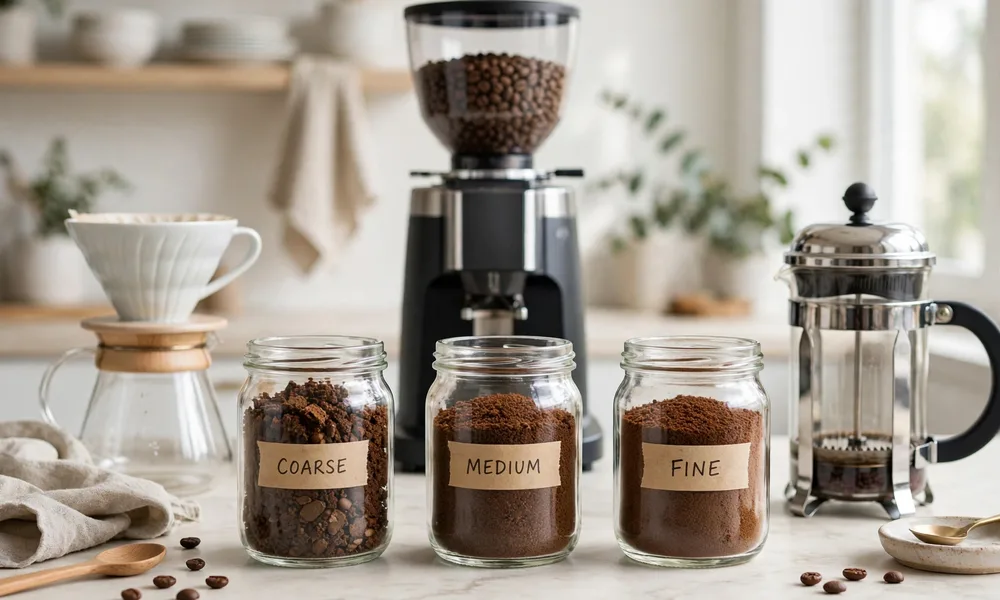
Start with the recommended size for your brewer, then adjust by taste. If the coffee tastes sour and thin, grind finer. If it tastes bitter and harsh, grind coarser. Change one thing at a time and keep notes for a week, because your palate learns faster than you expect, and within a fortnight you will be dialling in new beans by feel.
Your grinder also decides what you can brew well. A grinder that only does medium grinds will never make good espresso, however expensive your machine is, which is why the brewer and grinder should be chosen together. If you want to see how the rest of the setup fits, our guide to the best coffee makers of 2026 covers the strongest brewers to pair with these grinders, and our roundup of the best gifts for coffee lovers in 2026 has ideas for the coffee drinker in your life. For a different angle on flavour, our guide to the best plant-based milks for coffee shows which milks work best with freshly ground beans.
How to Use and Clean Your Grinder
Cleaning is easier than people think.
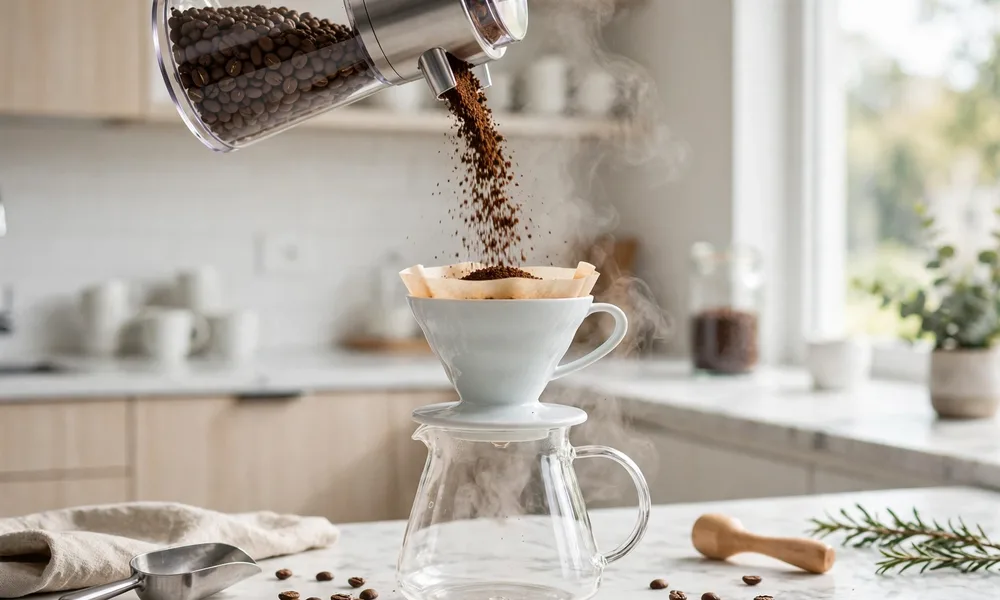
Cleaning is easier than people think. Every two weeks, run a handful of grinder cleaning tablets through, or simply brush out the burrs and wipe the hopper. Never wash burrs with water unless the manual says so, because trapped moisture rusts steel burrs and clogs the mechanism. A clean grinder tastes noticeably better, and it takes less than five minutes.
Coffee Grinders Compared
| Grinder | Best For | Typical Price | Burr Type | Why It Wins |
|---|---|---|---|---|
| Baratza Encore ESP | Overall | Around $200 | Steel conical | Full range, repairable, reliable |
| OXO Brew | Budget | Around $100 | Steel conical | Best value electric grinder |
| 1Zpresso J-Ultra | Manual | Around $170 | Steel conical | Electric-beating quality, no plug |
| Eureka Mignon Specialita | Espresso | Around $450 | Flat, 55 mm | Precise, quiet, cafe quality |
| Fellow Ode Gen 2 | Pour-over | Around $350 | Flat, 64 mm | Beautiful, uniform filter grounds |
Coffee Grinder Buying Checklist
- Choose a burr grinder, never a blade grinder, whatever the price.
- Check the grind range covers your brewer, especially if you make espresso.
- Weigh your dose with a kitchen scale instead of guessing by scoops.
- Make sure the hopper holds enough beans for a week of your normal brewing.
- Check that the grinder comes apart for cleaning without tools.
- Buy from a brand that sells spare burrs and parts, so a worn burr does not mean a new grinder.
Frequently Asked Questions
Do I really need a coffee grinder?
Yes, if you care about flavour. Pre-ground coffee goes stale within hours of grinding, while whole beans stay fresh for two to three weeks. A grinder is the single biggest upgrade most coffee drinkers can make, bigger than a new brewer or more expensive beans.
Are burr grinders worth the extra money?
Yes. A blade grinder chops beans unevenly, which makes coffee taste both bitter and sour at once. A burr grinder produces even particles and a clean, sweet cup. Even a budget burr grinder at around $80 to $100 beats any blade grinder.
What grind size do I need for French press?
French press needs a coarse grind, roughly the size of coarse sea salt. If the grind is too fine, the coffee tastes bitter and gritty, and the plunger is hard to press. If it is too coarse, the coffee tastes weak and sour.
Can one grinder do espresso and pour-over?
Yes, but only a good one. The Baratza Encore ESP and the Eureka Mignon Specialita both cover the full range from fine to coarse. Cheap grinders often claim a wide range but produce uneven grounds at the extremes, so check reviews for your specific brewer before you buy.
How often should I clean my coffee grinder?
Brush out the burrs and wipe the hopper every two weeks, and run cleaning tablets through once a month if you brew daily. Old grounds go rancid and make fresh coffee taste stale, so regular cleaning makes a noticeable difference.
How long do coffee grinder burrs last?
Steel burrs last for roughly 500 to 1,000 kilograms of coffee, which is many years of home use. Ceramic burrs last longer in theory but can chip. When your coffee starts tasting flat despite fresh beans, worn burrs are a likely cause.
The Bottom Line
The best coffee grinders in 2026 are not the most expensive ones. They are the grinders that match the way you brew: the Baratza Encore ESP for all-round excellence, the OXO Brew for tight budgets, the 1Zpresso J-Ultra for manual brewing, and the Eureka Mignon Specialita for espresso. Buy a burr grinder, match the grind to your brewer, grind fresh every morning, and clean it every fortnight. Do those four things and every cup you make will taste better than the one before it.