A comb is the simplest tool in the bathroom, and it is also the one most people get wrong. It costs very little, it has no battery and no moving parts, and yet the wrong comb can snap hair, pull out curls, scratch a scalp and turn a two-minute routine into a daily argument with a mirror. The best combs of 2026 are not the most expensive ones. They are the ones with smooth, seamless teeth, the right spacing for your hair, a handle you can hold without slipping, and a material that does not build up static or snag on every knot.

What a Comb Does That a Brush Cannot
A brush is made to smooth, shine and style. A comb is made to separate, detangle and place hair exactly where you want it. That difference matters most on wet hair. Wet hair is weaker than dry hair, because water swells the shaft and stretches the bonds inside it, and a brush with dozens of pins can snap it easily. A comb with a few smooth teeth spreads the force, slides through a knot instead of tearing it, and leaves far less hair in the sink.
A comb is also more precise. It can part hair in a straight line, section hair for styling, smooth a fringe without flattening it, and work product through from root to tip without moving everything else. A brush spreads product and smooths the surface, but it cannot draw a clean part or separate a single curl. If you already own a good brush, a comb does not replace it, and our guide to choosing a hairbrush that actually helps your hair explains when a brush is the better tool. For detangling, parting and careful styling, though, the comb wins.
How to Choose: Tooth Spacing First
Tooth spacing is the first decision, and it matters more than brand or price. Wide teeth, with gaps of several millimetres, are for wet hair, curly hair and thick hair. They pass through without pulling curls apart, they do not force knots tighter, and they are the only sensible choice straight out of the shower. If your hair tangles easily, or if you have curls or coils, start here and do not be talked into anything finer.
Medium teeth suit most people most of the time. They detangle dry hair, smooth the surface after brushing, and work well for straight or slightly wavy hair that is neither very fine nor very thick. A medium-tooth comb is the everyday comb, the one that lives on the dressing table and gets used every morning, and it is the safest first comb if you are only buying one.
Fine teeth are for styling, not detangling. They are for smoothing a part, tidying a fringe, neatening short hair, and creating a polished finish on straight hair. Used on knots, they will snag, pull and break hair, because the teeth are too close together to pass through a tangle. Keep a fine-tooth comb for finishing, and never use it as your first tool on tangled hair.
Wide-Tooth Combs: The Gentlest Option
A good wide-tooth comb has teeth that are smooth from base to tip, with no seam, ridge or rough edge. Run your finger along a tooth before you buy it, or along the edge of the comb if you already own it. A moulded plastic comb with a visible seam down the middle of each tooth will catch hair every time it passes, and that catching is what causes frizz, split ends and breakage over weeks and months. A seamless comb, whether it is made from plastic, wood or carbon, glides.
Fine-Tooth Combs and Clean Parts
A fine-tooth comb earns its place in a different way. It is the tool for a straight part, a smooth fringe and a neat finish on short hair. The teeth should be evenly spaced and the same length, and the spine should be stiff enough that it does not bend when you press it against the scalp. A comb that bends will draw a wavy part, and a comb with uneven teeth will leave stray hairs sticking up.

Detangling Combs: For Knots Without Tears
A detangling comb sits between wide and medium. Its teeth are usually longer, more flexible, and spaced to work through knots gradually rather than forcing them apart. The best ones flex a little when they meet a knot, so they ease through it instead of snapping the hair. That flexibility is worth paying for if your hair tangles every day, if you have children whose hair knots easily, or if you swim and your hair tangles after every session.
Technique matters as much as the comb. Always start at the ends and work upward, clearing the bottom few centimetres first, then moving higher. Starting at the roots pushes every knot down into a single tight ball at the ends, and that ball is what breaks. Hold the hair above the knot with your other hand, so the comb is not pulling on the scalp, and work in small sections. A good detangling comb makes this easy, but even the best comb cannot undo a knot that has been forced from the top down.
Materials: Plastic, Carbon and Metal
Plastic combs are the most common, and the best ones are seamless, smooth and slightly flexible. Cheap plastic combs are the worst, because the moulding leaves a seam that snags hair, and the plastic can crack and leave a sharp edge. If you buy plastic, choose a comb that feels smooth all over, with no rough line down the teeth, and replace it as soon as it cracks.
Carbon combs are the professional choice. They are made from a carbon fibre mix that is strong, heat resistant and almost free of static, so they are the comb to use with a hairdryer, straighteners or hot styling tools. They are usually more expensive than plastic, but they last for years, they do not bend out of shape, and they are the best option if you style with heat every day. Metal combs, usually stainless steel or aluminium, are also heat resistant and very durable, but they can feel cold and hard on the scalp, and a cheap metal comb with rough teeth will snag. Choose metal only if the teeth are polished smooth.
Combs by Hair Type
Curly and coily hair needs a wide-tooth comb, used on wet hair with conditioner, and nothing finer until the hair is dry and styled. Combing curly hair dry pulls the curls apart, creates frizz and breaks the curl pattern, so the rule is simple: wet, wide and gentle, then leave it alone. A wide-tooth wooden or seamless plastic comb is the safest choice, and it should be used in the shower or just after, when the hair is still damp and coated with conditioner.
Straight and fine hair needs a different approach. Fine hair tangles easily and breaks easily, so a medium-tooth comb with smooth teeth is the everyday tool, and a fine-tooth comb is the finishing tool. Avoid heavy wooden combs that pull fine hair down, and avoid metal combs that feel harsh. A light carbon or seamless plastic comb, used gently from the ends upward, will detangle without dragging the hair flat.
Thick hair needs a strong comb with long teeth that can reach through to the scalp. A short-toothed comb will only skim the surface, leaving knots underneath, so look for teeth that are at least a few centimetres long and a spine that does not flex when you press it. A wide-tooth comb with a sturdy handle is the best starting point, followed by a medium-tooth comb for smoothing. For beards, a small wooden or carbon comb is worth having, because it untangles beard hair without scratching the skin underneath, and it distributes beard oil evenly. Our guide to hair clippers that cut cleanly at home covers the cutting side, but for daily beard care a comb does the quiet work.
Pocket Combs and Travel Combs
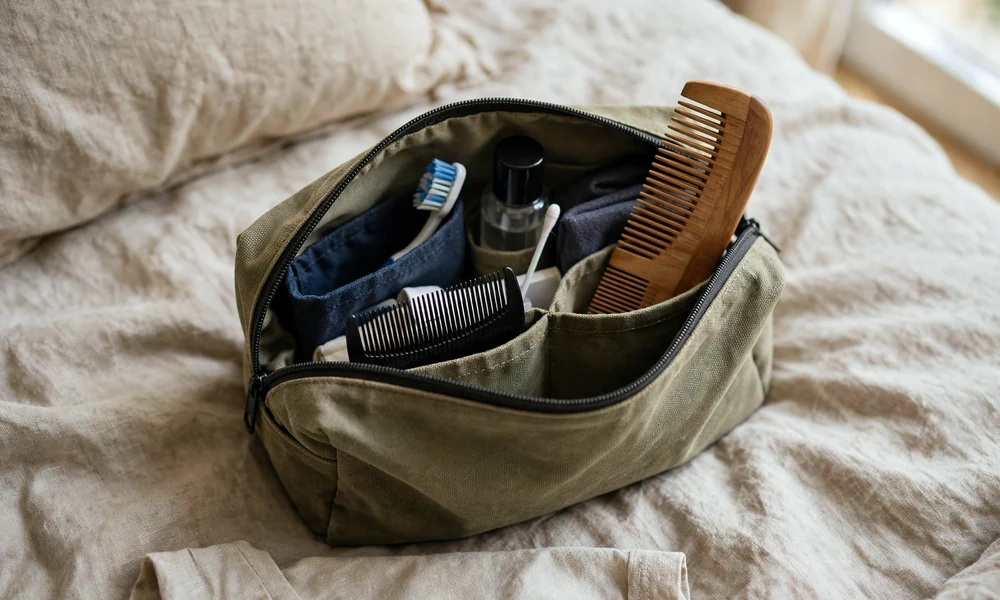
For travel, a single medium-tooth comb in a case is usually enough, plus a wide-tooth comb if your hair is curly or thick. Keep the comb in a wash bag rather than loose in a suitcase, because teeth bend easily under the weight of other things, and a bent tooth will snag every time it passes through hair. A wooden travel comb is a good choice, because it is light, it does not set off any alarms, and it works in any climate without building up static.
Cleaning and Caring for a Comb
A comb needs cleaning every week, and the routine takes two minutes. Pull the loose hair out of the teeth with your fingers, then wash the comb in warm water with a drop of shampoo, working between the teeth gently to loosen oil and product. Rinse well, then leave it to dry on a towel, teeth up, so water does not sit in the handle. A clean comb detangles better, because oil and product build-up makes the teeth sticky and causes them to catch.
What to Avoid When Buying a Comb
Avoid combs with a visible seam down the teeth. That seam is the single most common cause of breakage from a comb, and it is easy to miss in a shop if you do not run a finger along the teeth. Avoid combs with very sharp teeth, which scratch the scalp and can cause irritation, and avoid combs with teeth that are uneven in length, which leave some hairs untouched and others pulled.
Finally, do not expect a comb to do the work of a treatment. A comb can detangle, part and style, but it cannot repair damaged hair, add moisture or fix split ends. Those jobs belong to care and conditioning, and a good mask used regularly will do more for damaged hair than any comb can. Our guide to the best hair masks for dry, damaged hair explains which treatments are worth the time, and a comb used after a mask, while the hair is still damp, is the gentlest way to spread it through.
Frequently Asked Questions
Should I comb wet or dry hair? Detangle wet hair only with a wide-tooth comb, and brush or comb dry hair with a brush or a medium-tooth comb. Wet hair stretches and breaks far more easily than dry hair, so a brush or a fine-tooth comb on wet hair is the fastest way to cause breakage.
Can a comb really reduce breakage? Yes, if it is the right comb used the right way. A seamless wide-tooth comb, used from the ends upward on damp hair, breaks far less hair than a brush or a fine-tooth comb used on tangled hair. The comb itself does not repair hair, but it stops the daily damage that adds up over months.
The best comb is the one that matches your hair, not the one with the most features. Choose wide teeth for wet and curly hair, fine teeth for finishing and parts, smooth seamless teeth whatever the material, and a handle you can hold when your hands are wet. Look after it, clean it weekly, and replace it when the teeth roughen. Do that, and a tool that costs very little will quietly protect your hair every single day.