A poached egg is one of the simplest pleasures in cooking and one of the easiest to get wrong. Done well, the white is set and tender, the yolk is warm and liquid, and the whole thing looks like it came from a cafe kitchen. Done badly, it is a tangle of wispy white drifting through the water, a broken yolk, and a pan to scrub. The best egg poachers of 2026 take the guesswork out of that moment. They hold the egg in shape while the water does its work, so breakfast comes out right whether it is your first try or your five hundredth.

What an Egg Poacher Actually Does
An egg poacher is a cup, mould or insert that cradles a raw egg while it cooks in simmering water or steam. Instead of cracking the egg straight into a swirling pan, where the white can spread and feather, the egg sits in its own little compartment. The heat still reaches it from all sides, but the shape is protected. The result is a round, neat poached egg with a clean white and a yolk that runs when you cut into it.
The Types of Egg Poacher, Explained
Most egg poachers fall into four types, and the right one depends on how many eggs you cook, how much cupboard space you have, and whether you like gadgets or prefer simple tools.
Stovetop cup poachers are the classic design: a shallow pan with a rack of metal cups, usually four or six, and a glass lid. Water simmers underneath, steam rises through the cups, and the eggs cook evenly. These are the best choice for families and for anyone who poaches eggs most weekends, because they handle several eggs at once and the steel cups last for years. They do take up a whole pan’s worth of storage, so measure your cupboard before you buy.
Silicone pods are small, flexible cups that float in a pot of simmering water. You crack an egg into each one, drop them in, and lift them out with their little handles when the eggs are done. They are cheap, they stack into almost no space, and they are the easiest poachers to clean. They cook slightly more slowly than metal cups because silicone is an insulator, so add thirty seconds to your timing. They are the best choice for small kitchens and for people who poach one or two eggs at a time.
Microwave poachers are plastic containers with one or two cups and a lid, designed to cook an egg in the microwave in about a minute. They are fast and almost impossible to mess up, which makes them popular for weekday breakfasts and office kitchens. The trade-off is texture: microwaved eggs can cook unevenly, and the white can turn rubbery if you leave them in a few seconds too long. They are convenient, but they are not the best way to get a cafe-quality result.
Electric egg poachers are countertop appliances with a heated base, a water reservoir and a tray of cups, often with a timer and an automatic switch-off. They are the most hands-off option of all: add water, crack in the eggs, press a button, and wait for the beep. They are also the bulkiest and the most expensive, and they only make sense if you poach eggs nearly every day. For most kitchens, a stovetop set or a set of silicone pods does the same job for less money and less counter space.
How to Choose: The Three Things That Matter Most
First, think about capacity. One or two eggs at a time suits a single person or a couple; four cups covers a family breakfast; six cups is for households that cook for a crowd or like to batch-cook eggs for the week. Buying more capacity than you need wastes storage and money, but buying too little means cooking in two rounds while the first batch goes cold.
Second, check how the cups come out. The best stovetop poachers have cups with handles or a rack that lifts out in one piece, so you can tip each egg onto toast without fishing around in hot water. Silicone pods should have handles long enough to grab without burning your fingers. If you have to use tongs or a spoon to fish cups out of a hot pan, the design has failed at the most important moment.
Third, consider the lid. A glass lid lets you watch the eggs without lifting it and letting the steam escape, which matters because every lift drops the temperature and adds cooking time. A lid that fits tightly keeps the steam in and cooks the tops of the eggs, so you get a set white without flipping anything. Cheap poachers often skimp on the lid, and it shows in the results.
The Best Egg Poachers of 2026
The best stovetop poacher for most homes is a four-cup stainless steel set with a glass lid and a removable rack. Steel cups heat fast and evenly, the glass lid lets you watch the eggs, and four cups is enough for a family without turning breakfast into a production. Look for cups with a slight lip or handle, a base that sits flat on gas, electric and induction hobs, and a lid knob that stays cool. This is the workhorse, and it is the one to buy if you only buy one poacher.
The best budget pick is a simple set of silicone pods. They do the job for a fraction of the price of a steel pan set, they last for years, and if you decide poached eggs are not for you, you have lost almost nothing. The best premium pick is a heavy-gauge stainless steel set with a thick base that holds its heat and a lid that seals well. It costs more, but it cooks more evenly and will still be going strong in a decade.
Whatever type you choose, the same rule applies: buy the poacher that fits your kitchen and your routine, not the one with the most features. A four-cup steel set used every weekend beats an electric poacher gathering dust on the counter. If you already own a dedicated egg cooker, it is worth knowing how it compares, and our guide to the egg cookers worth the counter space covers the electric side of egg cooking in full.
Getting the Perfect Poach, Every Time
Start with fresh eggs. A fresh egg has a thick white that holds together; an older egg has a thin, watery white that spreads no matter what you do. If you are not sure how fresh your eggs are, crack one into a small bowl first. If the white stays in a neat mound around the yolk, it is fresh enough. If it runs flat across the bowl, save that egg for scrambling.
Use simmering water, not boiling water. The water should be at a gentle simmer, with small bubbles rising steadily and the surface barely moving. Boiling water is too violent: it throws the egg around, breaks the white apart and makes the yolk cook too fast. Bring the water to a boil, then turn the heat down until it calms before you add the eggs.
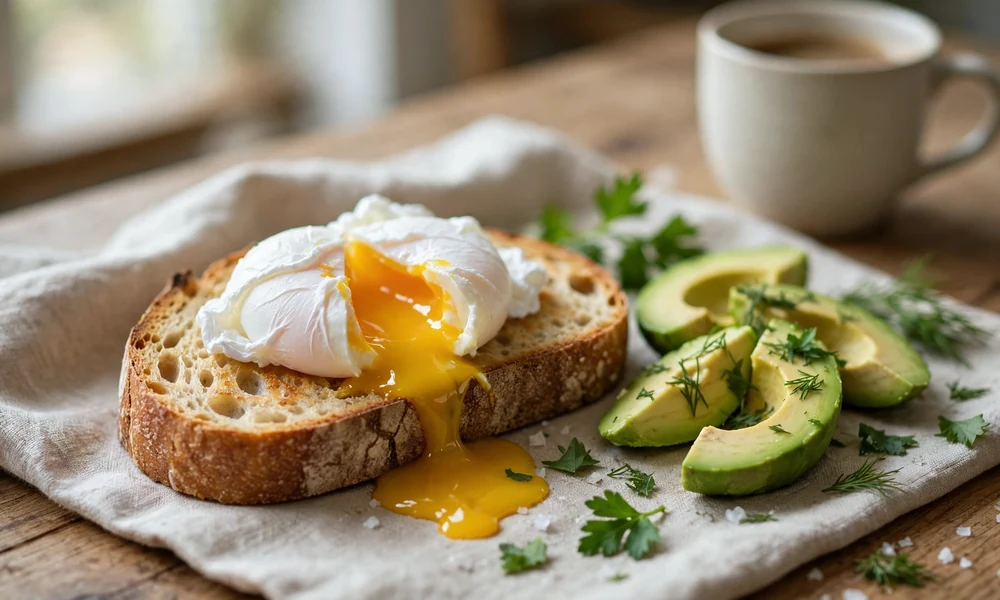
Time three minutes for a runny yolk, four for a yolk that is just set at the edges. Start the timer the moment the lid goes on, and do not lift the lid to peek, because each lift drops the temperature. Large eggs need about thirty seconds more than medium ones. When the time is up, lift the cup out and tip the egg gently onto toast or a warm plate. The white should be fully set and opaque, with no clear jelly left around the yolk.
Season after cooking, not before. Salt in the cup can thin the white slightly, and pepper sinks into the egg and looks untidy. A pinch of flaky salt and a crack of black pepper on the finished egg, plus a few snipped chives if you have them, is all a good poached egg needs. Serve it straight away: a poached egg waits for no one, and two minutes on the plate is the difference between a runny yolk and a warm one.

What to Avoid When Buying an Egg Poacher
Avoid cups without handles. Fishing a hot cup out of simmering water with tongs is awkward and risks dropping the egg. Handles are not a luxury; they are the difference between a tool that is pleasant to use and one that burns your fingers.
Avoid very cheap thin steel. A flimsy pan warps on a hot hob, the base stops sitting flat, and the cups cook unevenly, so one egg is overdone while another is still raw. A poacher does not need to be expensive, but it does need a base thick enough to hold its shape and spread the heat.
Avoid poachers with no lid, or a lid that does not fit. The lid is what traps the steam and cooks the top of the egg. Without it, the top stays raw while the bottom overcooks, and you end up flipping the egg or serving it half done. A glass lid is best, but any lid that fits snugly will do the job. If breakfast is the meal you are building around, our round-up of the best and worst breakfasts of 2026 is a useful companion read.
Frequently Asked Questions
Do I need to add vinegar to the water? Not with a poacher. Vinegar helps a free-form egg hold together in open water, but inside a cup the egg is already held in shape, so vinegar adds nothing except a faint taste. Save the vinegar for the days you poach without the cups.
Can I poach eggs ahead of time? Yes, and this is a useful trick for brunch. Poach the eggs, then drop them into a bowl of cold water to stop the cooking. When you are ready to serve, warm them for thirty seconds in hot, not boiling, water. They will taste freshly made, and you will not be juggling four cups while your guests wait.
Are silicone pods safe? Yes, provided they are made from food-grade silicone and rated for boiling water, which any reputable set will be. Look for pods that are thick enough to hold their shape in the water and handles that do not flop into the pan. Cheap, thin pods can tip over, so it is worth spending a little more on a sturdy set.
What else can I cook in an egg poacher? More than you might think. Steel cups work well for steaming small portions of vegetables or fish, and for making individual egg muffins or mini frittatas. Silicone pods are handy for melting chocolate or butter in small amounts over simmering water. A poacher earns its shelf space faster when it does more than one job, and a well-stocked kitchen drawer helps too — our guide to the mixing spoons worth keeping in the crock covers another everyday essential.
The best egg poacher is the one that makes a perfect egg on a Tuesday morning, not just on a slow Sunday. Choose a design that fits your kitchen, keep the water at a simmer, and give the eggs three unhurried minutes. Breakfast will take care of itself.