
Adirondack Chairs That Turn a Garden Corner Into the Best Seat in the House in 2026
Adirondack chairs are the rare piece of garden furniture that nobody sits in for five minutes. The wide slatted seat, the deeply slanted back and the broad flat armrests settle you into a lean-back pose that invites an hour with a book, a drink and nowhere to be. The shape has barely changed in more than a century, because the shape is the whole point: a low, wide, sloping chair for sprawling outdoors. This guide compares the main types and picks the chairs that earn their patch of lawn in 2026.
Key Takeaways
- An Adirondack chair is a fixed, slanted recliner, not a rocking chair: it does not move, and that stillness is what makes it restful.
- Cedar and teak last longest outdoors with the least fuss, while painted pine needs regular care and poly resin needs almost none.
- Seat width matters more than looks: around 50 to 55 centimetres suits most adults, wider for taller sitters.
- Wide flat armrests are a working surface, not decoration: check they are level, sturdy and wide enough for a mug.
- Folding Adirondacks save real space in winter, but check the hinge and the locking catch first.
Adirondack Chairs Compared
| Chair type | Best for | Material | Comfort | Upkeep |
|---|---|---|---|---|
| Classic cedar | Fire-pit corners, lawns | Western red cedar | Firm, breathable | Oil once a year |
| Teak Adirondack | Exposed gardens | Teak hardwood | Warm, solid | Wash only |
| Poly resin | Poolside | Recycled plastic lumber | Smooth, cool | Hose down |
| Painted pine | Bright coastal looks | Painted softwood | Light, easy to move | Repaint yearly |
| Folding Adirondack | Small gardens, storage | Wood or resin | Same recline | Check hinges yearly |
1. The Classic Cedar Adirondack: The Fire-Pit Favourite
The classic cedar Adirondack is the chair most people picture: warm slats, a gently fanned back, wide armrests and a low, sloping seat. Cedar resists rot and insects without treatment, stays light enough to drag across the lawn, and weathers to a soft silver grey if left alone. Thick slats and stainless fixings last a decade or more with one coat of oil a year.
The cedar chair suits the fire-pit corner better than any other seat, because it is low, wide and stable on grass, and its slatted back lets evening air through instead of trapping heat. Its weakness is softness: cedar dents if you drop something heavy on it, and slats can split if fixings are driven too close to the ends. Check seat depth before you buy: it should support your thighs without pressing behind the knees.
2. The Teak Adirondack: The Chair You Buy Once
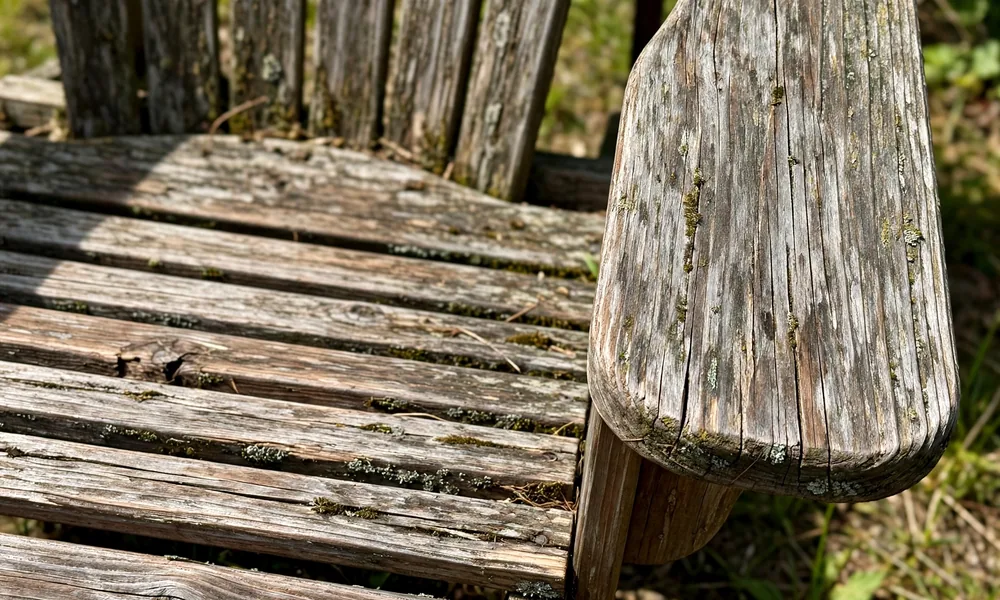
Teak is the hardest-wearing outdoor wood there is, and a teak Adirondack is the chair for a garden that gets full sun and full rain. Its natural oils repel water and insects, the dense grain resists dents far better than cedar, and it needs nothing more than an occasional wash. It silvers gracefully if left alone, and its weight keeps it steady in wind, though it is awkward to move.
The price is the honest trade-off: a solid teak Adirondack costs two or three times a cedar one. What you buy for that money is time, because a teak chair outlives two or three cedar chairs and never needs sanding, oiling or repainting. Check it is solid teak, not veneer, with thick stainless bolts.
3. The Poly Resin Adirondack: Colour Without the Upkeep
Poly resin Adirondacks, often sold as recycled plastic lumber, are the low-maintenance answer: they never rot, never splinter, never need paint, and a hose-down restores them after a dusty summer. They come in colours wood cannot match, from bright white and sea blue to deep green. For a poolside or a holiday cottage where nobody wants a maintenance chore, they are the sensible pick.
The trade-off is feel and weight. Resin chairs are heavier than they look, which keeps them steady in wind but makes them awkward to carry, and the smooth surface can feel sticky on bare skin in hot sun, where wood breathes. Press the seat before you buy: avoid any chair that bows under your weight or creaks at the joints.
4. The Painted Pine Adirondack: The Bright Coastal Look
A painted pine Adirondack in white, pale blue or sage green is the classic coastal look, and it suits a deck or a cottage garden better than any natural wood. Pine is light, cheap and easy to shape, so painted chairs are the most affordable way into the Adirondack shape, and a fresh coat of paint transforms a tired chair in an afternoon. The wide armrests double as a side table for a mug.
Paint is also the weakness. Pine is a softwood, and once the paint film cracks, water gets in, the wood swells, and the chair starts to rot from the joints outward. A painted chair needs repainting every year or two and should be stored under cover in winter. Check the underside for bare wood: some makers paint only what you can see.

5. The Folding Adirondack and the Adirondack Rocker
A folding Adirondack keeps the same slanted recline but hinges at the seat so the chair folds flat for a shed shelf or a car boot. The hinge is the whole story: it should lock open with a solid catch, fold without pinching fingers, and show no wobble when open. A folding chair is lighter than a fixed one, so check it does not tip when you lean back.
The Adirondack rocker deserves a clear word, because it looks like an Adirondack and behaves like something else. It mounts the familiar slatted seat and slanted back on curved runners, so it rocks. That motion is lovely, but it is a different chair from the fixed Adirondack, and it needs the flat, level ground a rocker demands, plus the clearance behind it to swing. Our guide to rocking chairs covers the motion and the space a rocker needs. The fixed chair is the better fire-pit seat; the rocker is the better porch seat.
Size, Comfort and the Armrest Test
Adirondack chairs are low, wide and slanted, and that geometry decides comfort more than the material does. A seat around 50 to 55 centimetres wide suits most adults; narrower seats pinch the hips, and very wide seats leave shorter sitters reaching for the armrests. Seat depth should support most of the thigh without pressing behind the knee, and the back should recline at roughly 30 degrees from vertical, which is what gives the chair its lean-back sprawl.
The armrests deserve their own test, because they are the chair’s signature. They should be wide, roughly 12 to 15 centimetres, flat on top and level, so a mug, a book or a plate sits steady. Press down on each armrest: it should not flex or creak, because it carries real weight when you push yourself up. An ottoman helps taller sitters. For evenings, soft cushions help, and our guide to outdoor cushions covers the quick-drying fabrics that survive a summer outside.
Where an Adirondack Chair Belongs
An Adirondack chair belongs where people linger, not where they pass through. The classic spot is the fire-pit corner, angled slightly toward the flames and toward each other, far enough from the heat to be comfortable and close enough to feel it. On a lawn, two chairs facing the view beat a row of chairs facing the house.
A fixed Adirondack sits happily on grass, gravel or decking and needs no clearance behind it, because it does not move. A porch swing, by contrast, hangs and sways, and our guide to porch swings explains the beam, the chains and the space a swing needs. If your evenings are slow and still, buy the Adirondack; if they sway, buy the swing.
Caring for an Adirondack Chair So It Lasts
Wooden Adirondacks need little care, but the little they need matters. Wash the slats with soapy water in spring, oil cedar once a year to keep its colour, or let it silver naturally and skip the oil entirely. Tighten bolts every spring, because wood shrinks and swells with the seasons. Painted chairs need their paint film checked each autumn: touch up chips before winter, or water will get under the paint and lift it in sheets.
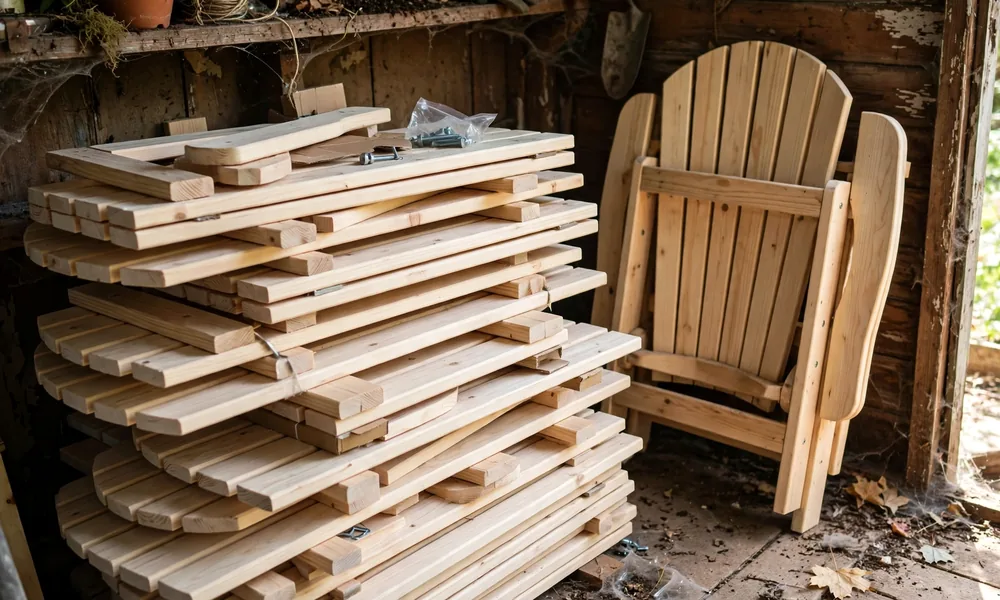
Resin chairs ask for almost nothing: a hose-down and a wipe with mild detergent is the whole routine. Whatever the material, store cushions indoors when it rains, and cover chairs or stack folding models in a shed in winter. A chair left out in snow and ice ages twice as fast as one stored dry.
Mistakes That Waste a Good Adirondack
The most common mistake is buying on looks alone and never sitting in the chair. Adirondack geometry varies more than it appears to, and a back that is too flat or a seat that is too narrow will not be fixed by a cushion. The second mistake is choosing painted pine for an exposed, wet garden, where it will need repainting within a year. The third is ignoring weight: a very light chair blows across a lawn in the first storm, while a very heavy one never gets moved to the sunny spot.
Adirondack Chair Checklist: Before You Buy
- Sit in the chair first: the back should meet your shoulders and the seat should support your thighs.
- Check the seat width, around 50 to 55 centimetres for most adults, wider for taller sitters.
- Press the armrests: wide, flat, level and free of flex, since they carry weight when you stand up.
- Choose the material for your weather: cedar or teak for exposed gardens, resin for poolside, painted pine only for covered spots.
- Check the fixings: stainless bolts and thick slats, not small screws near the ends of the wood.
- Plan storage and extras: a side table, a cushion or an ottoman, and a dry place for winter.
Frequently Asked Questions
Are Adirondack chairs comfortable?
Yes, for lounging: the wide slatted seat and deeply slanted back spread your weight and let you sprawl. They are less comfortable for sitting upright to eat or work.
What is the difference between an Adirondack chair and a rocking chair?
An Adirondack chair is fixed: its slanted recline comes from the shape of the frame, and it does not move. A rocking chair sits on curved runners and moves back and forth.
What wood is best for an Adirondack chair?
Cedar is the best all-round choice: light, rot-resistant and affordable. Teak lasts longest and needs the least care, but costs far more. Painted pine needs regular repainting.
Do Adirondack chairs need cushions?
Not necessarily. The slatted seat breathes in summer and is comfortable bare, but a thin outdoor cushion softens the slats and adds colour. Bring cushions in when it rains.
Can Adirondack chairs stay outside all winter?
Cedar, teak and resin chairs can stay outside if covered, but they last years longer stored dry. Painted pine should always come under cover, because trapped moisture lifts the paint.
Are folding Adirondack chairs as comfortable as fixed ones?
Yes, if the hinge locks solidly and the geometry matches. The recline is the same; the difference is a lighter build and a hinge to check yearly.
The Bottom Line
The best Adirondack chairs in 2026 are the ones that match your garden, not the ones that look best in a photograph. Buy cedar for the fire-pit corner, teak for a garden that gets everything the weather can throw at it, resin for the poolside, and painted pine for a covered deck. Sit in it first, test the armrests, and plan its winter storage. Do that, and the cheapest seat in the garden becomes the one everyone argues over.


