The Best Bakeware Sets for Every Home Baker in 2026
The best bakeware sets in 2026 make baking feel simpler, not more complicated. Instead of hunting through a cupboard for a pan that fits the recipe, everything you reach for matches: the same metal, the same weight, the same way of browning. A good set turns a shelf of random pans into a proper toolkit, where a cake pan, a baking sheet, a loaf pan and a muffin tray all behave the same way in the same oven.
Buying a set is also usually cheaper than buying the same pieces separately, and matching pieces stack neatly, which solves the storage problem that plagues most kitchens. But not every set is worth the money. Some are padded with pieces nobody uses, some mix metals that bake at different speeds, and some are so thin they warp the first time they meet a hot oven. This guide explains how to judge a bakeware set: the materials that bake evenly, the pieces that earn their place, and the warning signs that mean a set will let you down.
Key Takeaways
- A set is only worth buying if you will use at least four of its pieces regularly; filler pieces are the most common way sets waste your money.
- Heavy-gauge aluminised steel is the safest all-round material, because every piece bakes at the same even rate.
- Matching pieces brown food more predictably than a mixed cupboard, since the metal, colour and weight are consistent.
- Check the sizes first: a half-sheet tray, 8-inch or 9-inch round pans, a standard loaf pan and a 12-cup muffin tray cover most recipes.
- Non-stick coatings make release easier but wear out faster, so a set with a good coating and a fair warranty beats a cheap one.
Why a Set Beats a Random Cupboard of Pans
Most home bakers build their collection by accident: a round pan for a birthday cake, a tray picked up on sale, a loaf pan inherited from a relative. Each piece is fine on its own, but together they bake differently. The dark tray browns fast, the thin pan burns the edges, the heavy pan takes longer to heat. You end up adjusting every recipe to the pan rather than the other way round. A matched set removes that guesswork. Every piece is made from the same material at the same gauge, so a sponge, a batch of cookies and a loaf all meet the same even heat,
There is a practical benefit too. Sets are designed to nest and stack, which matters in a small kitchen where cupboard space is the scarcest ingredient. Round pans sit inside each other and baking sheets slide together. The other advantage is price: buying five or six pieces as a set typically costs a third less than buying the same pieces one by one.
The Pieces That Earn Their Place in a Set
A good bakeware set is built around the pieces a home baker actually reaches for. The exact contents vary, but the strongest sets share the same core, and anything beyond it should be judged on whether you will genuinely use it.
Round cake pans
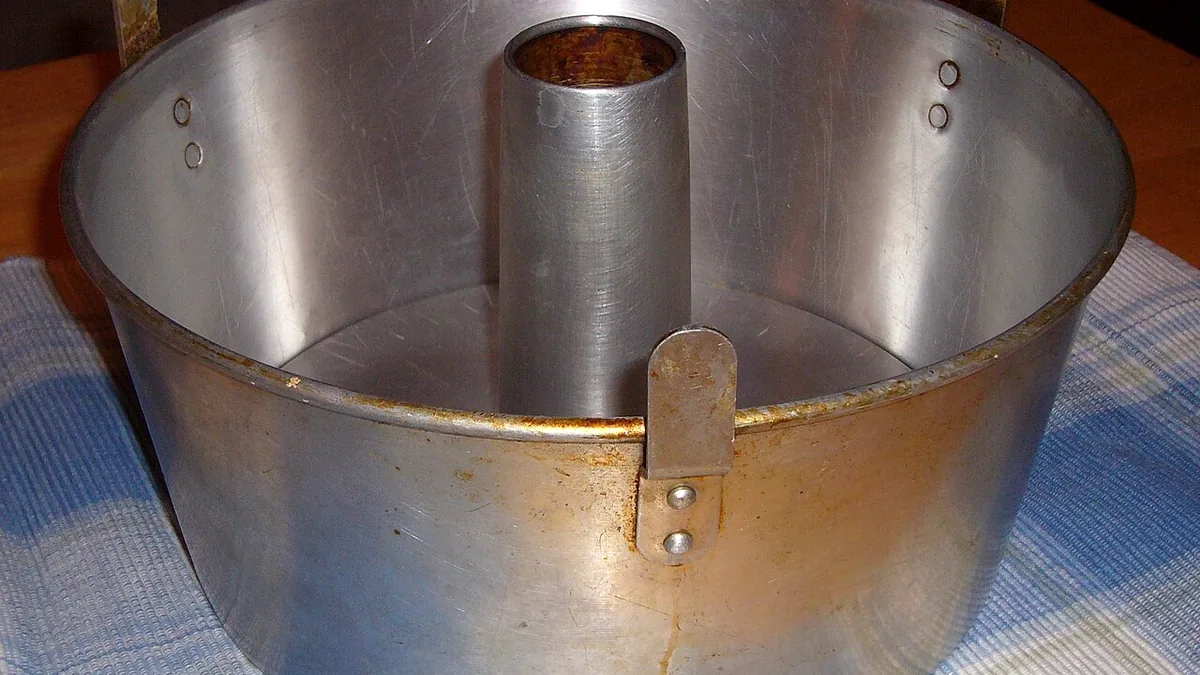
Two round pans of the same size are the heart of most sets. Layer cakes need two identical pans, and a single pan means baking in two rounds and hoping the second layer matches the first. Eight-inch or nine-inch rounds cover the vast majority of cake recipes. Look for straight sides, a rolled rim that resists warping, and a light colour that browns gently.

Baking sheets
A rimmed half sheet, roughly 18 by 13 inches, is the most useful flat piece in any set. It handles cookies, roasted vegetables, sheet-pan dinners and puff pastry, and it fits a standard oven rack with room for air to circulate. A set with two half sheets is even better, because cookies bake in rotation: one sheet in the oven, one being loaded. Thin sheets are the weak point of cheap sets, so check the gauge. A heavy sheet stays flat at high heat, while a thin one twists and leaves half the batch pale.
Loaf pans and muffin trays
A standard loaf pan, about 23 by 13 centimetres, covers sandwich bread, banana bread and fruit loaves, and a 12-cup muffin tray covers muffins and cupcakes. Together with the round pans and sheets, they handle nearly everything a home baker makes in a year.

The pieces to question
Some pieces appear in sets mainly to push the piece count higher. A tiny tart tin, a mini loaf pan or a decorative bundt shape may each be lovely, but if you bake with them once a year they are not earning their place. A five-piece set you use weekly beats a ten-piece set where half the pieces live at the back of the cupboard. Before you buy, count the pieces you will genuinely use, and judge the price on those alone.
Bakeware Set Materials Compared
Material decides how a set bakes, how long it lasts and how much care it needs. Because every piece in a set shares the same material, the choice matters more than it does for a single pan: a bad material choice is multiplied across the whole set.
| Material | Evenness | Browning | Durability | Best for |
|---|---|---|---|---|
| Aluminised steel | Excellent | Even, gentle | Excellent | Everyday baking, the safest all-round set |
| Plain aluminium | Excellent | Even, light | Good | Professional-style baking, light bakes |
| Non-stick coated steel | Good | Fast, dark pans brown quicker | Fair | Easy release and quick cleanup |
| Stainless steel | Fair | Slow, pale | Excellent | Durability and acidic recipes |
| Silicone | Fair | Slow, soft crusts | Good | Freezer-friendly shapes, easy storage |
| Cast iron | Excellent once hot | Deep, dark crust | Excellent | Bread and heavy baking, if you accept the weight |
Aluminised steel is the default recommendation because it combines the strength of steel with the even heat conduction of aluminium, and it resists rust far better than plain carbon steel. Plain aluminium bakes just as evenly and is lighter, but it dents and scratches more easily. Non-stick coatings are the most forgiving for release and cleanup, but the coating is the first thing to wear out, so buy from a maker that stands behind it. Stainless steel lasts forever but browns slowly, which makes it a poor choice for cakes and cookies.
How to Judge a Set Before You Buy It
Sets are usually sold boxed, so you cannot test each piece the way you could a single pan. What you can do is read the box properly and check a few details that reveal quality.
Gauge and weight
Weight is the simplest quality test. Pick the box up: a good set feels reassuringly heavy for its size, because heavy-gauge metal is what keeps pans flat and heat even. If the box feels light enough to be empty, the metal inside is thin, and thin metal warps. Where the gauge is printed, 18-gauge or thicker is the mark of a serious set.
Colour and coating
Light-coloured pans bake more gently than dark ones, so a set in a pale finish is more forgiving for cakes and cookies. Dark non-stick sets brown faster, which suits roasting but can burn the base of a sponge if you do not drop the temperature by about 10 degrees. Check the coating too: a good non-stick surface feels smooth and even, without rough patches at the corners, where coatings fail first.
Handles, rims and nesting
Small details decide whether a set is pleasant to use. Wide, flat rims give you something to grip with oven mitts, and they help the pan hold its shape. Handles are useful on larger trays but can stop pieces nesting, so check that the set still stacks neatly with them. Measure your cupboard before you buy, because a set that does not fit where you planned to store it will end up piled on top of the fridge.

Setting Up and Looking After Your Set
Wash every piece in warm soapy water before the first use, dry it thoroughly, and check that nothing arrived dented or warped. A dented pan will never bake evenly, so return it rather than living with it. For the first few bakes, line cake pans with parchment on the base and grease the sides lightly, even on non-stick pieces, until you learn how the set releases.
Care is what decides whether a set lasts five years or fifteen. Hand-wash non-stick pieces with a soft sponge, because a dishwasher and a scouring pad are the fastest ways to kill a coating. Dry steel pieces straight away to stop rust starting at the rim, and never stack a damp pan inside a dry one. If a coating starts to flake, retire that piece rather than baking with it.
Bakeware Set Buying Checklist
- Count the pieces you will use at least monthly, and judge the price on those pieces alone, not the headline piece count.
- Check the material and gauge: heavy aluminised steel at 18-gauge or thicker is the safest default for a set.
- Confirm the core sizes: a half-sheet tray, matched 8-inch or 9-inch round pans, a standard loaf pan and a 12-cup muffin tray.
- Look for a light colour if you mostly bake cakes and cookies, and remember dark pans need a lower temperature.
- Test the nesting: the pieces should stack neatly in the box, and the set should fit your cupboard.
- Read the warranty, especially on non-stick coatings, and check the maximum oven temperature before you buy.
Frequently Asked Questions
Is a bakeware set cheaper than buying pieces separately?
Usually, yes. A set of five or six pieces typically costs about a third less than the same pieces bought one by one.
What is the best material for a bakeware set?
Heavy-gauge aluminised steel is the best all-round choice for most home bakers. It spreads heat evenly, resists warping and rust, and browns gently. Non-stick coated steel is the easiest to live with, while plain aluminium is the professional favourite.
How many pieces should a bakeware set have?
Five to seven pieces cover nearly everything a home baker makes: two round cake pans, one or two baking sheets, a loaf pan and a muffin tray. Sets with more pieces are worth it only if the extras match what you actually bake.
Do all the pieces in a set bake the same way?
That is the main advantage of a set. Because every piece shares the same material, gauge and colour, they heat at the same rate, so a recipe that works in the cake pan will behave predictably in the loaf pan too.
Can bakeware sets go in the dishwasher?
Some can, but most makers recommend hand-washing, especially for non-stick coatings. Dishwasher detergent and high heat wear coatings down quickly and can dull aluminium.
When should I replace a bakeware set?
Replace individual pieces when they warp, when a non-stick coating flakes or food starts sticking badly, or when rust appears that will not wash off. Retire pieces one at a time and keep the rest working.
The Bottom Line
The best bakeware sets make baking feel consistent: matched pieces, in a good material, at a sensible gauge, in the sizes you actually bake with. A five-piece aluminised steel set with two round pans, a half sheet, a loaf pan and a muffin tray will cover nearly every recipe a home baker makes, Count the pieces you will use, check the weight and the warranty, and skip the sets padded with shapes you will never reach for. If you want to go deeper on the individual pieces first, our guides to the best cake pans, the best baking sheets and the best loaf pans cover each one in detail, and they will help you recognise a good set when you see one.