What Is a Sushi Mat? The Best Sushi Mats for Tight Rolls in 2026
A sushi mat is the flat, flexible sheet you roll sushi on, and it is the tool that decides whether a homemade roll comes out tight, even and sliceable or loose and falling apart. The classic version is a makisu: thin bamboo slats held together with cotton string, rolled up around seasoned rice and seaweed to press a maki roll into shape.
The first thing to understand is that a sushi mat is not a sushi roller. A roller is a rigid mould that shapes the roll for you, at the cost of control: the roll comes out whatever shape the mould dictates. A mat is flexible, so you control the pressure, the tightness and the shape with your hands, and you can make thin hosomaki, thick futomaki and inside-out uramaki with the same tool.
Key Takeaways
- A sushi mat is a flexible sheet, usually bamboo slats tied with cotton string, that shapes and tightens a roll; it is not a rigid sushi roller mould.
- Flat bamboo slats with tight, even spacing roll most evenly, and a mat about 24 by 24 centimetres suits most home rolls.
- Wrap the mat in cling film before you roll: it keeps rice out of the gaps and makes cleaning take seconds.
- Silicone mats are easier to clean and dishwasher-safe, but bamboo gives a firmer press.
- Replace a bamboo mat when strings fray, slats crack or a sour smell survives washing, because a worn mat rolls unevenly.
What a Sushi Mat Actually Is
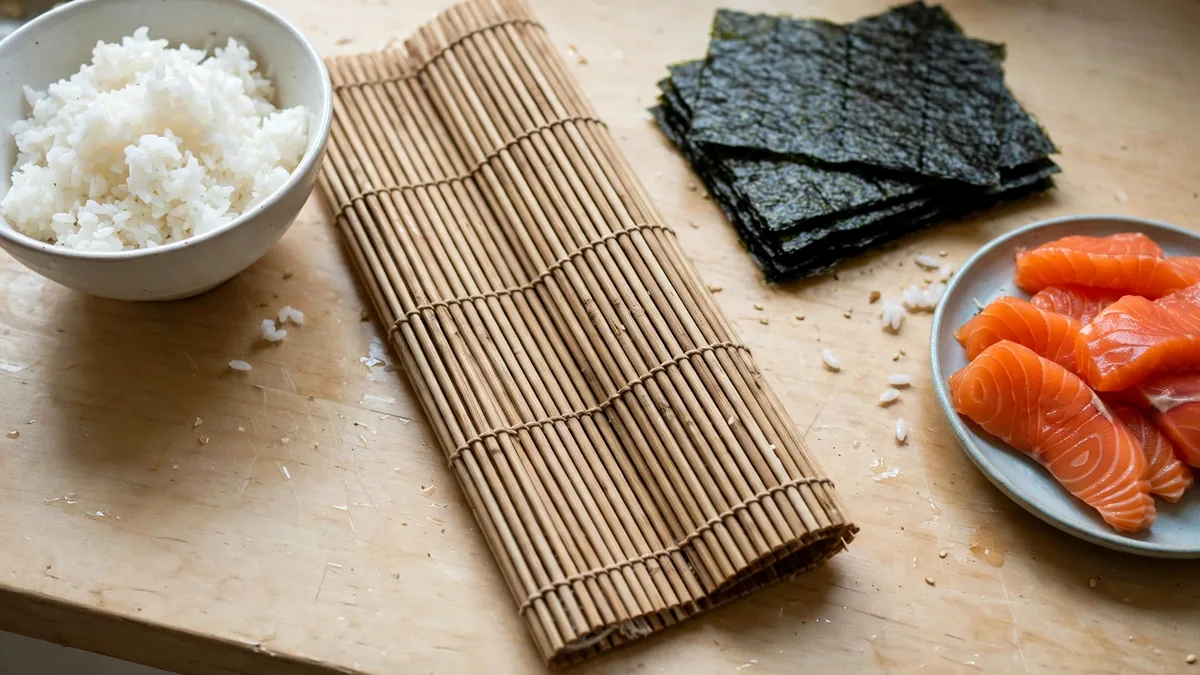
A sushi mat, called a makisu in Japanese, is a sheet of thin bamboo slats woven together with cotton string. You lay it flat, place nori on top, spread seasoned rice across it, add fillings in a line, then lift the near edge and roll it away from you. The slats flex around the roll, and it comes out round, firm and even.
The mat matters because rolling is a pressure problem. Too loose and the roll sags when you slice it; too tight and the rice squeezes out and the nori tears. A good mat spreads your pressure evenly, so the centre is as firm as the ends. A bad mat presses harder in some places than others, and the roll shows it.
The Main Types of Sushi Mat
Three kinds of mat cover almost every home. The one you choose decides how the roll feels in your hands, how you clean it, and how long it lasts.
Flat Bamboo Mats
The flat bamboo mat is the classic makisu: thin, flat slats of natural bamboo tied with cotton string. It is the standard against which the others are judged, because bamboo is firm enough to press a roll tightly, light enough to lift with one hand, and flexible enough to curl into a neat cylinder. The slats should sit close together, and the string should be taut. Its weakness is cleaning, because rice gets between the slats and bamboo must be dried fully or it smells.
Silicone Mats
Silicone mats are the modern alternative: a single flexible sheet of food-grade silicone, sometimes with raised ridges that mimic bamboo slats. They are the easiest mats to live with, because rice does not stick, they rinse clean, and most are dishwasher-safe. The trade-off is feel: silicone is softer than bamboo, so the press is less firm. If easy cleaning matters more than a firm press, silicone wins.
Plastic and Mesh Mats
Plastic and mesh mats are the budget end: thin polypropylene sheets, sometimes with a mesh texture, sold in multi-packs. They work, but thin plastic creases instead of curving, so the roll can come out with a flat side, and mesh traps rice in its weave. They are useful as spares for a sushi party, but they are not the mat to learn on.

Sushi Mats Compared
| Mat type | Press firmness | Cleaning | Best for | Typical price |
|---|---|---|---|---|
| Flat bamboo | Firm and even | Hand wash, dry fully | Everyday rolls, tight maki | Low |
| Round bamboo | Softer, rounder | Hand wash, dry fully | Thick futomaki, soft fillings | Low |
| Silicone | Medium | Rinse or dishwasher | Beginners, easy cleaning | Low to medium |
| Plastic or mesh | Weak, can crease | Rinse, rice traps in mesh | Party spares, one-off use | Very low |
How to Choose the Right Sushi Mat
Start with the slats. Hold the mat up to the light: the slats should be straight, evenly spaced and close together, with no gap wider than a grain of rice. Feel for splinters or slats that sit higher than their neighbours, and pull the string gently at a corner; it should feel taut and spring back, because slack string means the mat will splay open as you roll.
Size comes next. A mat of about 24 by 24 centimetres fits a standard nori sheet and suits most home rolls. A smaller mat suits single hosomaki, and a larger mat suits party rolls, but it is harder to control with one hand. Buy the standard square first.
Material is the third decision. If you roll weekly and you are happy to wrap the mat in cling film and wash it by hand, bamboo is the best tool for the job. If you roll occasionally and you want the mat to go in the dishwasher, silicone is the better buy. Check the string too: undyed cotton shows dirt honestly, while green-dyed string can bleed colour onto pale rice, so wash a new dyed mat in hot soapy water first.
How to Use a Sushi Mat for a Tight Roll
Wrap the mat in cling film first, every time. Lay a sheet over the mat, fold it around the back, and smooth out the wrinkles. This is the habit that separates easy sushi nights from frustrating ones: the film keeps rice out of the gaps, stops staining, and means cleaning is a matter of peeling off the film and rinsing the mat. It also stops the mat sticking to the rice.
Place the nori shiny side down, with the short edge nearest you, and spread the rice in a thin, even layer, leaving about two centimetres of bare nori at the far edge. Wet your fingers first, because dry fingers drag the rice. Lay the fillings in a straight line across the middle, keeping them in the centre third; fillings spread to the edges will squeeze out. Then lift the near edge with both thumbs, tuck the nori over the fillings, and roll away from you in one smooth motion.
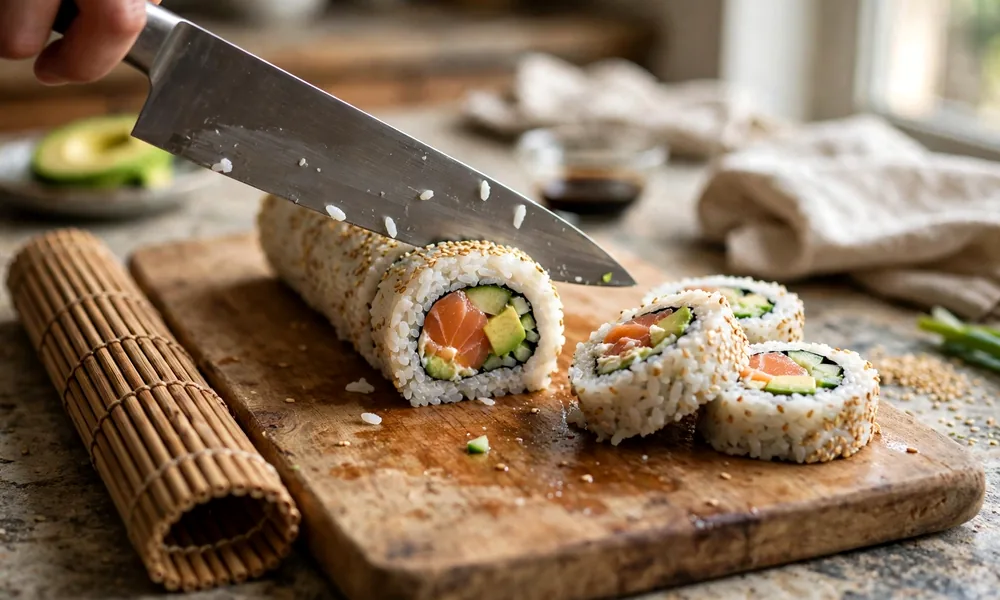
Once the roll is formed, give it a final firm squeeze through the mat, pressing along its whole length, then unroll the mat and check the seam. The bare strip of nori should seal itself with a little water. Then slice it with a sharp, wet knife.

Care, Cleaning and Storage
Clean a bamboo mat straight after use, while the rice is still soft. Peel off the cling film, rinse under hot running water, and scrub between the slats with a brush. A little washing-up liquid is fine, but rinse it well. Never soak a bamboo mat, and never put bamboo in the dishwasher; the heat and the long wet cycle will warp it.
Dry the mat standing up, unrolled, in moving air, so water drains out of the gaps. Only roll it up for storage once it is completely dry; a mat stored damp grows mould between the slats. Stored dry, a good bamboo mat lasts a year or more. A silicone mat is simpler: rinse it, or put it in the dishwasher.
Replace a bamboo mat when the strings fray or snap, when slats crack or splinter, or when a sour smell survives a proper wash. A worn mat rolls unevenly and can harbour bacteria in cracked bamboo. Mats are cheap, so replace early.
Mistakes That Spoil the Roll
The most common mistake is rolling without cling film. Rice forced between bare slats dries into a cement that prises them apart, and the next roll sticks and tears. The second mistake is overfilling: a roll stuffed with fish, avocado, cucumber and sauce has nowhere to go when you press it, so it bursts. Use less filling than you think you need.
The third mistake is pressing unevenly, usually hard at the ends and lightly in the middle, which makes a roll shaped like a dumbbell. Press with both hands along the whole length. The fourth mistake is using the wrong rice. Sushi rice is short-grain, seasoned and still slightly warm; long-grain or cold fridge rice will not stick to itself, and no mat can save a roll made with the wrong rice. Our guide to sushi rice explains how to cook it properly.
The fifth mistake is slicing with a blunt or dry knife. A blunt knife crushes the roll, and a dry blade drags rice with it. Use the sharpest knife you own, wet the blade before every cut, and wipe it between slices. Finally, do not buy a mat as part of a cheap set and expect it to be good: set mats are often the thinnest, loosest mats a maker can include. A sushi set is worth buying for its plates, as our guide to sushi sets explains, but the mat inside it is rarely the best mat you can buy on its own.
Your Sushi Mat Checklist
- Slats straight and close together, free of splinters, with taut string that springs back when pulled.
- Standard size around 24 by 24 centimetres, fitting a full sheet of nori with a small margin.
- Cling film ready before every session, wrapped smoothly around the mat with no wrinkles.
- Mat dried standing up and fully dry before it is rolled up and stored.
- Sharp, wet knife for slicing, and fillings kept to the centre third of the rice.
- Spare mat in the cupboard if you roll weekly, and a replacement at the first sign of fraying or sour smell.
Frequently Asked Questions
What is a sushi mat used for?
A sushi mat shapes and tightens a sushi roll. You place nori and rice on it, add fillings, then lift and roll the mat away from you, pressing gently so the roll comes out round, firm and even enough to slice cleanly.
Is a bamboo sushi mat better than a silicone one?
Bamboo gives a firmer press and is the traditional choice, but it needs hand washing and full drying. Silicone is easier to clean and dishwasher-safe, but its press is softer. Choose bamboo for the tightest rolls and silicone for the easiest care.
Do I need to wrap a sushi mat in cling film?
Yes, for bamboo mats at least. Cling film keeps rice out of the gaps, stops staining, prevents sticking and makes cleaning take seconds.
How do I clean a bamboo sushi mat?
Rinse it under hot water straight after use, scrub along the slats with a brush, rinse off any soap, and dry it standing up in moving air. Never soak it and never put it in the dishwasher.
What size sushi mat should I buy?
A standard square mat of about 24 by 24 centimetres suits most home rolls and fits a full sheet of nori. Smaller mats suit single hosomaki, and larger mats suit party-sized rolls.
How long does a sushi mat last?
A good bamboo mat lasts a year or more of weekly use if it is washed and dried properly. Replace it when the strings fray, slats crack, or a sour smell survives washing.
Bottom Line
A sushi mat is a small, cheap tool that does one job well when you buy the right one. Choose a flat bamboo mat with tight, even slats and taut string, wrap it in cling film every time, and keep it clean and dry, and your rolls will come out tight, round and sliceable. If easy cleaning matters more than the firmest press, a silicone mat is a fair second choice. Either way, pair the mat with good rice and a sharp knife, and remember that chopsticks that grip well turn a neat roll into a relaxed meal.